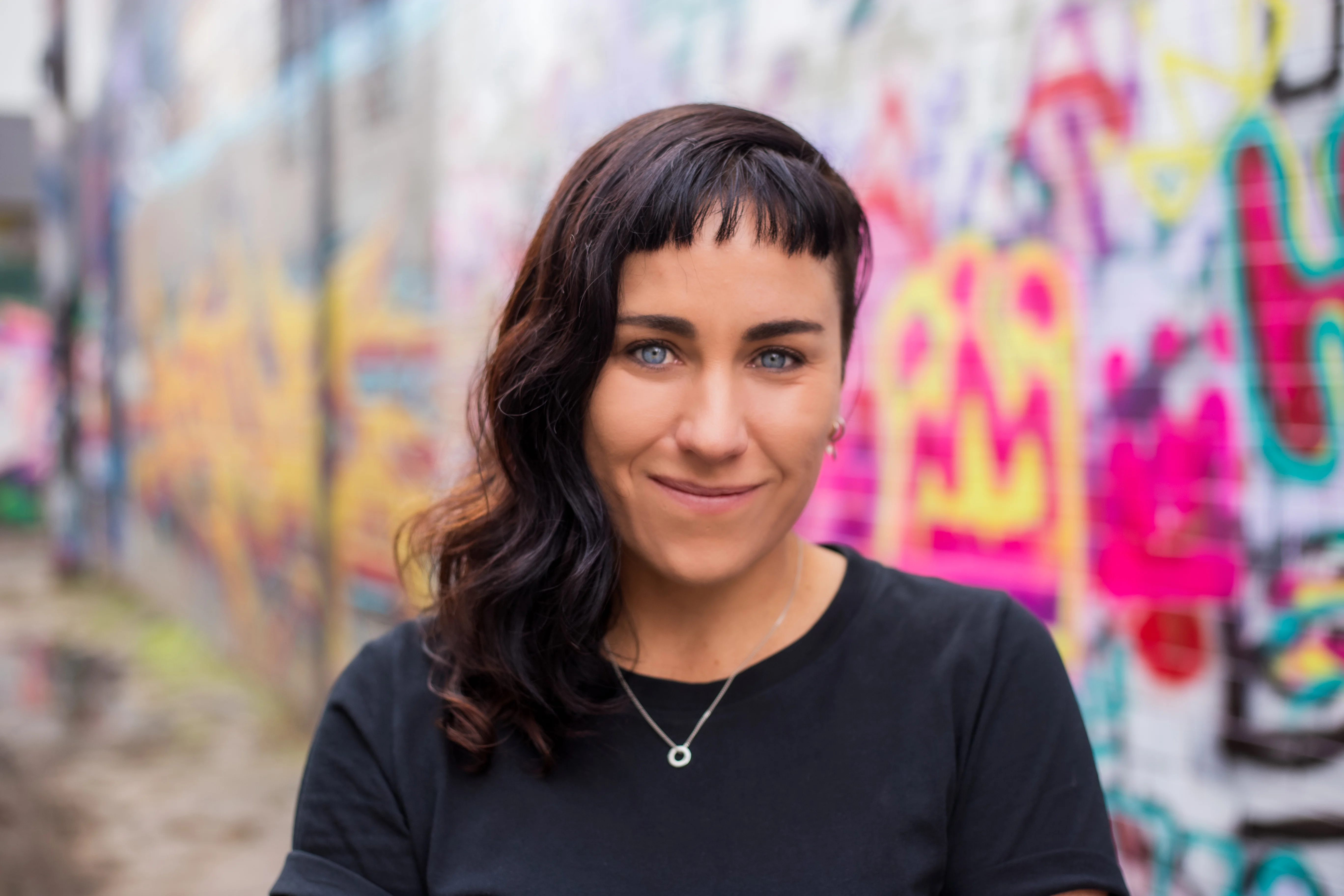
Lucy Thomas is the CEO and Co-founder of PROJECT ROCKIT, an organisation working alongside young people, schools and communities across Australia to challenge bullying, hate and prejudice and create spaces where everyone can belong. Lucy attended the Strategic Perspectives in Nonprofit Management (SPNM) program at Harvard Business School Executive Education in July and discusses the experience in the post below.
When my sister Rosie and I started PROJECT ROCKIT 20 years ago, we were fresh out of school. We had zero professional experience, no idea how organisations are built and certainly no clue that the youth-led project we were creating would become such a defining part of our lives.
We were driven by the simple belief that young people deserved a better world – one where kindness and respect thrive over bullying, hate and prejudice. That belief has carried us from youth-led school programs into co-design, advocacy and systems change. PROJECT ROCKIT has now directly reached over one million school students and supported 150+ young people into career-starting employment in the impact sector. Our role has always been to bring young people’s voices into rooms where they might otherwise be absent, and ignite the bravery to speak up and shape the communities around them.
Bullying is really an umbrella term for many of the harms and prejudices we speak about more incisively as adults: Exclusion, violence, hate, racism, sexism, homophobia, ableism, misogyny. The contexts have changed dramatically since we began our work in 2006, but the underlying human dynamics remain stubbornly familiar. If anything, the world feels more complex than the one we were trying to change when we started.
I thought about this a lot during the Strategic Perspectives in Nonprofit Management (SPNM) program at Harvard Business School, especially through our exploration of the Equal Justice Initiative and its work challenging racial injustice and mass incarceration in the US. I found myself wrestling with a question that I suspect many leaders carry quietly: What does success mean if you haven't come even close to solving the problem you set out to address?
After 20 years, that question has become personal. PROJECT ROCKIT has spanned my entire adult life. I’ve grown up inside the movement, learning to design programs, build teams, manage money, navigate risk, develop strategy and advocate for change. It has brought extraordinary connection, and at times great loneliness too. I’m increasingly aware that the instincts that helped us build something from nothing aren’t necessarily the ones needed to lead what comes next.
That’s what brought me to SPNM.
What I didn’t expect was how much the learning environment itself would affect me. I have spent my career arguing that young people learn and lead best when they are not treated as passive recipients of information. The case method put me on the receiving end of that philosophy. We were given complex situations without definitive answers and invited to form a view, challenge assumptions and change our minds when needed. Watching it unfold was like watching someone conduct an orchestra – the faculty held the room, but the music belonged to all of us.
Working with thousands of young people has taught me that trust starts with showing up as a whole person. Young people see through ego, credentials and pretension remarkably quickly. They taught me that authenticity isn’t just what you say – it’s how you connect, how you listen, and whether you are genuinely open to being changed by another person.
As PROJECT ROCKIT has evolved, I’ve increasingly found myself in environments that operate by a different set of rules – more formality, hierarchy, technical expertise and assertiveness. I’ve often felt like an outsider in those spaces, although I’ve come to see that as a strength when it offers a different vantage point.
The SPNM program was a space where I didn’t have to choose between these ways of leading. I could bring what I’ve learned from working closely with young people and communities, while also developing the technical and strategic capabilities needed to lead the organisation forward.
In social impact, many of us are used to working with scraps. We put the mission first, stretch resources and can be humble to a fault. Being surrounded by people explicitly committed to each other’s growth and advancing our collective impact felt deeply meaningful. Our SPNM living groups became a big part of that, giving us a space to move beyond our professional bios and get to know the people behind them.
I was also fortunate to share the experience with the amazing Carly Fradgley, founder of Baby Give Back. As 2026 Westpac Social Change Fellows, the fellowship made it possible for us to be at HBS – and what we left with was a broader community of people committed to doing this work, in all its complexity, for the long haul.
I returned to Australia and immediately started applying the learning to PROJECT ROCKIT’s strategy. For starters, I was tempted to begin our strategy day with a chalk outline of my body on the floor. The joke is doing some real work, though! After 20 years, we need to let go of some of the stories we’ve built about who we are, what we do and how things have always worked – and get curious about what could create the greatest impact now.
We’re now thinking about our impact through three interconnected tiers targeting change across individuals, communities and systems. Around day three of the program, the case studies helped this framework crystallise for me. Examining the successes and shortfalls of organisations moving from grassroots impact to systems change helped me see how PROJECT ROCKIT could define its own distinct role without losing focus or trying to solve everything ourselves. It’s helping us rethink what we scale, how we fund and evaluate it, and what kind of organisational structure can sustain the work.
I didn’t come home with a formula for solving the big problems. I came home thinking differently about what it means to lead an organisation that may never fully solve them. Perhaps success isn’t reaching the end of a problem, but cultivating the conditions for future leaders to create change in ways we can’t yet imagine.