Tell Me More: Cultivating Conversation, Coalition, and Community
2026 Symposium
Presentations & Discussions
- Video duration:24:44Turning Harm Into Accountability for Big Tech
- Video duration:16:49Do Leaders Bridge Cultural Codes? Evidence From an Organizational Merger
- Video duration:22:04Applying the Public Health Model to Democracy as a Public Good
- Video duration:19:30Attraction to Political Extremes as a Driver of Political Segregation
- Video duration:21:04AI Is What We Make of It: How AI Can Improve Our Heated Conversations
- Video duration:30:17Bridging the Unbridgeable: Disagreement Without Disconnection
- Video duration:21:05Forgiveness, Bearing Witness, and Reintegration
- Video duration:19:27The Science and Practice of Constructive Disagreement
- Video duration:20:40From Polarization to Progress: Building Collective Capacity for Change
- Video duration:10:04Poetry Reading: “The New Variant” and “The Impossible Life”
- Video duration:33:31Beyond DEI: Moving Forward to Human Rights
- Video duration:17:27Repair Within and Across Communities: A Theoretical and Practical Guide
Speakers

Imran Ahmed
Founder and CEO of the Center for Countering Digital Hate (CCDH)
Imran Ahmed is the Founder and CEO of the Center for Countering Digital Hate (CCDH), where he leads a team of researchers, policymakers, and advocates working to address the impact of digital platforms on children, families, and communities. He established CCDH in 2016 in response to the rise of online antisemitism in the United Kingdom and the murder of his colleague, Jo Cox MP, by a white supremacist radicalized online.
Ahmed’s work has helped shift public understanding away from blaming individual users and toward examining how platform design—particularly engagement-driven algorithms—shapes behavior, mental health, and social development. He is a frequent contributor to international media and documentaries and advises lawmakers around the world on policies that promote safer, healthier digital environments.
He holds an MA in Social and Political Sciences from the University of Cambridge and is based in Washington, DC. His work is guided by the conviction that technology should strengthen, rather than undermine, civic life.
Anjali M. Bhatt
Assistant Professor of Business Administration
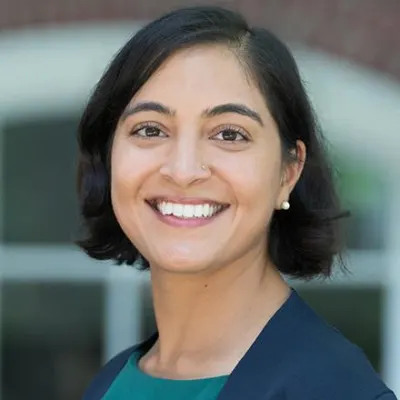
Anjali Bhatt is an Assistant Professor in the Organizational Behavior Unit at HBS and a Fellow at the Santa Fe Institute for the study of complex adaptive systems. She teaches the first year organizational behavior course in the MBA required curriculum.
Professor Bhatt completed her PhD in organizational behavior from Stanford GSB and her AB in physics and chemistry from Harvard College. Prior to graduate studies, she spent several years as a nonprofit consultant. Professor Bhatt's research investigates structural and cultural change in organizations, including the dynamics of hiring, M&A, and reorganizations. Her work employs a variety of computational methods, including simulations, natural language processing, and machine learning.

Bill Branniff
Executive Director, American University, Polarization and Extremism Research and Innovation Lab (PERIL)
Bill Braniff is the Director of the Polarization and Extremism Research and Innovation Lab (PERIL) at American University, where he leads cutting-edge research and programming to prevent violent extremism, targeted violence, and the drivers of polarization in American society.
Braniff most recently served as the Director of the Center for Prevention Programs and Partnerships (CP3) at the U.S. Department of Homeland Security (DHS). In that role, he was responsible for advancing the federal government’s efforts to prevent acts of targeted violence and terrorism through community-based partnerships and evidence-informed public health approaches. Prior to his federal leadership role at DHS, Braniff served as the Director of the National Consortium for the Study of Terrorism and Responses to Terrorism (START) and as a Professor of the Practice at the University of Maryland.
He is also a founding board member of We the Veterans and Military Families, a nonpartisan nonprofit of veterans and military families working to protect American democracy from violent extremism and disinformation.Amit Goldenberg
Associate Professor of Business Administration
Amit Goldenberg is an associate professor in the Negotiation Organization & Markets unit, an affiliate with Harvard’s Department of Psychology, and a member of the HBS AI Institute. Professor Goldenberg's research focuses on what makes people emotional in social and group contexts, and how such emotions can be changed when they are unhelpful or undesired. He is particularly interested in how technology is used for both emotion detection and regulation.
In his work Professor Goldenberg tries to integrate between experimental psychology that examines behavior at the individual and collectives levels. To integrate these domains, he employs a multi-method approach that combines behavioral experiments, analysis of data from digital media, computational modeling and AI.

Josh Gubler
Associate Professor of Political Science, Brigham Young University
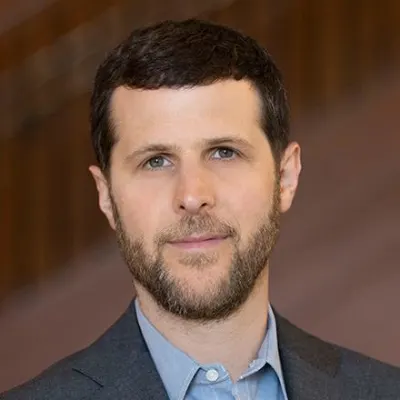
Joshua Gubler is an associate professor and political psychologist located at Brigham Young University. He's interested in identifying processes and tools for prejudice reduction and depolarization. His work pays particular attention to the roles of language, affect, and emotion in inhibiting and facilitating these outcomes. With Caleb Leach, he’s currently in the process of completing a book on emotion in political science. He also coordinates the Middle Eastern Studies/Arabic program at BYU. He co-founded and co-directs a team pioneering the use of AI in Social Science — the Social Science and AI Lab (SAIL) at Brigham Young University. The team’s first paper introduced and illustrated the concept of silicon/synthetic sampling. Its second paper illustrated how large language models can be used to improve online political conversations at scale. In addition to writing papers exploring in greater depth how AI can be used as a tool to further social science, SAIL is currently focused on a series of projects that use AI to strengthen democracy in the United States and worldwide.

Mónica Guzmán
Founder & CEO, Reclaim Curiosity
Mónica Guzmán is a bridge builder, journalist, and author who lives for great conversations sparked by curious questions. Her bestselling book, “I Never Thought of it That Way: How to Have Fearlessly Curious Conversations in Dangerously Divided Times,” has been featured in The New York Times, The Glenn Beck Podcast, and Reader's Digest; has been a popular selection for common read programs at schools across the country; and was named one of the 10 best books to read before college by U.S. News. Mónica is founder and CEO of Reclaim Curiosity, where she works to build a world that sees itself. She is host of “A Braver Way”, a podcast that equips people to navigate challenging divides in their everyday lives. She is both an Advisor and a debate chair at Braver Angels, the nation’s largest crosspartisan grassroots organization working to depolarize America, and also advises Disagree Better, The Viewpoints Project, and Courageous Conversations About Our Schools. Mónica received an honorary doctorate from Wheaton College and completed study and research fellowships on braver ways to navigate division at the Nieman Foundation for Journalism at Harvard, the Henry M. Jackson Foundation, and the University of Florida. A Mexican immigrant and dual US/Mexico citizen, she lives in Seattle with her husband and two kids, plays a barbarian named Shadrack in her besties’ Dungeons & Dragons campaign, and is the proud liberal daughter of conservative parents.
Zoe Marks
Lecturer in Public Policy, Harvard Kennedy School
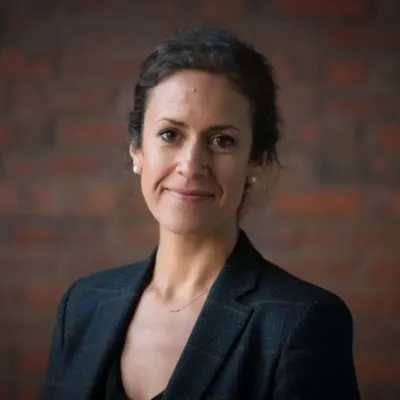
Zoe Marks is a Lecturer in Public Policy at the Harvard Kennedy School. Her research and teaching focus on conflict and peacebuilding, gender and intersectional inequality, and African politics. Her first solo-authored book, Anatomy of an African Rebellion, examines how and why rebel groups can sustain a viable threat to the state without widespread popular support. Drawing on two years of fieldwork in Sierra Leone, several hundred interviews, and private archives from members of the Revolutionary United Front, it provides an in-depth analysis of the internal dynamics of rebellion. Her second book project, Bread and Roses: Women at the Frontlines of Revolution (with Erica Chenoweth), documents the historic role women have played in violent and nonviolent mass movements globally since 1945. Using a novel dataset on women in resistance (WiRe 2.0 and WiRe+), they show that gender-inclusive movements are larger, more likely to succeed, and more likely to consolidate democracy and gender equality. Marks also studies peacebuilding and community reintegration after war, with projects in Northeast Nigeria and the Democratic Republic of the Congo using surveys and social network analysis. She is committed to ethical research praxis and more inclusive academia, and has led work on decolonizing the academy. Her research has been supported by major international funders and published in leading journals. She holds a DPhil in Politics and an MSc in African Studies from Oxford, and a BA in Government and African American Studies from Georgetown.

Julia Minson
Professor of Public Policy, Harvard Kennedy School
Julia Minson is a Professor of Public Policy at the Harvard Kennedy School of Government and the founder of Disagreeing Better, LLC – a behavioral science consultancy and training firm. She is a decision scientist with research interests in conflict management, negotiations, and judgment and decision making. Her main line of research addresses the “psychology of disagreement” – How do people engage with opinions, values, and judgments that conflict with their own? Her work examines disagreements around hotbutton, identity-relevant topics—conflicts around politics, values, and professional and health decision-making. She is interested in simple, scalable interventions to help people become more receptive to opposing views of others. Julia teaches courses and workshops on negotiations, decision science, and conflict management. Her work has been published in top academic and business outlets as well as widely covered by popular media including the New York Times, the Wall Street Journal, and the Washington Post. She is the author of How to Disagree Better, available through Penguin Random House in March 2026.

Sanaz Mobasseri
Associate Professor of Organisations and Innovation, University College London School of Management
Sanaz Mobasseri is an Associate Professor of Organisations and Innovation at the University College London School of Management. She studies people, organizations, and power to understand and address leadership and organizational challenges that are rooted in organizational culture—in particular, those marked by uncertainty and emotional stakes. Such challenges include inequality, organizational change, and technology adoption. Her research generates insights about how organizations can build cultures capable of learning, adapting, and shifting towards new ways of working. She has partnered with numerous organizations for research that has been published in academic journals, including Management Science, the American Journal of Sociology, and the Academy of Management Review, and has received awards from the Academy of Management and the American Sociological Association. She primarily uses field research methods— including computational, longitudinal-archival, and field experimental methods—to shed light on new ways of working that can enable both people and organizations to thrive. Sanaz completed her PhD at UC Berkeley's Haas School of Business. Before her PhD, she worked in finance in the US and the UK. She also holds a Master of Public Policy from UC Berkeley's Goldman School of Public Policy and a Bachelor of Science in Finance from the University of Illinois at Urbana- Champaign.
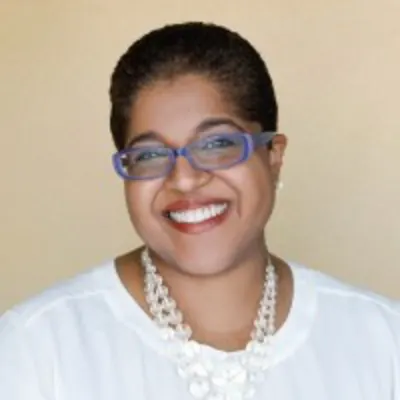
Laura Morgan Roberts
Frank M. Sands Associate Professor of Business, University of Virginia Darden School of Business
In addition to being the Frank M. Sands Associate Professor of Business Administration at the University of Virginia’s Darden School of Business, Dr. Laura Morgan Roberts is also a published poet. Dr. Laura infuses her lyrical expressions with global experiences of diversity and leadership. Her words paint images of the timeless quest for inclusion, justice, and social transformation among silenced and marginalized voices. A thought leader in the areas of authenticity, relationship building, and human development, Dr. Laura bares her soul in her lyrical expressions - a departure from twenty years of publishing highly visible academic research articles. Frustrated with the lack of progress in engaging divisive rhetoric through logic, reason, and rationality, Dr. Laura encourages thought leaders to use the arts (poetry, music, visual, etc.) to incorporate Heart Matters into civil discourse, higher education, business training and development, and faith-based institutions.
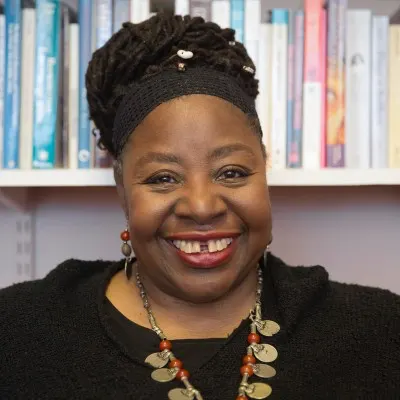
Loretta J. Ross
Associate Professor of the Study of Women & Gender, Smith College
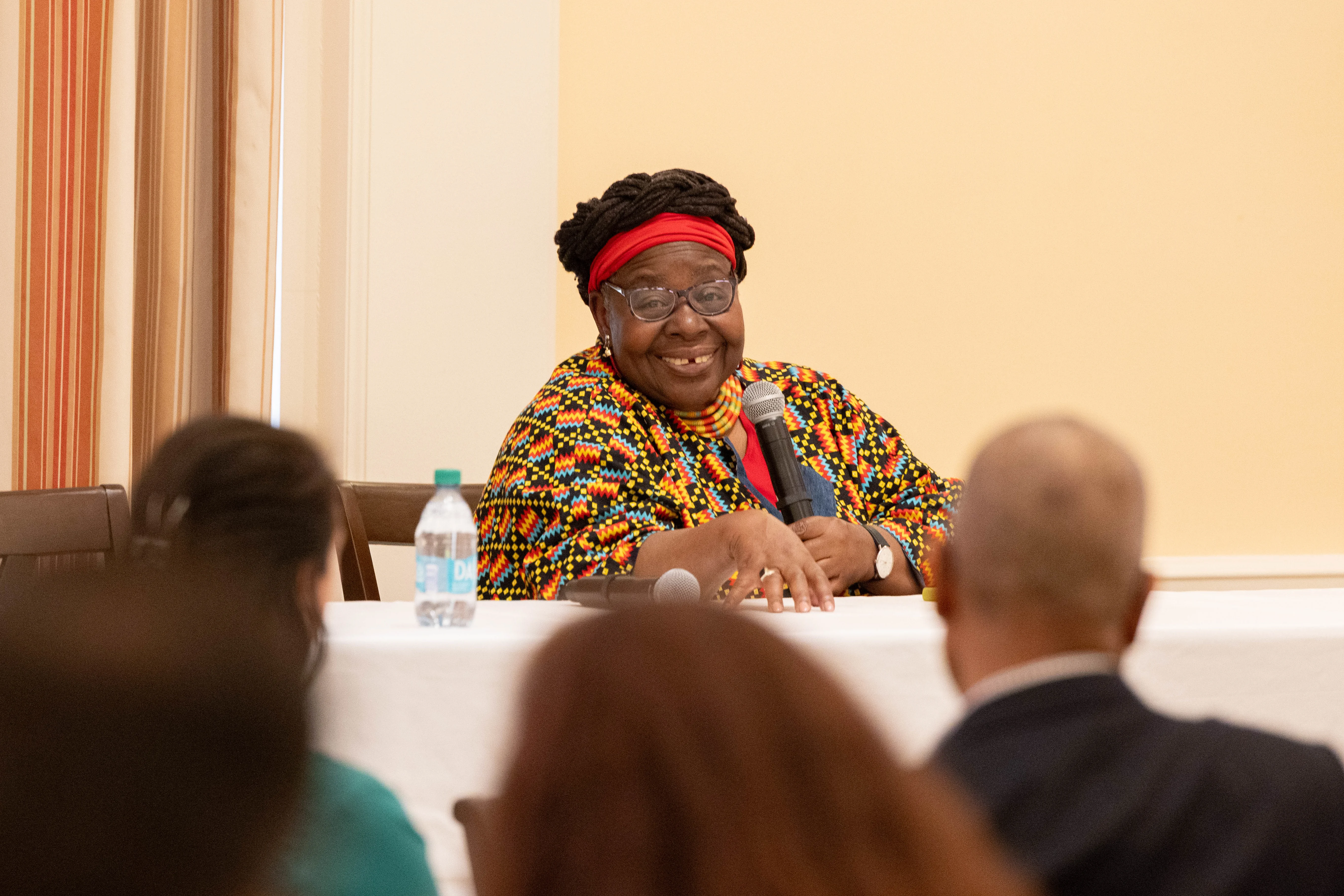
Loretta J. Ross is a Professor at Smith College in the Program for the Study of Women and Gender where she teaches courses on white supremacy, human rights, and Calling In the Call Out culture. Loretta also is a recipient of a MacArthur Fellow, Class of 2022, for her work as an advocate of Reproductive Justice and Human Rights.
Loretta was the National Coordinator of the SisterSong Women of Color Reproductive Justice Collective (2005-2012) and co-created the theory of Reproductive Justice. Loretta was National Co-Director of April 25, 2004, March for Women’s Lives in Washington D.C., the largest protest march in U.S. history at that time. She founded the National Center for Human Rights Education (NCHRE) in Atlanta, Georgia, launched the Women of Color Program for the National Organization for Women (NOW), and was the national program director of the National Black Women’s Health Project. One of the first African American women to direct a rape crisis center, Loretta was the third Executive Director of the D.C. Rape Crisis Center.
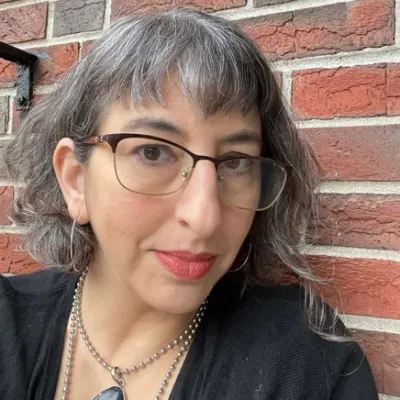
Danya Ruttenberg
Rabbi & Author, Life Is a Sacred Text
Rabbi Danya Ruttenberg is an award-winning author of eight books who now makes her primary writing home with the newsletter/magazine LifeIsASacredText.com. She's received the Lives of Commitment Award from Auburn Seminary, and the Rabbinic Human Rights Hero Award from the human rights organization T’ruah, was named by Newsweek as a “rabbi to watch,” and as a “faith leader to watch” by the Center for American Progress, and has been a Sunday Washington Post crossword clue (83 Down). Her most recent book, On Repentance and Repair: Making Amends in an Unapologetic World, is a National Jewish Book Award winner and an American Library Association’s Sophie Brody Honor Book. It was hailed by Congresswoman Ayanna Pressley as “A must read for anyone navigating the work of justice and healing.” She has written for The New York Times, The Washington Post, The Atlantic, and elsewhere, and has served as the leading rabbinic voice on Judaism and reproductive freedom, organizing and leading a network of 2500 Jewish clergy before, through, and beyond the fall of Roe. She's also organized her community to fight for economic justice, helped shape its response to sexual misconduct, created frameworks for understanding across lines of difference, and more.