
On Polarization, Emerging Technologies, and Constructive Dialogue
Polarization has been a dominant theme of the national—and international—conversation over the past decade. Many of us are finding that even within communities of “like-minded” people, relationships are straining under the weight of political, social, and cultural divides. When conversations feel as though they challenge our deepest values, it becomes harder to stay in candid, generative dialogue, and our collective fractures deepen. We believe that to learn, grow, and take effective action, we must make space for difference, conflict, and discomfort. At this year’s RGE conference, entitled “Tell Me More: Cultivating Conversation, Coalition & Community,” we explored what it would take to create that space—and what becomes possible when we do. Below, we dig into some of the highlights from the conference and what our speakers taught us about technology, polarization, extreme behaviors, and the tools we need to engage in productive dialogue together.
Technology Today (…and its Role in Our Tomorrow)
AI—the technology itself and its ethics—is becoming ever more central to our understanding of today’s social, political, and cultural issues. Notably, it represents the most current evolution in how technology can polarize our beliefs and our conversations. AI, like social media, is a technology that harnesses and disseminates information, but these neither exist in a vacuum, nor are they built with the sole intention of improving social relations. Most of us encounter these tools as commercial products that have the potential to both erode or build our relationships, which are increasingly mediated by the digital sphere. These tools trade on intangible commodities—namely, how much we engage with and rely on them.
Panelist Imran Ahmed, CEO and founder of the Center for Countering Digital Hate, noted that digital platforms are “advertising businesses…the more time you spend [on them], the more ads they sell.” Ahmed went on to specify that “Engagement is what makes you stop scrolling, react, comment, and share. And what makes humans engage on a population scale is emotional intensity, particularly our negative emotions.” Research conducted by HBS Professor Amit Goldenberg, who spoke alongside Ahmed on the topic of AI and ideological polarization, expanded on this observation with research demonstrating that AI reinforces our existing tendencies and psychological beliefs. We as people appear to prefer extremes, perhaps because they offer clarity in the midst of reality’s complexity.
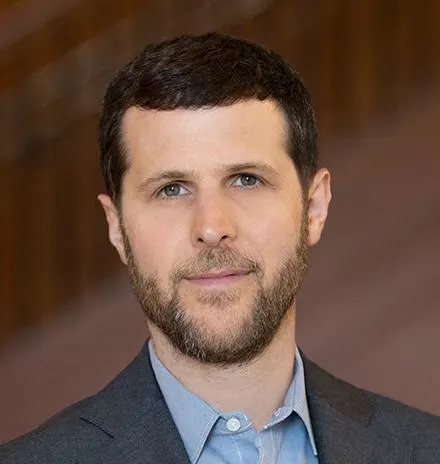
In "Attraction to Political Extremes as a Driver of Political Segregation," HBS Associate Professor Amit Goldenberg (Associate Professor of Business Administration, Harvard Business School ) examines how a psychological attraction to political extremity—what he refers to as acrophily—contributes to increasing political segregation and polarization. Drawing on cross-national research, he explores how this tendency shapes social and political behavior across different countries, highlighting early findings that while acrophily appears in nearly every country studied, it is strongest in the United States. Goldenberg concludes by discussing ongoing efforts to expand this research through new international partnerships, particularly in African countries, to better understand how attraction to political extremes varies across cultural and political contexts.
If, as Ahmed notes, our relationships are frequently and increasingly mediated by platforms that are not designed to regulate our emotional responses or make us listen to one another better, is there a way to both reclaim our relationships and the prosocial potential of these technologies? Knowing that AI can amplify what already exists, does AI have the power to support a paradigm shift? According to research conducted by panelist Professor Josh Gubler of Brigham Young University, the answer is yes. Digital tools like AI can be designed to disrupt polarized dialogue on virtual platforms. If designed with the intent of fostering productive conflict resolution, AI-powered tools can guide individuals to dialogue with respect and apply existing active listening strategies, rather than channeling their default emotional responses to inflammatory statements. As Professor Gubler noted in his address, a society without conflict is not the goal. Rather, the ideal is a society in which we all have tools to disagree constructively—including responsibly-designed AI.
For more insights into constructive dialogue, watch these videos from our 2026 Symposium, “Tell Me More: Cultivating Conversation, Coalition & Community"
In "The Science and Practice of Constructive Disagreement," Julia Minson (Professor of Public Policy, Harvard Kennedy School) explores the research behind productive conversations across differences, demonstrating that the way people communicate can be just as important as the viewpoints they express. Drawing on behavioral science, she explains how signaling openness, respect, and genuine receptiveness encourages others to respond in kind through the natural human tendency to mimic conversational behavior. Minson argues that by intentionally modeling curiosity and engagement, individuals can foster more constructive dialogue, reduce defensiveness, and create opportunities for meaningful understanding even in the midst of disagreement.
In "Bridging the Unbridgeable: Disagreement Without Disconnection," Mónica Guzmán, Founder and CEO of Reclaim Curiosity, explores how curiosity can help people navigate political division without minimizing real disagreement or danger. She describes how sorting, othering, and siloing narrow our perspectives and encourage us to judge people we rarely engage directly, arguing that those who are underrepresented in our lives often become overrepresented in our imaginations. Guzman offers practical strategies for staying curious when conversations are difficult, including questioning certainty, distinguishing discomfort from danger, listening for the experiences and concerns beneath another person’s views, and asking questions that uncover stories, values, and shared meaning. Drawing on examples from politically divided families and cross-partisan initiatives, she shows how feeling heard can increase openness, build trust, and create the conditions for constructive dialogue, sustainable coalition-building, and meaningful change.
A Democratic Future Oriented by Stronger Relationships
AI is only one among many tools that can either contribute to or ameliorate polarization. Scholars and practitioners have honed heuristics and tactics that we can apply broadly to our in-person and digital interactions. The research findings noted above tell us that technology has magnified long-existing human behaviors, namely our tendencies toward extreme binaries and like-minded company. While preferring to spend time with people who share our beliefs and values is not inherently harmful, powerful influences such as propaganda and digital echo chambers—a phenomenon proliferated by algorithms that ensures that we see content that confirms what we already believe—can leverage that feature in our social brains to antagonize people who hold differing beliefs and identities. Without conscious effort to counteract those impulses with compassion and active listening, none of us are exempt from the risk of othering potential allies. Wisdom from our speakers points to three potential outcomes that may help us bridge disagreements: coalition, forgiveness, and leadership.
Restorative justice activist and Smith College professor Loretta Ross proffers that we, as the “intelligentsia,” have a responsibility to hold capacity for multiple emotional truths—what she describes as “experiential diversity”; no one is entirely “right” or entirely “wrong.” Professor Ross’s framework for engaging with others names two key strategies that can disarm or prevent a fraught, emotionally-charged interaction. One is “calling in,” which might mean compassionately asking questions instead of resorting to anger, gently naming a harmful externality associated with someone’s words or actions to encourage accountability, or modeling vulnerability by describing the feelings evoked by their words. An accompaniment to “calling in” is to “call on” someone, which is an invitation for them to rethink their words or actions. These tools can bring us closer to, and even ally us in coalition with, people whom we previously considered political adversaries or unworthy of grace.
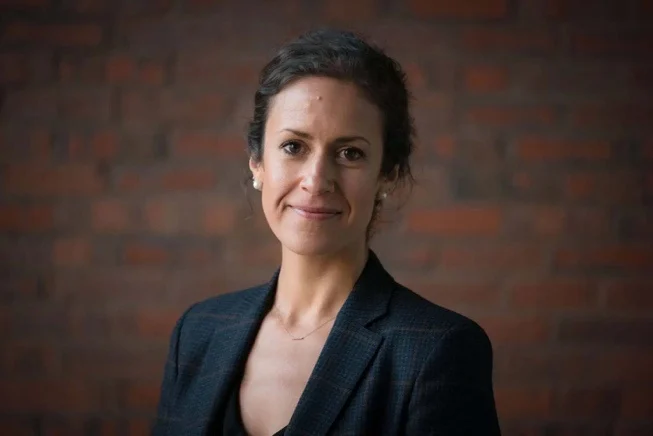
In "Forgiveness, Bearing Witness, and Re-Integration," Zoe Marks, Lecturer in Public Policy at Harvard Kennedy School, examines how communities recover from civil war by rebuilding relationships with former combatants rather than relying solely on formal peace agreements. Drawing on research from Sierra Leone, the Democratic Republic of Congo, and northeastern Nigeria, she explores how necessity, forgiveness, social reintegration, and bearing witness shape successful transitions from violence to peace. Marks demonstrates that acceptance is strengthened when communities recognize individual stories of repentance and transformation, arguing that meaningful peace depends not only on ending armed conflict but also on restoring social trust, creating opportunities for reintegration, and listening to the lived experiences of those most affected by war.
Zoe Marks, Oppenheimer Faculty Director of Harvard University’s Center for African Studies, presents forgiveness as another element of coalition-building. Her research, conducted in the aftermath of the civil war in Sierra Leone, after which people from both sides of the conflict had to live alongside one another, asks how people move from being in conflict to being at peace. Marks cites research that being from an oppressed or marginalized group, or a victim of harm, makes someone more likely to protect others. Civilians who survived the consequences of combat were surprisingly willing to accept combatants back into their communities. However, they needed to know that the combatants were remorseful and willing to repent for their participation. What we need in order to forgive those who perpetrate harm is acceptance from ourselves and accountability from them. Here, we can use Professor Ross’s tactic of “calling on” our peers to help them both acknowledge and atone for harmful behaviors, and dialogue through to forgiveness.
Finally, now that we can trace collective challenges back to some of our behaviors and impulses as human beings, we can integrate those lessons into a fresh leadership approach. Professor Bill Braniff, who directs the Polarization and Extremism Research and Innovation Lab (PERIL) at American University, proposes a modality that shifts societal problem-solving from a punitive approach that isolates a single perpetrator to a preventative approach that addresses the environment around grievances, rather than allowing them to fester and escalate into extremism. As Ahmed mentioned in his remarks, most violent individuals react to the most basic feelings: feeling misunderstood and lonely. These feelings might be considered “risk factors” for extremism, as Professor Braniff describes them, while being loved and seen might be considered “protective factors” against extreme behaviors. To make the problem more manageable, we need to expand the scope of potential solutions using our imaginations.
We will not overcome polarization by eliminating conflict or avoiding difficult conversations. For change to happen, we must address the conditions in which disagreement takes place by designing technologies that support reflection and meaningful listening; developing the courage to call people in, call on them, and make room for accountability and forgiveness; and cultivating communities in which people feel seen, connected, and responsible for one another. The work is neither simple nor comfortable. But as our speakers reminded us, stronger relationships are not merely a byproduct of a healthier democracy—they are one of the conditions that make it possible. Creating those relationships is work we can all begin, together.
To view all the videos from this year’s conference, visit the landing page for the 2026 RGE Symposium: “Tell Me More: Cultivating Conversation, Coalition & Community”