Every year, the Race, Gender & Equity Initiative convenes our academic community to engage with a thematic question that transcends the parameters of our scholarly disciplines. We especially endeavor to address timely concerns about the world at large—our most recent conference saw us gather in the aftermath of a tumultuous few years in higher education. A crucial facet of our event brings scholars to discuss their own internal experience engaging with their work; not just to present results, but to ask, what does our research teach us about our world? And beyond that, how does doing this work change who we are? We hope this edition reminds you that, to paraphrase our 2025 closing keynote speaker Gianpiero Petriglieri, it is the work that grounds us and guides us forward.
What drives the pursuit of new solutions to enduring problems?
The relationship between hope, despair, action, and discipline as four distinct and intertwined forces in our lives is worth interrogating. Even as headlines and current events offer much to despair over, we wanted to explore how hope, in all its complexity, could galvanize action. As a community driven by a desire to make a positive difference in the world, what can hope do for us when challenges seem intractable or insurmountable?
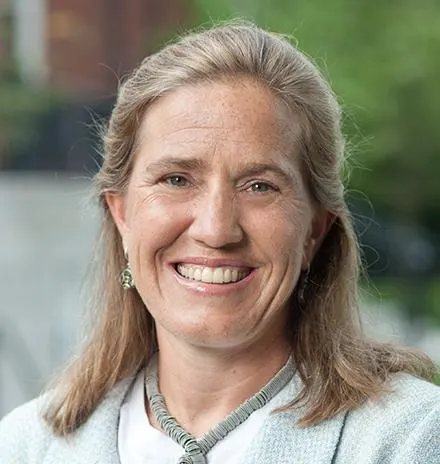
Panelist and Professor Katina Sawyer posited some powerful answers; as she spoke, she navigated through the waters of how one might sustain hope while facing the reality of deep inequalities. In her research, Professor Sawyer engages with people from all walks of life, many of whom are marginalized at work and beyond, and stays focused on the ways she can contribute to creating more equitable organizations and a fairer society.
What we do matters. Each one of us is, as Professor Sawyer put it in her remarks, “a vibrant soul with the potential to change the world.” Our impacts can be as seemingly small as showing kindness and patience to someone whose conditions we wish to improve. This can be someone we encounter in our research process, our students and colleagues, or, indeed, even someone we encounter in everyday life. Our impact is not only measured by protest or by publication, but also by the relationships we build and the people we inspire along the way. The process of engaging with our fields of study happens in these moments, in the epiphanies that follow innocuous interactions, and in recommitting to the work every time we face pushback, even when we don’t know what will be the result.
Watch Professor Sawyer’s full talk on our website.
How do we situate our research in the world around us?
Caroline Elkins presents “Empire on Trial: Historic Injustice and the Complexities of Hope” at the 2025 Race, Gender, and Equity at Work Symposium.
Breaking new scholarly ground can sometimes have profound effects on the ‘real world’ outside our academic institutions. Our HBS colleague Professor Caroline Elkins offered an example of how profound that impact can be in a talk reflecting on her discoveries about the Kenyan Mau Mau rebellion, which uncovered critical facts about the British government’s violent suppression of that insurgency and were instrumental in securing compensation for its victims. Professor Elkins recalled experiencing enormous pressure to minimize, soften, or reframe her findings, which were based not only on ethnographic fieldwork but on the colonial government’s own records. Still an early-career scholar, she persevered and ultimately testified as an expert witness in a legal claim brought by Mau Mau survivors, which resulted in a monetary settlement as well as an official apology by the British government.
The relationship between documenting, analyzing, and disseminating history using scholarly methods and ensuring that suppressed narratives are brought to light is undeniable. Hearing Professor Elkins recount her own journey and the journey of the Mau Mau survivors is an essential reminder that our courage and persistence can engender hope in times of disquiet.
To learn more about Professor Elkins’ work and the Mau Mau rebellion, watch her full talk above, and follow this link to see more from our 2025 Symposium.