by Shona Simkin
In 2000, Senior Lecturer Gerald Chertavian (MBA 1992) founded Year Up United, a national nonprofit that works to close the opportunity divide by connecting young adults without four-year degrees to meaningful careers. The organization provides training, mentorship, and paid internships at leading employers like Harvard Business School, creating a pathway for overlooked talent into fields like technology, finance, and operations. Since their founding, they have served more than 50,000 young adults across the country.
As Year Up United marks 25 years, we talked with Chertavian about the organization’s journey, his decision to step down as CEO and teach at HBS, and the lessons learned along the way.
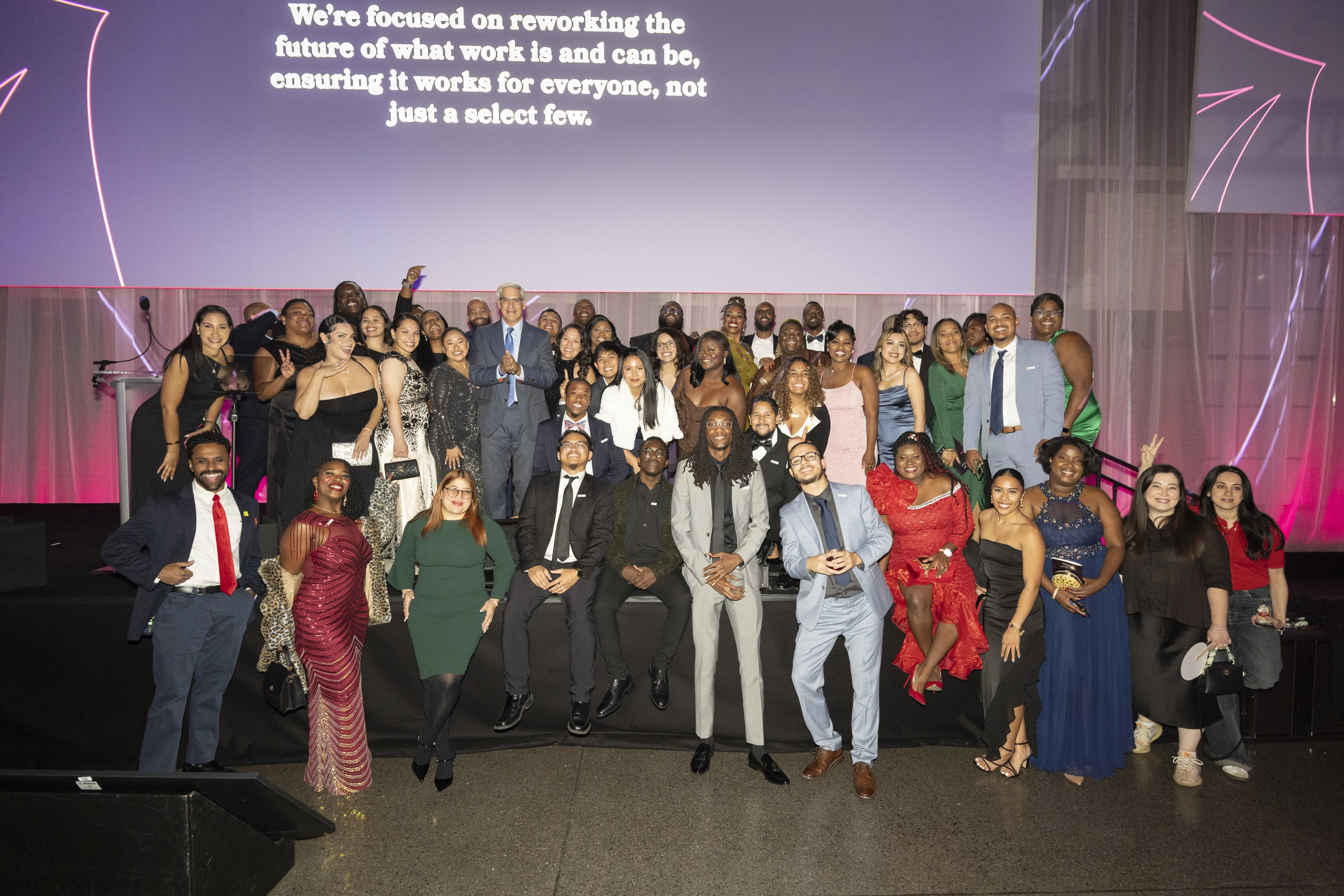
Year Up United graduates with Chertavian at the 25th anniversary gala. Photo courtesy Year Up United.
How are you reflecting on Year Up United’s milestone anniversary?
I've always been incredibly grateful. I co-founded a technology company after HBS and was fortunate to sell that business successfully in the late 90s. That gave me the flexibility to do something that I had wanted to do since my early 20s; start a program that would empower young adults gain access to good careers. I look back and feel grateful that I was able to turn an avocation into a vocation.
There’s a lot of humility in doing this work. My little brother David, who I was matched with 40 years ago through Big Brothers Big Sisters of America, told me that he would have made it one way or the other because he was smart and worked hard. He just happened to have been born on the wrong side of the opportunity divide. Before he could compete, he had to travel a long distance to get to the starting line. But he would have made it because he had the capacity.
That experience taught me that we are not changing or transforming anyone’s life; we’re giving people opportunity, a runway, so that they can take off. But never confuse the runway with the plane: The runway doesn't change the plane or cause it to take off. The plane already has strong wings and engines, just like my little brother David
For the past 25 years, I got up every day and thought, “I get eight more hours to serve a cause I care about; thank you for that. I hope I use those hours well.” To be close to young people is joyful. That's one of the reasons why I decided to teach at HBS.
Why did you decide to go to business school?
Through my relationship with David, who is now 47, I saw up close what lack of opportunity looks like. Once I realized how much talent we were wasting, in a country where we have no one to waste, I couldn’t turn away from it. In my admissions essay for HBS, I wrote that if they let me in, someday I would start a program to help close the opportunity divide in this nation. For me, it was always a question of when, not if.
What do you credit with Year Up United’s longevity—for surviving so many ups and downs in the economy in the past 25 years?
Nonprofits are businesses—we have to be flexible and adaptive. In 2000, we trained the first class of students in HTML. Then the internet fell apart and within three months every company I had sold to was either out of business or couldn’t take interns. We had to pivot quickly to train folks in desktop and IT support.
Lesson number one was that we are a market-based organization, we have to train for what the market wants, which is going to change on a regular basis. The ability to be flexible and adaptive to the market is part of our longevity.
Second, we never did this alone and have had amazing partners: Harvard and other universities, big banks, insurance companies, and hospitals. People in corporate America get that these young adults are talented and represent a great source of talent. We have tapped into this incredible group of folks who understand that keeping the American dream alive is important. Creating access to opportunity is important.
The third reason it works is that our young adults were truly overlooked in society. They were not being recognized for the amazing talent that they could bring to corporate America. We knew that intelligence wasn’t distributed by zip code and bank balance. Year Up works because our young adults are economic assets who just need opportunity. Once people see that up close, it changes their view.
What are some of the biggest industry changes you’ve seen in the past 25 years?
I’m grateful that we were early in reframing how employers look at emerging talent—that’s the biggest systemic change I’ve seen. Big companies now include emerging talent as part of their HR talent acquisition. That was not the case 25 years ago. Hopefully we were additive to the building of that field.
When I started Year Up United, workforce development prepared young people for fast food, retail, and security jobs. We were able to help position our young adults as tech workers. As we grew, the industry developed, and folks are now thinking about how to operationalize talent acquisition from groups that didn't go through traditional college paths, and how to do that as part of business, rather than as a do-good activity.
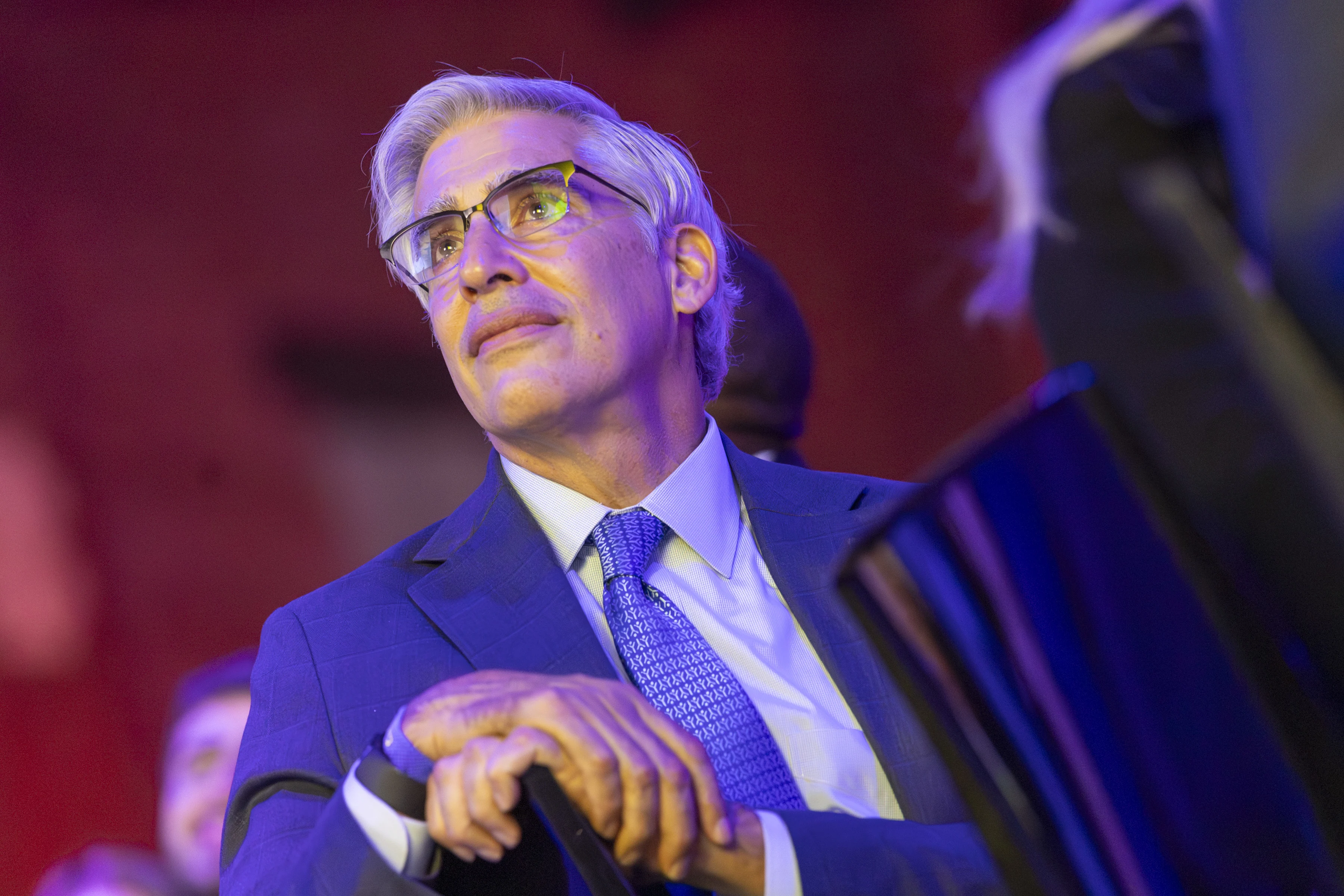
Chertavian at the gala. Photo courtesy Year Up United.
Why did you decide to step down as CEO?
The organization had grown to over 900 staff in 30 communities. I was on planes 100 days a year. It was busy. I kept thinking the biggest mistake I could make was not to try to transition it to the next group of leaders. I was flexible with the timing, but being there beyond 25 years struck me as the wrong thing for the organization.
Even though I founded Year Up United, it's not mine—a nonprofit isn't owned by anyone.
You're just stewarding it for a period of time so that it can continue to thrive and be strong and sustainable. I was lucky to have a good run. Year Up isn't me, I happened to have started it, but it's not my identity. You shouldn’t confuse founding a non-profit with ownership.
Why did you decide to come back to HBS and teach?
While we were working on leadership transition at Year Up United, I reached out to Professor Kash Rangan, who had been a mentor for me at HBS. We talked about developing a course in systems change. In addition to serving young adults, Year Up United had been working on changing the system that prevented young people from having access to opportunities. I knew we were a hack to a broken system and was intrigued by how you might fix the system itself.
The bigger question is, why isn't the system working? What prevents the system from creating opportunity for all young people? Year Up United has spent 25 years thinking about how to contribute to this system so that we're less needed in the future. Ultimately the public sector should be handling this more successfully; business should be more invested in this on a regular basis.
I came to HBS as an executive fellow while I was still at Year Up United. I wanted to figure out if HBS was a place I could land. I didn’t know if I would connect with HBS students in the way that I did with Year Up United students. What I soon realized is that HBS students and Year Up United students have more in common than not.
HBS students care and worry about the same things as the young adults at Year Up United; they’ve just had access to different opportunities. HBS has been a joyful and engaging environment from day one. There are smart, kind, good people to work with on a daily basis; you don't get that in every setting. I also get the chance to hopefully contribute to the next generation of social entrepreneurs. And I get a chance to still see and meet with our Year Up United interns and graduates around campus, which I love.
You said that the hope is that there isn’t a need for organizations like Year Up in the future—how do you think about that in terms of your own hopes for the organization going forward?
I think two things are probably true: the world will increasingly figure out skills-based hiring as opposed to degree-based hiring. That will open up opportunity for those who didn't have the privilege to go to a place like Harvard.
And there will still be young adults who were born 50 yards behind the starting line and will need something to get them there. AI is not going to fix that. There will still be young people who need formative experiences that help them learn about reliability, taking direction, customer service, and being professional.
It’s idealistic to say you want to do away with the need for the program, but that is the right vision. If you don't have that vision, you'd never attack the system. Ultimately, we need to create a new system that is more just, more equitable, and allows all young people to have access to economic mobility.
Any final reflections?
The journey of the past 25 years only happened because of “we.” It was places like Harvard, it was philanthropists who believed in us, it was companies like Bank of America, it was these amazing young adults who just wanted an opportunity, a group of staff who wanted to be of service. We had these caring people coming together who collectively saw a problem and committed to get in the way of it; to try to disrupt it.
To me, that’s what it takes to change our country. We can fix what's wrong with this country by what's right with this country. With Year Up United, there were a whole bunch of things that went right, it wasn’t just the few people who happened to start it. It was a community, and we can fix a lot of problems if we approach them collectively.
I want a whole lot of other people to take a bow for these past 25 years rather than just an organization.