
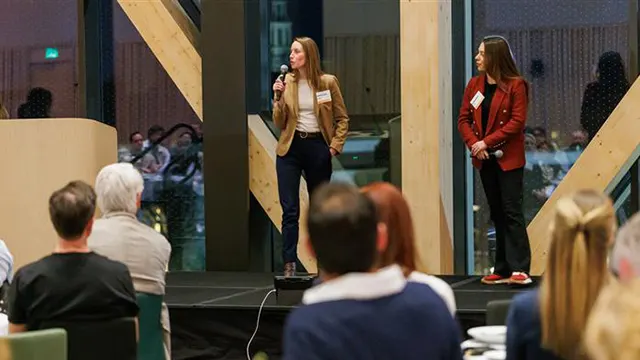
BOSTON—The Harvard Business School (HBS) Rock Center for Entrepreneurship recently hosted their annual Demo Day at the Rock Venture Leadership Dinner, a signature gathering bringing together emerging founders, faculty, investors, alumni, and leaders from the Rock entrepreneurial ecosystem for an evening of connection, inspiration, and collaboration. The evening also shone the spotlight on the top 20 semifinalists from the Rock Business track of the New Venture Competition (NVC), an annual pitch competition open to HBS MBA students with early-stage ventures.
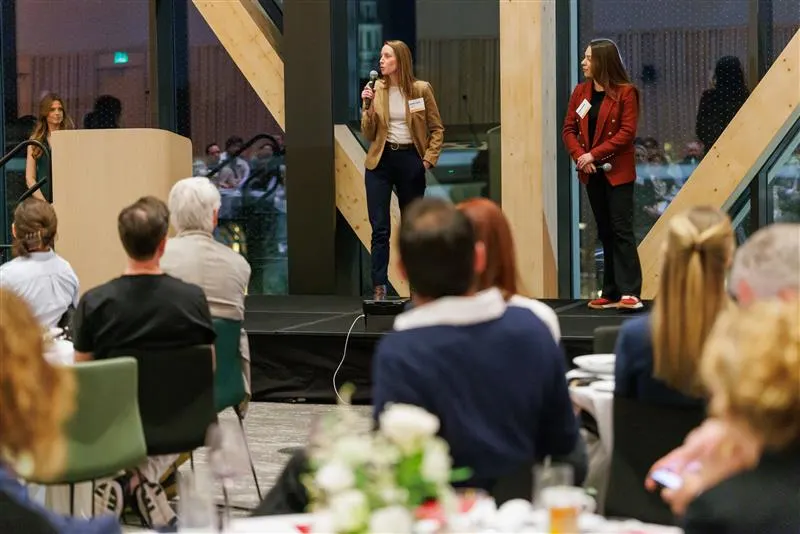
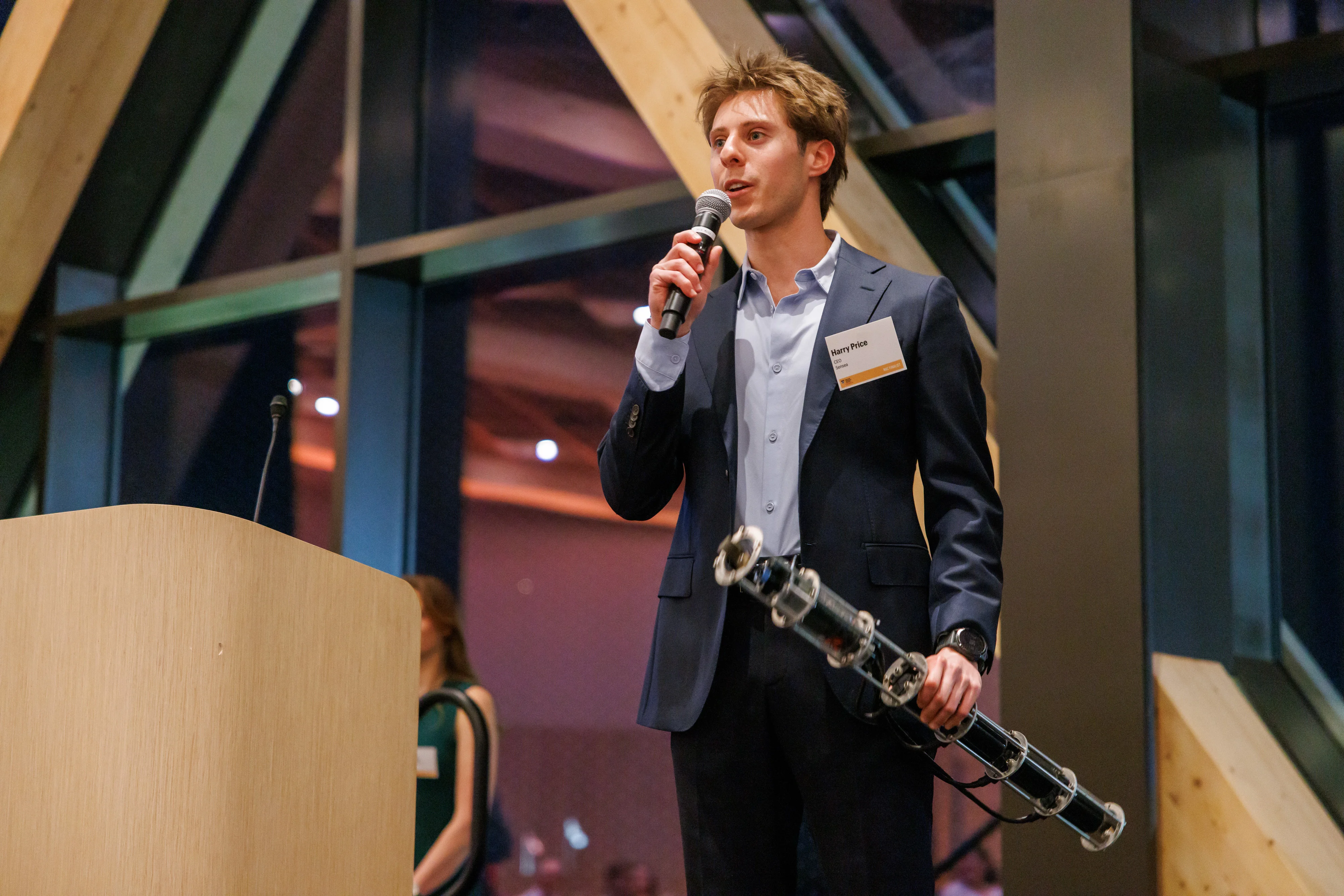
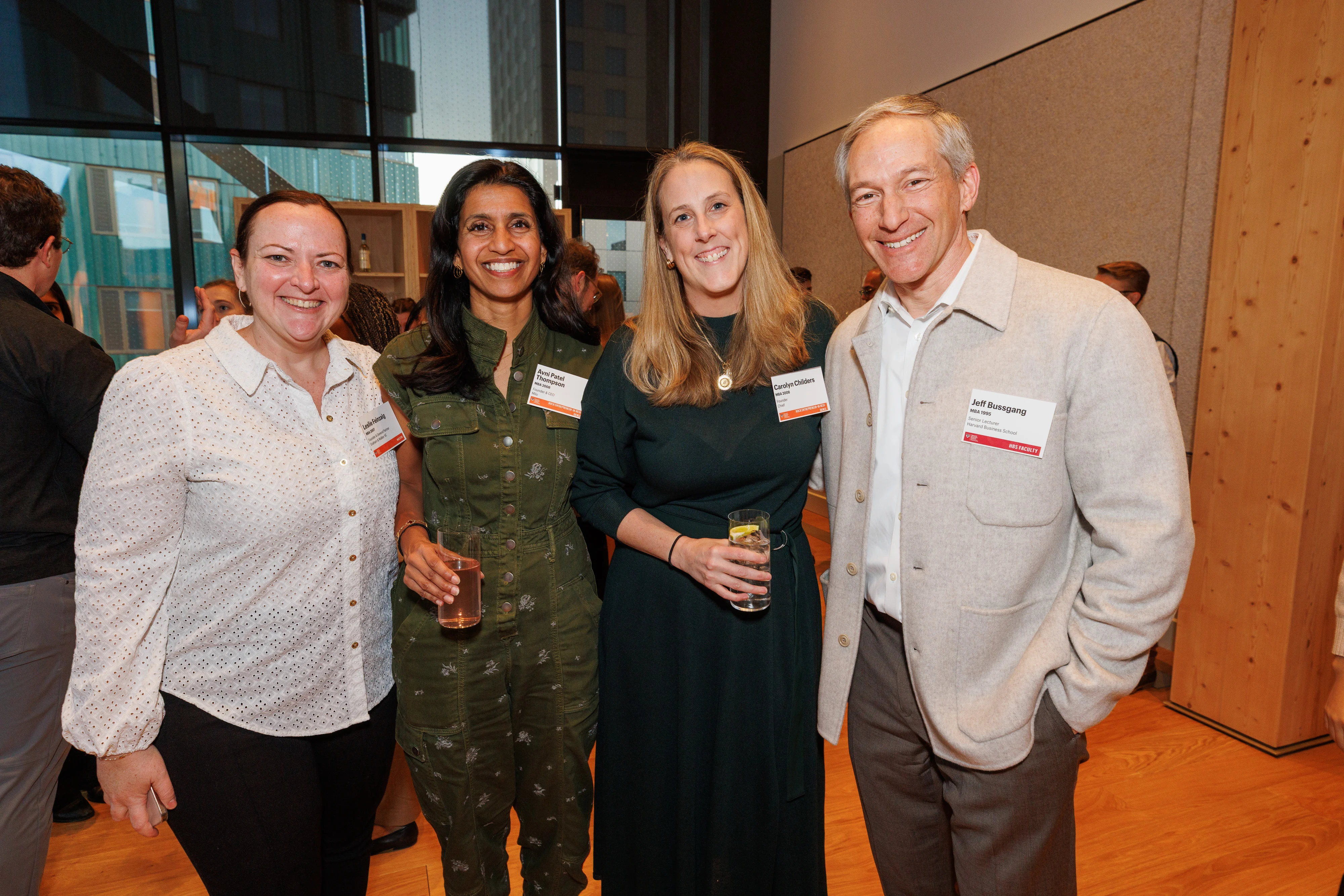
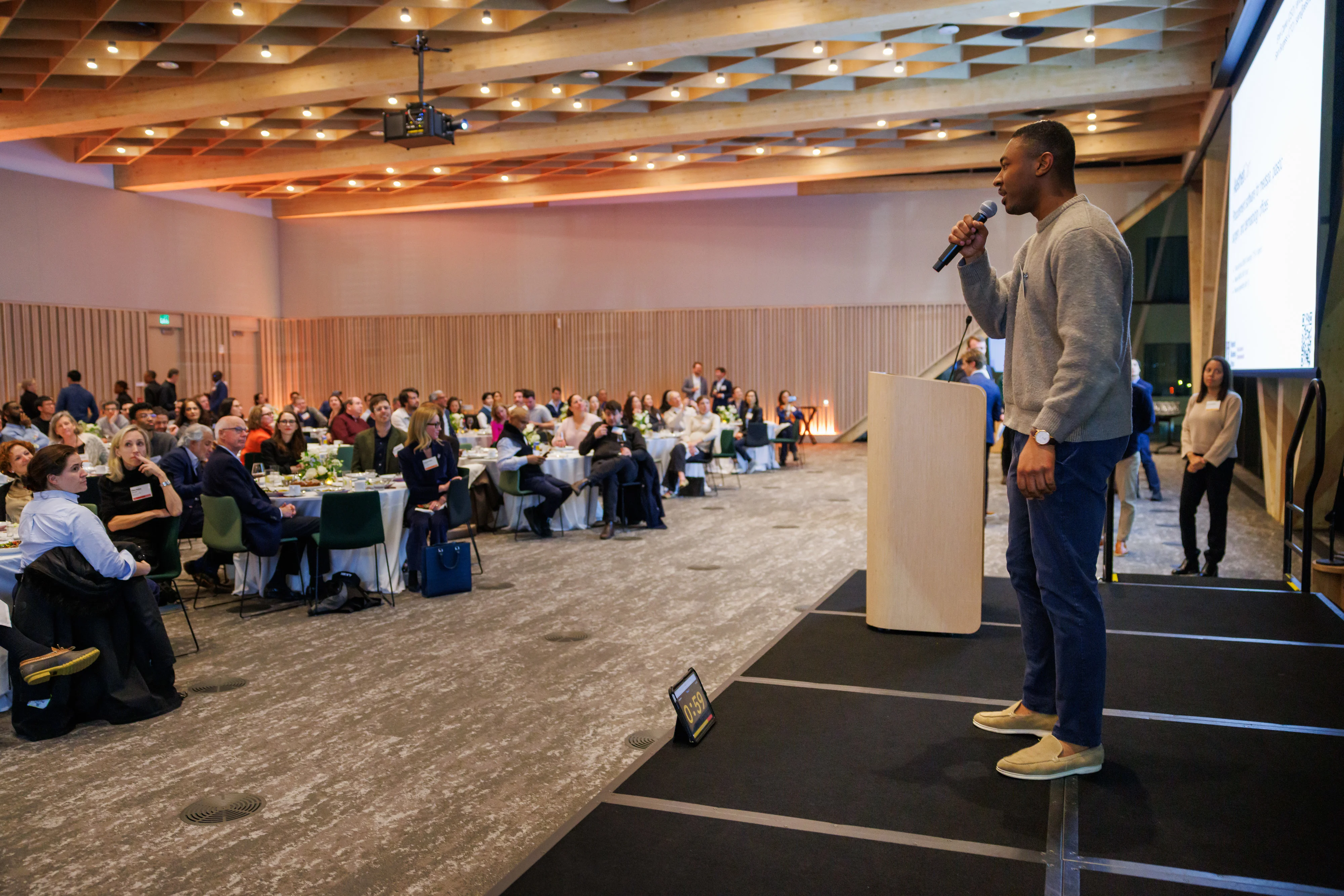
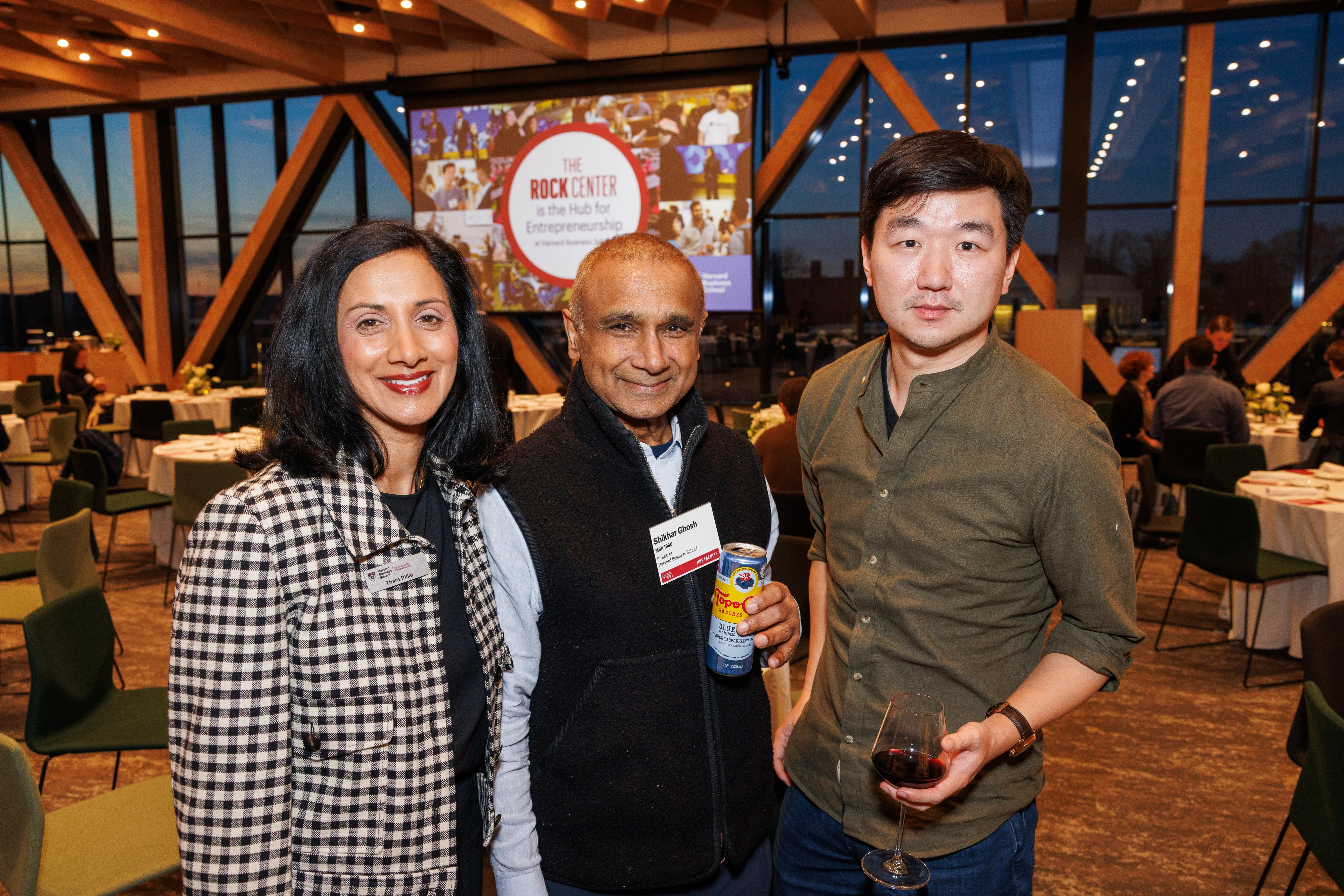
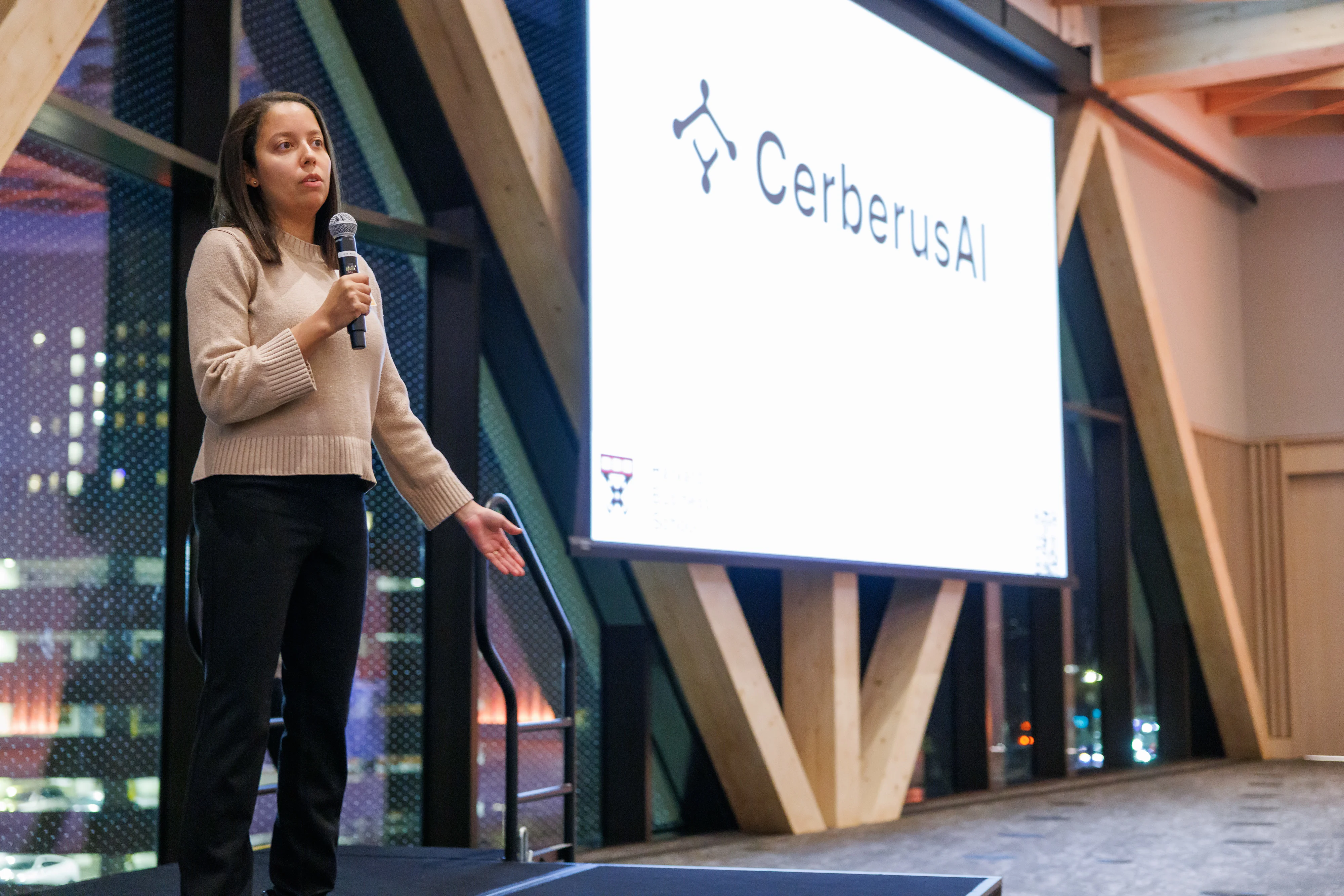
The semifinalist teams delivered one-minute pitches to a carefully curated group of alumni and early-stage investors, using the opportunity to continue to develop their pitch with help and coaching from faculty, staff, and advisors.
“At HBS, entrepreneurship is grounded in the case method and brought to life through learning by doing,” commented Professor Shikhar Ghosh, faculty co-chair of the Rock Center. “With more than 30 second-year courses focused on entrepreneurship, complemented by co-curricular programming such as Startup Bootcamp and Rock Venture Catalyst, our flagship summer program, students can actively build, test, and evolve their ventures in real time. This combination of rigorous, discussion-based classroom learning and hands-on experience, supported by a deeply engaged ecosystem, prepares our founders to navigate uncertainty and build enduring companies.”
“We connect founders to the full power of the HBS ecosystem, pairing hands-on support with exceptional co-curricular programming designed to move ventures forward,” added Thara Pillai, director of the Rock Center. “Through initiatives like Demo Day and the Rock Venture Leadership Dinner, students engage directly with leading alumni founders, investors, and domain experts who challenge their thinking, sharpen their ideas, and open doors. The result is more than exposure. It is meaningful momentum that helps founders build relationships, access capital, and accelerate their ventures well beyond the classroom.”
"What I loved about seeing the NVC startups was that they serve as an early indicator for the next big thing,” noted Amanda Eilian (MBA 2006), co-founder and partner at Able Partners, and one of the evening’s judges. “Everyone is building AI products, but the most ambitious teams were chasing the non-obvious, unglamorous opportunities. They're building AI to solve problems that are physically or regulatorily hard, like skilled nursing facilities borrowing at 16 percent interest because lenders don't understand Medicare receivables, or food distributors still receiving orders by fax. I was blown away by the quality of the startups, and I think that is a testament to the unique HBS ecosystem. A combination of faculty rigor, industry expert advisors and mentors, and a deeply engaged alumni network sharpened the founders into teams that can step off the stage and into any VC's office."
“We walked into the Rock Venture Leadership Dinner with a closed pre-seed round of funding, and walked out with a commitment to add to it, a second investor moving to diligence, and introductions to two senior engineers we’re now actively recruiting,” said Vidhan Bhaiya (MBA 2026), co-founder of Cortex Ventures. “That’s a strong evening for any company. For one building autonomous hardware engineering, where the investor and talent pools are limited, it was exceptional.”
The student ventures have been supported by HBS entrepreneurship programs such as Rock Venture Catalyst (formerly Rock Summer Fellows), Startup Operations, Startup Bootcamp, Founder Mindset, Founder Launch, and the Entrepreneurship Club.
Ventures at this year’s event, and their student founders, included:
Team: Errol Clarke (MBA 2026)
AesthetiCart is building a procurement platform for medspa, plastic surgery, and dermatology offices: an all-in-one platform where practices can shop for medical supplies, compare prices, and order products directly from all their existing vendors—unlocking up to 10 percent savings on medical product spend.
Team: Jesse Kesner (MBA 2026)
Alnu Health is the first clinically-backed AI companion that delivers continuous nutrition, behavioral, and side-effect support for GLP-1 patients—improving adherence, reducing discontinuation, and extending care without adding provider burden.
Team: Stephen Buchanan (MBA 2026)
Bandelier Technologies specializes in long-range quantum detection and imaging.
Team: Sarah Casella (MBA 2026) and Griff Potrock
CerberusAI is building the runtime trust infrastructure for the agentic era, enforcing identity and intent before autonomous systems execute high-impact API actions.
Team: Vidhan Bhaiya (MBA 2026), Eashaan Gunapati (MBA 2026)
Cortex Ventures is building the world's best hardware engineer by acquiring engineering R&D firms and turning decades of buried IP into AI that designs faster than any human.
Team: Morgan Hewett (MBA 2026)
Devin is building the intimacy layer for the loneliness economy, combining a sensor-equipped smart device with an emotionally intelligent AI companion that syncs in real time, learning what works for the user while building the first large-scale structured dataset on female arousal. It's Oura Ring meets AI romance, for the more than 100 million American women for whom no one has built an integrated platform.
Team: William Gao (MS/MBA 2026)
Frootful converts orders from Whatsapp, email, text, and more automatically into ERPs using an AI-powered pipeline that handles extraction, validation, pricing, and invoicing. Distributors get fewer errors, faster settlement, and the ability to scale without extra headcount.
Lora AI
Team: Bill Newman (MBA 2026) and Eshan Tarneja (MBA 2026)
Lora AI helps food distributors price thousands of volatile SKUs in minutes, by ingest ERP, inventory, and market data to generate transparent, optimal prices that boost margin by over 33 percent.
Team: Angelo Policicchio (MBA 2026) and Akash Sadashivapeth (MBA 2026)
Luca IQ is building the first AI native operating system for tax accountants, unifying the workflow management, document intake, automation, and tax preparation into a single modern platform designed specifically for CPA firms. At the core, Luca IQ is developing the first AI native tax engine and the first tax engine purpose built for accountants since the 1990s. Instead of layering AI onto legacy software, it is rebuilding the foundation from scratch.
Team: Andrea Corleto (MBA 2026) and Jennifer Arnold (MS/MBA 2026)
Lyv is a platform that connects wellness businesses (such as medspas, health coaches and wellness centers) to clinical services they currently can’t provide but have customer demand for;including blood testing, prescriptions, and peptides; supervised by a clinical team.
Team: Cristián Richard (MBA 2026)
Motex solves the liquidity gap that forces undervalued settlements for plaintiff lawyers by providing them with non-recourse case financing.
Omu
Team: Elif Memet (MBA 2026), Vincent Huang (MBA 2025)
Omu’s mission is to decode how humanity does its best work—and set enterprises up for it. US companies lose $2 trillion a year because two out of three workers are unproductive. This is because no system connects workforce interventions to enterprise value outcomes. Omu is building the first agentic OS that does: unifying workforce and financial data to identify the workforce value gap, using AI agents to diagnose its root cause, and executing interventions that boost EBITDA and workers' engagement.
Team: John Yang-Sammataro (MBA 2026), Chirs Eamiguel, and Tyler Oglesby
Onza Finance helps skilled nursing facilities (SNFs) get faster access to their own money so they can provide quality care. Onza’s software automates loans backed by Medicare and Medicaid payments: SNFs get cash when they need it; lenders get a clearer, safer way to lend, and patients get the support they deserve.
Sensea
Team: Harry Price (MS/MBA 2026), Jack Rademacher, and Colman Truett (MBA 2027)
Sensea is building foundational infrastructure to power an autonomous ocean.
Team: Goutam Gadiraju (MD/MBA 2026)
Serosafe Surgical is a clinical-stage medtech startup developing medical devices to reduce pain and complications associated with post-operative surgical care.
Team: Audrey Hansen (MBA 2026)
Siren turns online returns into revenue, using AI to capture the missing post-purchase data brands need to cut costs, grow sales, and win in the age of agentic commerce.
Team: David Neary (MBA 2027), Anton Njavro
Spectral Autonomy makes AI-enabled electromagnetic protection systems, so the same techniques that can jam enemy drones, degrade missiles, and spot incoming threats on advanced jets can now also protect transport planes, stadiums, and even civilian buildings, saving human lives.
Team: Michael Neiswander (MBA 2027), Ashvin Nagarajan (MBA 2027)
TableIQ uses AI-powered video analytics to help restaurants optimize operations, improve service, and compare performance across locations.
Team: Kyle Weil (MBA 2026), Prakrit Baruah (MS/MBA 2026)
Tummy is a digital health startup using low-friction data capture and AI-powered analysis to help people with chronic gut conditions identify triggers and manage symptoms over time.
Team: Trevor O'Leary (MS/MBA 2027), Charlie Nitschelm
Uplift Microhome Corp rapidly deploys housing for disaster survivors.