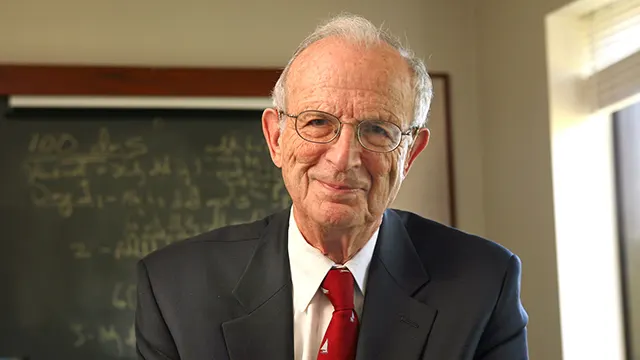
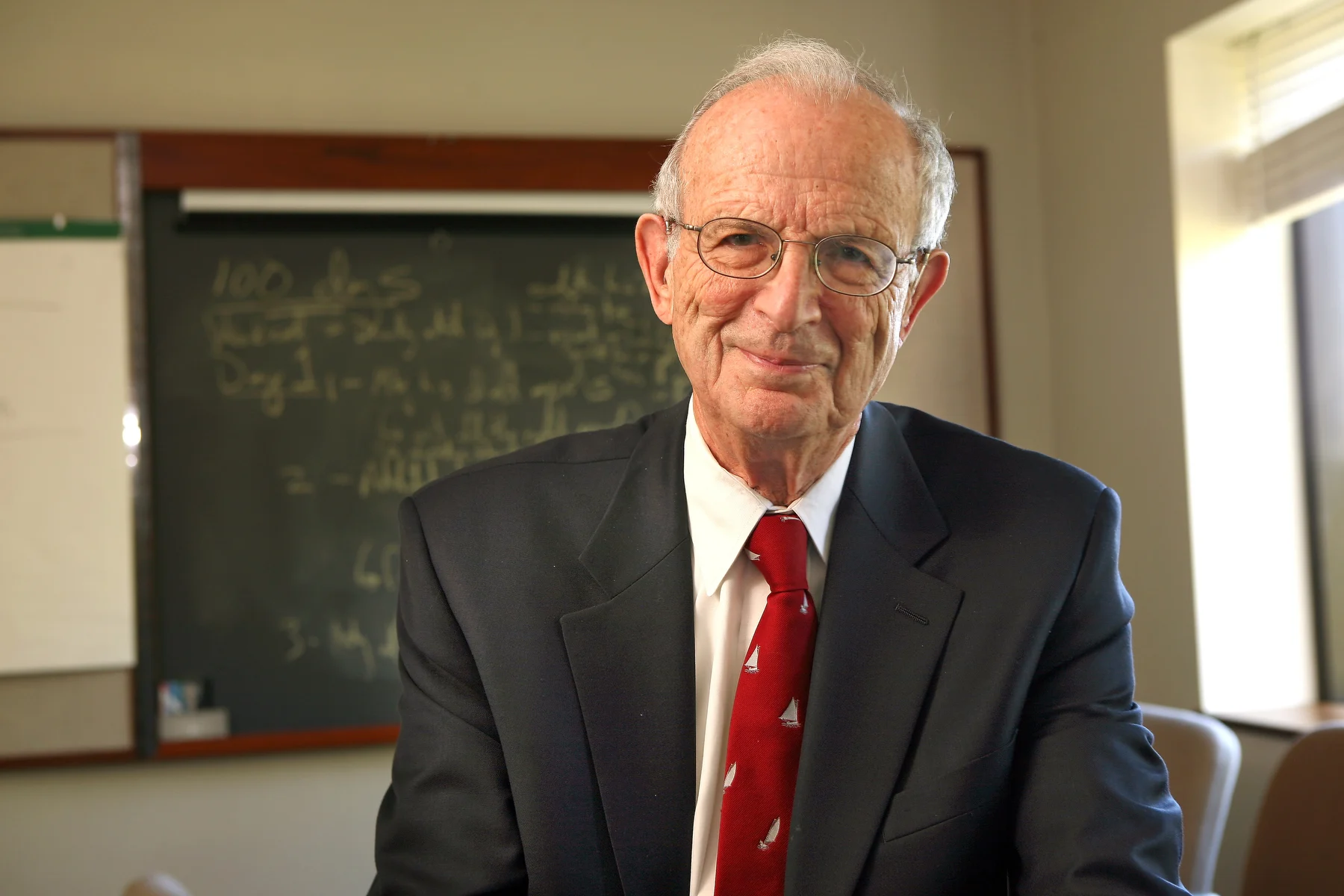
BOSTON- Ray A. Goldberg, the George M. Moffett Professor of Agriculture and Business, Emeritus, at Harvard Business School, and the scholar widely credited with helping define and shape the field of agribusiness, died peacefully at home on February 16. He was 99.
Over a career that spanned more than seven decades, Goldberg transformed the study and practice of food and agriculture by advancing a “systems approach” to the global food economy. His work reshaped how business leaders, policymakers, and scholars understood the interconnected chain that links farmers, suppliers, processors, distributors, retailers, and consumers worldwide.
An HBS MBA graduate of the Class of 1950, Goldberg returned to the School in 1955 as a lecturer and was appointed assistant professor in 1956. He was promoted to full professor in 1970 and remained on the tenured faculty until his retirement in 1997. Even after retiring, he continued to teach and mentor students for nearly two more decades, including Harvard Kennedy School and Harvard College.
Together with his mentor and colleague John H. Davis, Goldberg coined the term “agribusiness” in the 1950s, establishing a new field of study that bridged agriculture, economics, business, and public policy. Their landmark 1958 book, A Concept of Agribusiness, defined the growing interdependence between agriculture and the industries that supply, process, and distribute its products. What began as an academic framework became foundational to understanding the modern global food system.
At HBS, Goldberg introduced the School’s first course in agribusiness and in 1955 co-founded the annual Agribusiness Seminar, an enduring program that brings together leaders across the food and agriculture industries to examine pressing global challenges. He believed that the most complex problems in food and agriculture could only be addressed through sustained dialogue across sectors and disciplines.
That conviction also shaped his work at Harvard Kennedy School, where he led the annual PAPSAC forum—the Private and Public Scientific, Academic and Consumer Food Policy Group. PAPSAC convened senior leaders from industry, government, academia, and consumer organizations for candid, off-the-record discussions about food policy, regulation, markets, and public trust. The forum became a trusted space for navigating difficult issues and building understanding across constituencies that often approached the food system from very different perspectives.
Over the course of his career, Goldberg authored or edited 23 books, wrote more than 100 scholarly articles, and developed hundreds of Harvard Business School case studies. His research emphasized anticipating change and understanding institutions as part of a broader ecosystem. In 2020, as part of the Harvard Campaign, colleagues, corporate leaders, former students, and friends of Goldberg raised funds to establish the Ray A. Goldberg Professorship of the Global Food System at Harvard, a University-wide professorship that both honors and reflects the interdisciplinary reach of his work.
Born and raised in Fargo, North Dakota, Goldberg’s interest in agriculture was shaped by his early experience working in his father’s grain and seed businesses. That practical foundation informed a lifelong commitment to understanding how markets, institutions, and public policy could evolve to better serve society’s changing needs.
Goldberg’s influence extended far beyond academia. He served on more than 40 corporate and nonprofit boards and advised governments, financial institutions, and international organizations on agricultural development, investment, and food policy. He was a founder and the first president of the International Agribusiness Management Association and received numerous honors, including Harvard Business School’s Distinguished Service Award.
Colleagues say Goldberg’s legacy endures in the field he helped define, the institutions he strengthened, and the generations of leaders he inspired to think more broadly—and more boldly—about how the world feeds itself.
“Ray believed that the food system works best when suppliers and retailers understand one another’s challenges and collaborate to lower costs across the entire system,” said David Bell, George M. Moffet Professor of Agriculture and Business, Emeritus. “He believed food should be viewed as a public utility—essential and subject to public scrutiny—and through shared cases and even engagement with nonprofit advocates, he fostered a spirit of mutual learning and cooperation that he carried forward, attending the seminar faithfully even after his retirement, most recently this January.”
Others point to his pathbreaking scholarship and mentorship.
“The agricultural topics that Ray studied are made for the case method, integrating, as they do, marketing, production, operations, finance, strategy, and leadership,” said Forest Reinhardt, John D. Black Professor. “Through the seminar, Ray not only helped executives teach each other about their various subsectors within the industry; he also introduced generations of professors (including me) to the richness and complexity of the agribusiness world. It’s an honor to build on his pedagogical legacy.”
Goldberg was predeceased by his wife of 58 years, Thelma Englander. He is survived by his partner, Joan; his three children and their spouses; six grandchildren; nine great-grandchildren; and an extended global community of former students, colleagues, and collaborators.