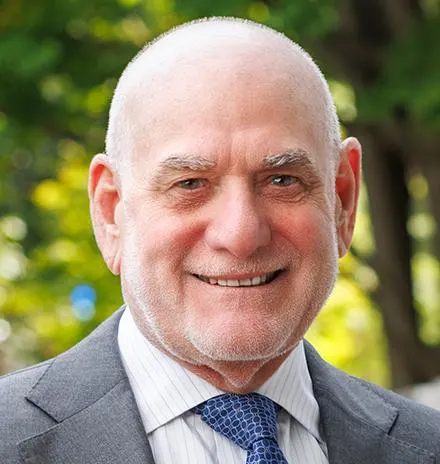


After a self-funded search led to the acquisition of Ally Waste in 2020, James Crawley grew the company more than thirty-five-fold. What did it take to scale the business from a handful of employees to a nationwide operation, with hundreds of team members working independently across dozens of states? Many entrepreneurs focus on systems and processes when growing a business. James, however, argues that culture deserves equal attention. In this episode, he explains how a clearly defined mission and a set of core values – including an unusual "no jerks" policy – became the foundation for scaling Ally Waste. James also discusses why culture is more than a set of aspirational statements, how it shapes hiring and management decisions, why investing in people can become a lasting competitive advantage, and how leadership is ultimately about developing people who serve others. Whether you're acquiring a small business or leading a growing organization, tune in to learn how an intentional culture can become one of the most powerful tools for driving performance, building loyalty, and sustaining long-term growth.
Transcript
Royce Yudkoff:
Welcome to Think Big, Buy Small, a podcast from Harvard Business School about entrepreneurship through acquisition. We’re your hosts, Royce Yudkoff…
Rick Ruback:
…and Rick Ruback.
Royce Yudkoff:
Welcome to Season Four of Think Big, Buy Small. Our opening episode for the season is an interview with James Crawley. James acquired a company called Ally Waste, which has grown explosively under his leadership, but today's discussion focuses on a very unique aspect of Ally Waste, and that is how a clearly articulated culture is at the heart of how they manage the company, and in this way is different from many other companies we encounter, not only in the world of small firms, but big firms too. So, we're going to learn all about the very unique culture that James and his management team have created at Ally Waste.
Rick Ruback:
By way of full disclosure, we should let our listeners know that we're investors in James's business. But James, I'm thrilled to have you here and thrilled to talk more about this culture thing. I think it's going to create a lot of learning for our listeners. I know in our conversations, it has created a lot of learning for me, so I'm excited to get to it. But James, I wonder if you want to start by giving us a quick background of whatever you think is relevant that got you into the chair you're in now.
James Crawley:
First off, thanks for having me. It's fun to be back in the HBS ecosystem. My background is I went to Brigham Young University as an undergrad, studied accounting, and I started on more of the traditional finance track at Goldman Sachs, doing investment banking in New York for a few years. And then I worked at a mid-market, private equity fund, also in New York. And I enjoy investing. I thought that was going to be my career but, in going to business school, had a lot of new opportunities put in front of me that I hadn't fully thought about before. And it wasn't until I took your class, Rick and Royce, that I fully understood what the search fund path could look like. And I got a couple months into your class and I told my wife, “I think this is what I want to do.” And I had an offer to go back to my old private equity fund but I told my wife, “If I can find a business while I'm in school, that's what we'll do. We'll go and try our hand at running a company, and if not then we'll go more of the safe path and go back to finance.”
Rick Ruback:
Did you have kids at the time?
James Crawley:
We did, yeah. So, I married my high school sweetheart. We got married while we were in undergrad and I started business school with our oldest – he was two at the time – and then in business school, we had twins. So, it was a really busy time in business school with three kids under the age of three. And so that was part of the calculus as well. I really wanted to go the self-funded path because of what I learned in your class, but I couldn't self-fund outside of school. I'd already budgeted for my costs while I was in school. But that was the primary reason why I started searching while I was in school, is because I wanted to go self-funded, didn't have the ability to support the burn rate that I was on with three young kids outside of school, so it was either find a business now or take a different career path. That was a lot of what went into my calculus, and while I was in school, I came across a bunch of businesses – I think I probably signed seventy-five NDAs and looked under a bunch of rocks – ended up coming across Ally Waste. And I remember coming into Royce's office and I said, “Hey, I think this is an interesting business. What do you think?” And he said, “I think so too. Let's take a look.” Huge credit to Royce and appreciate your help in thinking through the process with me. I graduated May 2020, closed on the deal June 2020, and I've been garbage-man-in-chief ever since.
Rick Ruback:
And my recollection is you joined a colleague who was already at Ally. Is that wrong?
James Crawley:
That's partially correct. So, I got introduced to the founder of Ally Waste through a friend of a friend. And we had both gone to BYU, but I didn't know him. The investors that backed me to buy Ally Waste bought out a majority of the business, but the founder, he retained a stake in the business, and so he and I, especially in the early days, operated very much as a dual partnership. Over time, he has stepped back in his pursuit of other ventures. We've been very supportive of that. He's been an incredible partner. But yes, I started as a solo searcher. I ended up in a partnership model, especially in the early days.
Rick Ruback:
In a different kind of way though. And tell us a little bit about what the company does.
James Crawley:
Some people describe us as concierge trash, as fancy trash, and that's part of what we do, and that is how we started. But I'll give a quick overview for listeners. So, the business has evolved quite a bit over the last few years, but you can think of us as a B2B services business that sits between multi-site waste generators – so, think of apartment complexes, restaurants, hotels, storage units, et cetera – and waste haulers, like waste management, or public services, waste connections. And multi-site waste generators have a lot of on-site waste needs. Those range from valet trash to picking up bulk items, like couches and mattresses, to things like they need recycling containers decontaminated, they need dumpsters moved because they're in a parking lot and they have to get moved out onto the street so they can get emptied. In the city of San Francisco, if you fail a waste audit, you have to have your trash literally sorted item by item on site. We do that. So, we do every on-site need that a multi-site waste generator has. And we're getting into other services as well that are more tech-enabled and consulting-like. But as of right now, to the best of my knowledge, we're the largest boots-on-the-ground operator of these waste services for these types of clients in the country.
Rick Ruback:
And how many states are you in now?
James Crawley:
We have at least one client and a presence in forty-four states. The majority of our business is in seven or eight states that are mainly coastal and in the sun belt, but we're nationwide.
Rick Ruback:
And roughly how many employees?
James Crawley:
We have about five hundred full-time team members and about fifteen-hundred part-time team members.
Royce Yudkoff:
And James, just to give our listeners a sense of the growth of the company, how big was it when you acquired a majority of the company with your investor group?
James Crawley:
I think we had seven full-time employees when I started and about fifty or sixty part-time. If you think about it from a revenue perspective, we are about thirty-five X from where we were at six years ago.
Rick Ruback:
That's a remarkable and wonderful success.
James Crawley:
It helps when you start small, but yes, we've had a good run.
Royce Yudkoff:
Rick, I think one other useful statistic, as we provide our listeners with some background on Ally Waste, is that at the base of the company success are a lot of happy customers, and it's worth, James, if you'd share with our audience the recurrence rate in your valet trash business, which is your oldest business. What percent of the customers renew from year-to-year?
James Crawley:
We have all of these different service lines that I've talked about. Our average retention rate is about 90% to 92% per year. So yes, we've got great retention year-over-year and, on top of that, we're growing organically quickly, and doing other acquisitions.
Rick Ruback:
That's wonderful.
James Crawley:
I'm very lucky to be in a recurring revenue business, especially a B2B one.
Rick Ruback:
It's a nice thing. It's a wonderful thing.
James Crawley:
And I learned that in your class, you know, “Recurring revenue, recurring revenue, recurring revenue are the top three things you should be looking for.” I'm very grateful that I learned that from you and that it worked out to find a business that had that.
Royce Yudkoff:
You get there by having happy customers. That's one key element in the formula.
Rick Ruback:
Well, and this is another one where the happiest customers are, of course, the people who live in the buildings, but they're not the contracting customers. The contracting customers are the building management companies, right?
James Crawley:
Correct. It depends on the service line but it's largely a B2B2C model, so we sell to a customer, but a lot of our services ultimately service their end market, their customers and their tenants of apartment complexes.
Rick Ruback:
And those aren't always the easiest people to make happy, but you do it. That's a gift. It's wonderful.
James Crawley:
Yeah, five to seven nights a week, we're picking up trash from four hundred thousand apartment units all over the country, and so making sure that our service is high-quality and consistent is really important because those four hundred thousand individuals have a voice. And if they're unhappy with our service, then they can take to social media, they can take to our Google review page. And so ensuring that we're very consistent in performing a service that they find valuable is one of the hardest things that we do. But I'm proud to say that we're the highest quality service provider in our industry, and we've got the retention and the other data to prove that.
Rick Ruback:
It's remarkable and quite an accomplishment.
Royce Yudkoff:
This is a perfect moment to talk about the very unique culture Ally has created because one thing that's clear is you have a lot of people in this organization dispersed widely and often working alone or in small groups and somehow they have to show up every night or every day and they have to get the work done to a high standard. And that's critically important and there has to be something that impels them to do that because it's not a supervisor watching every person who's doing this work – and that's your culture.
Rick Ruback:
It's a level of trust but a level of responsibility too. I know when I first heard about this business, I remember you telling me who the early valet pickup people were, and I always wondered like, “How scalable would that be?” And, wow, it's turned out to be wonderfully scalable, but that's because of the culture.
James Crawley:
Just to agree with you, we're not a waste services business. We're a labor management company at our core. The hardest thing that we do is exactly what you're talking about, which is to get our team members on a client site, almost always unsupervised, and to do a good job and to really care about the job that they're doing. And a lot of times these team members are transient in nature. We've done a lot of surveys with our team and a lot of them, they're taking this as a second job. We compete with DoorDash and Uber for these type of laborers. And a lot of times they're saving up money for a down payment of a house or saving up for Christmas or a new child's birth, and so we're dealing with a semi-transient workforce. So, to get our team out in the field to be really consistent and to really care is a huge challenge. And so we recognized that very early on, and that was one of the many reasons why we've invested so heavily in culture and people and just a lot of the soft systems that we'll talk about today. But I think it's worth noting that's the hardest thing that we do because there's something like two hundred and fifty valet trash companies in the country, but only four have really scaled to a national presence. Scaling is very challenging. Managing a disparate, semi-transient workforce on a very consistent basis is really hard. And we've figured out the mousetrap – and excited to talk about what we think are the underpinnings of that – but I think it's worth emphasizing just how hard it is to do what we're doing.
Rick Ruback:
And you've already mentioned it, but one of the things that intrigues me is the centrality of this approach, that it is all-encompassing, that it's not just in the senior management team or the people who are providing the services. It's from the very bottom to the very top. It governs the way you run the business day-to-day.
James Crawley:
Yeah, absolutely. I like to think about our culture, our vision, our mission statement, our values as being our operating system, like that is the code of conduct, the rules of engagement, the set of operating procedures that everyone has signed up for. And when I stepped into the business, that wasn't how the business was run. It was no fault of anyone at the business at the time. The business was really young. They were just trying to survive. In the early days, that's all we were trying to do, is just keep up with the growth and keep the bank account funded with enough money to cover payroll. But over time, we put in place a pretty comprehensive set of values and, again, this operating system that is now just incredibly important to everyone who works here and, I think, one of the many secrets to our success.
Rick Ruback:
So, maybe we could begin by you describing this as if our listeners were a potential new employee. So, somebody knocks on your office door, you're considering them for some role – maybe an entry-level managerial role, somebody who's not going to report directly to you. How do you explain?
James Crawley:
I live this every day because I still interview not all but most new team members that join the organization. And by the time they hit my desk, they know the answers to these questions, but I still go over it. But the first is I talk about how good organizations know why they're in business. They know why they exist. And good organizations don't exist to make money. They don't exist to benefit shareholders. Yes, you need to do that. Yes, you need to make sure that you're delivering your investors a fair return, but that doesn't get people excited. That doesn't get people motivated. So, in the early days, we established our “why”, like, “Why do we exist as an organization?” And so if I'm interviewing you, Rick, I'm describing what that is. And our “why” as an organization has nothing to do with trash. It has nothing to do with making money. We exist to develop and empower leaders who serve others. We believe that there's a couple of secrets to happiness in life, and we're focused on a few of those. One is when you grow and improve, you are happier. It may be painful, it may be hard, but that's ultimately fulfilling. And then second, if you're helping somebody else, you're happier. And so as we tap into this at our core, like we're trying to help our team to live the most fulfilled and happy life possible by focusing on themselves stepping up, developing, growing, being empowered, and then serving our communities. Every night, again, we're picking up trash from hundreds of thousands of doors where we don't know who's behind the door, but a lot of times it's a new mother; it's someone who just worked a long shift; they just had knee surgery; it's someone who's more advanced in years, and so getting down stairs into the edge of the parking lot, like that's a real chore, but we're serving them. We're helping to make their life easier. So, that's why we exist as a business. That's what motivates us to get out of bed every morning.
----------
Rick Ruback:
Royce, one of the things James says, “We exist to develop and empower leaders who serve others.” And what's interesting about that is it doesn't say, “We exist to make a whole barrel full of money.” But while he describes his goal as not explicit financial success, he's of course accomplished great financial success.
Royce Yudkoff:
Yes, because his goals lead to great work in the eyes of a customer and the customers end up rewarding a supplier who can do great work for them. I think what's at the heart of James's comment is that people want to matter. They want to have some role in life that makes the world a better place, that they have meaning, and James and the company recognize that and are cultivating that quality, and one of the results of that quality is good work that leads to good financial results.
Rick Ruback:
I agree with everything you've said. If you ask me, “How do I manage my working capital to help success of the business?”, we have a litany of things – watch your receivables, manage your inventory, manage your payables. And we could look at what somebody did and say, “Oh yeah, they're doing it well or poorly.” But here it feels more like art.
Royce Yudkoff:
You know, I don't want to put words into James's mouth but I think it's a little bit of the difference. If you imagine the accounts receivable clerk, to pick up on your example, whose job is to ensure collections stay within ninety days, one way of defining them to themselves is to say, “You are valuable if you keep receivables under seventy-five days, and that's your target, and that's what I want you to think about every day.” Another is to say, “At the end of this long chain, there's a young family with an infant that is overwhelmed and we make their lives better each evening. And to get that reliable service, one element is that we get paid so we can pay our people.” And I think you feel differently about your mission if you know that, rather than “I'm a human with worth if I keep receivables under seventy five days.” I think that's what James is getting at.
Rick Ruback:
He humanizes the entrepreneurial journey in an important way. What James does, which is so special and important, is he gives their jobs meaning and their work environment meaning to them.
Royce Yudkoff:
He is making people feel that they are part of a function that is deeply purposeful and honorable. I think it's inspiring.
Rick Ruback:
Absolutely.
Royce Yudkoff:
And now let’s go back to our conversation.
----------
James Crawley:
The second question that I emphasize in these interviews is “how” we go about our business. So, our mission statement of developing and empowering leaders who serve others, that answers the “why”. Our values answers “how” we go about our business. And we have seven core values. The first is family. What we mean by this is no matter what your differences are – your race, religion, political, sexual orientation, like all of that, it matters and you should bring your whole self to work – but when you come to work, your identity is you're an ally. You're a member of our tribe and we belong together. Don't worry about the differences. Don't worry if you fit in. You do. If you're here, you belong here. So, that's family. The second core value is integrity – “I make the harder right choice over the easier wrong choice.” Third core value is grit. This is the one that I'm least concerned about enforcing across the business because it automatically self-selects those that have grit. We do a tough job. Whether we're picking up bulk items, removing dumpsters, or sorting trash, or picking up alley trash, if you can't do the job, it's going to be very clear and you're going to get weeded out. The fourth core value is humility. The way that we define humility is no matter your background – how successful, educated, experienced you are – you're going to be expected to change, grow, improve, evolve while you're here, and so we should never be too proud to change. We should always be open to feedback and, for the benefit of the team, be willing to improve. The fifth core value is we have to exceed customer expectations at every turn. The sixth core value is we have a sick a strict policy of “no jerks”. If someone is not a fit, it becomes very clear – and we don't just immediately terminate them. A lot of times we'll coach them, but if they're prickly, then they're going to be shown the door, no matter how high performing they are. And then lastly, everyone home safely every day. Safety is not a priority, it's a value at Ally Waste. So, if I'm in an interview, I just shared all of that with you and then I'm going to ask you questions around, “Are you okay living these values? What examples do you have of exemplifying these values in your life? Are you willing to uphold these values yourself and with those around you?” And that's about half the interview that I have with team members, is talking about this.
Rick Ruback:
So, which of these do you think is the most subjective? Because I love this but there's a lot of personal evaluation that goes into assessing how people are in these, right? You're bringing a lot of yourself to the assessment of this person's personality, work ethic.
James Crawley:
You know, one of my favorite quotes is that “Culture is as leaders do”. When you're part of the system, you can see like, “How do we define grit?” It doesn't mean that we're working twenty-four-seven. We all generally try to have a work-life balance with our families and jobs and community responsibilities. But we define grit in a way that you can see as you are around people here. So, I guess there's a level of subjectivity to all of these, but I'd argue that there's a lot of consistency within the organization, operating with the same expectation for these different values. Now, if I had to pick one, I'd probably pick “exceeding customer expectations”, largely because that varies dependent on your place within the organization. If you're on the operations side, it is more clear that, “Okay, I've got to exceed the customer's expectation by delivering great service every single night or every single morning.” If I'm on the accounting side, how am I exceeding customer expectations? I can respond quickly. I can be pleasant with them in my conversations, but that's very different than maybe how a sales team member would execute a sales process to exceed customer expectations. So, that probably has the most variance to it.
Royce Yudkoff:
I've always been powerfully struck by what James has created here. One is the codifications of the set of values and how you continuously promulgate it. Fifteen years ago, before I partnered up with Rick at the Harvard Business School, I ran a B2B services business, but the difference between your business and the business I ran is we had relatively few employees, all located in one office. And I too felt very strongly about a code of values, but I could live that code of values, and everyone watches the CEO and so it was promulgated that way. Your challenge is entirely different because you can't do that. You have hundreds and hundreds of employees, many of whom you won't see for a long period of time because they're located in a faraway city. So, I'm very struck by how you've taken these values and there’s almost a recitation of them that is required because of the organization you manage. And the second thing that strikes me is I've always felt that one of the most widely shared human desires is to matter, is to have an impact. And you've taken a business – like so many of the businesses, Rick, that you and I are involved in, it's a humble activity – and you've said, “Yes, we proudly do this, but it's all about the set of things that if you live this life, you matter as a person”, and I think that is so motivating to people.
Rick Ruback:
Right, but my own personal view, and this is because I'm a committed capitalist, is I think whenever you sell anything for more than it costs you and people are eager to buy it, you're creating value for society, generally. And what is, I think, special about what James and the team has done is they've taken that capitalism and personalized it in a way so that people say, “Oh, improve people's lives – that's not just the psychologists and the physicians who are doing that.” That's also the people who check you out at the grocery store, or plow your driveway, or mow your lawn, whatever service you want to get done, they're making you better off. I want to go back to the culture thing because one of the ones that I am truly intrigued about is the “no jerks” one. You tell me that you routinely terminate people because they're jerks, and I'm trying to figure out what that means. Does that mean they're acerbic? They're hard to get along with? They're disrespectful? Is it just a bucket of anti-social behaviors?
James Crawley:
I'll start with the genesis of this. When I stepped into the business, it was very small. I often say we were strung together by contracts and a bunch of duct-tape.
Rick Ruback:
Maybe a few bungee cords mixed in.
James Crawley:
Yeah, exactly. And it became clear that there were certain members of the organization, at that time, that would not have passed what I would view as a “no jerks” policy. In the early days, I'm a brand-new operator, never run a company before, but I had heard of other companies establishing this kind of a thing. I ended up reading a report by a Stanford Business School professor that tried to quantify the cost of having a jerk within your organization. And it effectively said that a lot of organizations will tolerate high performers that are jerks because they believe that they can't let go of their top salesperson or their top operator or whatever. Whereas this article argues that what is not taken into account implicitly in that mental calculation is the cost of those around that individual. And this article purported to have done some research showing that when you do remove the jerk from the situation, everyone else performs at a much higher level, more than compensating the organization for the loss of the top performer. So, that just felt right to me, but I still didn't have the real courage, I guess, to rip off the band-aid and to implement this policy and to say, “Okay, this is what we're going to do and I need to let a few people go.” But I went to lunch one day and I was going through the drive-through at Chick-fil-A and I looked in the Chick-fil-A and I saw the dozen or so young adults who were working, and they're doing a very tough job, right? They're in a hot kitchen, frying chicken, running around on their feet for eight hours a day, but everyone inside was so happy. I could just tell that they enjoyed working together. And I thought back to Clayton Christensen, the late Harvard Business School professor, in one of his books, he talks about how management is one of the most noble professions out there because of the ability that you have to impact people's lives. They spend a lot of time with you at work and if you impact their life for the good, when they come home to their family, they're a better person. They're happier. They're more relaxed. If they leave work and they're stressed, they're mad because they're emotionally drained from a day at work, then that's not a great situation for their family, their community, the other groups in which they associate. So, as I looked into this Chick-fil-A restaurant, it really hit me that it's my job as the CEO to create an environment where people show up to work and they're happy. They enjoy working with each other. They don't leave emotionally drained. So, the very next day I installed a “no jerks” policy. I terminated a few individuals, and that kicked off a really challenging three-to-six month period where we had to replace individuals, but we’re so much better off for it. And today, I think you could ask any member of the organization, I hear this all the time from new people, especially from companies that we acquire and they come in, and for the first couple weeks, they say, “I think this is just a weird honeymoon phase, there's no way people are actually this nice.” And then three, six months later they say, “Wow, people are actually just really nice to work with.” Going back to your original question, “How do we define a jerk?”, there's no strict definition, but you know it when you see it. It's someone who is prickly, someone who is self-centered, someone who's not working for the benefit of the team, someone who is sharp-tongued, sharp-elbowed – and it's often something that is deeply embedded in just how they operate, and so we do try to coach them up, but more often than not, we just need to coach them out.
Rick Ruback:
And when you terminate somebody for being a jerk, do they know they're being a jerk? When you say, “Harry, you're a jerk. We're terminating you.” Does Harry say, “Yeah, I knew I was a jerk. I've always been a jerk, but I'm really good at what I do.” Or does Harry say, “I didn't do anything wrong!” I'm guessing it's the latter, but I don't know.
James Crawley:
We try not to offend people too badly on their way out. In these conversations, we try not to label it too hard just because calling people a jerk isn't necessarily productive, especially if you've already made a decision to fire them. So, it's usually a list of behaviors. “We observed x, y, and z happened. This happened. This had this effect. And this is just not the type of behavior that we allow within our system of values.” That's how we would phrase it.
Royce Yudkoff:
You try not to be a jerk as you fire a jerk.
James Crawley:
They can argue over whether or not our interpretation is fair or not, but they can't argue as we present it that the behaviors as listed did or did not occur. They occurred. We probably talked to them about it already. It is what it is, and we get to determine whether or not someone is a fit in our organization, and so we have that conversation. We try to pay severance and make it easier for people to transition into their next role. There's one incident that I can think of that's several years old, at this point, where someone really pushed back, but other than that most people have just moved on.
Rick Ruback:
Because if you didn't think they fit, they didn't think they fit either.
James Crawley:
Yeah, in my experience, more often than not, when you let somebody go, there's some sense of relief. There's friction on both sides. They've been trying to make it work. You've been trying to make it work, and you rip the band-aid off and everyone just breathes a collective sigh of relief. “Okay, I can move on with my life. I knew this wasn't working.”
Royce Yudkoff:
My guess is that over time the number of these unpleasant conversations get to be a small percent of the activity in the company. I can imagine there are a lot of people who naturally fit very well in an organization and this policy empowers them and makes them the best people they can be. And then there are people who could go either way, and this policy guides them to be their best selves. And so at the end of implementing this for a while, there's probably just a very small percent of people who, for whatever reason, just can't do it. Is that how this plays out?
James Crawley:
I think it's exactly as you say. But there are a number of people, they're not really a jerk, but when they're stressed or tired they have the tendency to snap at people or to be more irritable. I was in a meeting this week and one individual, unprompted, said, “I'm really grateful for our ‘no jerks’ policy because in a prior life I might've snapped at an individual but I am restrained because I know that that is not how we act as an organization.” And even me, like, I’m certainly not perfect, but there are times where I want to be emotional, I want to be quick to react. And top of mind every single time I'm like, “Oh, okay. Is that something that a jerk would say?” And I've had to restrain myself to make sure that I'm setting an example, that I'm living by that set of core values. So, I think there's probably more people than not in the organization where that's the case, is that guides their behavior. And same thing with the other core values. Sometimes it's late at night and I'm needing to try to get through a batch of emails, and I think about our grit core value and I'm like, “All right, our team on the front lines, they're going to the last door to pick up a couch, a bag of trash. I can get through this work in front of my computer.” So, because it's so top of mind, I think it is a guiding set of philosophical points that people use to make decisions on the margin, and it shapes their behavior.
Rick Ruback:
And what about bad days? You know, it's when a kid's in the hospital, and you're not getting any sleep, and your puppy's ill, whatever the issue is. Sometimes family stress bleeds over into work and maybe the right answer is you should have just stayed home and collected your thoughts but you're not really sick so it doesn't feel appropriate to take a sick day. But you've been working for five years, you're a good team member, and suddenly you've hit a rough patch in your personal life that's making things harder.
James Crawley:
Everybody has ups and downs in their personal life and things outside of work affect their work life, and we're understanding of that. We try to be pretty transparent with each other about what we're going through but, at the end of the day, there's not an excuse for being mean, prickly to someone. Now the “no jerks” policy doesn't mean that we are always all smiles and we always agree, but there's never really an excuse, in my mind, of snapping at someone, yelling at someone, losing their temper. If there is a situation like that, where someone has normally been fine but something out of character comes up, the question is, “What is going on that we're not aware of that is leading you to act like this? Because we know that's not you.” And then we'll get to the bottom of it and try to help them to work through it. But I fear that if we make an excuse like, “Oh, don't worry about so-and-so. He had a bad day. He can lash out”, then you open up a world of all sorts of exceptions and excuses. We can't do that.
Rick Ruback:
So, you're not really counting strikes. It's more like, “What's going on? We need to figure this out. We need to provide perhaps some resources so that you can manage a little bit better.”
James Crawley:
Yeah, we care about the team member and we want them to be successful in their life, personally and professionally. And we're really looking for patterns. If there's patterns of good behavior, great. But if there's a pattern of jerk-like behavior, that's when we lead to a termination or we have a more serious conversation.
Rick Ruback:
That's really interesting. And I would think part of that requires that the organization at least be open to understanding what's going on in people's lives. If the person's unable to perform and it's due to some external factor, like a sick kid, then what you're going to do is try to provide some resources so that person can come back into the fold, if you will.
James Crawley:
Yeah, 100%. And I've been a part of organizations before where you're expected to show up and what happens in your personal life isn't anybody's problem and you just have to come and perform and nobody really cares. That's not the culture that we've tried to build here. And so on nearly a weekly basis, we have people escalate to the senior leadership team, “Hey, so and so lost their grandfather. Hey, so and so is going through a divorce, or had a baby.” – both happy and negative things that would affect their work performance. And we just have a standing order for our office manager to send flowers, to send Door Dash, to send gifts. And we've tried to create an environment where people are comfortable sharing what's going on. Even myself, as I've gone through ups and downs personally in my life, have been open with the team, and I think that's given them license to say like, “Hey, sorry, so-and-so is sick or this is happening.” And then it allows us to give them the grace and to give them the space and to support them. I think that kind of feeds into our broader positive culture of caring for each other and having a family-like environment.
Rick Ruback:
The best boss I ever had was John MacArthur, who was Dean of the Harvard Business School when I joined, and that was his operating view, that the role of the unit heads were to let him know when a faculty member was going through a bump in our life. And he often took action, and it was that level of thoughtfulness that, years later, somebody asked me what I thought about John, and I said, “If it was pouring rain or sleet or snow, and I hadn't seen John for a decade, and he called and said, ‘I'm on the turnpike. Would you come change my tire?’ I would say, ‘Absolutely!’” You build that kind of loyalty.
James Crawley:
Yeah, people don't remember what you say to them, how much you pay them, but they remember how you make them feel. We genuinely really do care about our team. That's just a better way to live life, it's a better way to do business and, we're not perfect. There's a lot of instances where I'm sure things are not shared because they don't feel comfortable or whatever, but that's the environment we're trying to build, and I think we've been largely successful. And another thing, people don't quit jobs, they quit bosses. So, if your boss genuinely cares about you and your family, the odds that you're going to have a good working relationship and that your retention is going to be higher, it's through the roof. It's much higher than more of a transactional relationship.
Rick Ruback:
That makes a lot of sense to me.
----------
Rick Ruback:
Royce, it occurs to me that this culture-first approach to business that James does so well really relies on a willingness to let people go when they don't fit well.
Royce Yudkoff:
I think that's right. You and I know many companies where the CEO will say, “I employ this select group of people who are immensely talented but immensely difficult people, and I tolerate their difficulty because they're immensely talented.” And James touches on this – but you have to be willing to part with someone because the value is either essential to the company or it's not. And as soon as you make exceptions, or as soon as you try and fix someone who's a jerk but talented and it doesn't work, if you're not willing to support that value, it won't permeate through the company.
Rick Ruback:
I think letting those people go is both the cost and, James would say, the benefit of this cultural approach. And I think it's really hard to find examples of businesses that let people go even when they're functioning well, in the sense that they're meeting their objectives. You know, your director of sales is selling a lot but just a jerk in meetings. And wow, I don't know that I know very many examples of people who will say…
Royce Yudkoff:
…“Who cares if he makes a hundred and ten percent of budget each year? He's a jerk.”
Rick Ruback:
Yes, that's right.
Royce Yudkoff:
I think that when you start a program like this, you can get into a virtuous cycle where the people who could be a jerk say, “If I like being here, I have to be a better person.” And so I don't think you have that many people, after a while, that you have to lean into.
Rick Ruback:
Yeah, that's such an interesting point, that there's both self-selection on the way in and a kind of pressure to culturally fit in that evolves very quickly, that whatever organization you're in, people adapt to that culture.
Royce Yudkoff:
Yeah, and often the cultures are just superficial, like how the organization wants its employees to appear to customers, but in other ways, you know, it can run deep, and this is a deep behavioral thing he's focused on.
Rick Ruback:
Yeah. Royce, let’s get back to the conversation.
----------
Rick Ruback:
I can't help but think that there are other management systems like the entrepreneurial operating system, for example, that lots of people adopt and I think it's very intriguing. This comes at many of the same ideas through a different lens. Do you think I'm misinterpreting that or do you agree with that?
James Crawley:
I agree with that. So, what I'd argue, just based on my research, is the genesis of a lot of the ideas in EOS comes from “Good To Great”, Jim Collins’ work, and that's where I pulled a lot of our framework that we use today. EOS distills “Good To Great” and tries to apply it in a small business context, and we've done that. We’ve put in place EOS, or at least a version of it that suited our needs, five or six years ago, and we still operate on that framework, to some extent. But I think EOS is probably a little heavier on the structure, the program, on the process. I think it could and should emphasize more the values, the mission, the vision, et cetera. Small businesses, more so than others, one individual can really make a difference. A large organization, one individual has a harder time making a difference. But if you have a smaller team that's really bought in and is really rowing in the same direction, which is all of what the cultural initiatives help to facilitate, you can move the needle quite a bit. So, I'm a fan of EOS. I just say EOS Plus would be some added focus on these cultural initiatives, is what I'd advocate for.
Rick Ruback:
But I think these cultural initiatives are probably at least as important and I don't think you have to choose between A or B.
James Crawley:
No, you need both. You have to have a good meeting schedule. You have to have a good marketing plan. You have to get the right people in the right seats. Like all of those things are essential – but that is, in my mind, table stakes. In order to create a great business, the difference is in like, can you get everybody really focused on the same vision and operating with the same set of protocols?
Rick Ruback:
Makes a lot of sense to me.
Royce Yudkoff:
I can see how this makes a huge difference, both in obvious matters, like retention of valued people, but also in just the quality of work at moments where it's not easily measured. You know, when someone is alone and picking up the last bag of trash down the far end of the corridor when no one's watching, it's really feeling a sense of identity with the mission that gets them to do that. And so when you focus on this, it’s not hard to see the importance of these values.
Rick Ruback:
James, we always end our podcast by asking our guests if they have any questions for us.
James Crawley:
Let's see. I guess I'd flip the question back on you, as it relates to culture, which is, what have you identified across the businesses that you've invested or in your job at HBS, culturally? Any advice that you'd give to me of things that we might be able to implement on the cultural side better that you've seen in other businesses that you've invested in or, again, in some of your employment experiences?
Rick Ruback:
Boy, that is a hard one for me because I think you really are the leader in this in the small business space. It is not something that Royce and I have a case on that we teach, but I think it is really intriguing and I find so many businesses that we're involved with that tolerate jerks because they don't think they have a choice. “This guy is my head engineer, this guy is a really important technician, this guy's a great salesperson.” That's what I hear. I hear this real hesitancy to terminate people for behavior. And the other thing that I see is I think many managers in the modern era are nervous about applying their own value systems to their workforce. They don't want to offend anybody. And I think you can be tolerant of differences and embrace and celebrate differences, but yet still have a culture that provides cohesion to the organization. And this idea that you think the primary job as a CEO is to build a place where people are happy working, it's enormously powerful. So, I don't think we have anything to teach you about culture because I think you're far ahead of most small businesses.
James Crawley:
Well, we can always be better. But, as you can tell, it's something that's really important to us. And I think you're right. I think as you’re establishing your culture, if you're trying to be everything to everyone, you're going to be nothing to no one. Like, you do need to kind of pick a set of values. People need to be in a consistent framework, and that's not going to fit everybody's framework. Companies that I really admire generally have their niche and they have carved out a set of cultural values – and people self-select in and they self-select out. So, I'm thinking of REI, or Trader Joe's, or Costco, or Chick-fil-A…
Rick Ruback:
Or you said you worked in an investment bank in New York City. That's a different culture, right?
James Crawley:
That's a good point. There's a type of individual that thrives in that environment and there's a type that doesn't. So, we've just tried to create a consistent environment where the right people that fit our model select in. Now, if you dilute that model because you're trying to just not offend everybody, I think you end up not having an identity as a business, and that's a far worse place to be than be in a position where some people might feel excluded because their values don't align with yours. Our very first value, family, is intended to define us as a tribe. We don't care who you vote for, you know, what religion you practice, what your education…none of that matters. When you're here, you're an ally. That's very intentional. I've worked at organizations where within an organization, there are all these affinity groups and it ends up becoming this subgroup battle. I think that's nonsense and very counterproductive. And so we've tried to recognize and appreciate differences, but focus on the commonality of our goal, of our mission, our set of values, and to define ourselves collectively as a tribe.
Rick Ruback:
And that family thing, let me just emphasize that, it's that you're treating your co-workers as family.
James Crawley:
Yes.
Rick Ruback:
And that's really the critical part.
James Crawley:
Exactly, and really the core word in all this is “belonging” because if people feel like they don't fit in, what happens is they end up spending a lot of mental energy trying to fit in. They try to censor what they say or don't say, and they try to weasel their way to a sense of belonging. That's one of humans’ basic needs, to belong to a group. Now, when you're in your family, like a well-functioning family, you don't think about that at all. You are a part of your family because you were born into it. You belong there, right? So, that's what we're trying to recreate is, regardless of your differences – we appreciate, we value those – but you don't have to spend any mental bandwidth thinking, “Do I fit in?” You do. You know, spend that mental bandwidth advancing the mission of the organization. And this idea really came from a book called “Culture Code”, written by a guy named Daniel Coyle. And he breaks down the common denominator of the most successful groups – like the Navy SEALs, certain professional sports teams – and what he identified as the most obvious common denominator among repeatable, highly successful groups is there’s a leader that's very good at helping individual members feel this sense of belonging. And so, again, they're not focused on, “Do I fit in?” They focus on advancing the mission of the organization.
Rick Ruback:
So interesting.
Royce Yudkoff:
James, thank you so much for taking the time to visit with Rick and me and share a little bit about the great company you're building.
James Crawley:
Thank you guys. Thanks for your support over the years, wisdom, and I've enjoyed the conversation.
----------
Rick Ruback:
Royce, we hear and see many businesses that define corporate values, and they're often a poster on the wall. And sometimes you get the sense that the values are competitive to the goals of the organization. For example, there's an environmental value, but that doesn't add to what the company's doing. But here what is interesting is that the culture is core. It is one hundred percent additive to the financial management of the company. Everything that happens in his company evolves from this culture, which has been so helpful in allowing James and his team to grow the business by about thirty-five times in six years.
Royce Yudkoff:
It's a very instructive example for potential searchers that when you buy a small company, it doesn't need to stay a small company. There are examples of growing companies many times over and driving them to be mid-sized and even big companies, like Ally Waste is now.
Rick Ruback:
That's right. It's a big company now, but what I find intriguing is it began as a small firm acquisition. It was kind of a typical self-funded size, and James, in part through this cultural initiative, was able to see a vision in which he could grow it dramatically.
Royce Yudkoff:
I think it's worth noting that this isn't an industry where Ally Waste had some new technology that was adopted by the world. I think it would be fair to say it was an established need that had different forms of service providers, but there was a big white space in the area of valet trash – that residential apartment owners weren't using it and could see the value in it – but it is anything but a technological innovation that caused this growth.
Rick Ruback:
That's right. This isn't the latest artificial intelligence idea, right? This is you have your bag of trash, you leave it outside your door, and when you wake up in the morning, it's gone.
Royce Yudkoff:
And I think the exceptional aspect of Ally Waste is that they're able to take care of that problem with enormous reliability and service quality, and that's what they bring to the market that their customers appreciate.
Rick Ruback:
Right. And what is intriguing is he doesn't define the product in the way I just did. He doesn't say, “What we do is pick up your trash at night.” What he says is, “We're providing this essential service to people in need.” And then he describes the elderly person who would have trouble bringing the trash down two or three flights of stairs, or the young couple with a new child who just is overwhelmed with things to do – very human needs, and I think everything he says is right. He's providing a massive service to people who value it much more than they pay. What a great conversation we've just had with James. I think his approach to corporate culture, well, I've just learned a lot from it and it's going to change the way I look at how people manage small businesses and the virtue of getting the culture right and describing people's roles in really meaningful ways. It's not taking out trash, it's helping people. And I'm just in awe of the way James has created this culture and am just delighted to learn about it.
Royce Yudkoff:
I'm with you and what's clear is in addition to just being a mode of treating people the way you feel people should be treated, it has a very practical business purpose because your most talented colleagues, who have the most choices, start to operate in an environment which they really like. And I think it's just a barrier against losing great people to other companies.
Rick Ruback:
I think you're right. I think getting the culture right, getting the environment right has just been magical for James and I think it can be magical for other people as well. Royce, next week our guest is Michael Horowitz, who will talk about franchises and quick service restaurants and his success with Wingstop.
Royce Yudkoff:
I'm looking forward to that episode. As you know, we have talked with our students and among ourselves about this vast opportunity in franchising thousands and thousands of different types of franchises, many of which come up for sale each year. Should that be an area of focus for searchers? We're going hear from a searcher who bought a franchisee, successfully operated it, exited it, and now has some perspectives on it that he'll share with our audience.
Rick Ruback:
Yeah, I'm looking forward to it as well.
Royce Yudkoff:
Rick, we end each season with a very special episode where we ask our listeners to e-mail us and offer questions they have after listening to our episodes or after their experiences in search. We pull out the questions and you and I discuss them.
Rick Ruback:
You know how much fun that can be.
Royce Yudkoff:
It’s a favorite of ours and a favorite of a lot of our listeners. So, listeners, shoot us an e-mail at rickandroyce at hbs dot edu and we’ll put them in the bunch we go through and answer them in our final episode of Season Four. We’re looking forward to it. You’ve been listening to Think Big, Buy Small. We’re your hosts, Royce Yudkoff…
Rick Ruback:
…and Rick Ruback.
Royce Yudkoff:
Katie Zandbergen produced today’s episode.
Rick Ruback:
Craig McDonald is our audio engineer. If you have any questions, comments, thoughts, feel free to just e-mail us, rickandroyce, all one word, at hbs dot edu.
Royce Yudkoff:
We’ll be back next week with another episode of Think Big, Buy Small.