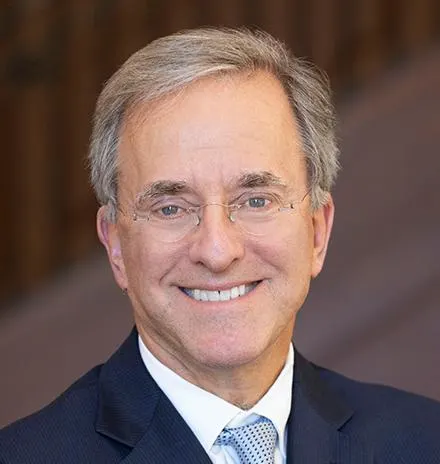
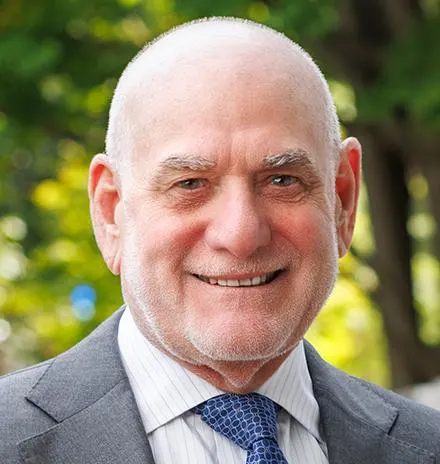

Ike Ukawuba was a self-funded searcher whose path to entrepreneurship began far from the boardroom. Raised in a single-parent household in Chicago, he began his career in engineering before discovering his true passion for business and problem-solving. After several years at Accenture, followed by experience at some startup ventures, Ike found his stride in entrepreneurship through acquisition – a model that allowed him to leverage his skills, take ownership, and build something enduring. In this episode, he reflects on his path from consulting to running a home healthcare company, the challenges of leading a large team, and the fulfillment that comes from making a difference in people’s lives. Ike’s journey is one of thoughtful risk-taking, resilience, and purpose-driven leadership, offering valuable insights for anyone interested in acquisition entrepreneurship.
Transcript
Royce Yudkoff:
Welcome to Think Big, Buy Small, a podcast from Harvard Business School about entrepreneurship through acquisition. We’re your hosts, Royce Yudkoff…
Rick Ruback:
…and Rick Ruback.
Royce Yudkoff:
Rick Ruback and I are delighted to welcome to our podcast Ike Ukawuba, who is a searcher who has bought and operates a company that he'll tell us about. Ike, we're delighted to have you on Think Big, Buy Small.
Rick Ruback:
Yeah. Ike, it's nice to see you. Tell us about yourself.
Ike Ukawuba:
Thanks. I'm excited to be here and thank you for having me. So, I was born and raised in Chicago. Both my mom and dad immigrated from Nigeria. My mom and dad ended up separating while I was pretty young. For the most part, I was raised in a single-parent household with my mom and my three sisters, and we grew up relatively poor. My mom was very intentional about how she raised us and was very big on getting an education and using that degree to get a good job. So, I ended up going to school at University of Wisconsin and I studied mechanical engineering. And while going to school, I found myself having interest in business and in finding creative ways of earning money. But I still stayed the course with engineering and I started doing some internships. Upon doing that, I realized that this is going to be very tough for me to do day in and day out. I have an interest in business, I need to try to find some way to get down that path. Luckily, I stumbled upon a consulting company, Accenture, that happened to hire a lot of engineers. The way they explained it to me is that, “You are going to be working with different businesses, helping them solve their problems, and you're going to be traveling, and there's a lot of variety in what you're going to be doing.”
Rick Ruback:
You're twenty-two at the time?
Ike Ukawuba:
Yes, twenty-two.
Rick Ruback:
A lot of appeal, huh? New things all the time, traveling, whole thing.
Ike Ukawuba:
Yes, that was very appealing to me. I ended up getting offered a job to work out of their office in El Segundo, California. And while I was in the process of accepting their job offer, I had people telling me, “Hey, that's a great career where you can learn a lot while you're on the job and then eventually start your own business.” So, I felt that it was just a win-win all the way around. There were some other engineering companies that I interviewed for but this was the path that I wanted to take. While working there, I was very enamored about all the solutions that we were providing to these clients, and I felt these were great skills to learn and something that I eventually wanted to put to use on my own. So, after working there for seven years, I decided to leave Accenture and basically become an independent consultant. And that was pretty much my first leap into risk-taking, becoming an entrepreneur when I left Accenture.
Rick Ruback:
So, you were twenty-nine at the time when you leave Accenture?
Ike Ukawuba:
Correct.
Rick Ruback:
Married? Single?
Ike Ukawuba:
Married with two kids.
Rick Ruback:
Nice. And how did that leap feel at home? Did that feel stress-y or did that feel exciting or exuberant?
Ike Ukawuba:
It was more exciting. I had mentors that worked at Accenture that I spoke with along the way to get their advice. I knew exactly the niche that I was going to specialize in and knew that that niche was in high demand and basically spent the past three years prior to leaving, honing my skills in that niche. And while I was leaving, I already had a client lined up, right?
Rick Ruback:
Nice.
Ike Ukawuba:
But there's still some uncertainty. I could have walked in a situation where that client says, “All right, we don't need your services anymore”, and I would (have) had to find another client.
Rick Ruback:
But it must have been so different from doing that in a large organization, that has lots of resources.
Ike Ukawuba:
It is from the standpoint of, yes, you don't have those resources behind you, but when it comes to the day-to-day project work, client interface, and solutions that you're giving, these are things that you kind of learn and it's embedded in your head. You've done these projects before, you've worked with other clients that had similar problems, so at that point, it's providing your expertise. Now, the safety net certainly isn't there, but I could be focused on my day-to-day work with my clients, and I have additional time flexibility to pursue other side business ventures.
Royce Yudkoff:
This is great. We're following. Tell us how it unfolded from here, Ike.
Ike Ukawuba:
So, when I left Accenture to do the independent consulting, I did have some ideas, in terms of some side venture startups that I wanted to get into. I ended up starting a medical marketing company with a college friend of mine that was in medical sales, and our company was to basically help generate referrals for physicians that were specialists.
Royce Yudkoff:
And you were creating this business with a partner at the same time as you were launching your consulting firm.
Ike Ukawuba:
Correct.
Royce Yudkoff:
It feels like the consulting firm was meant to be day-to-day income, and then you were exploring other opportunities on top of that. Is that fair?
Ike Ukawuba:
Right. And with that company, we made some income from it, but it wasn't anything that could replace my independent consulting income. So, we were always looking for other ventures that could have a little bit more upside. We ended up starting a medical spa from scratch, and that business didn't work out too well. It lasted about a year or so. And my partner decided that he didn't want to continue with the medical marketing company that we had. I tried to spend a little bit more time trying to make that company work and, while I was doing this, I ran into a foot and ankle clinic that I was trying to bring on as a client. They were basically acquiring foot and ankle clinics around the country. I spoke to the physician there, and he mentioned that they did about three hundred or so acquisitions. They partnered with a private equity firm to help grow this. I just remember asking him, “How did you think of this? Most doctors don't think this way.” And he mentioned that, “Well, I got an MBA while also getting my medical license. And I partnered with these folks to help, where they put some growth capital into my company and basically helped me scale this practice across the country.” It was at that moment where I thought to myself that what I'm currently doing, I'm going about this all wrong. From there, I ended up having a conversation with my sister, who did work in mergers and acquisitions. I just asked her about the private equity field, inquiring about it, and then I told her some of the things that I was looking to do, and that's when she mentioned search funds. I ended up attending the Chicago Booth and Northwestern Kellogg Conference to learn about search funds and I felt that it was intriguing. And while I was interested, at that point in time, I was still married, not with two kids this time, four kids – and I didn't think that I had enough flexibility to pursue this traditional search fund path. I was supporting my family, and so I didn't have the flexibility to stop working, raise a search fund, find a company that may or may not happen. So, leaving that conference, my thought was that, “All right, I'm going to still try to grow this marketing company that I have and at least try to build a nest egg, if I do want to pursue this path.” Come March 2020, of course, COVID hits, none of these clients are interested in getting any marketing services. And I was kind of just forced to spend some time learning a little bit more about search funds. And this is when I dug into your book, so thank you for that. I think I read it about three times, took vigorous notes. And then I started just learning more about the self-funded search path. And my thought was that, “All right, for the past seven, eight years, I've operated some small businesses while being an independent consultant. I should be able to do self-funded search as well.” And basically decided that I'm going to pursue a self-funded search. June 2020 is when I launched my self-funded search.
Rick Ruback:
There’s so much to unpack about this. First, you have a great job with Accenture and a great career path. Future was looking great. You were brought up in a way to think that the purpose of an education is to gain traction to a career that will allow you to make money and support your family, and so you were doing that in Accenture. But then you take what seems to be a risk, to go out on your own as a more flexible, independent consultant. Was that because you thought you'd make more money?
Ike Ukawuba:
Yeah, so Accenture is a great company but Accenture isn't necessarily the place you go to make a lot of money. Accenture is the place that you go to learn a lot of skills and get a lot of experience.
Rick Ruback:
And have a pretty stable lifestyle.
Ike Ukawuba:
Have a stable lifestyle. Now, one thing that intrigued me about going to Accenture in the first place was the fact that I would work with different businesses, solve different problems, and there was a sense of variety.
Rick Ruback:
I mean, it was great for you. It launched you on this path. But what I find interesting is even while you're out on your own, that entrepreneurial itch continues, so you experiment with startups. And then you say to yourself, “Well, I don't really like startups that much because I've got a start with nothing and it doesn't always work, so I think I'll go buy a business.” You find search funds – your sister's a very clever person, I hope you've given her a commission – then you find our book and you get launched on this other career of a self-funded searcher. But what I find so intriguing is how you've thought about risk all the way through, because you were being driven by financial considerations and the risks didn't keep you from pursuing these paths.
Ike Ukawuba:
Yeah. So, the other consideration that I had as an independent consultant was that if I wasn't working, I wasn't getting paid. So, while I technically started my own business, I didn't have a real business where I can basically go to sleep, go out of town, do a podcast with some very brilliant people, and still earn money.
Rick Ruback:
Right, because if you weren't billing the hour, you didn't make any money.
Ike Ukawuba:
Exactly. Exactly.
Rick Ruback:
And so what you were looking for is that special leverage that a business brings to you of having workers or products. If you're an independent consultant, you basically have a great job, a job you have lots of control of, but you have a job. You don't have any leverage. Whereas, if you own a business, the business has the potential to give you leverage beyond your own time.
----------
Royce Yudkoff:
Rick, how do you think about how Ike thought about risk? Because he describes himself as coming from a poor family, single mom, trained to get an education, as he puts it – that was the directive. Gets an education but doesn't like being a mechanical engineer, shifts to consulting, does well. And now he is sort of leaving the world of educational pedigree and big-time consulting firm to be a single-person consultant living by his wits and selling business. What did you take from that discussion?
Rick Ruback:
Well, I took so many things from it. I do think it was fascinating that he was so focused on income, it was like he didn't consider the risk. It was like it never occurred to him that he could leave Accenture and not find any clients. So, it was a whole different attitude. There was no whininess about the path. You know, I tried to ask him about risk a few times and I felt like ships passing in the night because I'm not saying he's a risk taker, but he seems to be a person who optimizes the moment and doesn't dwell on what could have been or what could be.
Royce Yudkoff:
I think that's really interesting, Rick. You know, my observation is when you meet people who started from a background of no money and have sort of improved their lives economically, you can class them into two groups. One group is so seared by the experience that they search out a career that optimizes for security.
Rick Ruback:
Right, and if they want excitement in their life, they're going to ski or sky dive or…
Royce Yudkoff:
They take up a hobby, exactly.
Rick Ruback:
…rock climb, but they want a paycheck which doesn't change from month to month, and goes up a little bit year-to-year.
Royce Yudkoff:
Exactly. And the other group are people who say, “Well, I didn't like that experience at all but I climbed out of it. And if I had to go back to that, I could climb out of it again.” And I put Ike in that category.
Rick Ruback:
Yeah, he has a lot of confidence in himself, and appropriately so. It is interesting that when something bad happens, some people say, “Well, the world didn't end. It was just fine. I guess I don't have to worry about that anymore.” And other people say, “Well, it happened so it could happen again, so I really should worry about that all the time.” I guess I'd rather be in the former than the latter.
Royce Yudkoff:
Yeah, I'm with you, Rick. I'm with you. And by the way, we've heard this before from some of the searchers we've interviewed, like Logan Leslie, who, when you asked him what the great contribution was to him starting this business, said, “The great contribution was that I failed in the prior business because I felt freed by that.” I think I understand better what he meant now that I've heard Ike.
Rick Ruback:
Yeah, I think it's about confidence in yourself, and it's an interesting and I think very healthy way of thinking about the world. It's that the joy is the journey and not to worry so much about the rocks you might hit along the way.
Royce Yudkoff:
Exactly. You know, one of Ike's qualities is clearly a scrappiness. You know, he keeps sort of pivoting as he sees new opportunities and new experiences that could put him in a better position. And I kind of love this leap from big company consulting to his own firm, to starting a medical referral practice, and then a med spa on the side. And these startups, they were really hard to do because the truth is going from zero to one is really hard, and arguably harder than going from one to ten.
Rick Ruback:
Right. Now, let’s get back to the conversation.
----------
Rick Ruback:
So, in 2020, in the midst of COVID, you started searching full time?
Ike Ukawuba:
Yep.
Rick Ruback:
And then when do you find your business?
Ike Ukawuba:
I found the business in March of 2021.
Rick Ruback:
That was pretty quick.
Ike Ukawuba:
Yeah, I closed in October of 2021.
Rick Ruback:
So, it was a little bit more than a year after you started your search you were a CEO and owner. Tell us about the business.
Ike Ukawuba:
So, the business I acquired is a home healthcare company. We basically provide care to individuals with intellectual and developmental disabilities. So, these are people that need help with their day-to-day lives, just doing daily chores, eating, and bathing. And we serve clients as young as three years old up until we're no longer able to serve them in a home anymore.
Rick Ruback:
And did you have any particular interest in working with people who had disabilities?
Ike Ukawuba:
Well, my interest was to find something in the healthcare field, right? That was the industry that I was comfortable with. I was familiar with the labor force. I was familiar with certain terminologies when it came to medical billing. And then probably one of the most important things was that I didn't need a physician license to operate the company.
Royce Yudkoff:
All of that makes sense. How did you find the business? Did you find it through a broker? Did you network your way there through industry contacts?
Ike Ukawuba:
Yeah, so it was through a broker. When I started searching, I was searching on my own. I was looking for a small company that I can basically just fund myself. The first company I found was a small home care company outside of Chicago. It took me about two or three months to do analysis on this deal and get comfortable and put in the offer. They didn't accept my offer, and I was upset at the time but luckily I ended up running into a set of guys from a company called SIG three weeks later, right? SIG is Search Invest Group, where they basically had a platform where they helped self-funded searchers buy much larger companies. So, I connected with them in October of 2020. They helped accelerate my knowledge, in terms of how to go about looking for a business, understanding a good business to buy, understanding what business I can actually close. So, once I was able to kind of learn the ropes, so to speak, working with them, that really accelerated my search in terms of finding deals, putting offers on deals. The company that I ended up buying, it was actually the third company that I got under LOI in a matter of three weeks. And that company, when I found it, I saw it on a Sunday afternoon, and I had an offer in the following Monday night.
Royce Yudkoff:
Ike, these folks at Search Investment Group, sounds like they gave you advice on how to find and buy a company, but I assume they're also investors and provided the piece of capital that you needed to get a purchase done.
Ike Ukawuba:
Correct.
Royce Yudkoff:
And I assume also you're buying the company with an SBA loan and maybe some seller debt, maybe not, but then a bit of equity raised from outside investors.
Ike Ukawuba:
Yes. And it was a pretty large company, so I bought it with the SBA loan, with a little bit of conventional debt on top of that, and a seller note, and had a small set of investors. The biggest investor was a family office that took the biggest chunk in the equity. So, that was how I financed the deal.
Royce Yudkoff:
So, this was the big kind of turn in your professional life, that Rick was talking about.
Ike Ukawuba:
Yeah, a huge moment. I went from being an independent consultant, to managing a small marketing company, where we had probably three to four people at max, in terms of employees, to running a company where we now have over three hundred employees.
Royce Yudkoff:
Wow. And you might not particularly know the business you bought, but you get the idea of how healthcare works and how you accumulate clients.
Ike Ukawuba:
There was a comfort level there. One, these businesses, they grow by getting referrals. So, I had a history of working with practices where we were generating referrals from them. There is a billing aspect to it, so I was very familiar with medical billing. And a lot of times you're working with people that may not have a college degree. The majority of my employees are hourly employees with just a high school education. So, being familiar with that workforce, recruiting for that workforce, hiring those folks, understanding some of the issues that they may have on a day-to-day basis, I was all very familiar with that.
Royce Yudkoff:
Yeah, it's interesting you say that because Rick and I often get asked by people starting to learn about search, how is it that searchers can buy businesses that they were never in and be successful as often as they are? And part of this is that smart searchers pick businesses that they could envision themselves running. And so even though you had never run a home healthcare service, you'd been in the industry, you'd worked in generating referrals, the workforce felt comfortable to you. There's a whole set of things that you're describing that made this something you could say, “I could see myself running a business like that.”
Ike Ukawuba:
Yeah, that was definitely a large part of it, having that lens or those previous experiences to get comfortable with the deal, see yourself running it. And then, most importantly, see yourself adding value to the company to grow it were very key items when it came to pursuing and closing this deal.
Rick Ruback:
Now, I've seen similar businesses that focus on the older population, and generally what they do is they pay their employees X, they bill to X, and use some of that profit of X per hour to cover overhead. And the more efficient they can be, the more of that X they get to keep, and that's basically the business model. Is that a fair characterization of the model you have?
Ike Ukawuba:
It is. It is. It's a business that you have to get more employees in order to get more revenue and to get more clients.
Rick Ruback:
Right. And they have to be there on time and you have to find coverage when people inevitably get ill or their kids get ill or alike. And that's what makes the business so hard to manage because, in some sense, you can have zero failure. You have to have somebody there when you've promised to have somebody there.
Ike Ukawuba:
So, people's lives are depending on this service, and turnover in my industry is pretty high, but it's something that…
Rick Ruback:
Of providers, not customers, not clients…
Ike Ukawuba:
Of employees.
Rick Ruback:
Employees come and go because they're not high-end RNs. They're helping with daily tasks, they may not even have a license beyond your training.
Ike Ukawuba:
Correct. They're caregivers and they don't get paid a large amount of money. A lot of times these are people that have the heart for the work, and there's things that come up that you wouldn't even think about in a professional world, where someone's saying they're not showing up to work because they don't have enough money for gas in their car.
Rick Ruback:
Right. Right. It's a different population of workers. And I assume one of the things we find about home healthcare is that, of course, the best patients are the ones that need the most care. And at least in the geriatric end of the market, the sad thing about those clients is your best clients get old and die. But here, your clients must be with you for decades.
Ike Ukawuba:
Yeah. So, one of the things that I really liked about this business is that our clients are a lot stickier. Our clients have intellectual and developmental disabilities, and they're pretty much going to need services for the rest of their life, until they are no longer able to get those services in a home and need to go to a facility where they need a higher level of care. So, there's a lot of stickiness with this customer base. We pretty much have good insight on what our revenue's going to be week after week with our clients.
Rick Ruback:
And who's the payer? Is it a government payer or is it private payer, or is it both?
Ike Ukawuba:
It's the government payer. We are on the Medicaid waiver, so there is some payer concentration there, absolutely. But if you take a look at this, you know, everyone pretty much knows someone that has intellectual development disability…
Rick Ruback:
Absolutely.
Ike Ukawuba:
…so it is something that is near and dear to everyone's heart, right? So, when it came to underwriting, the risk of the deal is understanding that, “All right, no one on either side of the political aisle is going to be the one that wants to cut funding for service for this group of vulnerable people.”
Royce Yudkoff:
So, Ike, tell us a little bit about what the first few months were like running this business, because you've been not quite a lone entrepreneur so far in your career, but not far from that, and now you've actually got three hundred people working for the company. Tell us what that experience was like over the first few months.
Ike Ukawuba:
Yeah, so when I first acquired a company, we had about one hundred and eighty-five employees, and of that hundred and eight-five, six people were part of the management team. Coming in, I knew the key thing was to win over that management team because that is the business, it's the management team and our workforce. So, I spent those first few weeks learning the business, but also getting to learn my management team, taking them to lunch, spending time with them, and kind of reiterating that I'm here to just grow the company. I'm not here to make a bunch of wholesale changes. I know that's the cliche that everyone says when they buy a company, but just kind of really instilling that confidence that things weren't going to change. The other part was understanding the different levers of growth for the company. We provide three main services, but one of the key areas of growth was what we call “daily living support services”, where we basically have to provide care to the individual twenty-four hours a day, seven days a week. Those are our highest revenue generating clients. But at the same time, that comes with a lot of work because you need employees twenty-four-seven, and it comes with more risks. And the previous owner was in this line of business but he wasn't trying to grow that daily living support business because he didn't want to deal with the headaches. So, one of the things that I wanted to key in on was understanding those headaches and put a process around that to help mitigate those headaches, because this was a key area for us for growth. And then also getting a more refined process in terms of recruiting additional employees. They didn't have any recruitment process in place, they weren't even posting jobs online. So, getting that process in place, I spent the majority doing it myself because I wanted to go through it end-to-end before I handed it off to someone else, to make sure that they can execute it in the right way. So, I spent the first, I'll say six-to-nine months doing all the recruiting. Then I was finally able to restructure the company, add some layers in between me and the rest of the management team to deal with the day-to-day headaches, have somebody in a recruiting position. And from there, fast-forward, it's three and a half years now since I've completed that acquisition, and we basically doubled in size. We're well over three hundred employees. I have a management team of thirteen people.
Royce Yudkoff:
That's a huge amount of progress. That's great. And it must manifest itself not just in more revenue and more profit, but a change in the way you’re a manager. Because when you run a smaller small business, there's a whole lot of problems that rush right to you every day, even though they weren't the most important things you want to work on, they might be the most urgent. And now, as a larger small company, you know, you can focus on the important and there's someone else there to catch some of the urgent. Does that resonate with how you live this life?
Ike Ukawuba:
Yeah, so now I've added multiple layers under me. I have a President that's there running the day-to-day, and we of course still have our check-in calls and there's things that I'm working on behind the scenes, but actually being there day-to-day, that's something I don't have to do anymore, after I put that infrastructure in place.
----------
Royce Yudkoff:
This other point in his description, that you and I have heard before, about one of the great challenges of a smaller, small firm - and I'm going to borrow some words told to you and me by another former searcher, now successful investor, Andrew Saltoun, who, when we asked him what was difficult about running a small firm, he said…
Rick Ruback:
Oh, I know what you're going to say, I know what you're going say!
Royce Yudkoff:
Say it!
Rick Ruback:
Single points of failure.
Royce Yudkoff:
Exactly, that you wake up and, you know, two of your call center operators have not shown up for work because they have the flu, and now you're down by 50% and this is a CEO-level crisis, when you have a call center of four and no manager.
Rick Ruback:
Right.
Royce Yudkoff:
And you've got to build the business beyond that, so it scales to where there actually is a manager who deals with that incredibly urgent problem, so you can stay focused on the bigger issues.
Rick Ruback:
Right, it's not that the problem isn't real. It’s just that if the CEO then has to take calls at the call center for the five days that the employee’s out sick…
Royce Yudkoff:
Right. He or she is not, you know, doing…
Rick Ruback:
…doing whatever else they're supposed to be doing.
Royce Yudkoff:
Exactly. And so he kind of gave us the narrative of growing out of that stage of the business.
Rick Ruback:
Yeah. Now, let’s get back to the conversation.
Rick Ruback:
So, in these other home nursing businesses that we've seen, the challenge has always been the growth in SG&A. And just to refresh, when you bought the business, you had about one hundred and eighty employees and you had six people in the front office so – this is really rough and tumble math – we'd say that there were basically one front office person for thirty people who deliver actual services.
Ike Ukawuba:
Yeah. Correct.
Rick Ruback:
Now you have thirteen front office people in various roles and three hundred employees, so each person supervises twenty-three people on average instead of thirty. That's about a 30% increase in overhead staff. Has that affected margins in a negative way or no?
Ike Ukawuba:
No. So, the one key thing is that area of growth that was going to be the driver of growth, which is our daily living support services, where these clients need services 24/7. At the time when I acquired a company, we had about seventeen of those clients. Now, we've pretty much tripled those number of clients. So, for these clients, you probably need three to five employees to provide service to them on a weekly basis.
Rick Ruback:
And they require less supervision because they're concentrated on particular clients?
Ike Ukawuba:
No, they have more supervisory hours. However, the reimbursements on those are much higher.
Rick Ruback:
Ah, okay. The pricing is different. So, what you've done is while you've had to increase supervision, you went to a higher-valued segment of the client base. By going to this higher value, you got enough money to offset the required higher SG&A.
Ike Ukawuba:
Correct. I'll say at this point, what probably keeps me up at night is having so many employees. There's only so much that you can control, but you can't control an employee doing something foolish, right?
Rick Ruback:
Right.
Ike Ukawuba:
That potentially gets you in a lawsuit.
Rick Ruback:
Yeah. I would get that. That's the kind of thing which creates potential risk. Are there other things that worry you or cause you management hassle from just the fact that you employ so many people?
Ike Ukawuba:
Yeah, I mean, you're dealing with people, and everybody has their own potential issues in their day-to-day life that sometimes steep into their professional lives. And I'll say, in this type of business that's a little more prevalent that you see that. They may not necessarily be as professionally polished. They may not have the discretion, in terms of what you should and shouldn't discuss in the workplace. And, at the end of the day, you're relying on these people for your business. And I found myself, when I took over this company, spending probably 75% of my time being a counselor, just being present, and the other 25% actually focusing on the business. And that was something that I had to get adjusted to very fast. Again, this isn't a corporate setting where you're coming in and someone asks you, “Hey, how's your day?”, and you give a one word answer. No, these people will answer your question and tell you exactly what happened in their day. And you had to have that balance to be somebody that actually cares about them and to show that you're not just all business, because these are the people that you're going to be relying on and you want these people to have some emotional attachment to you and the company and not just feel like it's transactional.
Rick Ruback:
I get it. I get it. So it's all the things you have to do to manage people in their lives. And it's a challenge, particularly when it's not a factory. You can't just say, “Okay, Joe's not coming in today. I guess that means we're not going to produce this piece today. We'll produce it tomorrow.” You can't do that. You need to have somebody there.
Royce Yudkoff:
That's exactly right. And also where you can't walk down the corridor and look over everyone's shoulder and see that the work is being produced, but that there's someone in a house twenty-five miles away with a little girl or a little boy who's disabled, and you're trusting that that work gets done right because you only hear about it afterwards if it's not.
Ike Ukawuba:
Yes.
Royce Yudkoff:
Very challenging managerial job.
Rick Ruback:
It is a challenging business, but an important one. And the world's a better place because people like you run businesses like this. And where would those people get the services if people like you didn't do the business? So, it's really a great thing.
Royce Yudkoff:
Ike, what's your vision for where you want to go from here? You've crossed this huge river of becoming a owner-operator of your own business. I'm sure it gives you a lot of independence. I'm sure the finances of it are attractive to you. What next?
Ike Ukawuba:
So, over the past two years I've been investing in other search fund deals and, with that, I speak to a lot of people about search. And I find that very exciting, learning about different companies, different deals, different dynamics, and sharing war stories with them. So, that would probably be the most likely path, is to eventually be a full-time investor, primarily in this search fund space.
Royce Yudkoff:
I understand that you've done the experience, and I think a lot of new searchers would find that valuable as an investor-advisor, in much the same way as you did with the people who backed you.
Rick Ruback:
Plus, he likes learning about different businesses, because that's what drew you to Accenture in the very first place. So, it'll bring you full circle.
Ike Ukawuba:
Yeah.
Rick Ruback:
Ike, we always end our podcast with asking our guests if they have any questions for us.
Ike Ukawuba:
I have a question, all right.
Rick Ruback:
I have a feeling I got a hard question coming here.
Ike Ukawuba:
It's not that hard. So, now I've listened to your show and I've listened to other people that you had on your show, and I come from a little bit of a different background. I didn't get an MBA at one of the elite schools. I didn't get an MBA at all. And when I found out about search and went to the conferences and joined the forums, there was always a question of like, “All right, can I do this without an MBA?”, right? And, of course, I feel that question has been answered. But the question I have for you is, to have great success as an investor, like you all have, what would be the one or two or three courses that you would recommend for someone that's been a searcher, operated a business, did an exit, but wanted to be a world-class investor?
Royce Yudkoff:
I think you approach being an investor in search with some amazing and valuable skills, which will cause the very best searchers to very much want to have you as part of their capitalization table. And those are skills like you've actually successfully searched for and bought a company and financed it. You've actually run a company and you've grown it to the point that you no longer have to work in the business, but you can work on the business, as the saying goes. So, there's a ton of experience in learning that you have that is really valuable. And, as you know, search investing is done as a team, and so the way I would approach this is not to feel like to be a great investor, you have to have all of those skills. To be a great investor you need one of those important skills and you need the relationships and ability to sort of pull together other investors who don't have your skills but who have other skills. Rather than trying to become a finance expert or trying to become a production operations expert, you have a network that brings those people in and now you've got them covered. That would be my answer to that question.
Rick Ruback:
I like that answer a lot. I would just add that I think life works best when you do what you do best. And what you do best is manage people, grow businesses, have a good eye for what creates value. There are other people in the world, many more investors, who know how to do the finance stuff than actually know how to manage businesses and people, so I think it's going to work out great.
Royce Yudkoff:
I do too. I think that's a good point, Rick. Ike, thank you so much for joining Rick and me in this conversation. It's been fascinating and fun.
Rick Ruback:
Yeah, thank you. It's nice to get to know you a little bit more.
Ike Ukawuba:
I appreciate it. Thanks for having me.
----------
Rick Ruback:
Royce, this episode has some eerie similarities to the Tom Allsworth episode. It is interesting in this season that we have two self-funded searchers, both of whom bought businesses that service people with intellectual disabilities, and both of whom did not have an MBA. Is that just happenstance?
Royce Yudkoff:
It's not happenstance. It's actually that when you get out from inside a big company and you're in the flow, opportunities go by you that you can pick. And it turns out that they met a person who became a common investor to both of them, and that person, a gentleman named Robert Graham of Search Investment Group, actually had a big success as a searcher, running a home health care-like company, became an investor in search – much as Ike is aspiring to do – and, not surprisingly, he naturally has a sense of comfort with home health care businesses. And so the fact that he met these two people and was able to influence them and help them buy home health care services is no coincidence at all, other than when you sort of get out and you get in the flow, you meet people who become opportunities and shape your life. And they both met the same person.
Rick Ruback:
And do you think that happens outside of this particular instance? And what I mean to say is, do you think you end up with advisors, investors, people you trust who have expertise, who can help you navigate, and, as a result, you end up buying businesses sort of like the business they bought?
Royce Yudkoff:
I do. I think when you work inside a large organization, it is a very controlled environment, in terms of who you get to meet. In other words, you meet your fellow employees, your bosses, you meet a carefully curated set of clients. It's not that they're trying to control who you meet, it's just that's the way big companies work. But when you're an entrepreneur, you have the opportunity to meet a whole variety of potential customers, deal counterparties, advisors, mentors, investors. And this is where part of the talent is, that you need to have judgment about when to take those opportunities and when to move on.
Rick Ruback:
Well, and it says that if there's a kind of business you want to buy, you probably want to find an investor who's had some experience in that business.
Royce Yudkoff:
Yes. That's a really good point, Rick, because here in Ike's story, he clearly had some experience in and around healthcare-type businesses, and he found an investor who had actually operated businesses like this and now wanted to invest in them. And so it kind of all came together, in terms of a mentor who had actually bought and operated, and Ike, who aspired to do that.
Rick Ruback:
Right, his canvas was ready for the painting. And, you know, it strikes me a little bit that one of the things you and I marvel about is that after you buy your business, you often find tuck-in opportunities that come to you. You spent all this time searching for a business, you buy the business and in the first six months you find two or three other businesses that you could tuck in, that are almost as good as the one you bought, and where were they when you were looking? And the answer is, well, you didn't know that they were there. You might have seen them, but you didn't know it because you weren't in the business yet.
Royce Yudkoff:
Right. Right. You're now spotting them, and also that deals beget deals. Now that someone has seen that you have the capacity to close on a deal in their industry, they're going to pick up the phone and call you in a way they never would have before.
Rick Ruback:
Right, so the right investors can actually help with sourcing in an interesting way.
Royce Yudkoff:
Yes, sourcing and the efficiency of screening, it's very powerful to get the right investors.
Rick Ruback:
Right, and when you mean the efficiency of screening, it's that very preliminary due diligence that you do before you send in the LOI. And if you've been in the business before, you have a sense of its value in a more fundamental way than an outsider would.
Royce Yudkoff:
Yeah, exactly. Right. I hope everyone enjoyed our conversation with Ike Okawuba and his journey from working in someone else's company, through startup entrepreneurship, to finally becoming an acquisition entrepreneur. In our next episode, we will be speaking with Meghan Orzetti about the impact which search has on the searcher’s family. Meghan is the spouse of Michael Orzetti, who was a Season One guest and acquired his own firm and successfully has been operating it. Meghan will shine a light: what it's like to be the partner of a searcher, to be raising a family, because many people contemplating entrepreneurship through acquisition have partners and have families and the impact on them is an important consideration in this journey. Meghan Orzetti, in our next episode.
Rick Ruback:
I’m looking forward to it.
Royce Yudkoff:
Rick, we end each season with a very special episode where we ask our listeners to e-mail us and offer questions they have after listening to our episodes or after their experiences in search. We pull out the questions and you and I discuss them.
Rick Ruback:
You know how much fun that can be.
Royce Yudkoff:
It’s a favorite of ours and a favorite of a lot of our listeners. So, listeners, shoot us an e-mail at rickandroyce at hbs dot edu and we’ll put them in the bunch we go through and answer them in our final episode of Season Three. We’re looking forward to it. You’ve been listening to Think Big, Buy Small. We’re your hosts, Royce Yudkoff…
Rick Ruback:
…and Rick Ruback.
Royce Yudkoff:
Katie Zandbergen produced today’s episode.
Rick Ruback:
Craig McDonald is our audio engineer. If you have any questions, comments, thoughts, feel free to just e-mail us, rickandroyce, all one word, at hbs dot edu.
Royce Yudkoff:
We’ll be back next week with another episode of Think Big, Buy Small.