
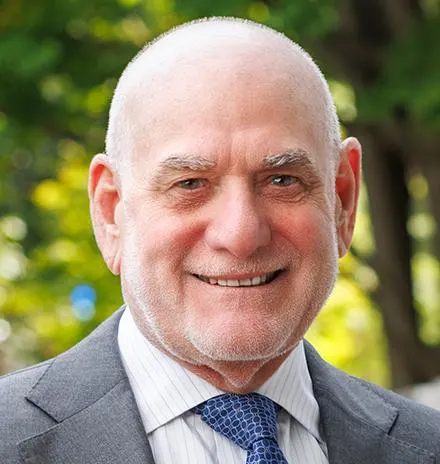

In this episode, Rick and Royce sit down with Rob LeBlanc, Co-Founder at Ambit Partners, to explore the evolution of search fund investing beyond traditional markets. Rob traces his path from building an ETA platform in South Africa to backing searchers across frontier economies, offering an insider’s view on how entrepreneurship through acquisition is adapting globally. The conversation examines the unique dynamics of searching and operating in less developed capital markets – where relationships, local fluency, and cultural context often outweigh formal structures – and explores how factors such as currency risk, investor networks, and institutional maturity shape the search process. Through comparative insights between developed and emerging markets, this discussion highlights the expanding boundaries of the search model and the growing diversity of its global practitioners.
Transcript
Royce Yudkoff:
Welcome to Think Big, Buy Small, a podcast from Harvard Business School about entrepreneurship through acquisition. We’re your hosts, Royce Yudkoff…
Rick Ruback:
…and Rick Ruback.
Royce Yudkoff:
Rob, it's a pleasure for Rick and I to be hosting you today. Our listeners are probably aware that you are one of the innovators in bringing search investing all across the globe, including to many frontier markets. And while your fund now invests globally, your origins are really in off-the-beaten-path markets. So, maybe a good place to start is telling Rick and me a little bit about where you grew up, your family, your education, your career leading to this point, and we'll take it from there.
Rob Leblanc:
Sure. Well, thank you for having me. I grew up in Vancouver, Canada, and went to high school here. Then I went to Montreal to undergrad, to a place called McGill University, and I studied commerce and international development and environmental studies there. So, I was always sort of interested in the intersection of business and environment and social development issues. Thereafter, I went into management consulting, private equity to HBS, actually. And that's where I first got nipped by the search bug, thanks to you two and your work there. Wasn't lucky enough to get in the class second year, by virtue of losing the lottery on gaining admission, but my roommate at the time ended up being one of the first searchers in Canada, Liroy Haddad, so I had a front row seat and access to most of the case material that way. And at HBS, I was interested in ETA and entrepreneurship, but also emerging markets and also the emerging idea of impact investing. And it's sort of the confluence of those three things that led me to moving to South Africa after school to build an ETA investing platform there that looks a little bit like in North America now, the sole sponsor, private equity EIR model – or entrepreneur in residence model – that you see at greatest scale with maybe NextGen, out of Chicago, or Alpine Invest. And what I mean by that is a single LP, 100% funded, but working in a traditional private equity way of buying an asset and then placing an operator into the business. And so I worked on that for almost ten years after business school, buying thirty ETA-like small companies in South Africa. So, my pathway into this space was really kind of my team and I being the de facto searcher thirty times, and then placing operators into the CEO seat and working at a board level with all those CEOs to get them comfortable and operating at a high level.
Rick Ruback:
So, not the typical search model where the buyer is also going to be the CEO? More like a private equity firm, really…
Rob Leblanc:
Yeah, with an owner-operator model sort of post-transaction. If you think of mixing the ETA cocktail, traditionally as searcher finds asset or, you know, jockey then horse, we definitely had it flipped, where it was asset first and then operator. So, yeah, very much buy a solid horse, find an appropriate jockey. And the reason for that, Rick, was circumstantial, right? Of course, ETA hadn't even happened in Africa yet at the time. This is like 2012. So, it wasn't for lack of potential in Africa for traditional search, but if you require, by definition, the talent to move first, no talent had moved. So, we were sort of forced to go with the asset first. Anyway, we did that thirty times, we exited a few of them, and then we decided in 2018 to sell the remaining portfolio to another private equity firm in South Africa. And that's when I came up for breath. And Royce, right around that time is the first time I reconnected with you and started pinging you about, “Would search work in new places, like South Africa?” And that's when I was kicking around the seed that became what is now Ambit Partners. I just thought, “Maybe now the time is right for talent to go first and not have to lead with the asset.” And I started investing traditionally in search in North America. That was fun. I got into the community, understood the traditional side of the ecosystem in the US and Canada. And then actually what happened is something I didn't expect at all, which was that searchers looking to launch search funds in new markets outside of North America started contacting me. And at first I didn't understand how or why. The “how” became evident after eight or ten of these conversations happened, which was that great searchers are doing a ton of diligence on the career opportunity, and so they had talked usually to dozens and dozens of other searchers. And a lot of these searchers, who were in classes like yours at HBS, were asking themselves, “What investors understand that intersection of search and emerging markets?” And my name came up a few times and then those searchers found me. And after having about a dozen of those calls, the “why” became very obvious, which was just there was a chicken and egg problem with search in a new place, which was that the best investors in the world were primarily American, at the time, and didn't have time or appetite for the country risk. And then great local investors, who were actually open to the idea of the ETA model, were very skeptical or didn't want to do it without the training wheels of an experienced North American investor. So, locals would say, "Sure, I'm in if you can get an American." And then the Americans would say, "Sure, I'm in if you can get a local who knows their way around the block."
Rick Ruback:
The way I characterized it in a couple cases we have on search in developing markets is that the US investors don't know enough about the country, the economy, and the local investors don't know enough about search and there might not be much of a capital market to begin with. So, you're kind of stuck. If you're in a developed economy and you want to do a search, you can usually get half your equity funding from US investors and half from local investors. And I'm not sure the cost of capital, the hurdle rates and the like, are so much different than what searchers would face in the United States. But I think when you leave those developed markets, as you have, it becomes a much more complicated problem because there's just so little information. And one of the hesitations that I've heard often is just about the rule of law. If you invest outside of the United States, even if you have great contracts, the contracts effectively become unenforceable. What's your answer to that?
Rob Leblanc:
Well, there are different legal systems with different degrees of enforceability around the world. Our lived experience in the portfolio is, I'm not saying it won't happen – it's definitely a higher risk of happening – but a lot like the foundational elements of search in America that have allowed it to thrive – really about like high functioning, high integrity, high collaboration, high trusting relationships in the room – is really the first and best defense there. You're just working with good actors, despite the context, and we spend a lot more time underwriting that than the actual legal system.
Rick Ruback:
That makes a lot of sense to me.
Rob Leblanc:
We think there's tremendous opportunity for search in new places, but it's important to think about those new markets. The rest of the world outside of North America is a big place and very different. And we think about it as a two by two, where you have maturity of the economy and maturity of the search ecosystem. You have, obviously, less developed at the lower end of the spectrum and very developed at the other end of the spectrum, along those two dimensions. And I think the way we're seeing markets evolve overseas is you really do have those distinct four quadrants, where if you have North America as sort of the top-right developed in both respects, you have, say, very different macro-economies. Take like Brazil and Spain, or Brazil and Germany, for example. There, you'd have very developed capital markets and an economy in general versus a clearly emerging market, but then a very, very high functioning, fast moving, well-developed search ecosystem. So, Brazil would be an example that stands out there, an incredible search ecosystem with all the constituent parts, probably with the exception of institutional debt capital. But high functioning equity investors, incredible broker community, incredible advisors across capital markets, tax law, an incredibly friendly foreign investment structure that allows withholding free distributions to foreign capital. There's a lot there that we move faster with more confidence in Brazil than say, Italy five years ago, that had no search transactions done yet, right? So, the search ecosystem can outpace the macroeconomic story in a country.
Rick Ruback:
That's fascinating.
Royce Yudkoff:
I think a lot of our listeners are probably thinking right now, "Wait, hold on. There's a lot going outside of North America and Western Europe." Maybe you could just take us on a kind of short global tour and give the listeners a sense of where search activity is occurring, you know, how much of this is happening?
Rob Leblanc:
We like to think of it as like a stone in a calm pond and there's a sort of ripple effect, so you can think of it as like concentric circles of search emerging. And I think it's important, before we jump into the detail, to clarify that this isn't a new thing, with search as an investment model. If you look at the exporting of traditional venture to traditional private equity to more sophisticated alternatives, like real estate and infrastructure, you know a lot of that stuff starts in America and then there's investors that bring it into other relevant markets over time, right? So, if you look at the last forty years of private equity, are there private equity managers and investors in every global economy now? Yes. Did it take a while to get there? Yes. So, we don't think that search is any different, per se. It's just earlier in its life cycle and we're playing a small role maybe in pushing it outside of the US. So, with that in mind, the first pebble to drop obviously was the States. It rippled quickly to Canada and the UK and Mexico. Then from there it sort of went to Western Europe, the rest of Latin America, and the last frontiers now are really Africa and Asia, if you think at a continental level. You can start nitpicking inside countries in those different regions, where it's been faster and slower to germinate, but that's the broader sense. And the cool thing, going back to my story about leading with the asset in Africa ten or fifteen years ago, the whole engine room of search is the entrepreneur, right? So, our view on geography doesn't actually start with the country. We don't prescribe it top down like, "Oh, Indonesia would be interesting to invest in." It doesn't matter unless there's an Indonesian searcher, right? So, for us it's the primacy of the person, really, that drives the geography.
Rick Ruback:
If I want to search in India, do I have to be Indian?
Rob Leblanc:
It's more nuanced than that. What we look for is a high degree of professional, cultural, and social fluency in the place. So, it isn't necessarily nationality or, if we want to get really technical, tax residency, but it is certainly a degree of professional fluency. And so if you're solo, you probably are from that country and you've professionally grown up in it. It's meaningful professional experience and social experience. For example, someone who's from India, gone over to an elite university undergrad, worked in the States, elite business school, and then that person might want to hop back to India - we've almost never done that, because we consider that person professionally American. If it's a paired search, sometimes one can be an explicit expat, but probably with a pattern of high performance in new contexts in their career. But one person in the pair would be native to the country and highly experienced there. So, it depends but, in general, Rick, the short answer is you're from where you search.
Rick Ruback:
It's really interesting because in the US, as you know, there are many successful searchers who were born outside the United States, and that seems to be turned into an asset for them.
Rob Leblanc:
Yeah, I think it's a unique feature of the US and, I would say, to a lesser extent maybe Canada and the UK. Countries that are economically robust, huge and deep markets, and also a history of immigrant-led entrepreneurship – and, very importantly, with a social standing of exit through disposition or exit to an acquirer being socially a good outcome to celebrate as opposed to socially maybe not a great outcome, right? So, that sort of Anglo-American access, you see immigrant searchers do really well.
Royce Yudkoff:
So, tell us a little bit about how you select searchers. What you've already told us is you don't start by saying, "Well, I want to allocate money to Peru." It sounds like you start with the searcher knocking on your door and now what are your considerations, Rob, about backing that person?
Rob Leblanc:
Yeah, so here, guys, I think will sound really traditional and I think that's the thing about our investment thesis, is we're changing the geography but trying to keep everything else very much the same. So, I think if you had a prolific successful American investor on the podcast who told you about how to pick a searcher, our answers would sound probably the same. First of all, we recognize it's super hard to underwrite a person. It's very difficult. We don't see there being any particular killer data point that is the answer. We see it much more as building a mosaic with a bunch of tiles that hopefully gives a picture of likely success, and we build that mosaic along three dimensions. One is high intellect, one is high empathy, and one is high diligence. So, that combination of sort of raw intellectual horsepower, highly relational, and then that cultural relevance and professional networks in the country. And that's what our whole underwriting process focuses on. But I think, again, twenty-five, thirty years ago, you'd focus on some of the same fundamentals.
Royce Yudkoff:
Yeah, you'd focus on those fundamentals, I agree. In that way it's very similar to, say, a North American search investor. The one difference is the network in-country, and here that's an important issue in your consideration. Can you speak a little bit to that particular point?
Rob Leblanc:
Absolutely. I mean, the role of networks in more frontier markets is way more pronounced than in North America. In fact, that's probably one of the biggest differences in running an effective search in other markets. We see the local network as significant. It's one of the main things we underwrite more in newer countries, is who the local investors are. It's part of the reason we do traditional funded search outside of the country, is that hurdle of locking in great local investors at the search phase, because there's not only a need to understand the quality of work of the searcher over the search phase, but there's building relationships and understanding the working habits and preferences and reputations of the local investors as well. Working through multiple deals, you start to develop a real sense of who's strong in that local cap table as well, and all that reflects back on the quality of the searcher's network.
Royce Yudkoff:
So, that network is partly about the quality of investor you get. It is also about deal flow, so that's very different from North America, for sure, where a searcher's pre-existing network just isn't that relevant. You're going to have a huge number of intermediaries. You can work with a vast number of owners you can approach directly, but that's different in these developing markets. Somehow, you need to know people before you get to know them.
Rob Leblanc:
Very much so. They're much more relational economies. The US is much more transactional.
Royce Yudkoff:
Yeah.
Rick Ruback:
And what do you do about the fact that some countries are just uncomfortable doing business with certain people, for example, doing business with women. Does that mean you can't back women? How do you deal with that? Because I suspect that would bother you a lot.
Rob Leblanc:
Yeah, it's a good question. I think that there's a couple of demographic dimensions on which there are differences around the world. We haven't run into that problem on gender, specifically, although in some markets that can mean a harder swim upstream for the female searcher. But I think sometimes it's sort of, in a martial arts way, you can use your greatest weaknesses as your biggest strength in differentiating, right? So, an unexpected trend is some of the first searchers in a lot of East Asian countries are women, for example. And that's a traditionally, you know, sort of conservative, patriarchal, ageist culture, but the women are flourishing and I think doing great, in terms of deal flow and origination, because they are so different. And so, in that sense, it's probably played a little bit more to their benefit than been a drawback.
Rick Ruback:
It's really interesting. We teach a case of HBS searchers who bought businesses in Ghana and one of the things they talked about was this cultural resistance to young people leading businesses in Ghana. You need to work your way up and it's just culturally inappropriate to try to start at the top, and thus searching is something which is looked down upon or met with great suspicion. Is that only Ghana or is that elsewhere around the world?
Rob Leblanc:
I think it's not endemic to Ghana or unique there. In fact, you can almost, as you draw a line east from America, the reticence to believe in young people almost goes up in a linear fashion with a weird blip in Israel and then maybe a little tail off in Australia and New Zealand, but basically it's a straight line.
Rick Ruback:
And so Israel and Australia are probably more similar to the United States?
Rob Leblanc:
A little bit, yeah.
Rick Ruback:
But like Russia, not so much.
Rob Leblanc:
Yeah, I think a different way of putting that is that America is culturally unique in its faith in young people and its appetite to take risk in new and young leaders. You see that in so many manifestations, whether it's pop culture or entrepreneurship. I mean, I think the sort of cultural code or unstated assumption is that young people can do anything in America, and I think people allocate capital that way and people pursue opportunities that way. That is less true abroad, so there's definitely a stronger current to swim upstream against and you have that sort of ageism, lack of gray hair dynamic everywhere. A really useful piece in solving that puzzle is the local investors. And also I'll say this is, as we've been investing and working, like we're about five or six years into our journey now, we've actually experienced social norms shifting. If you take, say, India and China as two big examples in the East, in parallel to what we're doing in ETA, there's a booming startup ecosystem with big outcomes and younger professionals achieving more, that there's even a shift in the social view of age as a limiting factor in potential. And then there's just the hard reality of it, right? Like, “I'm seventy, my kids have emigrated to America, I've got my small business. Maybe I need to shake off my views that a thirty-five-year-old can't run my company, because…”
Royce Yudkoff:
That's who's knocking on my door.
Rob Leblanc:
That, and my alternative is to shut it down. And here's a Harvard MBA who worked for the country’s leading private equity firm and leading management consultancy before that, and they want to move home to country X, when my kids refuse. And they want to create jobs and create wealth and be a business role model in the community. Like, all of a sudden, you know, they start to think, "Geez, I kind of wish my kids would do this. This is cool." And a relationship builds there and that's often the seed that germinates into a fruitful transaction.
Rick Ruback:
Royce, with search being so popular in the United States, I guess it isn't surprising that there's a fund like Rob's to bring search around the world.
Royce Yudkoff:
Well, that's right, Rick. You know, when you and I started teaching this topic fifteen years ago, it was really a North American phenomenon. And you and I have watched as our former students and many others have populated Western Europe with search. And then we've seen people go into Asia and Africa, and I think if you had told us fifteen years ago that people would be launching searches in Morocco and Egypt and Paraguay and Ghana, we would have been skeptical. And, you know, there are a few needs that are global. One is for a retiring entrepreneur who doesn't have a big management bench underneath him or her. Who do they sell that company to? It's too small for private equity. If they don't have kids who are interested, this is where the searcher comes in, and that's a global phenomenon.
Rick Ruback:
Well, there's this pent-up demand by potential sellers all around the world because they don't have an exit plan. In all the businesses that need both a manager and capital, without search, there's no real exit. Private equity does that imperfectly, and there isn't that much private equity around the world. And so I see what he's saying.
Royce Yudkoff:
Yeah, and for young entrepreneurs who don't have some big idea, aren't technologically inclined, and feel a startup is too risky, this is a way to achieve entrepreneurship early in your career.
Rick Ruback:
Let’s get back to our conversation
Rick Ruback:
Can you tell us something about the transactions? My guess is the companies are a little bit smaller, maybe a lot smaller. Multiples are also smaller, but maybe none of that's true.
Rob Leblanc:
Look, I'll first point out that, just like picking the searcher, we try to stick to the traditional search knitting from North America. We're quite selective on the asset as well, that it ends up looking a lot like a North American asset, both in terms of business model but also capital stack and valuation. So, it looks a lot the same, but there's an inherent selection bias in there. There's other deals that are closing that we're not participating in that might reinforce your view, Rick. But in our dataset of stuff that's closing in new countries, it's largely the same size, so still a million to $5 million of US dollars in EBITDA, sometimes a little on the smaller side. They're often less levered, but still more levered than you might think. It's just the sources of debt are a little bit different, so it's often not a senior lender. It's usually a larger seller's note and/or some private debt capital, although there is traditional senior leverage available in a lot of markets. Again, that goes back to more mature capital market versus mature search market, right? So, in more mature capital markets where search is new, you can still raise debt. And then they typically tend to be growing much faster, yet valuations are the same. So, we have a heuristic internally, we borrow from one of our long-term mentors and advisory board members, Will Thorndike, who talks about a power ratio. It's just sort of entry, trailing one-year growth rate divided by the EV to EBITDA multiple. And search all time is about 2X, so about 12% growth for six times EBITDA, in the Stanford data set. And ours overseas is much more like four to 6X, so much more like 20 to 40% growth divided by that same sort of four to six times multiple. But you'd expect that for the country risk and the FX risk and, you know, those other things. And so that's the typical profile. But strangely, Rick, we've been surprised by actually the size of opportunities found. In some of these markets, there's such a scarcity of lower middle market or even mid-market private equity, that a searcher shows up as the only buyer. This past year, the biggest opportunity we looked at was $16 million of EBITDA.
Rick Ruback:
One, six?
Rob Leblanc:
One, six at a $90 million EV. So, we're talking, you know, five-ish – well within the strike zone of lower middle market private equity deal. It's just in the country, this was in the Andean region of Latin America, just literally no private equity, no other buyer. And that deal didn't go through, more for seller hesitation, but we were shocked at the size. And that searcher in that country has actually come with things that are in the six, eight, twelve, sixteen million of EBITDA, because there's just no private equity there.
Rick Ruback:
That's interesting because in the United States I really do believe that when searchers go up market, they're really confronting private equity firms that have gone down market. And so I think if you're trying to buy a business which has two to three or four million dollars of EBITDA, you're likely facing competition either from a strategic or from a small private equity firm.
Rob Leblanc:
Not to mention other searchers.
Rick Ruback:
Yeah, but I think it has to be something very special for the searcher to win that competition against a strategic, who can often pay more, or a private equity firm, who can often manage the idiosyncratic risk better. So, what you're saying, which I think is really cool and interesting, is if you go outside of the developed US economy – particularly in the private markets, where we like to think of the private markets in the US as being illiquid, and they are relative to the public markets, but they're still pretty liquid relative to these markets that you're regularly doing transactions in – and when you go to what you call frontier markets, where there's much less liquidity, much less private equity focus, searchers can win deals that you would expect would go to private equity, simply because there's not enough private equity activity in that country. Really fascinating idea.
Rob Leblanc:
Again, it really matters on the market, right? There are places like the UK, maybe, that's like a medium-to-mature search market, but then a very, very, very mature, well-served capital market, right?
Rick Ruback:
Right, so that's not happening there.
Rob Leblanc:
Yeah, and similarly in Western Europe, you know, there's lower middle market private equity super active all over the continent. Your assumption from America would probably largely hold true there. But certainly, the more emerging on the macro side that you go, it's way shallower. Now, of course, the corollary of that becomes one of the major drawbacks, in that there's less liquidity for exit. And so that's where that scarcity of later stage private equity is a risk. There's some nuance there too though, because our view of that exit dynamic is it's not so much the absolute volume of private capital and the velocity, you know, in that private capital market. It's actually about where supply meets demand, because what we find is even though there's less absolute amounts of capital or buyers, there's also fewer good assets to buy. And so a search-acquired and operated company after five to eight years – you know, that's professionalized and digitized and it's fast-growing and a professional board and external equity investors, all of those things that you would find stereotypically true of a search-acquired asset – when that comes to market in the US, you're one of hundreds, if not thousands, of assets on the market, you know, in the one or two year exit cycle. When you're in some of these more frontier markets, there is no small private company in sort of that six to ten of EBITDA range for any private equity or family office or strategic buyer, right? So, we almost feel like, to a degree, there's less capital, but there's even more scarcity of well-run assets of that size in those markets, that we think exits could still happen at a premium. Of course, our oldest assets are only four years old now, five years old, so it's early days.
Rick Ruback:
Early days. So, in the US, I think a lot about the difference between the search investments and the search transactions that are fundamentally value investments. And, you know, that's kind of, if you will, the HBS model of search. You buy dull, you buy at a low multiple, low growth rate and you do really well. And then there's the Stanford version, which is high growth. Both, I think, have been very successful. But would you say that, when you look at your portfolio, that outside-the-US growth companies are better positioned for success than value companies? Because Will Thorndike's ratio is really about the idea that if you buy a small business in a rapidly growing sector, then that growth solves a lot of the problems that happen from new management. You can make a lot of bumps, but when you're growing 50%, maybe that means you're only going to grow at 30%, but you're still going to do really well.
Rob Leblanc:
So, in general, we would favor growth. It's one of the things you control the most that can drive the biggest relative impact in the return. But it's also circumstantial in the market, so I'd almost pivot the premise, which is that you can find “boring” in these markets, that's high growing still, because of the nascency or leapfrogging nature of some of these economies. So, we buy very search-typical assets in a lot of these places. They're just growing 20 or 30% a year because the product or the service is still relatively under-penetrated and sort of under-adopted in those markets. And search-typical, it's like enduringly profitable, you know, moderate-to-strong growth, high revenue quality, high capital efficiency, all of those things – and so, in that sense, looking very typical to what you'd see in America. It's just those businesses tend to be growing faster. But you also want that due to the relative lack of leverage, the higher cost of capital, and how that reflects sort of those big out-of-control risks, like FX and, you know, tariff regimes, for example. There's some big things that can swing against you when you're not just in a single country and single currency.
Royce Yudkoff:
I'd love to explore a couple of the practical elements of searching, particularly in the more developing markets. One is sourcing, right? In North America, there are three or four thousand small business brokers and there's a robust communication system and acceptance of it that allows for mass direct outreach – different or similar in a lot of these non-Western European, non-North American countries?
Rob Leblanc:
I would say different, and in Western Europe it's also different. It's not quite as transactional or accepted to reach out in the same ways. Searchers have to be a lot more relational and tactical and non-tech mass outreach driven. Over the last five years we've been surprised. At the beginning of our investment cycle, so many of our searchers in new markets wanted to connect with our North American searchers to download best-in-class sort of tech stack e-mail campaign know-how. And in the last eighteen months, it's reversed, where our American searchers are, sort of, not necessarily like the death of the tech stack and the e-mail, but certainly the need for an omnichannel approach, where e-mail's not enough anymore to originate a good one. And so they're actually wanting to reach out to some of our searchers who have had to build it from scratch, in non-traditional ways, in those more frontier markets, to download cool ideas and sort of differentiated techniques to get in front of sellers. So, there's been almost this like reverse innovation from searchers in our portfolio that we didn't anticipate.
Royce Yudkoff:
That's interesting. And these comments tie back to your earlier comments, that some things you look for that make these searches go well, as a searcher, who say has been a McKinsey partner in that part of the world and has extensive relationships among the owners, who they might convert into a seller, or getting that wealthy, well-known family on your cap table because they have a lot of relationships, and these are attributes that investors in North America don't particularly screen for.
Rob Leblanc: (00:46:37):
Yeah, it's a totally different fishing pool, generally smaller but, in a way, way easier to make faster, credible, high-quality connections.
Royce Yudkoff:
Fascinating.
Rick Ruback:
Is the 18 months, 24 months of search, is that still typical in these other parts of the world?
Rob Leblanc:
In general, because of that proximity and size, the ability to cover the market fast with great introductions, it just goes a little faster. So, in the newer search markets, where the fishing ponds are sort of less fished, our searchers are generally going faster. Of course, it's like judging the success of dating by the wedding nights and not the quality of the marriages, so we're reticent to sort of, you know, attach too much to that speed if, in fact, maybe we're all the Vegas weddings that are, you know, shot gunned and fail in two years time. So, we don't really judge it by speed but rather by quality.
Royce Yudkoff:
That's a metaphor which deserves to be captured and reused by us, I think. I like it. A topic that we all knew we’d get to, but there've been so many interesting things to talk about, is FX. In these searches outside of North America, and maybe outside of Western Europe, you're bringing together in-country investors and out-of-country investors, and for those out-of-country investors, they've got to deal with the FX risk, somehow. Tell us a little bit about how investors and searchers think about that issue, and who bears that risk also.
Rob Leblanc:
It's a great question and it's difficult to manage. I'll start with our perspective as an investor but then blend it in with the searcher's perspective because the long and short of it is that through the traditional structure, the searcher ends up bearing a lot of the risk, even though there's some ways to share it. So, I think as an investor we have a couple layers above the individual search acquisition to think about it. So, you know, our funds are structured to do between sixty and eighty searches and twenty to thirty acquisitions, and that'll probably be in twelve to fifteen currencies. So, we're diversified at the fund level and, in that sense, we have some protection. But in the search fund itself, there's also an element of like the search not particularly mattering – not to say that that capital's not at risk or it doesn't really matter, but the search stage capital is a little bit de minimus, and it's really more about when you acquire the company and you put in a lot more capital. At that stage, there's another couple ways to think about it. There's what currency is the investment denominated in? What currency does the hurdle rate take over on? What currency are the performance hurdles measured against, particularly that third tranche in a traditional search fund, the performance-based vesting. So there, the international community has oscillated between more investor-friendly and searcher-friendly norms, and it can change by country through the cycle, the perceived strength of the deal, or the searcher to sort of give and take. But in general, it's sort of hard currency denominated preferred return of principle, and then usually the performance targets get pegged to a differential between the US inflation and the local country's inflation. So, if that currency is going to devalue a percent a year over, say, like a ten year hold, to make the math really easy, then the third tranche of the searcher's equity would vest between 30 and 45% nominal, as opposed to the 20 to 35% hurdle.
Rick Ruback:
But, just to make sure I understand, it's not measured in US dollars, at this point. It's measured in the currency of whatever that country is.
Rob Leblanc:
That's right. Yeah, yeah.
Rick Ruback:
So, in some sense, we haven't got to the currency risk yet because the money hasn't left the country.
Rob Leblanc:
That's right, yeah. But we've set up holding structures in some of the major markets we have where we can actually realize returns in that currency and maybe keep them there for an extended period or redeploy them there for an extended period so that we can time our FX realization separately from the realization of the distributions from the asset. But we generally don't worry so much about FX. We don't want to be FX traders and we try not to think like currency traders. Great searchers, great assets, in great industries with solid deal structures – that's sort of our bread and butter that we stick to. But going back to the FX piece, we often see that it adds a layer of search criteria filtration. We talked about the traditional North American, high-quality revenue, high- quality capital efficiency, et cetera. In currency-volatile markets though, we encourage our searchers to add a layer of FX defensiveness into what you buy. And that's most commonly manifest in foreign denominated revenues and local cost basis. So, exported services are usually the archetype that really works. And there you have an inbuilt FX hedge because as the foreign currencies that characterize your revenue stay strong, your revenue grows. And you want to avoid imports and/or commodities that are FX priced in your cost space. And if you have any of those things sort of interactively in your cost structure, then you want to deeply interrogate the contractual and working capital mechanisms in the business to make sure that any spike can be pushed on a flow-through basis through to your customer, who ideally is also denominated or liquid in a hard currency, where it's not going to hurt them. So, you know, it's really important, really complex. It's why we think about it at every layer of our fund structure at the asset level and even into the search aperture, because you can buy great defensive, almost a-cyclical, hedged assets if you find the right business. And we've got a handful of those in our portfolio that are doing great.
Rick Ruback:
One of the things I found interesting is that in the US we tend to underwrite a base case where we assume no multiple expansion or reduction. So, entry equals exit multiple, for our basic model, and then don't worry about inflation or this or that. We just have some IRR hurdle, like mid-thirties, and that's how we end up pricing deals. Here, it seems that your base case, while it doesn't necessarily assume a decline or an increase in multiple, it is going to assume some decline in the currency because I'm going to boost that what in the US might be 30% IRR to trigger the incentive piece of the carry. You would trigger at 40 or 45%, giving you that extra margin of safety around the currency and, I suppose, around political things in the country as well, whatever it is. And so that's what you mean when you say, “The searcher ends up bearing those costs”, because to get their full measure of carry, they have to perform better than a similar searcher in a similar industry in, say, the United States or Canada or Mexico.
Rob Leblanc:
Precisely, so you're generally buying more growth for a lower price to offset, in part currency, but some other risks as well. But your ability to attract talent to the business, as a new searcher in a new place, you're like a sizzling story, compared to working for any other SME in the country. So, you can often build exceptional teams faster. And then, in more frontier markets, where access to capital to scale is often the binding constraint on small businesses, when you bring a search cap table and a search network, particularly the local investors, your ability to tap into local growth capital becomes dramatically differentiated against any of your competitors. So, the complexity and difficulty of doing business can be higher, but then the size and magnitude and ease of some of the fundamentals can be easier. It really depends on the specific asset and the opportunity and the person.
Royce Yudkoff:
I was also very struck by your passing comment that a criteria is often that you're selling into developed market currencies and your costs are in the, say, emerging market currency, as a way of hedging foreseeable currency decline. You know, I'm thinking, Rick, the Philippine call centers, whose clients are US clients, and as the Philippine currency declines, you're opening up this big gap for repricing your US customers because you're becoming so cheap to them. And I never reflected on that until you raised this point, Rob, but it is a way of turning a terrible risk into at least a neutral or maybe favorable.
Rob Leblanc:
Yeah, and it's actually even a niche, when you look at industry focuses in a searcher's PPM. You know, if you look at top international searchers, there's a lot of like cross-border services as a pillar of that search strategy, so very explicit goal in going to find those types of opportunities.
Rick Ruback:
That makes a lot of sense. So, as we're wrapping up here, I'm trying to think about what I'm going to take away from this conversation. And I would say the kinds of companies you look for are quite the same. What's different is there might be fewer opportunities, but there are many fewer searchers so there's more opportunity per searcher. And so far, at least, those opportunities seem to be coming at a faster clip so that the search period seems to be a little bit lower. Those are all positives. And I would add one more positive, which is that it's possible to find companies that have great fundamental values when looking through the rearview mirror, but also high growth when looking through the front windshield, which is pretty unusual in the United States. So, those things are all terrific. On the downside, the transactions can be a little bit more culturally complex. You have the hurdles that young people might face in a country that's less accepting to young people doing that. You have potential geopolitical risk and currency risk that investors will factor in. Do I have it?
Rob Leblanc:
That's a lot of it. The only proviso I'll throw in there, Rick, is the idea that it's very hard to generalize those conclusions for everywhere.
Rick Ruback:
Of course.
Rob Leblanc:
Context matters, you know? The local country and person and asset and industry and those things – but thematically, I think it's spot on. And it's what piqued our interest to go do this in the first place, is we felt that at the top of the funnel, the most exciting thing was the talent arbitrage. Because one thing we haven't really touched on is that that individual who wants to go back from learning about search, you know, at one of the world's leading business schools, back to their home market, is very often a sort of big talent fish in a small talent pond. And then once you start searching and operating, then a lot of the things you just mentioned sort of take over. But again, we love the idea of this type of person going back to these types of markets where it's new. It reminds us really of search forty years ago in the US, and some of the biggest returns ever came earliest, and so we're really fascinated by capturing that in other parts of the world.
Rick Ruback:
That is clear and exciting.
Rob Leblanc:
It is. It is. And I think the number one thing for us is managing the time zone and travel. I sit in Vancouver, on the West Coast. My partners are in Paris and Cape Town. We're eight to ten hours apart, depending on if we're Daylight Savings Time or not. That's great for our portfolio because we're available to our searches worldwide, you know, all day, every business day. But for us internally, it's tough. And then the travel that comes with that, I'm six to eight pretty big overseas trips a year. That's just part of the job and it's a grind, especially with young families at home, and it makes our spouses critical. The name of our firm, Ambit Partners, we place a lot of emphasis on the “partners”, because they make it all happen in a lot of ways. But the flip side of that is just such diversity and, you know, food for our professional intellectual curiosity, right? It's like with new culture, new norms, new tax system, I mean, whatever you want to nerd out on in any given day. Sitting in Vancouver, I can be in eight or nine countries a day on Zoom and thinking through different business models with different people, but with that really cool common thread of just, you know, those search characteristics for North America of like high-performing, round elbows, highly collaborative, that you get all the diversity but that same constancy through the portfolio, which just makes our work a ton of fun. So, as much as it's a grind on the road, it's always fun when we're there.
Rick Ruback:
Rob, we always end our podcast with a terrifying moment for Royce and I because we ask our guests if they have any questions for us.
Rob Leblanc:
It's such a great invitation. I'd love to take you up on it. The question is, how do you see the potential of self-funded search abroad? And I'll give you context for the question. We've made an operational choice inside our business to focus on traditional, and that's really because we needed to minimize the complexity, right? However, we're approached multiple times a week with great self-funded opportunities all over the world, and there's just a natural curiosity: What are the terms? And how good is the asset? And what’s the industry? But it doesn’t have the momentum and track record that self-funded does in the US, and I'm just wondering, because there's no SBA loans anywhere else.
Rick Ruback:
Right. I mean, self-funded in the US goes with SBA conveniently, but it probably wouldn't make that much difference if the SBA…
Rob Leblanc:
…wasn't available.
Rick Ruback:
Yeah, wasn't available. I mean, what's nice about it, of course, is the no covenants, but with that comes a lot of complexity and fees up front. And so some people, particularly in smaller deals, elect to go conventional. Anyway, your question is, “Why don't we think about self-funded outside of the US?” And the two we've written cases on are self-funded, but they're both very small at the beginning. You know, the Ghana was, I don't know, a few hundred thousand dollars in TEV in the original transaction. And we have another one in the Czech Republic, about a company that assists schools in arranging travel. And again, a small business. Both have done really, really well and both were purchased by self-funded searchers. What I have thought in both those cases was that the self-funded searchers really were able to be more nimble than a funded search would be. And so they're buying assets in a kind of different way, of a different size, with a different structure, and I think it would be really hard to do those transactions as funded searchers. That said, from an investment perspective, I think they're both terrific, except there's not much equity needed to do those deals, because they're smaller. So, from a fund level, investing in unfunded searches is really hard because if the searcher's buying a smaller business in a smaller country, your equity check might be $50 or $100,000, and it's hard to put enough capital to work. So, I think that's a limiting factor. Royce, what do you think?
Royce Yudkoff:
Well, I agree with all the points you just made, Rick, so I'll do something additive to that. One of the ways in which funded search works is that you're connecting with an early career manager where there is not a lot of track record to look at. There's being a winner through school and through some mid-level management jobs, but you make your best assessment and then you have a year and a half to really get to know this person in a very entrepreneurial context. And so by the time they present a business to you, you have vetted that person's energy and tenacity and street smarts and soft skills. And the problem I have with self-funded search is, and this is through an investor's lens, you want to make sure you really know that person. It cannot be that they just show up with an interesting looking transaction and you're relying on their reference list of what kind of human being or manager they are. That is a very dangerous proposition. And it's not clear to me how you overcome that. Rick, when you and I have invested in self-funded searches, we have generally known the people in a professional context for a long time. I can't think of an example where, you know, there's been a knock on the door in the night and a hand reaching out and we've said, "Sure, it sounds like a fine deal." That's the issue I would have.
Rob Leblanc:
I think you guys are spot on. I think there's a clear trade-off though, right? I think self-funded allows for way more nimbleness and flexibility, Rick, as you pointed out. But if you get support from your investors to find an asset, it's likely it's going to be bigger, it's likely you're going to get more capital to work, it's likely you're going to build a stronger board of people who know you well and so on and so forth, and then hopefully go further and bigger together. But it's a very clear trade-off. I also think that it's so much about the searcher too, right? The type of work they want to do Monday to Friday, because that smaller business is a slightly different ball game than something that's a little more scaled and professionalized.
Rick Ruback:
Yeah, very different.
Rob Leblanc:
Yeah.
Royce Yudkoff:
Well, Rob, thank you so much for visiting with Rick and me. The story of what you're doing is fascinating.
Rob Leblanc:
Thank you for having me.
Rick Ruback:
I think in the U S the best, certainly unfunded, smaller acquisitions are in niches.
Royce Yudkoff:
Yeah.
Rick Ruback:
What do the students say? Riches in…
Royce Yudkoff:
There's riches in the niches.
Rick Ruback:
Yeah, there's riches in the niches. And maybe when you go outside the U.S. you're not looking for businesses that are so nichey.
Royce Yudkoff:
I think that's an important point because when you ask yourself, “How can a business be both small and high quality? If it was high quality, wouldn't it be big?” And the answer is the nichiness of it, right? That they find some very defensible niche that's too small for big competitors to fit their way in and, within that niche, they're actually a devastating competitor. They are small simply because the niche is small…
Rick Ruback:
Right.
Royce Yudkoff:
…but hugely profitable, and those small economies might not have those niches.
Rick Ruback:
Right. They might just not have those niches because you don't have that structure. So, it might be in a developed economy, you have a landscaping service mow the lawn, and that landscaping service is a good business. In a less developed economy, maybe one of the workers mows the lawn. You just don't have that highly articulated economy where you outsource quite as much from the firm.
Royce Yudkoff:
Yes.
Rick Ruback:
But I think it's intriguing that the popularity of ETA seems to be very much moving from developed economies to what Rob calls “frontier economies”, places where the capital markets are less well-defined, where structures are less well-defined, but businesses still exist and economies are still vibrant. And, from an investor's standpoint, what Rob's doing seems to be really hard work. Because while I don't think you need to be a full-time investor to invest in interesting search opportunities and businesses in the United States, there is so much more to understand, even when you take that same business and move it to a frontier economy.
Royce Yudkoff:
I totally agree, Rick. And, you know, when you reflect on how we invest in the U.S., there's so much we know that we're not even aware of that we know. We know tax codes, and we know regulation, and we know people frequently who we can call and who'll have some insights into the particular project we're doing. I can go on and on. But if you now transport us to some country where we know none of those things, we're stripped of many of our advantages and, you know, Rob, to his great credit, overcomes that to harvest other benefits.
Rick Ruback:
But sort of hard to imagine you could do this without doing it as a fund. I think individuals can invest in search as individuals in the United States, Europe, Canada, Mexico, you know – but I don't know that you could do this outside of a fund because there's just so much work to be done.
Royce Yudkoff:
Yeah, I think that's right. I think this really does require special knowledge, and I'm very respectful of what he's accomplished.
Rick Ruback:
Yeah, it's really great. You know, you can tell from the conversation that he has a certain nimbleness and willingness to entertain new thoughts, and I think that's what you really need to be successful as an investor in this space, in those places.
Royce Yudkoff:
We agree.
It's a fascinating look on how search is becoming a global phenomenon that would have been hard to imagine just a few years ago. Rob can really shine a light on that from his view as an investor in frontier markets and global search. In our next podcast, we'll be meeting Ike Ukawuba. Ike is a self-funded, mid-career searcher. He worked in a large company and decided that his future was with entrepreneurship. He experimented, like many entrepreneurs, with startups, and then found his way to entrepreneurship through acquisition, buying a company of which he is now a successful CEO and owner. So, we're going to learn a lot about the journey and why that turned out to be a good decision for Ike.
Royce Yudkoff:
Rick, we end each season with a very special episode where we ask our listeners to e-mail us and offer questions they have after listening to our episodes or after their experiences in search. We pull out the questions and you and I discuss them.
Rick Ruback:
You know how much fun that can be.
Royce Yudkoff:
It’s a favorite of ours and a favorite of a lot of our listeners. So, listeners, shoot us an e-mail at rickandroyce at hbs dot edu and we’ll put them in the bunch we go through and answer them in our final episode of Season Three. We’re looking forward to it. You’ve been listening to Think Big, Buy Small. We’re your hosts, Royce Yudkoff…
Rick Ruback:
…and Rick Ruback.
Royce Yudkoff:
Katie Zandbergen produced today’s episode.
Rick Ruback:
Craig McDonald is our audio engineer. If you have any questions, comments, thoughts, feel free to just e-mail us, rickandroyce, all one word, at hbs dot edu.
Royce Yudkoff:
We’ll be back next week with another episode of Think Big, Buy Small.