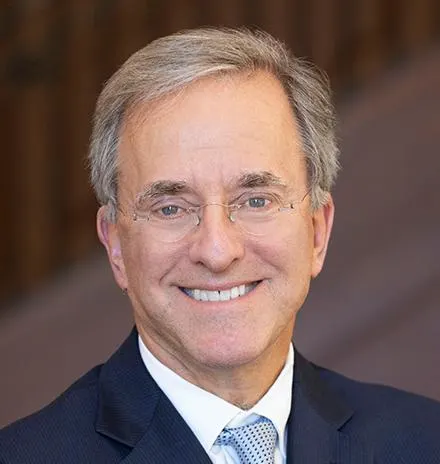
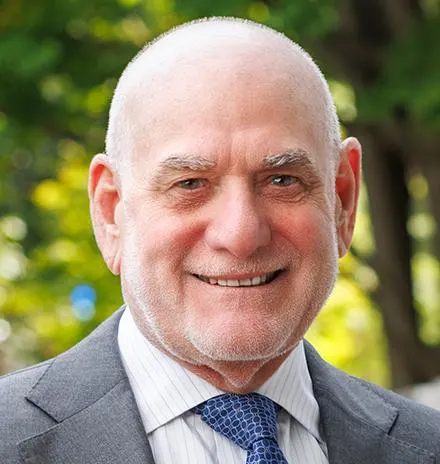

Partners in search, Nick Kerr and Shaquille Walker, join Rick and Royce to share their journey from risk-averse upbringings to acquiring HealthBridge, a concierge primary care clinic on Long Island. In this conversation, they discuss how their backgrounds, family considerations, and desire for autonomy led them to entrepreneurship through acquisition, while also reflecting on the emotional highs and lows of searching for, buying, and operating a small business. Furthermore, they describe what it’s like to partner with a founder who remains deeply involved in the practice, why concierge medicine offers an appealing model for both physicians and patients, and how they plan to build a differentiated, prevention-focused platform through thoughtful expansion. Along the way, the conversation explores physician burnout, the value of separating clinical care from business management, and the compelling alignment that strong operational leadership can create for doctors, patients, and investors alike.
Transcript
Royce Yudkoff:
Welcome to Think Big, Buy Small, a podcast from Harvard Business School about entrepreneurship through acquisition. We’re your hosts, Royce Yudkoff…
Rick Ruback:
…and Rick Ruback.
Royce Yudkoff:
We're joined today by two searchers who are partners executing a fascinating consolidation strategy, and these are Nick Kerr and Shaq Walker. Gentlemen, welcome to Think Big, Buy Small. Rick and I are delighted to have you here.
Rick Ruback:
It's great to have you guys here.
Nick Kerr:
Yeah, thanks for having us.
Shaquille Walker:
Thank you.
Royce Yudkoff:
Rick, you and I should note for the audience that we are investor participants, among a collection of investors, in Nick and Shaq's enterprise.
Rick Ruback:
And we should say that both these guys sat beside each other in our class for a full year. How many years ago was that? Two years ago?
Shaquille Walker:
We graduated two years ago.
Rick Ruback:
And Shaq was just a guest in our class.
Shaquille Walker:
Hopefully, they didn't take anything I said too seriously or they'll all be in trouble.
Rick Ruback:
You were great.
Royce Yudkoff:
It's going to be a fascinating discussion because both of you are early in your journey as entrepreneurs through acquisition, but you have successfully completed the first of what you aspire to be a number of acquisitions. So, there's just a lot to talk about for people who are contemplating going down this path. But Rick and I always like to start kind of at the beginning and maybe would just ask each of you to tell us a little bit about your backgrounds and your journey to this point.
Nick Kerr:
Sure. I'll go first because Shaq has the way more interesting background. I don't want to follow his up, so I'll start with my more boring one. I'm from Salt Lake City, Utah, originally, oldest of four kids. Both my parents are from California but they went to school at Brigham Young University and never left Utah after that. I also went to Brigham Young University for undergrad, as did Shaq, although we didn't know each other there. I was at the business school there. Shaq was doing exercise science. Growing up, I think it's funny because I come from like a fairly risk-averse family. My dad's mother was an immigrant from Mexico. Given that, I think he and all his brothers grew up in like a very kind of risk-averse family with the goal being like “get very stable, middle-class jobs”. I observed that in my parents a lot growing up. All of my dad's career moves were really focused on stability and I think, for me, that was a big core of what I was looking for early in my career, was kind of seeking that same level of stability. I think that manifests through the jobs I took in management consulting and private equity. And it wasn't until like I got into Harvard Business School and started thinking about more of what I wanted to do and really reconnected with Shaq, at that point, that the thought of entrepreneurship started to creep in. When Shaq was first preaching the gospel of ETA to me, it really rang true because it was everything I was looking for, right? It was the excitement and ownership and kind of long-term orientation of entrepreneurship and the chance to build something genuinely exciting with kind of a risk-reward profile that felt kind of more appropriate for me and my background and also my family situation. I've been married for ten years, have two little girls, a six-year-old and a two-year-old. What I was looking for was kind of a different risk profile than I think a lot of my classmates were looking for.
Royce Yudkoff:
Nick, when you say risk profile, could you expand on that for a moment? Rick and I were following your description of your parents, focused on risk management, but when you say “a little different risk profile”, do you mean you were willing to absorb a little more risk than your classmates or you felt like you were coming from a place of trying to avoid absorbing risk?
Nick Kerr:
More the latter. It's a confluence of things, right? I think like people coming to HBS come from a variety of backgrounds. In my situation, I was fortunate to have had good jobs prior to coming to the business school, so I felt like there was a level of downside protection from my resume, if that makes sense. By the same token, given that I was married, the primary income provider, and also having two kids, it's just different in terms of feeling less inclined to create a startup from scratch with no clear pathway to revenue right away. That was something that, for me, felt like I probably wasn't going to consider.
Rick Ruback:
So, you wanted less risk.
Nick Kerr:
I wanted less risk, but still something different than what I'd been in before. I really enjoyed my time in private equity and consulting and learned a ton, but I always felt like I had lack of autonomy and ownership over what I was working on and, because of that, I never felt like I was truly at my best. When I reflected on times in my prior career when I had been at my best, it was when I had full autonomy and it was like my reputation on the line. And those are the most stressful times, but also the times when I felt most fulfilled. I wanted to seek that, but in a way where I felt comfortable that it was going to meet my family's needs throughout.
Royce Yudkoff:
Shaq, how about you?
Shaquille Walker:
First off, I think it's funny that Nick always says my background's so much more interesting because then it sets everyone up to be very disappointed when they actually hear my background. So, I'm originally from Savannah, Georgia. I was one of six boys. My parents worked in blue-collar jobs. My mom was a bus driver for the city. She still is, after twenty-five years, so if anyone in the audience has ever taken a city bus around the squares in downtown Savannah, you've probably been on my mom's bus. My dad, he would kind of do whatever sounded like a get-rich-quick kind of thing, he would take a shot at it. He never had his big break, but he never gave up. He's a very optimistic guy. He's five foot six, but he named his son Shaquille, so if that doesn't tell you about what he's like, then you're probably not going to get it. But growing up was good. You know, my parents were insanely focused on their kids going to college. My older two brothers didn't go to college. My younger two brothers didn't go to college, but my twin brother and I did. And the way we were able to do that is, you know, my parents kind of riding us and saying, "You have to go to college. The only way you will go to college is if you get a scholarship because we can't pay for it." And so my scholarship and my path there, I tried a lot of different things but it ended up being track and field. And then my twin brother, his path to college ended up being marching band. And so I ended up running at Brigham Young University and always thought that I was going to be a dentist or a doctor, and that was kind of the plan. For similar reasons to Nick, looking for some security because after seeing my dad bounce around so often and seeing my mom really struggling to make ends meet, I felt like, "I want to do something that is secure, that is safe, that is not so risky." That led me, like Nick, to management consulting straight out of school. After management consulting, I actually joined another search fund investor and was there for just a short term before going to Harvard Business School. I think it's interesting that both Nick and I were looking for security yet we're operating in ETA, which I think most people probably hear this and think, "Wait, that's the risky thing to do."
Rick Ruback:
But do you really think it's risky? I mean, management consulting has been a really risky career path over the last couple of years.
Shaquille Walker:
Yeah, I totally agree. So, that's the funny thing. When I was in consulting back in 2019, I read the book “HBR Guide to Buying a Small Business”, and I remember y'all said something in there to the effect of “people think ETA’s so risky.” I do remember reading it and thinking, "You're right. This doesn't really feel that risky." I mean, you're looking to find a business. If you don't find a business, then you go get a job, which is what you would've done anyway. If you find a business, you're going to operate that business. And even let's say it fails and you don't create a ton of equity value, well, now you're going to have so much experience. You will have learned so much and that's going to make you so much better for the rest of your career. And so, from my perspective, I don't view it as super risky. Were there jobs that, you know, we could take that might pay us more? Sure, but I don’t think that's the whole point. It's really about the experience and trying to build something that we enjoy and that we feel proud of, while also hopefully being exposed to some of the upsides. So, I don't feel it is more risky than any other job.
Nick Kerr:
Yeah, especially looking at the current job market and seeing, you know, my peers' experiences, I would agree with that. I feel like it really caps the financial and career risk. Now, it's not without risk. For sure, you might come out the other end and kind of be a few years behind where you would've been otherwise, but probably okay. But it does feel like an emotionally riskier path, meaning that like search is super challenging and there is little to no validation that you're doing a good job along the way until you actually get a result. And I actually think that level of emotional risk increases once you acquire because in a prior job, you know, let's say you don't perform well and you care because you might've disappointed a couple of people but at the end of the day, you know, most likely the company is going to keep running, everything's going to be just fine. If we mess up when operating, if we don't drive home a good outcome, our seller rolled at a significant amount of equity. We know all of our investors very, very well. It would be like emotionally devastating, right? To have to deliver a disappointment in that realm. So, I think it is less financially risky than I thought it would be coming in but maybe more emotionally risky than I would've appreciated, not being in the seat.
Shaquille Walker:
Yeah, I agree.
Rick Ruback:
And how do your spouses view it? You're both married.
Shaquille Walker:
I'll jump in first. So, my wife, Katerina, I think it probably feels slightly more risky to her than it does to me, but I think she would also say that she would not want me to be doing anything differently. And that's mainly because, you know, she knows me better than anyone. She knows what I think about a career and creating something for our family. She trusts me. She knows it's not without risk but I think she is comfortable with the amount of risk presented, but also, I think, she sees some of the other intangibles, money aside. “There's more autonomy in this role. I think Shaq is probably a lot happier in this role than he would be in any other role.” We get to kind of all join this together, my family along with Nick's family, and kind of take this ride together, which is emotionally exhausting sometimes but also really rewarding and really fun.
Nick Kerr:
Yeah.
Rick Ruback:
Nick, tell us about how your spouse thinks about it.
Nick Kerr:
I think she thinks about it very similar to Kat, who's Shaq's wife. She would not want me doing anything else. I mean, the level of fulfillment that I have right now is just so much higher than it was in the past. It was both of our explicit goals to like come out of HBS, to be able to find something where I would have that level of autonomy and fulfillment, and we both feel like we found it. Is it without stress? No. And in some ways, it's more stressful but probably like a type of stress that I'm more okay with and so it's easier to handle. And I think on a macro level, the uncertainty is totally manageable, right? Because now we're here with the business. And while there's a lot of uncertain things, we know we're locked in, so we know what we're doing for the next several years. And along the way, I think there was a lot of sources of micro uncertainty that were harder for her, geography being a big one, right? When you acquire, you don't know where you're going to end up.
Rick Ruback:
And you have kids. And where are the kids going to go to school? And who are their friends going to be? And what kind of medical care are they going to get, and everything, right?
Nick Kerr:
Yeah. And in no prior move had we had kids who were school-age. My daughter just started kindergarten, and so this was like the first move where schools kind of actually mattered, right? And we thought a lot about it. And so there was a lot of roller coasters throughout the search where we'd have a deal, we'd be excited about it, we'd talk to our wives about it, and they didn't care at all about the deal, right? They cared about, “Where's this thing located?” And so usually, you know, it'd be like, "Yeah, this thing's in Arizona." And my wife would be like, "Hard pass. No, like we're not doing Arizona.” And so I think that was a big source of uncertainty. And then, even when we found the deal and had it under LOI, we had a very long LOI-to-close process. And our timeline kept getting pushed back, and that was also like a source of uncertainty of like, "Wait, when can we move? When is the deal going to close?" And like the answer is, "I think it's this, but I don't know." And that's another giant source of uncertainty.
Rick Ruback:
Yeah, sure.
Nick Kerr:
But macro, now as we look around, and we just finished getting together with a couple of our classmates, they're all going through bigger uncertainty right now as they kind of have the existential crisis, "Oh wait, I actually really don't like this job I'm in, and I don't know what I want to do." Whereas Shaq and I, like, we don't have that right now, right? Because we're locked in. We're committed.
----------
Royce Yudkoff:
You know, I thought these guys made such a good portrayal of the risk in search because they evoked so clearly how risk-averse they were because of their family backgrounds and really testified to the fact that when you go out and you buy an established business that's been around for a long time, it's profitable, the customers are happy, the people who work there are stable and do a good job, you're really not taking that much risk, from a business perspective. And you and I wholeheartedly agree with that. And then they said the other piece that is always so interesting to us, which is how huge the emotional ups and downs are – and Rick, you've talked about this and used these words – which is that the reason these ups and downs are so great is because everyone looks to you, to the entrepreneur, to make their lives better. Your employees, your customers, your investors, your lenders, your family, everyone's looking to you in a way where if you're one manager in a big company with a whole cohort to your right and your left and bosses above you, supervising you, no one's really holding you to that kind of expectation. But when you're an entrepreneur, you feel that weight and so the good days are fantastic and the bad days are really sad, so the oscillations are disconnected from any risk you're actually taking.
Rick Ruback:
Yeah, the example that they gave that I thought was so intriguing and resonates so much with me is they said one of the ups and downs that was most challenging was as their spouse would imagine what life will be like in a particular community, where they would live. They didn't focus on the quality of the business. And I reflected on that a little bit and I thought, “Well, this is really interesting” because suppose you find a business in a place that your spouse really wants to live. You know, it's right beside your spouse's parents or far away from your spouse's parents, depending on how the person feels.
Royce Yudkoff:
Or near a forest, for example.
Rick Ruback:
Or near a forest, which would make their dog very happy. And so as you enter into due diligence or price negotiations, it turns out the deal just doesn't make sense anymore, so you abandon the deal. Now, it's not because the forest has disappeared or your in-laws have moved. It's not because some of the dimensions on which your spouse is evaluating the transaction have changed. It's about a dimension that they weren't focused on at all. And so, of course you're going to get those magical oscillations because your family is viewing the same thing across multiple dimensions and looking at very different inputs. And the entrepreneur, the searcher, has to somehow manage all these, you know, wants the family to be in a place where it can thrive but doesn't want to take a deal that's not going to work financially, right? So, there's so many conflicting influences.
Royce Yudkoff:
One of my early business mentors used to say that life wouldn't be complicated if it weren't for the people in it. And I think this is a good example of that.
Rick Ruback:
Yeah. You know, I've heard that line before but I've always imagined it's the people like you meet at the grocery store or the service providers. I hadn't really thought about that it's the people nearest and dearest to you that might create the maximal complications.
Royce Yudkoff:
Let’s return to our conversation.
----------
Royce Yudkoff:
I think this is probably a good moment to address something the audience has got to be wondering, which is, “Oh, wow. They bought a business. What business did they buy?” So, let's turn to that. Maybe tell us a little bit about what you've acquired and, at a high level, what your plan is with that business.
Nick Kerr:
We acquired a company called HealthBridge, which is a concierge medicine practice located in Long Island, New York. We have four doctors, serve a couple thousand patients, and we really liked the concierge medicine market for a variety of reasons, which we can get into. But within the concierge medicine market, it was apparent from pretty much the moment we met the seller and checked out the website that it was a very special practice. It was clearly operating in a different tier of professionalism and scale that put it in the 90th percentile among practices. And they had a care philosophy that we felt was differentiated, where they have a registered dietician on staff who supports all the patients with nutrition guidance. They have an on-site fitness facility with a personal trainer. And for me personally, as someone who grew up in really poor health – in and out of doctor's offices and ERs all the time, I had to be really mindful of how I managed my health growing up – all those things were really meaningful because a holistic approach to health, with controlling my nutrition and controlling exercise, was massive for me to be able to get out of the chronic illnesses that I had as a kid and become a healthy adult. And so I love that the practice not only espoused like a very strong primary care philosophy but also more holistic approach to health.
Royce Yudkoff:
One of the differences between HealthBridge and most search investments is that in most search acquisitions, the seller is leaving and they're bought out. That's the big benefit a searcher brings to that seller, and they take over the business. This is different from that. The person who founded the practice, the lead doctor, remains intimately involved, has a significant ownership position. Tell us a little bit about what that's like, to sort of get involved in a practice where the founder continues to play a really big role and wants to play a big role with you going forward.
Rick Ruback:
And what complexity does that add to the purchase process?
Shaquille Walker:
I think it's a great question. So, we partnered with Dr. Edelson – he was the lead doctor of the practice – and I would say there's some pros to having the seller, in our case, a doctor, stay on, and then also some risk you have to watch out for and manage. The pros in our case is one, the seller really understands the business. Dr. Edelson built the business, and so he has the history and the context for why things are the way they are and how they've gotten to where they've gotten. He's a real expert, you could say, in concierge medicine. He has lived it. He has built it for twenty plus years. But you're right. It does introduce a lot of complexity. When you're trying to get the deal to close, not only do they have to like your money, but they also have to like you. And so that was something we took very seriously and we recognized was important. We would make sure, in addition to all of the many, many conversations we have about the deal terms and about what things are going to look like after the deal closes, we also had a lot of touch points where it was purely informal, like, "Hey, we'd love to go to dinner with you and your spouse." His wife's name’s Michelle. She's also in the practice. We would bring our spouses, we brought our kids, and we really got to know them. And we did that probably a half dozen times or so, just getting together informally throughout the deal process. That was very important not only to getting the deal done but potentially more important for the post-deal relationship. Every quarter maybe, we'll get together and have a dinner or something informal. And I would say going into the deal, a lot of people cautioned us like, "You definitely don't want the seller on the board. It can blow up in your face. If they don't like what you're doing, they're going to just block it." And I believe those are real risks. But in our case, we've been really fortunate, where Dr. Edelson has been an even better partner post-transaction than he was in the lead-up. Does that mean that it can't go wrong at any time? No. It is a relationship. You have to nourish it, just like you would nourish a partnership, for example, because it is a true partnership. But it's definitely not without risk, and it does change the dynamic a little bit, and it's just something you have to be mindful of. Anything I missed you would add, Nick?
Nick Kerr:
Completely agree with that. I would add just two things to it. One, to kind of double down on what Shaq said, I think about it almost the same way as like a partnered search. When a partnered search is going really well, it is super powerful, and one plus one is three. And I think the same thing about when you've partnered with a seller and they're staying on, in the best circumstances, it's really powerful. But when it goes poorly, a bad partnership is going to be way worse than a solo searcher, and a bad seller staying on is going to tank the whole thing. So, we applied the same level of intentionality and rigor to it that we did when we were evaluating our partnership and, thus far, I think we're ending up on the best possible case, where we see him as an amazing partner and I think it's been super powerful. And then the second thing I'd say is it really affects how you can structure the transaction. You might say, "Hey, I'd like some seller equity role” to make sure that they're aligned and, you know, if there are skeletons in the closet, they have exposure to that. And “I want a seller note” because I can put less equity up front and less equity means an easier time generating a good internal rate of return. For us, that's all a consideration but even more important is does the deal structure create super tight alignment between us and the seller, such that we feel like their incentives are about as perfectly matched with ours as they can be? Because we recognize that we're handing the person who is still very integral to the business a big wad of cash at close, and if they don't have very aligned incentives, it can blow up in our face. And so the deal structure became way more important for us because of that.
Rick Ruback:
I would imagine that post-acquisition this is an “everybody-stays-in-their-lane” kind of circumstance, with the doctor not only taking care of his patients but handling the design of the medical care and you guys handling the business end. So, you're handling insurance reimbursements, professionalization of the business, expansion of the business, recruiting, you're handling acquisitions. Is that how it's modeled going forward or is it more complex than that?
Nick Kerr:
A little bit, but it's more flexible than that. And I think it's, I mean, similar to Shaq's and my partnership, where we have rough lanes in the business, we cross over all the time and we actually collaborate a lot. It's similar with Dr. Edelson. Some of the lanes we have are by necessity and also for compliance purposes. There's no way Shaq and I are going to get involved in any clinical decisions.
Rick Ruback:
Right.
Nick Kerr:
You know, legally and ethically, and for every other reason, like it would not make sense for us to do that. But we can and do lean in on like perhaps coaching some of the other physicians, when it crosses over to the business realm. So, in concierge medicine, a lot of what makes physicians successful is like, “Do they have strong customer service mindset? Are they exceeding patients' expectations?” We can coach them on leveraging their network and creating connection opportunities to strengthen the referrals that come their way. But for the most part, Dr. Edelson does kind of own the lane of like managing the other physicians, with Shaq and I supporting when it makes sense from a business perspective. And on an expansion perspective, I'd say it works similarly. We bring in Dr. Edelson all the time when we're evaluating an expansion opportunity.
Rick Ruback:
Sure, because he's the expert, right?
Nick Kerr:
Yeah, he's the expert, so we want to get his take on like how he thinks about the quality. And I think even more critically, like doctors trust other doctors and so whenever we have a meeting with another seller, we try to loop Dr. Edelson in as early as possible because we think it's critical and a big differentiator for us, versus other concierge medicine platforms that are purely led by business people.
Rick Ruback:
But I would think one of the key goals that you and Shaq have is to make it easier for the doctors to do their job. So, they can do what they like to do, and do it at a higher quality level, with happier patients and better outcomes than they could do by themselves.
Shaquille Walker:
Yeah, for sure. It's funny because we went to dinner with Dr. Edelson just a few weeks ago, and you can tell life's good because everything that we're doing, in terms of managing the business, he was doing that on top of his clinical work before. And so, a lot of that has come off of his plate, and it's allowed him to focus on coaching the physicians more and then also to put the rest of that time to helping us with growth initiatives. I look at him, I'm like, "You look more stress-free, my friend," which is the point of it. It's supposed to be that way.
Rick Ruback:
Right. And it's good for both of you. It's good for everybody.
Shaquille Walker:
Totally.
Nick Kerr:
He's been really excited about it because he's had this backlog of like operational improvements and growth initiatives that he's wanted to do that he just hasn't had the time or capacity to do. And the adage in ETA is like: “Don't change anything in the first six months to a year.” I mean, we've broken all the rules with that. We're changing their pricing structure. We're changing their systems. But it's because people were actively asking for those changes from the day we stepped in. And because we had the whole team's support and because Dr. Edelson, he was bought into those changes, we were able to make those changes and kind of break those rules in ETA when otherwise, you might've been more cautious about it.
----------
Royce Yudkoff:
You know, this has been an opportunity for reflection because we get bright, talented people who go into the field, buy companies, and then a minority of them, but a decent minority, gleefully tell us they've made big changes early, and a majority do listen to us. I stand by our recommendation. I think first time CEOs are going to be different managers one year later than they are on Day One. And when they, for example, rebuild their CRM system, they're going to know a lot more about the information they do and don't need at the end of a year than they will at the end of three months. So, I'm just scratching my head at people who aren't listening on this point.
Rick Ruback:
I don't want to put words in your mouth, but you would say one of the reasons we recommend that is because the changes you'll make, you'll do them better later.
Royce Yudkoff:
Exactly.
Rick Ruback:
I think that's right, but that's not why I always say it. I say it for a different reason. I say you've spent a bunch of your life trying to find a business that has a successful operating strategy. It makes money at what it does. It has employees that show up to work, do their job. If they're listening to us carefully, they're buying enduringly profitable businesses, so they're buying businesses where this business has been delighting the customers for years and years and years. They're buying the business because the business is doing maybe not everything, but most things right. You know, a new inventory system, for example, might seem to be a relatively small thing. But you don't know it's a relatively small thing because you don't know enough about the business to know it's a relatively small thing. So, why not trust your due diligence, trust your research, trust your own hard work and say, “I bought this business for a reason. I want to get to know it really well before I try to change it.”?
Royce Yudkoff:
Well, I agree with that, Rick, and it's not as if we're saying, “Don't do anything for the first six to twelve months.” You'll go in and every day you'll make lots and lots of decisions. The circle we're trying to draw here is that when you have a decision where it's a really big investment or expense and where if it's not going well, it's hard to reverse, wait on those decisions. The rest you can tackle and change and alter because they're not huge decisions, and if you get them wrong, as managers often do, you can go back and reverse them and it's not that painful. So, it's not as if we're asking people not to be fully engaged as owner-CEOs.
Rick Ruback:
Right. But the thing that I think is a little bit different in the case of Nick and Shaq is their value strategy requires change. They're not going to medical school and joining a concierge medicine practice. So, the ability to actually add value and run the business in exactly the same way just simply doesn't exist for Nick and Shaq. They have to do things differently. If they don't make the experience better for the physicians and the patients, if they can't do that, then they're not helping.
Royce Yudkoff:
That's right. So, the first question is, “Let's make a list of the things we can do to make the patient experience better, the doctor experience better. And then let's pick off that list the items that aren't hugely expensive or if we do them and we get them wrong, we can reverse them, and let's defer the ones on that list that are not that.” And so it would be a sad situation if you got into a business and the only things you could do to make the experiences of customers or providers better were hugely expensive and hard to change once you put them in place.
Rick Ruback:
Right. This business isn't a turnaround, but the going in value proposition of buying this business was “We're going to change things. We're going to make a division between the delivery of service and the management of service.” Maybe it's a fuzzy division, but it's there.
Royce Yudkoff:
It's a good point because I think we're on the side of change. We're not on the side of no change. We're just saying sequence that change, right? Don't do the risky stuff first. Do the risky stuff when you're smarter.
Rick Ruback:
Yeah, be cautious in the change because you bought a great business.
Royce Yudkoff:
And now, let’s go back to our conversation.
----------
Royce Yudkoff:
Tell us a little bit about your vision for the platform you two and Dr. Edelson are creating. Where does it go from here and why does that make sense as a business goal?
Nick Kerr:
We want to create the best concierge medicine platform at kind of the upper middle end of the market. I'd say that's our guiding principle, and so we would define it as being in a price range that's higher than kind of the entry-level point of the market, where the physicians still need to take on kind of significant patient panels. You can't quite reach the levels of service and prevention-focused care that you could with more resources and smaller patient panels. But we're also not on the ultra-high-end of the market, where we feel like it is a small market size and much more exclusive. And so with that kind of target in the market, we think that there's absolutely an opportunity for us to be the best concierge medicine platform out there for both patients and physicians. We want to be the number one employer for physicians in concierge medicine, and we want to be the best prevention-focused, holistic place for patients to receive care, again, in that end of the market. Geographically, we're probably going to be more focused in the Northeast to start but, you know, ultimately, I think there's no reason why we couldn't expand further. It'll probably involve follow-on acquisitions. Perhaps down the road, we do some new builds and experiment with things like that. But I'd say that's our North Star – create something with exceptional quality and with a scale and cohesion that doesn't currently exist in the concierge medicine landscape.
Shaquille Walker:
You also asked like, “Why does it make sense?” One, I think there's tremendous tailwinds in the industry. Physicians, in terms of what they're looking for, a lot of them are burned out with the medical system. They are seeing, some of them, you know, sixty, seventy, eighty patients a day. They don't have time to practice medicine the way they want to. So, physicians are looking for something different, where the pace slows and they can really solve issues, not just at the symptom level but at the actual true root-cause level. And then patients are looking for the same thing. They want to know their doctor. They want to know that their doctor knows them. They want to feel holistically taken care of instead of just handed a pill. And we think as we grow and refine and define a model, that we can meet both the physician need, as more physicians look for this, and the patient need, as more patients become aware that this is an option. One other reason I'd add is we've observed that as practices gain scale in a specific geography, you kind of have this flywheel effect, where you now have several of the best physicians in an area who can collaborate together, so care gets better. Other physicians hear about the excellent experience that the physicians are having at this specific place, and now they want to join. More patients see that excellent physicians are joining this platform, so now more patients want to come. And so, because we believe concierge medicine is a better way to provide care, it makes sense to gain scale and density in specific geographies, because it will enable us to do that better, both from the recruiting physicians and patients perspective.
Rick Ruback:
Nothing succeeds like success. The more successful you are, the easier it is to be successful going forward. When you figure it out, everybody wants to be part of it.
Shaquille Walker:
Yeah, we've seen that.
Rick Ruback:
You know, one of the things about the concierge medicine model that I really like is that, you know, every once in a while, I get sick and I call my doctor's office and the phone rings, and a machine answers the phone, and it says, "If this is a medical emergency, hang up and call 911. If you're a physician caller, i.e. a priority customer, press one, and we'll answer the phone right away. If you're a patient in need of care, press two, and we'll return your phone call when we get around to it." I've always thought to myself, “You know, I think my time is at least as valuable.” And when I'm sick, I really want a response. And so you’re telling me that you care more about the time of another medical professional, no matter what the topic is, than me. This answering machine is inherently insulting. And I hope that concierge medicine will force the market to remember who the customer is. It will force the market to say, "You know what? The customer actually isn't the physician." It is true that you need to provide a work environment that makes physicians want to do their job. But what seems to be lost in the entire medical delivery equation is this idea that the patients are customers and they deserve to be treated like human beings and with respect, and so I am so excited about the model. What I don't understand is where the roll-up benefits come in the model. I get if I'm living in Long Island, I want a great concierge medicine practice in Long Island. And I think if I'm living in Boston, I'd love to find a great concierge medicine practice in Boston. But why do I want one that is in Boston and also in Long Island?
Nick Kerr:
Yeah, great question. I think there's a lot of reasons, and they wouldn't be in the traditional economies of scale – we have better purchasing power and we have lowered our SG&A. It's much less around that and more around three things I'd point out – one on the pure business side, one from the perspective of the physicians, and one from the perspective of the patient. So, on the business side, in concierge medicine, the biggest risk you're dealing with is inherently the key person risk, right? Where you have a meaningful portion of your revenue that is wholly dependent on one person. And even in the largest independent practices, you may only have five or six providers, and so that's still 15 to 20% revenue concentration with one person, and that's risky. And when there's a lot of risk, the multiples are low. As you get bigger, you're naturally just going to outgrow that key person risk. Now, you still have it on a micro level, but because you've now built a business that has institutionalized the capability to hire physicians to replace outgoing and retiring physicians, you've eliminated that and the business is much less risky with still all of the attractive attributes that make you like it at the small level.
Rick Ruback:
I buy that. So, we're just going to get rid of concentration, and the way we're going to do it is just by aggregation. We're not going to get rid of it. It's still going to be there at the local level. But at the network level, it's much, much less.
Nick Kerr:
Correct. From the physician's perspective, I think there are a lot of benefits to being a part of a company where a lot more physicians are involved. I mean, one very tactical one is cross-coverage. When you've got these independent concierge physicians with one or two doctors, if they want to go on vacation, there's no one to help them out. And they have very small office teams, and so if their front desk person calls in sick, they just don't have a front desk person for that day. Whereas being part of a bigger group, if a front desk person calls out sick, we've got three more and so they are never going to lack that administrative support. And conversely, we have physicians who will take an entire month off. And they can because we've got several other physicians that can cross-cover for them and maintain a seamless experience for their patients. And so I think it enables a much better lifestyle for those physicians because they have that increased level of support. I mean, does that increase for them when there's one hundred physicians versus twenty? Maybe not. But at least within like a market level, as we build scale and density there, it makes a meaningful difference for the physicians.
Rick Ruback:
Certainly, ten is so much better than three.
Nick Kerr:
Totally. And then, from the patient perspective, we think that as we get bigger, we can continue to add innovative services and things that make a lot of sense at scale that don't make sense when you're a solo doc practice. So, a good example is having a dietician on staff or having a personal trainer on staff. When you're a four-plus doc practice, you can add those things. And as we continue to grow, we can add more and more treatment methodologies, which should increase our value proposition, which then will have increased our pricing power and kind of our stature within the landscape. And so I think it also kind of creates a virtual cycle where scale begets the ability to provide better service, which then creates more satisfied customers and a higher willingness to pay.
Rick Ruback:
Yeah, satisfied, happier, healthier customers.
Nick Kerr:
Yes, exactly. Shaq, anything I missed there?
Shaquille Walker:
I agree with all that. And then the other obvious one is just that recruiting flywheel, both from the patient and physician perspective, when you're building density in a specific geography. And so I agree with you, Rick. If the plan was “buy individual practices all over the US and never built density in any one of those regions”, that will still help with the concentration issue, but it wouldn't help as much, I don't think, with the physician and patient experience, which is also something we're looking to solve for.
Rick Ruback:
Very interesting. Very plausible.
Royce Yudkoff:
I found that very persuasive too, Rick. So, kind of an extension of that is you guys go out and must frequently meet with doctors who are, at some level, contemplating throwing in their lot with you – or, at a minimum, you are meeting with them to try and persuade them to do that. What is that conversation like? What are doctors, who maybe operate a concierge practice on their own, asking about, worried about, interested in when they meet with two people like you? And then, as an extension to that, what's going through the head of a doctor who has a conventional sixty patient-a-day practice as they think about the possibility of joining a concierge practice?
Shaquille Walker:
So, over time, we've kind of developed a sense for what each physician that we talk with is looking for. Our initial communications are almost always focused on just building that relationship and understanding more about their practice, more about their story. What we found is everyone loves to tell you about how their practice grows and how their practice was born. And in the course of that conversation, all of these little clues come out about what they're looking for, and that's usually when we kind of jump in with what we can do to help them solve those issues. We don't have to present, "Hey, this is the suite of services we offer. Take it or leave it." We can actually have these conversations and get very specific about what they're looking for. I think that's a benefit that we have of the way we're doing things. Occasionally, there are people who are more tight-lipped. They're not just going to tell you what they're looking for, and in those cases we usually say something like, "Look, you've clearly built a practice that is successful for all of the following reasons. Your patients love you. You have high retention. You're at an attractive price point. You're in a great geography. Your reviews are usually great." These are really well-known and good doctors. And then we say, "I'm sure there's so many ideas that you have that you just haven't been able to execute on because you either don't have the time, because you're maintaining this beautiful practice you've built, or you don't have the access to the resources, or you don't want to use your own resources.” That's where we come in. “We have time. We have been working on developing a model. We think it scales well and is complimentary to what you are building. And here's the vision we have for what can offer, both to you and your physicians but also to your patients.” The right partners are usually very compelled by that pitch because it's something they can be a part of and something they can grow with. Now, of course, that doesn't work with people who are looking to retire, and there are occasionally those. And right now, we're not looking broadly for retiring physicians. Now, at some point, we might if we have density in a place in a specific geography and there's a retiring physician. At that point, I think we'd be much more flexible and open to have the conversation because we're in the geography, we’d have relationships built, and we can feel confident that we can replace that doctor. But for now that's how the conversations tend to go.
Royce Yudkoff:
That's super helpful.
Shaquille Walker:
And then Nick, did you want to take the second part of the question?
Nick Kerr:
And this is like when we're looking to hire a doctor?
Royce Yudkoff:
Yeah, exactly, one of the many thousands and thousands of doctors who's in a conventional practice where they're seeing fifty, sixty patients a day, what is it that's on their mind as you talk to them about joining a concierge practice?
Nick Kerr:
They're thinking about three things, and how they weight them really depends on the individual. But they're thinking about lifestyle, clinical autonomy, and compensation. And we think that we have a superior value proposition on all three of them, but what we emphasize really depends on the needs of the person we're talking to. So, lifestyle, obviously better than in a traditional primary care context, with the asterisk that like, “Yes, because it's concierge, you're going to get calls after hours, you kind of are always available.” But that's the other piece of being part of a larger practice. You've got a better team to kind of like help filter those. And we do think as we get bigger, we can figure out ways to continue to minimize that burden on the doctor while still providing every bit as excellent of an experience, and then a very capable administrative team to help them. You know, my father-in-law is a primary care physician, and I've seen how much after-hours paperwork he has to do. He's working super hard during the day and then spending two to three hours doing paperwork at night. Like, it's unsustainable.
Rick Ruback:
That's all the burnout.
Royce Yudkoff:
Yeah. My brother-in-law was a dental surgeon, and I would marvel. He'd be doing surgery all day long, and then the next several hours after that were spent interviewing a replacement for his receptionist, dealing with tax issues, dealing with reimbursement issues, and it just drove him crazy.
Rick Ruback:
Well, and he probably wasn't trained in that. That's the other thing, is that nobody would ever think that somehow, "Oh, you've got an MBA. You've got a PhD in business management. Sure, go ahead, help people manage their hypertension." Nobody would ever suggest that, right? But somehow there's a presumption that the person who's been trained to manage that hypertension also knows how to manage working capital.
Nick Kerr:
Yeah, and even beyond that, I mean, just like the regulatory environment in healthcare…
Rick Ruback:
Oh, it's crazy, right?
Nick Kerr:
It changes fast. Like, you've got to keep on top of it. I mean, even just this year, there's been a couple of regulatory changes that we've had to be aware of, and Shaq and I just look at each other like, "How does an independent physician stay on top of all this?"
Rick Ruback:
Yeah, it's so hard. And that's why I think as medicine gets more institutionally complex, bigger just gets to be better. You will have resources to provide higher quality care the bigger you are. Anyway, we are about out of time, and I can hear in the background our producer saying, "We said an hour, Rick. We said an hour, Rick." Royce and I always like to end our sessions by asking if you guys have any questions for us.
Nick Kerr:
I mean, I guess the question from me, off the top of my head, is, you guys obviously see a classroom full of students interested in ETA year after year. You guys are very aware of the students who do embark on that path – their experience and their journey afterward. How has your advice changed for students interested in pursuing ETA now versus maybe five years ago, if at all?
Rick Ruback:
I don't think we've ever had that question before, Royce. That's a really good question. So, I think two things have really changed. One is that the career path has become more mainstream so you no longer have to worry about people thinking about, "Well, are you depressed? Are you just incapable of working? What's wrong with you? You're sitting in your pajamas in front of your computer. Should you be seeking therapy?" Right? I think the questions students have are much more nuanced than they used to be. They're about, “Do we do a funded search because we have families, or we have a lot of post-graduate school debt? Whatever the reason, we don't think we can afford to search in the way we want to search. We want to do a national search, for example. We can't afford to do that as a self-funded searcher, so we want to be a funded searcher.” And then on the converse we get people who say, "Boy, I really want to have more control. I want to own more of my business. What is it like if I am a self-funded searcher? What are the complexities of broken deal costs and how do I manage them?” So, I think students have changed the questions they ask, as this career path has become more mainstream. And our advice is always that this career path is not one-size-fits-all. There are many people for whom a funded search makes a lot of sense. There are many people for whom an unfunded search makes a lot of sense. There are many people for whom an unconstrained national search makes a lot of sense. There are many people for whom a geographic search or an industry search makes a lot of sense. And I think it's a very individual thing, so that piece of advice hasn't changed, but I think the opportunities are broader than they once were. There are more choices that are mainstream and there are more opportunities. Royce, what would you add to that?
Royce Yudkoff:
Well, I agree with all of that and I think that's a great answer. And I'm so glad you went first as well because you not only did a great answer but, you know, my mind was entirely blank when Nick asked this question to us, and I was listening to you and what I would add is you and I have been doing this for a long time, Rick…
Rick Ruback:
Fifteen or so years.
Royce Yudkoff:
…so we've watched populations mature. A question we would always get and still get is, “Well, let me get this straight. I am buying this business and is that going to be my life for the rest of my life? Or am I going to sell it in five years or sell my interest in it? What happens to me?” And doing this for fifteen years, you actually see what happens to real people that you know. And it turns out, building on Rick's point, there are a lot of paths. Earlier this morning, Rick and I were on the phone with a former student who bought a business that, to him, was a random selection of a good business, thirteen years ago. He's done a marvelous job. He's been on the cover of his industry magazine five times as one of the outstanding managers in his industry. He's expanded the number of customers four or five times over, loves the community that he's become embedded in with his wife and kids. And we didn't ask him this question, but it wouldn't surprise Rick and I if he spends the entire rest of his career managing this business in which he's deeply expert, deeply successful and, frankly, has come to love. There are other people who have eventually left their businesses, sold them successfully, and become investors in smaller firms. There are others who have sold and gone on to buy a larger business, where they take their gains and they own most of that company themselves. So, I guess what we've learned is that there are all these paths that people have that are interesting and that make for a thirty-year career.
Rick Ruback:
Shaq, do you have a question for us?
Shaquille Walker:
I do, yeah. What would you say to someone who's considering doing ETA, maybe one of your students, but their question is, "Well, what happens when either I don't make an acquisition or I make an acquisition and the deal doesn't work out?" What do you typically say to people, and has your advice on that changed at all over the last five-to-ten years?
Royce Yudkoff:
That's a great question because we get it a lot from students, and it's understandable. Someone exploring the idea of ETA is going to want to know, “What happens to me if, despite my best efforts, things don't work out?” You usually end up getting a job that looks pretty much like the job you had before you took the ETA path. And the reason for that is, first of all, it's not as if your skills are traded away. And second of all, for many employers, they'll look at you and say, "That person has a bunch of experiences that are really different and additive. They're obviously scrappy. They presented themselves to lots of people. They did due diligence. They examined businesses. I want that person on my team." But, at a minimum, they place the value that was placed in you before you went down this path. That doesn't mean it's free to you. You've spent some time doing something which didn't turn out but, “It's not really the kind of thing that takes your life into a dark place, is what we say. Rick, would you add something to that?
Rick Ruback:
Yeah, I would. I think the challenge for people, maybe the most obvious, is often a financial challenge, that there's a broken deal cost, there might be some quarterly of earning charges to an accountant, there might be some to an attorney, there's certainly some financial out-of-pocket costs. At the same time, there's probably been some interruption in sourcing and so, you know, there's a financial moment where you say, "Wow, I didn't buy a business and I owe $25, $50,000." And particularly for an unfunded searcher, that can be a very traumatic experience. So, that's number one. Number two is the person wonders about whether they are doing something wrong. That is, “Am I incapable of closing a deal? What did I do wrong? What did I miss?” So, there's a kind of lack of confidence, I think, that happens. And on both of those, as Fred Astaire says in the song, “You just got to pick yourself up, dust yourself off, and start all over again.” You've just got to move forward. And most of the time, it's not reflective of a personal flaw. It's reflective of bad luck. There's a lot of luck in small firm transactions. Is there a due diligence problem that was completely unanticipated that was uncovered late in the deal? Did the seller get so focused on their life after owning the business that they forgot to manage the business? And you've had, during the three months it takes to close the business, just a disastrous quarter, and so earnings, profits, however you measure it, are down by 30%, and they don't want to drop the purchase price by 30%, and you're just stuck. So, things like that happen. They're not about you. They're about luck, and they're about other people's behavior, and you've got to go beyond that. So, if you wanted to buy and run your own firm, you should just get up and have an unhappy day or two, and take the dog for some long walks, and then come back and do it all over again. So, those are my thoughts on that.
Royce Yudkoff:
With that, Shaq, Nick, Rick and I want to thank you for spending the time visiting with us. This was really great talking to you. Lots of fun and lots of learnings for us, and I'm sure for our listeners, so a huge thank you from us.
Rick Ruback:
Yeah, thank you.
Nick Kerr:
Thank you.
Shaquille Walker:
Thank you guys.
----------
Rick Ruback:
Royce, what do you think about this idea of separating the delivery of care in a physician's practice from the management of the practice?
Royce Yudkoff:
I thought that was a fascinating part of our discussion because it's so stark in medical practices, but it's fascinating because this is a central truth of search, which is many of the founder-owned businesses that searchers buy were created by someone who knows a particular craft and uses that knowledge to build a thriving business out of it. And twenty-five years later, they find themselves not practicing that craft anymore and they've become a business manager, and that's just not something they've ever trained for, wished for, frankly had any prior experience at – and thus when a searcher comes who may not know that craft but has been trained in management, there's a positive effect for everyone involved in that business – the customers, the employees, the owners. Usually that's a subtle thing and hard to observe, although it matters in search and is one of the reasons for success of search. In medicine, it's so clear, right, Rick? Because you have people who trained all their lives to become physicians and heal people, and what are they doing spending two or three hours after they've dealt with patients interviewing receptionists or dealing with insurance company billing or renegotiating the lease on their offices? What's that all about?
Rick Ruback:
And they're not probably very good at those tasks.
Royce Yudkoff:
They're not probably good at it because they weren't trained to do it and they don't love to do that. They just don't work that way, you know, “I really want to renegotiate my office lease and see how good I can make this.”
Rick Ruback:
Right, and I don't think anybody actually ever wants to renegotiate their office lease, but the difference between somebody who runs a collection of medical practices versus the doctor who runs the medical practice, the difference is that the manager has probably done this or will have to do this dozens of times. They have the time and patience and training to dig into what's important.
Royce Yudkoff:
I think that's exactly right.
Rick Ruback:
You might remember, Royce, that we had the episode with Logan Leslie and he talked about all the improvements he was able to make in the delivery of automotive repair simply by managing these automotive repair centers better – doing the accounting better, doing the billing better, doing the collections better – not cutting corners on anything but simply running the garages better. And I think that is very close to what Nick and Shaq are going to do.
Royce Yudkoff:
I do too. And, you know, when I look at this opportunity through a doctor's eyes, I can just imagine their day where they're constantly dealing with patients where these conversations really, really matter. Someone's blood pressure is spinning out of control. They have pulsing headaches all the time.
Rick Ruback:
Sore back, sore back.
Royce Yudkoff:
A sore back. And then they're asked to turn to something that is the everyday stuff of administering a business, and that's not the right prescription for doing all the jobs in an enterprise well.
Rick Ruback:
What I think, from both the patient and the physician standpoint, is that they should view this as a great opportunity for improvement. You know, Royce, you have this idea that you've told me many times and always resonates with me, which is that when you want somebody to make a change, you need to be able to convince them that this is their best professional opportunity they will get in their lifetime. And I think for the physicians that come to work for Nick and Shaq, this is the best professional opportunity they'll get in their lifetime. They'll get to do what they want to do and what they do really well. That brings joy and a sense of fulfillment that you don't get from renegotiating the lease or managing the back office part of a physician's practice. From the patients, it should be the same thing. They should look at this and say, “Wow, I'm going to go to an office where my physician has the time to focus on my needs and my concerns. And when I make a phone call, it's not going to get lost in some computerized phone web. When I send an e-mail, I know somebody will look at it and get back to me in a prompt and thoughtful way.” So, this is a win-win. It's better for the patients. It's better for the physicians. It's probably better from a cost side as well. And yet, not everybody embraces it. And I think with time, people will learn that advances in management are almost as important as advances in medicine in the delivery of healthcare. You think that's a bridge too far?
Royce Yudkoff:
I like it. I think these are real truths and this is an exciting thing that Nick and Shaq and Dr. Edelson are doing together. I'm looking forward to seeing this journey unfold. What a great conversation with Nick and Shaq about partnered search, funded search, rollups, and acquiring professional service firms. In our next episode, we come to our season closing session, which is question and answers with Rick and Royce. All season long, our producer, Katie Zandbergen, has been collecting questions from listeners, and next week the tables are turned. As HBS professors, we're used to being the ones who ask questions. Now it's our audience that gets to ask questions of us, and we'll do our best to answer them. It'll be very interesting and lots of fun.
Rick Ruback:
I’m looking forward to it.
Royce Yudkoff:
You’ve been listening to Think Big, Buy Small. We’re your hosts, Royce Yudkoff…
Rick Ruback:
…and Rick Ruback.
Royce Yudkoff:
Katie Zandbergen produced today’s episode.
Rick Ruback:
Craig McDonald is our audio engineer. If you have any questions, comments, thoughts, feel free to just e-mail us, rickandroyce, all one word, at hbs dot edu.
Royce Yudkoff:
We’ll be back next week with another episode of Think Big, Buy Small.