
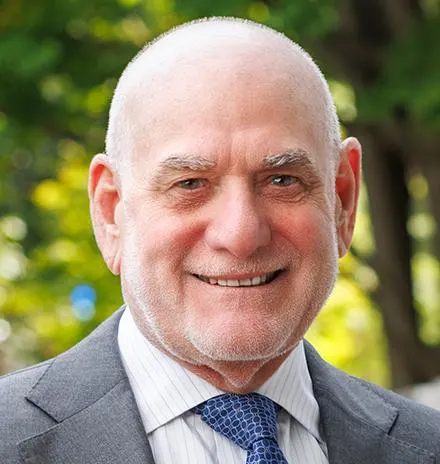

In this special “Friends and Family Night” episode, Rick and Royce speak with Meghan Orzetti about the experience of entrepreneurship through acquisition from the perspective of a searcher’s spouse. Drawing on her personal experiences, Meghan shares candid reflections on supporting her husband, Season One’s Michael Orzetti – a Marine Corps veteran, turned searcher, turned CEO – through the uncertainty, sacrifice, and adventure of acquiring a business while raising a growing family. From deployments and cross-country moves to self-funding a search and closing on a deal, Meghan reflects on the practical realities of uncertainty, mobility, and financial planning, as well as the deeper importance of partnership, mutual support, and shared values. Her story highlights how clarity of purpose, open communication, and a commitment to family can transform the ETA journey into something deeply meaningful.
Transcript
Royce Yudkoff:
Welcome to Think Big, Buy Small, a podcast from Harvard Business School about entrepreneurship through acquisition. We’re your hosts, Royce Yudkoff…
Rick Ruback:
…and Rick Ruback.
Royce Yudkoff:
Rick and I are here today with Meghan Orzetti for a very special interview. On an earlier episode, Rick and I interviewed Michael Orzetti, Meghan's spouse, about his journey searching, and acquiring, and running the company he bought. But, of course, all searches are partnerships. Today we're going to do something that Rick and I do each year in our class at Harvard Business School, which we call “Friends and Family Night”, and bring in the partners of searchers to talk about the experience of search on the family. On this important topic, maybe a good way to start, Meghan, is if you tell us a little bit about yourself and your background, where you grew up, what your own family was like, and your path to today.
Rick Ruback:
Yeah, this is going to be so much fun.
Meghan Orzetti:
Well, thank you, Rick and Royce. This is such a pleasure, and we always have looked forward to the “Friends and Family” nights, so this is awesome. I love being here. So, briefly about us, Michael and I met our summer before our senior years in college, and then we went back to college and finished up our undergrad degrees.
Rick Ruback:
You went to the same college?
Meghan Orzetti:
No, we did not. We went to two different universities. He was at Naval Academy, at the time.
Rick Ruback:
Right, right. That's what I thought.
Meghan Orzetti:
And then we went to two different grad schools, finished up our grad degrees. I was studying deaf education and to be a teacher of deaf and hard-of-hearing kiddos. And then pretty much a year after that we got married. Michael was in the Marine Corps. And I jokingly kid, but we've collected kiddos kind of like coffee mugs. Every place we've gone, we've had a kiddo. So, our first was in California. He is ten years old now. And JP, our oldest, was born at the end of March, and Michael deployed early May for seven months, which was very tough for family life. And we commend the military greatly – they do it time and time again. But that kind of was a pivotal moment for us as a couple. He wanted to try business, so then went to Harvard Business School, and that's where we had Luke, in Boston. And then from there he decided to do ETA, and we moved down to Virginia and we had our third kiddo, Bennett, who is now five. And then it was a successful search season and we moved two years later up to New York, where we've had our latest and greatest – we have a three-year-old and then an eighteen-month-old.
Rick Ruback:
Are they all boys?
Meghan Orzetti:
The three-year-old is a girl.
Rick Ruback:
That's interesting. So, one more for a basketball team or hockey team or whatever.
Meghan Orzetti:
Exactly, exactly. All three older boys are currently playing hockey, so we have an active crew.
Royce Yudkoff:
So, that's a big family to lead into a search, actually. Most searchers are single or couples or might have one child. I think, Rick, this is the largest platoon that we've seen go into search.
Rick Ruback:
Yeah, this is an amazing accomplishment to have that many kids and deal with the kind of parenting experience, while Michael was on deployment, then searching and running a business.
Meghan Orzetti:
I think that time from the military really gave me such gratitude of being under the same roof as him. We looked at it as our number one job is to each other as a team in marriage, so how can we construct this around our family life?
Royce Yudkoff:
Well, I was following you and how when Michael was in the Marines and went through deployment, that was sort of a pivotal moment in perhaps propelling you into civilian life and Harvard Business School. What about the first thoughts about search and buying your own business? Tell us a little bit about how you thought about that, when Michael came back from, say, his classes and said, "Hey, there's this new idea. Maybe we should do this after business school, not join some big company that's a traditional HBS recruiter." What was your reaction to that and how did the two of you process this path?
Meghan Orzetti:
You know, it's funny, as I was kind of walking down memory lane recently and I said, "Do you remember the first time when you said ETA? Like, do you remember when you first told me?" And he actually said, "No, I don't remember that." I said, "Oh, I do. I remember. When you first…"
Royce Yudkoff:
Well, tell us. Tell us.
Meghan Orzetti:
It was a gorgeous, I remember, like just a gorgeous, gorgeous drive. The foliage was beautiful. It was Thanksgiving. I think he was in the first ETA course, which was so inspiring to him, and since business school, I felt like he always had that entrepreneurial itch. He really wanted to pursue that. So, when he first said, "Hey, there's this idea, that I go out and I'm going to try to see if there's a business that I can buy, own, and operate." And, of course, at first I was little like, "Oh wow, I thought you were going to Harvard Business School and going to have this great job on the back end, and now we're…"
Rick Ruback:
And a house in the burbs with a backyard and never have to move again, right?
Meghan Orzetti:
Exactly. But I will say, he communicated a lot of the big ideas – “This is why, and this is, you know, why I think that this can really fit into our family life and what we value.” So, I came around to it. When I first heard it, I was a little like, "Okay, this is not exactly what I was expecting." But then by the time we really talked about it and kind of laid out a plan, the timeline really did mentally mitigate a lot of the ambiguity that could potentially happen.
Rick Ruback:
When you were leaving business school and not taking a job at an established company, did you ever say to yourself, "So, my husband survived the Marine Corps and that was great; and he got into business school and that was great; and we're all set to have this really established life, an established path, and instead, I have three children and I'm going to lead a nomadic existence for the next two years. Why is this happening to me? Why is my husband doing that?" Did that ever cross your mind?
Meghan Orzetti:
I think we kind of saw it as an adventure. We were in California when he was in the Marine Corps. I was born and raised in Virginia, and so I was far from home at that point. And we were very open in the search range of geographically. As Michael says, he just wanted as many shots on goal as possible. And again, we felt like if we're under the same roof, it'll be an adventure. We'll see where it goes. It was a trial for sure. You know, there was a lot of ups and downs within that search period but, looking back, I enjoyed that season, too.
Rick Ruback:
If he were to come home tomorrow and say, "You know, I think I'd like to do it all over again. I would like to start a national search and we'll see where we end up." How would that feel?
Meghan Orzetti:
I mean, we had young kids at the time. We could transport, you know? I mean, we had three kids under the age of four and so we were kind of really just open to…
Rick Ruback:
The kids didn't have roots yet.
Meghan Orzetti:
Exactly, exactly.
Rick Ruback:
But now that's less so.
Meghan Orzetti:
But now it would be harder to get up and move. But we look back and we've had lots of great friends and it for sure was hard to leave. But we stay in touch with a lot of those friends and, you know, some are like family. And so it's hard, but I think we didn't want to shy away just because it's hard. So, if I knew that it was a great opportunity and he said, "We have to move to..." Fill in the blank, you know.
Rick Ruback:
Toledo?
Meghan Orzetti:
Toledo, I would move to Toledo. As long as he's under the roof, I would be very grateful. But geographically, it was a large area. There were a few that made me a little nervous, that were like planes, trains, and automobiles, and you were getting onto, you know, a two-hour Uber ride to the local airport and it was just like, "We can't do this. All of our family's on the East Coast.”
Royce Yudkoff:
So, Meghan, on that point, when you and Michael started to plan this out, were there some constraints you guys agreed on? Like, well, geography would be one, or maybe how long Michael would be searching, and if you didn't find a company by then it would stop, or was it just sort of, "Let's do it and see how it unfolds"? Did you guys agree on some parameters?
Meghan Orzetti:
Yes, and I think that gave a lot of peace of heart, too. We had a timeline. The official stop point was eighteen months but then if there was a solid company under LOI and things were really moving forward, we would push to twenty-four months. And that's actually what did end up happening. I think the close of Eastern, like twenty-three, twenty-four months was the timeline.
Royce Yudkoff:
And how about geography? Was that something you guys agreed on?
Meghan Orzetti:
We were pretty open. I mean, it would just be different places every week or so. And it was pretty open. And I think, just as a spouse perspective, there were times when I feel like you have to shoulder the weight and push through with the ambiguity. That is really hard, that you don't know what you're going to be. Zillow can be a love-hate relationship because you think, "Oh, we're going to be in Arizona," and you start looking at places to live. And then it's not productive to then go down that rabbit hole. But he would come home and, you know, say, "Oh, this great confection company” or then, “Oh, maybe K9 training." I mean, it was all over the map, literally all over the map. All different businesses and, I think, that's when he sometimes would have to shoulder for me and give me a hug and say, "It's going to be okay. It's going to be okay." So, for me, when all the different places geographically started coming up, I think that's when sometimes I'd be like, "Wow, I'm open to it. I have to take a little time to process it." And then other times, you know, the one at home is reminding the searcher that it's all going to work out. It's all going to be okay.
Rick Ruback:
Now, you said the search happened from Virginia and you're from Virginia. Am I connecting the dots correctly that…
Meghan Orzetti:
Yes.
Rick Ruback:
...you searched near your family?
Meghan Orzetti:
Yes. Post-HBS, Michael said, "I need a laptop and an airport. Where do you want to go?" And I, you know, kindly, "Please, can we go to Virginia for this stint?" And it worked out really well. I was close to my family. They were twenty minutes away, so that was a nice time.
Rick Ruback:
And it was hard to leave, I bet.
Meghan Orzetti:
It was. I feel like many places that we've been have been hard to leave.
Rick Ruback:
It's interesting. Your early family years involve moving – California, business school, deployments, whatever – and so it's just sort of part of your family DNA.
Meghan Orzetti:
Right, it was. And actually, we were in New York for the last four years, but we did do a move two hundred feet up the block, so we did move almost every two years of our married life. So, it is. It's very much a part of just like our family DNA.
Royce Yudkoff:
Meghan, the three of us are talking about the uncertainty involved in this process, and I'd love to hear a little bit about how you managed it. And, you know, I'm imagining two guardrails. One is sort of every day Michael comes back from a day spent searching or making offers or negotiating or doing due diligence, and you're getting kind of a constant play-by-play, you know, "This deal's on. We might be running a candy company in Philadelphia. Oh, it's off. We might be doing this," as one way to experience the search. Another way is sort of, "You know what? Please keep this all to yourself. Just at the end, hand me a note and say we're buying an aerospace company and moving to Kalamazoo." Where between those two guardrails worked best for you guys?
Meghan Orzetti:
Well, two things come to mind. The first is he actually had an office outside of our home. We were living in a small apartment with, at that time, two and one-on-the-way small children. So, he actually went to a local business park and asked, "Do you have a janitorial closet? Like, can I just find any nook and cranny in this place that's very cheap?" And the gentleman was very kind and found him a desk, and they ultimately did actually have an office. So, to separate family and search space, I think, was a key for him. The second thing is the search community. There were a few other searchers at the time that he would call multiple times a day, just to be able to really get into those nitty-gritty details of the search process that he didn't want to really share at home, just these little things that were kind of nuanced that they would understand and that maybe family might not understand at the time. He would on a high level discuss a lot of things and, of course, you know, we were a sounding board or we would try our best to like give our best advice, but it was the fellow searchers that I think really helped carry little details, "What do I do?", and the HBS search community. I know now he really enjoys talking to current searchers. He's been able to reach out to lots of people and to, you know, just keep that community going.
Rick Ruback:
So, that must've been an exhausting day for you. He gets up in the morning, goes off to his search place, his office of quiet and solitude, and you are with two kids and the third one growing. He comes home, probably around dinnertime, and it might be like a three ring circus, with food flowing around and screaming and loud sounds, not from the adults in the room, but maybe from the adults in the room. And then the kids go to bed and, if you're like other parents that have two small kids with another one on the way, you are just exhausted, right?
Meghan Orzetti:
Yes, yes.
Rick Ruback:
So, when do you actually talk about this?
Meghan Orzetti:
I think when he walked in the door, he put on Dad hat, you know?
Rick Ruback:
Yeah.
Meghan Orzetti:
He was fully Dad, which, you know, it was a balance. He was able to leave search for one second, because I know he wore the pressures. You know, I wasn't the searcher, but just from observation, you wear the pressures on your shoulders heavily. So, I think it was nice, he was able to walk in and be just simply, you know, Dad and enjoy the kids. And then once kids were in bed, then we would talk, you know, a lot about what's happening, what are the latest and greatest things? Or, you know, "Oh man, today was a really hard day. I got, you know, four hundred no's.” But to remind him too of like, “You're a rich man. You've got a wife that loves you and three kids that absolutely adore you. Everything else is going to work out.” And we were young. I now look back, our apartment at the time was so small that we actually transformed this teeny garage into like the playroom. So, we put this couch out there and then just the toys. And we have a picture of Michael smiling, but you could see like the bags under the eyes, the dark circles. He's holding a newborn baby. And like, it was a lot, you know? It was a tough season, but it was also a good season. There was so much good that came. And after we had Bennett, who was our third that was born in Virginia, he went two days after he was born to California to try to raise capital. So, there was definitely sacrifices, you know? It was definitely hard. But, "Okay, I got the load. You know, I can carry this. It's going to be okay." And then other times he would carry the load. And I think just that communication and teamwork mentality of like, “We're both in this fully.” You jump in, and I'm sure it was always in the back of his mind, "Oh, what if I fail at this?" – and there's a real possibility of that – but he did it for us. He was doing it for his family. He was putting in long hours, he was going places to try to meet companies and navigating, raising capital. You know, it was tough but it was incredibly rewarding, and so we would pass the baton back and forth quite a bit, of, you know, wearing sometimes the weight of it.
Royce Yudkoff:
Meghan, that's fascinating. I have kind of a practical question. You guys did a self-funded search, meaning that you didn't sign a contract with a group of investors who paid you all a salary and covered your expenses of the search. You kind of sailed off under your own power. How did you think about budgeting and life where, you know, unlike most HBS grads, who kind of leave being an unemployed but busy student and get a job and suddenly start getting a big paycheck, you were setting off to go eighteen months, you know, living off savings. Obviously, you made it work, but any thoughts about that? Because a lot of people thinking about self-funded search pause over that issue.
Meghan Orzetti:
We were used to living fairly lean, you know, and looking at the bank account and saying, "Okay, how can we stretch that?" Part of the inspiration of the move, too, was, “Boston is beautiful but we need to at least cut rent in half, if not more.” And so budgeting living expenses, budgeting rent, at the time we were used to that, you know? And it was slightly unnerving, especially when he first brought it up and I was like, "Oh, okay, this is not exactly how I was thinking." But then when we laid out a timeline, laid out a budget, really looked at it, it was like, "This is what it might take, and I think that this is doable." And if it doesn't work out, he would start searching for a more typical, traditional-route job, you know? So, at the end of that eighteen-to-twenty-four month search time, I knew, you know, he will be finding a job. And to watch him really pour into it – because he was on a timeline – I feel like he was hungry for it and you could see that he wanted it to happen.
Rick Ruback:
Lots of our students postpone the search and say, "I'm going to wait a little bit." And one of the reasons they wait is they think it'll be easier on their families, so I wonder if you think that's true. For example, if Michael had taken, say, a consulting job for two or three or four years and you were established in a community, how would that feel, relative to the adventure right out of business school, when the kids are younger?
Meghan Orzetti:
I think for us, we were ready for the adventure. Our kids were young. We weren't set up in a community. We knew we were moving. I know everyone's search journey is so different, but for us it really worked well in that season. I think it would be a little harder right now – we're comfortable here, our kids are a little bit older.
Rick Ruback:
And so if somebody were to say, "We're graduating business school, we have a young child or two, and we're trying to decide, do we search now or later?" I'm hearing your answer is, “Do it as soon as you can.”
Meghan Orzetti:
Yes. You know, if you're coming out of business school, you're going to be moving somewhere, so I think it is easier to do right off the get-go.
Rick Ruback:
So, easier on your family to do it earlier. It's an interesting idea because Royce and I get lots of students, some of whom are married, and either have a family or are starting a family, thinking about when to search. And what you would say is, “If you just look at it from the family lens, what's good for your spouse, what's good for your children, probably sooner is better than later.”
Meghan Orzetti:
I think for us, it was. And we knew if you had to pivot in 24 months, then we will. But yeah, for us it was definitely graduate and start making e-mails, and calls, and all the things.
Rick Ruback:
So, some of the students who want to delay it, what they say is, "I really want to build some financial security. I want to have some money in the bank. I want a cushion. And I'm going to feel a lot better about this if I have a year or two of living expenses in the bank." Not so?
Meghan Orzetti:
I think for each family it's so different, with comfort levels, you know? We really did feel, "Let's put it all on the line. Let's give this a go and let's do it." But I do understand that some people might not feel 100% comfortable with that. But I look back and, you know, we were under thirty. And so I feel like you're young, you've got energy and gusto, and I think it was a really good time to do it, when we were in that season of life.
Rick Ruback:
Meghan, you weren't teaching during the search time, were you?
Meghan Orzetti:
No, I was not.
Rick Ruback:
Is the way you organized your lives that you basically were the primary person in charge of the family, the household, Michael was in charge of the business, and you came together on important issues that overlapped?
Meghan Orzetti:
Absolutely, yes. I think, especially busy seasons, he had that trust that home's secure. We got it. We were safe and thriving and happy. And then, yeah, he would be, you know, traveling. You can see that it's a lot. And I think searchers wear that. I mean, anyone outside of the home, you know, there are certain stresses that I don't have, being with the kids, and then there's vice versa.
Rick Ruback:
Right. And how about after the closing and Michael was running the business? That is often an all-absorbing activity.
Meghan Orzetti:
It is. When he first started, you know, we knew that this is going to be a very busy season and we kind of hunkered down. And then there were evenings that he's able to coach three kids at hockey. He is able to have flexibility, a little bit, when the season of busyness calms down, to be with his kids and to be with, you know, family. He was able to create that space, you know, he can create that schedule, and he can put the kids first, so that has been a gift.
Rick Ruback:
And what do you think it would've been like if he didn't have kids? I know that's an impossible thing to imagine…
Meghan Orzetti:
Really quiet bedtimes.
Rick Ruback:
But, I mean, would you have felt lonely, abandoned?
Meghan Orzetti:
No, I think we've always been more like a team mentality and I don't think I would feel that way. I think I would still feel grateful that he worked so hard.
Rick Ruback:
You are a glass half full kind of person, aren't you? I'm really jealous of that. I keep on trying, but I haven't got there yet.
Royce Yudkoff:
So, Meghan, the search ends up successfully for Michael. He buys a company and becomes CEO and, as our listeners know from a prior episode, the company was a big success underneath his leadership. But once he was doing that, did that feel very different to you? I mean, in some ways his job is a lot like all of his classmates from HBS who took jobs in companies. In other ways, it's different. He's, you know, propelled to being a CEO at a very young age. That's part of the magic of search. How did you sort of experience that new role that he had?
Meghan Orzetti:
Sometimes you get very used to wearing one hat, you know, the Marine Corps hat was on and then the HBS student hat was on, and then search. You know, they're different roles, but I think what he enjoys to do always remain the same, in leading and being with the people of a company. I mean, obviously the search was radically different, but from a home perspective, we would weave our time in in different ways, so it just makes us be a little more creative, too. When he searched, we would bring him lunch at his little office at the business park. And then at Eastern, when he was there, it was a different role but I could see he was thriving and enjoying it. I think once you kind of wrap your mind around, "Okay, this is a different role. This is something new.", it's fun to see the person you love enjoying what they do. And so, yeah, it's been fun to watch him.
Royce Yudkoff:
And, Meghan, as you imagine searchers and their spouses are listening to this podcast about your journey and Michael's and your kids, and they're thinking about whether they want to jump into the pool and start doing search, what advice would you give them to think about, either in making that decision or to prepare them for the journey you guys took? What are some of the lessons learned that you think are worth sharing?
Meghan Orzetti:
If you feel that you're with the right person and you believe, hey, that they really want to go out and give it a go, I say absolutely try it. And I know everyone's search journeys have been different, you know, and this is just what we've experienced. But I think if you know that it might be a tough season but that you'll get through it and that it really could be fruitful, and having that specific timeline, budget, and planning, and having that organization before you go in has really been super helpful for us to get through, and it helps mitigate any of the worry. But I would encourage to try. I think if you have an itch for it, I say go for it.
Rick Ruback:
And when you look at the spouses of HBS colleagues who've taken more traditional paths…
Meghan Orzetti:
Traditional meaning?
Rick Ruback:
Paths post-business school, they took, you know, jobs in consulting or private equity or investment banking or wealth management – you know, what MBA students do, they're working for Google, whatever they're doing. How does that feel when you get together for a reunion or dinner and you say, "Well, that's the life I could have had. And this life is so much better or not quite as good or..." You know, it's not a multiple choice, but strengths and weaknesses. Or has that never even occurred to you?
Meghan Orzetti:
To be honest, I wouldn't have it any other way. Knowing that this is the path that we chose and, you know, I'm so grateful for it. There have been sacrifices, you know? There have been moves. You meet great friends and then you have to leave. I remember for a while I was like, "Oh man, you know, this family has stayed there for three years, compared to, you know, every one and a half to two years moving, and they have so many friends." But I feel like what you put all your chips on the table for, for Michael and I, it was always like for the betterment of our family, you know? Financially and schedule-wise, and when he really explained ETA, I felt like, "I could really see you thriving in that kind of environment." I feel like I saw it, that he could do well. So, I think everyone takes different paths and I think certain personalities, you know, might absolutely enjoy other routes, you know? And I knew like for Michael, maybe that more traditional route, he wouldn't be happy. So, knowing him and our journey, this was absolutely the right route to try. And if he gave it a shot and it didn't work out, then it was, "Okay, let's go the more traditional path", you know? That was always our mentality of like, "Okay, you tried. It didn't work out, and that's okay. We're going to try a different route."
Rick Ruback:
Thank you. That was really helpful. We have this tradition on our podcast where we ask our guests if they have any questions for us, since we've been asking all the questions. So, I guess I knock this one back to you. Do you have any questions for us?
Meghan Orzetti:
I feel like the ETA community, from my point of view, it really seems to be growing, which is amazing. What are you seeing on your end? Who is the typical searcher?
Rick Ruback:
Such a great question. It is not one size fits all. You find all kinds of people searching, all kinds of backgrounds. Right, Royce?
Royce Yudkoff:
Mm-hmm. Yep.
Rick Ruback:
I think people who have more confidence in the kinds of lives they want to lead – like, “I want to be married; I want to have a family; I want to engage in these kinds of activities, be it hockey or church or skiing or whatever it might be; I want to be able to spend time with my kids; I want to spend time with my spouse” – I think those people are more likely to search. And I think the people who are still, I don't know what the right word is – finding themselves, experimenting, learning? Maybe those people aren't ready to search. I don't know. Royce, what do you think?
Royce Yudkoff:
Somehow I feel like we ought to divide the world of searchers into two groups. There's a big population which go to business school, look at this path – this different path from taking a traditional big company job – and go down it. And then there's this other population that isn't at business school, but has typically come out of college and taken one or more jobs, and somewhere along the path decided they just don't like working in someone else's company, or they like it, but not as much as controlling their own destiny, and they go off and search and buy a company themselves, most often in the way Meghan and Michael did it, which is in a self-funded search.
Rick Ruback:
And there's certainly a fair number of people who have military backgrounds, as Michael did, and they tend to be older because it's not unusual, depending on what part of the service you're in, but if you're a pilot, you're kind of like an eight-year minimum or nine-year minimum. If you're a SEAL, it's the same kind of thing. Different careers have different horizons, it seems, in the military. But yeah, it's a great question. I'll just summarize my view, and Royce's is a little different but not inconsistent. But my view is that people who are more comfortable with themselves and the direction of their lives are more prone to search and be happier at it.
Royce Yudkoff:
I agree with that.
Meghan Orzetti:
I see. Yeah.
Rick Ruback:
Thank you so much. This was so much fun.
Royce Yudkoff:
Meghan, thank you for spending the time with us. We appreciate it.
Meghan Orzetti:
Of course, of course. Thank you. I appreciate it.
Rick Ruback:
Royce, I thought this was intriguing on the topic of when to search because so many of our students and people we meet in everyday life ask us, “Well, is it the right time to search?” I was in the ski lodge last winter and a ski coach who's, you know, in his late 50s said to me, “What do you think? Is it too late for me to search?” And I thought, “Well, when is the right time to search?” And what I think is intriguing is that most of the students who delay their search talk about gaining experience, getting some financial independence, but they never talk about the impact on their family.
Royce Yudkoff:
Yeah, and I think that Meghan really made such a compelling case for why, in that respect, earlier is better, and in at least two ways. One is there's, of course, more geographic flexibility when your kids are little than when you have bigger kids, and when you maybe don't have as long a history of connections with a local community, it's just easier to move. And then the other point I thought she made very vividly was when you search, particularly if you do a self-funded search, you know, you're living lean. And that surely is easier to do when you're a young person than when you've already spent a few years kind of climbing up the ladder of consumption, as you've gotten well-paying jobs that allow you to go out to restaurants or join a club or go on vacations, whatever your choices are. It's just harder.
Rick Ruback:
Or you have kids who are in private school and established. I think this thing of being established, that humans tend to put down roots – and, you know, she might have preferred to stay in Virginia with her family, but she's more than comfortable putting down roots in New York. But what's hard is to pull those roots out of the ground. That is what's hard.
Royce Yudkoff:
Yeah. I thought her testimony on this was just really interesting and human. You know, you could imagine how much easier this is to do than five years later. The other thing that I found remarkably sort of healthy in Meghan's view was that, “Look, we're going to work hard to make this work, but if it doesn't work, Michael will get a job and we'll sort of be like everybody else in our place in life.” And I thought that was such a good grasp on what happens if you don't succeed at searching. And so many people that you and I advise, Rick, as you know, feel like if they search and don't buy a company, they're sent to the dark side of the moon and life is over. And I think they don't appreciate that in long careers where you're driven by high ambition, there are always going to be moments where you didn't achieve your objectives and others where you do. And so I thought her attitude towards this was just really well adjusted.
Rick Ruback:
Yeah, what I think is so clear is that she and Michael both have enormous clarity on what the goal is. The goal is to provide for their family, for their family to be able to live in a particular way and have resources, but also have time. And it's not about the job or the career, it's about their family. And the job and the career is just about providing one of the inputs that will help them reach their objective. It's not the end-all. And, you know, we find students sometimes who are interested in their careers as if that's the objective. The objective is to make senior partner at the private equity firm. The objective is to be the person who makes partner at the consulting firm.
Royce Yudkoff:
Yeah, they negotiate this issue in different ways from Michael and Meghan, right? We've seen where one partner has a career that's tremendously mobile. They're a software programmer or they're a physical therapist…
Rick Ruback:
…or a nurse.
Royce Yudkoff:
…or a nurse, who could replant anywhere. Or they take turns in their careers, in some cases. Or one of them has a career like they're climbing the ladder in a law firm or a private equity firm, and they are not mobile and the other partner does a search that's geographically highly scoped. So, those are different relationships with different solutions to how to do that as partners.
Rick Ruback:
Right. And I don't think Michael and Meghan's is the only model that works. I think lots of models work, but what I think is interesting is the clarity of objectives. And I think if your objective is, “What's best for our family?”, it's easier to take the ups and downs of search and not have that emotional roller coaster because…
Royce Yudkoff:
…you're working towards the same goal, right?
Rick Ruback:
It's not me versus you or your time versus my time. It's, “What are we collectively doing to help our family?”
Royce Yudkoff:
Yeah, agreed. What a great conversation with Meghan Orzetti on the impact on family of searching and acquisition entrepreneurship. In our next episode, we're going to be speaking with partners, Nick Kerr and Shaq Walker, who executed a funded search and are doing a roll-up of concierge medical practices. We'll learn a lot about being partners in a search, about executing a roll-up, and about this interesting space of concierge medical practices, and the larger opportunity in the area of professional services and acquiring or rolling up those kinds of businesses. So, we look forward to hearing Nick Kerr and Shaq Walker's thoughts on all of these areas.
Rick Ruback:
That will be a great conversation.
Royce Yudkoff:
Rick, we end each season with a very special episode where we ask our listeners to e-mail us and offer questions they have after listening to our episodes or after their experiences in search. We pull out the questions and you and I discuss them.
Rick Ruback:
You know how much fun that can be.
Royce Yudkoff:
It’s a favorite of ours and a favorite of a lot of our listeners. So, listeners, shoot us an e-mail at rickandroyce at hbs dot edu and we’ll put them in the bunch we go through and answer them in our final episode of Season Three. We’re looking forward to it. You’ve been listening to Think Big, Buy Small. We’re your hosts, Royce Yudkoff…
Rick Ruback:
…and Rick Ruback.
Royce Yudkoff:
Katie Zandbergen produced today’s episode.
Rick Ruback:
Craig McDonald is our audio engineer. If you have any questions, comments, thoughts, feel free to just e-mail us, rickandroyce, all one word, at hbs dot edu.
Royce Yudkoff:
We’ll be back next week with another episode of Think Big, Buy Small.