
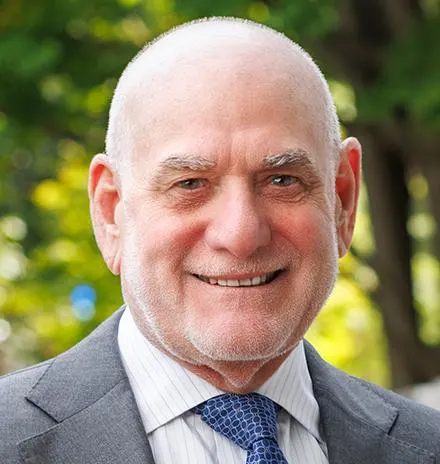

In this episode, Rick and Royce are joined by A.J. Wasserstein, Senior Lecturer at the Yale School of Management, for a deep dive into one of the most critical – and often misunderstood – aspects of buying a small business: revenue quality. Together, they unpack the full spectrum of revenue types, from transactional to contractually recurring, and explore how these distinctions impact everything from growth potential to customer retention, acquisition strategy, and valuation. With real-world insights and a clear framework for evaluating revenue during diligence, this conversation is essential listening for any aspiring acquisition entrepreneur looking to de-risk their investment and build lasting value.
Transcript
Royce Yudkoff:
Welcome to Think Big, Buy Small, a podcast from Harvard Business School about entrepreneurship through acquisition. We’re your hosts, Royce Yudkoff…
Rick Ruback:
…and Rick Ruback.
Rick Ruback:
Royce, it is a delight to have A.J. Wasserstein with us today. A.J. we've known for a long time. A.J. has been a frequent class guest. A.J. has been a successful entrepreneur in his own right, and was a frequent search investor, and now is, like us, an academic. A.J. runs the small firm initiative at Yale and has written quite a bit on the topic.
Royce Yudkoff:
The three of us are talking about recurring revenue because as a searcher explores for the enduringly profitable business that they want to buy, one of the most important qualities is recurring revenue or, more generally, the quality of the revenue in the business. This will determine the predictability and safety of the business. It'll speak to the ability to grow the business, and it takes a long time to move the quality of revenue up or down, and so making an accurate assessment of the quality of revenue in the business you buy is going to be one of the most important assessments that an acquisition entrepreneur makes.
Rick Ruback:
So, A.J., welcome. It's just a delight to have you and it's a delight to see you. We think about you as an old friend so thank you for agreeing to join us today.
Rick Ruback:
Rick and Royce, I'm absolutely thrilled and flattered to be here. Looking forward to the conversation, and so thoughtful of you to include me.
Rick Ruback:
It's so rare for us to talk to somebody who spends at least as much time as we do, maybe more, both teaching and thinking about some of the small firm ideas, and I want to dive into one that I know we've had multiple conversations on, and that is around revenue quality. The question I want to begin with is I find that so many young entrepreneurs struggle with the difference between what I call repeating revenue and recurring revenue. I think you call it contractually recurring revenue? Contractual recurring revenue is the best. How do you go from contractual revenue, where there are very high switching costs, there's a contract binding the customer and the firm, to, “Well, I've looked at the customer list and the same customers have purchased about the same amount over the last five years”?
Rick Ruback:
So, Mark Agnew and Brian O'Connor and I wrote this paper about five years ago, exploring different buckets of revenue. And not all revenue is created equally, so we've identified five buckets of revenue. If I want to walk down the ladder, we move from contractually recurring revenue; to non-contractually recurring revenue; to repeat revenue; to actuarial, recurring revenue; to transactional revenue. So, I think of contractual recurring revenue as the gold standard in revenue quality. So, this is the top of the food chain and what all entrepreneurs, including search fund entrepreneurs, should aspire to have in their business. And all things are rarely equal, but if all things are equal, having a firm with contractual recurring revenue is a superior place to be than not. So, I think of contractually recurring revenue as a legally binding agreement between vendor and customer, where customers commit to consume products and services over multiple periods on a take-or-pay basis, with separation costs. So, this is the very best place to be. Entrepreneurs get to wake up on New Year's Day with incredible confidence and visibility on what their go-forward revenue streams are going to look like for the next twelve months. They get to work on building revenue, not replenishing revenue. So, lower forms of revenue typically have lower switching costs, higher attrition – and what we're talking about now, contractually recurring revenue, tends to have lower attrition. To put this in the most simple terms, if a CEO chose not to get any new customers for a given year, they would still enjoy the installed customer base revenue and cash flow and profits, less any attrition or shrink, without adding a single new customer.
Rick Ruback:
One of the features of that, that I don't think I've ever seen in practice, is the take-or-pay nature. By that I understand, I'm going to buy a thousand widgets and I am going to pay $10 a widget. And if I don't buy the widgets, I'm going to give you $10,000 – so it’s, “I take it as contractually-specified or I pay it”. And I don't know that I've ever seen that in a small firm.
Rick Ruback:
I'm going to politely push back. So, one of your alums, a search fund entrepreneur, he bought a franchisor called BNI and he enjoys contractually recurring revenue of this very nature. A search fund entrepreneur from Kellogg runs a video security monitoring service, based in Atlanta, called EyeQ, and has this very type of revenue with a take-or-pay type of feature. So, I'm not going to say they're prevalent but they certainly exist, and that's a very desirable feature.
Rick Ruback:
Of course, they're time-limited, right? It's take-or-pay for some number of years and then presumably if you're taking and not enjoying, the customer will move on.
Rick Ruback:
Well, yeah, but these contractually recurring revenue businesses are ideally backed up by a contract, and that contract has features which help the stick rate and increase the switching costs – one of which, Rick, might be an evergreen feature, so the contract automatically renews for successive multi-period terms unless the customer takes the initiative to cancel the contract with an adequate number of days in advance.
Royce Yudkoff:
A.J., I often see contractual revenue as accompanied by other types of sticky forces, like you'll have an annually renewing software contract, but it is a gigantic pain for the customer to swap out one software and bring in other software and train his organization or her organization to use it. And so yes, there's the contract, which represents the gold standard of taking-or-paying. It is, as Rick said, time-limited, but there are other forces that just push for repeated renewal of it. Do you see that?
Rick Ruback:
I totally agree with you. I would call that non-contractual recurring revenue. And while a very high quality of revenue, I'm not sure I consider it the apex. So, that type of revenue stream might have switching costs baked in but it doesn't quite have the same stick that the contract presents in the relationship.
Royce Yudkoff:
And sometimes they overlap, right? You can have a contract, and one of the reasons the customer is willing to sign a take-or-pay contract is because they don't want to switch, even if there were no contract. It’s not appealing.
Rick Ruback:
And there’s some price advantage for going with take-or-pay…
Royce Yudkoff:
Exactly.
Rick Ruback:
…as opposed to at-will.
Rick Ruback:
The contract is belt and suspenders. So, all things being equal, a contract is very valuable because if, for any set of circumstances, the company drops the ball on a service issue, a contract helps give you an opportunity to apologize and make it right. With the absence of a contract, you might not get the next chance to cure the problem.
Rick Ruback:
Are there any downsides, A.J., to this high-quality revenue?
Rick Ruback:
There are. So, Rick, one of the problems with this super high form of contractual recurring revenue is it could be very hard to get customers because if those customers are what I will refer to as “vended”, they are already part of a competitor's ecosystem, it will be very, very difficult to dislodge that customer from a competitor. So, if you are in an industry that leans towards maturity and there's not sort of a tailwind of secular growth, it might be difficult to grow organically. When most players in the industry have this contractually recurring revenue, organic growth might pose a problem and you're stuck fighting for un-vended customers who currently do not use a service provider.
Rick Ruback:
Right. The stickier the customer the harder it is to unstick them from a competitor. Now, I suppose if you're in an emerging industry, then it works great.
Rick Ruback:
That's right.
Royce Yudkoff:
This is actually a wonderful due diligence question to be asking a seller when you're looking at a business that has very high recurrence and contractual revenue, which is, “Where do you get your new customers from and why is it you project this high rate of growth when it's impossible to unstick customers or very difficult to unstick them?”
Rick Ruback:
Because everybody's really happy to talk about how low their churn rate is but they're less happy to talk about how high their growth rate is, in those instances.
Rick Ruback:
Can I make two more points on this form of revenue, one positive, one negative?
Rick Ruback:
Sure.
Rick Ruback:
Positive is, just want to highlight, that with contractually recurring revenue like this, you tend to experience customer acquisition costs once for a given customer. That's an incredibly important concept to internalize, that you're not running in place to replenish revenue and you only incur customer acquisitions costs to set up what hopefully is a perpetuity. So, that's good news. Bad news is aspiring entrepreneurs should not confuse contracts with service agreements or pricing arrangements. So, what looks like a contract and has unequivocal thirty-day customer cancellation clauses is not a contract. That is a pricing arrangement or a service agreement, which is fine. I'd rather have a service agreement than not have a service agreement, but cancelable upon thirty days is not contractually recurring revenue.
Rick Ruback:
Right. So, if we take the step down, then we have non-contractual recurring revenue. There's pretty high switching costs, and those switching costs could just be that you're a small percentage of the cost structure of your customers and they don't want to have to collect the information on who else could provide that. So, it could be a relatively small barrier, but it's still some barrier…
Rick Ruback:
That’s right.
Rick Ruback:
…and they repeat.
Rick Ruback:
Yeah. So, this is still an incredibly attractive form of revenue quality. So, it is not quite as good as contractual, but it is pretty darn good. This tends to have all the features of contractually recurring revenue with the absence of a contract and this key feature, that customers must take action to terminate the revenue stream. So, we used to get newspapers delivered and…
Rick Ruback:
I still get a newspaper delivered!
Rick Ruback:
I'm jealous. We do all of ours online now. But that's a classic, non-contractual recurring revenue. So, a newspaper used to deliver to your house every day, and they would send you a bill every month, and you would dutifully pay it, and they're going to keep dropping that newspaper off every single day until you take the initiative to tell them, “Please stop delivering.” This is still a very good form of revenue. The service rolls on unless the customer takes the effort to terminate it, and there might be behavioral and systems encumbrances that prevent that.
Rick Ruback:
So, I have a couple things I say in class that I wonder if you think they're correct. One of the sources of these barriers that seem to be so key to this non-contractually recurring revenue is the importance of being unimportant. That is to say, if you're a small part of your customer's cost structure, you naturally have a barrier because when they think about cutting costs, you're very low on the list. And as long as you're delivering your product at a high quality and you're not creating a problem, you're not a source of worry or stress, being unimportant is its own barrier. What do you think?
Rick Ruback:
I completely agree. The example I always use for that is if I were selling something to the Ford Motor Company, I would not want to be selling them steel.
Rick Ruback:
Yeah, right.
Rick Ruback:
So, I assume the CEO of Ford knows the price of steel per ton every day, and I wouldn't want to be his steel vendor. I'd want to sell something way down the food chain in the SG&A bucket that is immaterial to him or the corporation but very, very material to me, and be under the radar screen.
Rick Ruback:
Staplers.
Rick Ruback:
Staplers. Yes, that's right.
Rick Ruback:
When Royce and I first got into small businesses and started studying them and teaching about them, we were always looking for what the barriers to entry was because, you know, what we know about a lot of small businesses is they seem to have competitors, and yet they have pretty good margins. The margins aren't being competed away and their customers are sticky, and yet there's no contracts and no high switching costs. We came up with this concept – and I'm intrigued on whether you agree with it – that for many small businesses, simply providing good service creates its own barrier.
Rick Ruback:
I definitely agree with you but I think if you're higher on the food chain, you have the contract, that's better. But hopefully if you're in this non-contractual recurring bucket, there are significant operational and behavioral switching costs that would prevent you from wanting to swap out a vendor. But leading with great customer service is always a wise strategy.
Rick Ruback:
Let me push back on that because my view is that great customer service creates the switching cost. Because I know that I'm not getting a problem when I buy from A.J., but if I buy from Royce, I could have a problem. And he can promise me that he's going to do it great but I know you’re going to do it great.
Royce Yudkoff:
So, I think that introduces the idea of risk, right? That a switching cost is a fear of a risk. You know, if you take two different services, like your local gas station, where you and I might go to the same gas station again and again and again and again, but if we drove up one day and there was a long line, we'd go to the one next door because we know there's no risk. It's so unlikely we're going to have a bad outcome. But maybe that wouldn't be true about, say, our dentist, who we have no contract with either and recur, but there's a consequence if we made a bad choice.
Rick Ruback:
But the dentist has all this information on us, which creates its own switching costs, right? They know which teeth are fake, they know which teeth they've already done.
Rick Ruback:
That's right.
Rick Ruback:
So, your next bucket of revenue is repeating revenue. And it's not nearly as good as non-contractually recurring revenue. I think about contractually recurring revenue and non-contractually recurring revenue as, you know, maybe one is superb and one is excellent, but they're both fabulous.
Rick Ruback:
An example of repeat revenue is the dentist. A dentist might help facilitate me remembering to make the appointment, but I have to take action to consume the product or service. In non-contractually recurring revenue, the customer needs to take action to cancel but here the customer needs to take action to consume, so it's a slightly higher bar to generate that revenue. There are all sorts of search funds doing dermatological services and dentistry - okay businesses. People tend to go the same botox, dentist, barber, whatever, but not sure the quality of revenue is as high. So, some professional services fall in this bucket as well – accounting services, private equities. Businesses tend to get their audits and tax returns done by the same firms for many years. But every year the client needs to sort of…
Rick Ruback:
Make a decision.
Rick Ruback:
…make a decision.
Rick Ruback:
You got to decide if you're going to sign that retention letter for your tax accountants every year.
Rick Ruback:
And, just to be clear, repeat revenue tends to be consumed in similar quantities and frequencies by the customer. So, it's not erratic. It tends to be pretty smooth cash flows, but the customer needs to take action to initiate the transaction.
Rick Ruback:
Now, how about the person who repairs my furnace when it breaks on a cold day? It only breaks on a cold day, somehow. And I call the same company that provides excellent service. They come out, they fix it, and I don't really care what they charge me because it's cold. Is that repeating revenue? Recurring revenue? Because I have to take the action. I got to call them because my furnace is broken, but I call the same people until they say, "I can't come until next Wednesday," and I say, "It's four degrees outside." They say, "Hey, not my problem."
Rick Ruback:
Usually that happens also when you have guests.
Rick Ruback:
Yeah. Yeah.
Rick Ruback:
From the company's perspective, it probably has elements of both repeat and actuarial. So, it might infrequently happen for you, Rick, but if you look at 10,000 households in Boston, when the weather is zero degrees, X percent of them are going to have furnace problems at 2:00 in the morning. So, there's some statistical probability of that happening, even though yours individually will be relatively infrequent. But if you look at the portfolio, there's some predictable degree of occurrence.
Rick Ruback:
I noticed that there's been an increased emphasis on preventative maintenance contracts. And I've always thought that the purpose of the preventative maintenance contracts are twofold. One, they keep the furnace repair people busy when it's not cold outside. That’s one thing. And second, they put a little sticker on the furnace that says, "If the furnace breaks, call me.” It's a small thing, but it probably has a huge impact on recurring revenue.
Rick Ruback:
That's right, those little nudges. Can I introduce one other component of repeat revenue which is worth at least highlighting?
Rick Ruback:
Sure, please.
Rick Ruback:
Repeat revenue often can be exhibited in what I think of as razor blade models, so where people make a one-time purchase of something and then a repeat purchase of the compliment that goes with the razor. So, you have an alum, Ahron Oddman…do you know Ahron?
Royce Yudkoff:
Yes, a former student.
Rick Ruback:
I wrote a case about Ahron Oddman. He bought a business called Presentation System South, PSS, in North Carolina. And Ahron is in the business of providing schools equipment to print educational posters. So, he sells schools printers, and that tends to be a one-time purchase, but he sells them all sorts of printing supplies, the blade to the razor, which is repeat revenue. But, once again, the school needs to take action to buy the supply. So, that's a subset of repeat revenue and a pretty good place to be but, once again, not as desirable as contractual or non-contractual recurring revenue.
Rick Ruback:
Right. I also have learned that some people have taken repeat revenue and sort of notched it up a bit. Not to a contractual or non-contractual occurrence level, but they simply use information: “Because we've done the preventative maintenance, we know everything there is to know about your appliances, and we know what models you have, and we'll bring the required parts.” It's information as a way of providing better service and better service makes the customer stickier. That's how I think about it.
Rick Ruback:
I think all intelligent entrepreneurs and CEOs are trying to climb the revenue ladder in any way possible to make revenues more predictable and more sticky. Converting repeat revenue into something that looks more like non-contractual recurring revenue bodes well for the entrepreneur and the company.
Rick Ruback:
Yeah, and that's a transition you can often nudge in that direction.
Rick Ruback:
That's right.
Royce Yudkoff:
Yeah, and I think that's an important point, you know, what you buy is not necessarily your destiny. You can make your revenue quality better, and you do see all sorts of companies making that climb. You know, we all see in trades companies more and more preventative, annual contracts being sold, and that's one element of trying to move up the food chain of revenue quality, from just responding to emergencies. Or you see that the bank has for years been offering electronic bill pay, where after a while you've loaded so many of your vendors into that, that the thought of switching bank accounts is horrifying. A very recent one is how the car wash industry is reshaping itself from a purely episodic transactional business to selling subscriptions. It's to your point, A.J., you see smart entrepreneurs trying to improve their revenue quality.
Rick Ruback:
That's right. You see that Amazon, every time you check out, they ask you, “Is this a one-time purchase or would you like to subscribe and get this every month?”
Rick Ruback:
Right. What Amazon knows about us gets to be scary. But anyway, moving on – actuarially repeating revenue…
Rick Ruback:
I think the first time I heard the phrase “actuarial revenue” was from Royce, so credit where it's due. This is a pretty good form of revenue. This is when a new cohort of customers enters into a company's realm on a predictable basis. So, the company uses the same systems, infrastructure, and processes to serve the customers, but the customers are new every single time period. I sometimes call these “class ring businesses”. It's a one-and-done relationship. So, you buy your class ring once, and then you never buy the class ring again. It's graduation season, so where the students will all rent their caps and gowns and get their rings and diplomas and frames and doo-dads. This is an okay form of business. These are relatively predictable but harder to grow than the contractual recurring revenue because you're refilling the cohort every year.
Rick Ruback:
But also the HVAC business, right, falls into that category because actuarially, there'll be some proportion of breakage or emergency work. And emergency rooms, by the way, fall into that too. You don't know who's going to be in the emergency room, but you know the emergency room's going to be full and busy, maybe more so on July 4th than on July 3rd. But you get the idea.
Rick Ruback:
That's right. That's right.
Rick Ruback:
And the bottom of the ladder is transactional revenue. We think about the typical construction contract, where the architect designs some project in your home and you interview three contractors and pick one. And you might never do another renovation, but you're picking that contractor. And that's really the bottom of the barrel, I think.
Rick Ruback:
Bottom of the barrel. Project, one-time, episodic – whatever word you want to use – much lower visibility on future revenue streams. Take airlines as an example. Very low switching costs, you could pick a different airline every time you get in the airplane, but they're climbing the revenue ladder. They're trying to create switching costs through these loyalty programs and mileage, but generally a lower grade of revenue. And if I could just highlight, Royce and Rick, the notion that when you're in this type of revenue business, you start every day, month, and year with zero, and you're fighting, clawing to build the top of your P&L statement. When you're in a contractually recurring revenue business, you start every day, month, year with everything that you have in your back pocket and you're trying to build upon. It's a very different mindset and starting point, when you think about a business.
Rick Ruback:
But it's so big, it’s so big and it's so important. It lets you sleep at night.
Rick Ruback:
It is a gift to wake up on January 1st in a contractually recurring revenue and know what your year is going to look like.
Royce Yudkoff:
A.J, I'd like to ask for your help in putting some numbers to what we've just talked about, because we're finance professors, right?
Rick Ruback:
I didn't know math was going to be on this test!
Royce Yudkoff:
If we can substitute a number for a word, we all feel happier here. You know, the way most acquisition entrepreneurs experience revenue analysis is they first see what their customer retention rate is in the business. They'll get the teaser and it'll say, “95% customer retention”. And then they have to go on the kind of journey the three of us have just talked about of, “So, what is the reason this is so high or so low? What are the revenue quality characteristics?” And so I'd like to ask you, could you break apart what you view as sort of great revenue recurrence, good revenue recurrence, acceptable revenue recurrence and, finally, I just personally wouldn't put my money into a business with recurrence that low?
Rick Ruback:
Wait a minute, are we talking about revenue quality or are we talking about churn rates?
Royce Yudkoff:
We're talking about churn rates. I'm really expressing them as recurrence rates, the inverse of churn. Just for audience, when we talk churn, we're talking about the percent we lose each year. And when we talk about retention, the percent we keep. So, a 90% retention rate equals a 10% churn rate.
Rick Ruback:
The way I think about this is you get the teaser. They define it as “non-contractual recurring revenue”, and their evidence of that is you've seen five years and the same names appear on the top-twenty customer list, and there's ups and downs, but they buy about the same amount every year. But the question is, what churn rate on those top-twenty customers gives you comfort?
Rick Ruback:
So, the very, very best companies have negative churn, meaning current customers grow without adding additional, new customers. Yeah, I think, under 5%, you're in a really good place. But can I introduce two notions? I think, the analysis is not just retention or churn, but it's also a customer acquisition cost. So, more churn with less customer acquisition cost is more tolerable than more churn with high customer acquisition cost.
Rick Ruback:
Fair enough.
Rick Ruback:
And if you introduce profitability and then start to think about customer lifetime value, those are sort of the three legs of the stool that you get to play with to think about how desirable a customer is. But businesses with very low churn can tolerate more customer acquisition cost than businesses with very high customer churn. So, contractually recurring revenue businesses allow CEOs to invest heavily in building annuity, perpetuity, revenue, and hopefully profit streams. Businesses that are transactional in nature cannot tolerate the same investment in the customer acquisition.
Rick Ruback:
I agree with all that, but when I look at the customer list and the revenue per customer, I can't tell anything about switching costs or the nature of the contractual relationship.
Rick Ruback:
Well, the only way you could tell something about the contractual relationship is if there is a contract and it has the terms and features that we consider desirable. I think if you look at a revenue ledger during diligence, I think it's a false flag to look at logo only. I think some entrepreneurs fall into that trap of talking about retention based on logo and not necessarily dollars.
Rick Ruback:
Let's talk about that because you'll find in actuarially repeating revenue oftentimes you get logo retention but very different dollars depending on whether their furnace breaks or not that year. So, you'll always get their preventative maintenance contract, small dollars for their annual furnace cleaning, and then medium dollars for when it breaks, and then big dollars when they replace the boiler.
Rick Ruback:
That's right.
Rick Ruback:
So, knowing the same names repeat makes me more comfortable that there is, in fact, this meaningful relationship between the customer and the business.
Royce Yudkoff:
Looking at what we're talking about through the lens of a searcher doing diligence, I think it's important to sort of do both these pieces of work and satisfy yourself that you can make sense of why they both exist. In other words, you want to look at the numbers of customer retention or dollar retention and logo retention. And, you know, if you see it's a good business, it's like in the mid-80s of customer retention from year to year, 85%, you then need to understand why that's going on. Are there contracts? Are there high switching costs? Are you a small part of the cost structure? Does the narrative pair with the statistics you're seeing? And, more importantly, is the narrative durable? Are there reasons to believe that those characteristics that have propelled this in the past are going to remain unchanged?
Rick Ruback:
Yeah, but my question is, if I find a business where I have 98% logo retention, but very high variability in the dollar amount year to year – and I understand it's because the customer simply doesn't have the need that year. It could be a law firm. I'm never going to use a different law firm, but if I'm not sued this year, I'm not going to pay you anyway. There's a little bit of actuarial project business in there, but when I have the problem, I'm going to go to you, not by contract, but just because you've provided great service. I feel like I have actuarially repeating revenue along with logo retention that's quite high, above 80%, I'm going to check that box and say, “Okay, this has high quality recurring revenue.”
Rick Ruback:
It might be good, but I'm not sure it's exceptional. When businesses have revenue, profit, and cash flow streams, and those cascade down to each other, that are more predictable, that means there's less risk, and usually creditors are more excited, equity backers are more excited. And I think when there's more variability in the revenue streams by logo or customer name, it's slightly degraded revenue quality. It might not be horrible, but it's not the best.
Rick Ruback:
But doesn't the probability, doesn't being an actuarial, doesn't that solve the problem? I've pondered this and if I had contractually recurring revenue with 70% customer concentration or the kind of revenue I described, where I have 80 or 90% logo retention and variability year to year because it's actuarial revenue, I would take the second over the first over and over again, because I hate customer concentration.
Rick Ruback:
No question about that.
Royce Yudkoff:
It seems to me that an actuarially recurring business turns on how granular the client base is, you know? You want it to be further and further away from a project business, and it gets there because the HVAC company has a thousand customers, and so it leads to a regularity in total of annual revenues. And the fewer of those you have, the more it starts to actually look like a project business.
Rick Ruback:
I agree, Royce and Rick, but if we're staying with this HVAC home services-type of example, the switching costs are moderately low, so even though there might be some predictability in the revenue, it's not as sticky as contractual recurring revenue. So, if the home changes hands, if the last tech that showed up was rude, if something happens, the switching costs are relatively low. It's just finding a new phone number.
Rick Ruback:
I agree with that. And it's, again, good service is a great barrier, particularly on these kinds of businesses.
Royce Yudkoff:
Should we turn to the issue of why this is important, A.J.?
Rick Ruback:
Fundamentally, entrepreneurs, including search fund entrepreneurs, are selecting business models. And revenue quality informs the business model. And I think of the business model as the foundational economic characteristics that underpin the business. Business models allow entrepreneurs to think about de-risking and hopefully increasing the probability of success. So, businesses with more predictable revenue streams allow first-time, inexperienced entrepreneurs to learn the business. That is super important. Retention and revenue quality are positively correlated, and revenue quality and attrition are negatively correlated, so that's important. I think the concept that when you have good revenue, the CEO spends more time on building, pyramiding, compounding the business and is forward-looking. When you have lower qualities of revenue, the CEO is always replenishing the leaky bucket. So, high-quality revenue businesses have buckets without holes, low-quality revenue businesses have buckets with lots of holes. So, revenue quality really points towards time allocation for the CEO. It provides a high safety net. Creditors tend to perceive higher-quality revenue businesses as less risky, so those tend to win better valuations, credit terms. Something else I'll just highlight is that there is a vast difference in the power distribution in the vendor-customer dynamic. So, the higher the quality revenue, the more power the vendor has. The lower the quality of the revenue, the more power the customer has. And I will never say that the vendor wants to exercise or flex their power, but it's nice to know you have it in your back pocket.
Royce Yudkoff:
I agree with this list. I also think that revenue quality is hard to change and takes a long time to change, so when you buy a business that's a factor you're not easily going to make better. And, in that way, it's different from a lot of other things you can control as a CEO, which you can change more quickly. Employees, breakout of responsibilities, delegation, product line…but revenue quality takes a long time to change.
Rick Ruback:
You could tilt it, but it's not tomorrow. It's going to take a long, long time to materially reorient the portfolio.
Royce Yudkoff:
Exactly.
Rick Ruback:
And I think the last thing I want to say on this is that in due diligence, it's really important to find out what your revenue quality is. It doesn't mean the lowest quality revenue, the transactional revenue, the project revenue isn't a good business, but you need to take account of the revenue quality, and you're often not going to be able to tell that from data. You're going to have to get under the hood and get your hands dirty and ask the question why customers buy from the company, and how often, and what that relationship is. And I think it is so easy when searchers find a business that has high statistical reoccurrence that they just say, "Oh, recurring revenue. We're done." And they check that bucket off and move on. And what I think we've learned from this conversation is the quantitative stuff doesn't replace the qualitative stuff. You have to do both.
Rick Ruback:
Rick, if I can amplify, a contractual recurring revenue is definitely an aspirational goal, but I would much rather be in a repeat revenue business that's lower CapEx and has higher growth opportunity than a contractual recurring business that has very high CapEx with limited growth opportunities. So, revenue quality is one dimension in a handful of key ingredients that might make a business model successful and point towards desirable outcomes. But it doesn't stand on its own unless you hold everything else equal.
Rick Ruback:
Right. A.J., we always ask our guests, having asked them questions, we give them a chance to ask us a question. And it's scary because you know us really well and you've thought a lot about this, but let's do it.
Rick Ruback:
I will give you a question that sticks to the topic. Can you think of examples of companies with high quality revenue, so contractual or non-contractual recurring revenue, that for some reasons did not perform well? So, if they had this foundational element that we all aspire to, what was their undoing?
Royce Yudkoff:
Well, first of all, I need to say that I love sticky, highly recurring businesses. I think I speak for Rick too. But the ones I've seen fail are when there's a substantial technological change that puts their industry in the shade. And so I'll use the example you used at the beginning of the podcast, which is newspapers, right? That's, you know, a fantastic business for generations, and then a variety of digital media just put that in the shade. And I've seen that across a number of different industries.
Rick Ruback:
Yeah, a different form of the same thing is when there's big shifts in the macro environment. It could be, for example, you're a provider to the oil business and all your customers are very sticky and everything works great, as long as you're actually drilling for oil. And it could be that in the prior five years, everybody's drilling for oil, but you buy the firm and then they stop. Or you're importing something from Asia and it works great, and then you have 143% tariffs, and then suddenly it doesn't work all that well. I think those instances are where I've seen it blow up, and I think those are just similar to Royce's technological change. It's not quite aliens coming from outer space, but it's the black swan event. It's the kind of risk that you often wouldn't imagine.
Rick Ruback:
So, even when companies might have the highest grade of revenue, they're subject to all sorts of externalities that could upset the apple cart?
Rick Ruback:
I would say external risks, right? That there are things that are beyond their control. It's a risk that unless you look for it, you won't find it because it occurs in a low enough frequency.
Royce Yudkoff:
I think of this in a positive way, which is when you have high recurring revenue, you've left a huge number of everyday risks behind, and you're left with a small subset of risks that are relatively unlikely to happen, but no one can insulate themselves from every risk.
Rick Ruback:
Nothing's risk free.
Rick Ruback:
So, I would tell my students, as I often do, that you're trying to make as many decisions as you can that tilt the probabilities in your favor, but there are no certainties, even if you make lots of good choices.
Rick Ruback:
Absolutely.
Royce Yudkoff:
On this point, I'd just like to say that many people regard entrepreneurs as risk-takers, and the three of us, who bathe in the waters of entrepreneurs, know the opposite is true. They are constantly looking for ways to avoid taking risks, to pass it to others, or at a minimum to be very well-paid for the risks they agree to take, and recurring revenue and everything we've talked about is the hallmark of good entrepreneurship.
Rick Ruback:
That's right. You try to shift risk. You don't take risk.
Rick Ruback:
I think we would all three agree that if we had to instantly decide on whether to make an investment in a small firm, and we knew two facts – that the margins were very good, say 25%, and the churn rate was very low, say, you know, retention of 80% – I think we would all say, "Oh, that's the kind of firm we'd like to invest in." If we knew nothing else, if we had to decide on those two facts, those two facts make the world happier. They're markers of likely success.
Rick Ruback:
Can I ask a follow-up question?
Rick Ruback:
Sure.
Rick Ruback:
How would you advise a student looking at a business with very sticky, contractual, recurring revenues, but instead of being flat or growing, it's melting?
Rick Ruback:
Well, we love cigar butt businesses.
Royce Yudkoff:
The label comes, of course, from when you're walking down the street in Manhattan and you see a cigar butt on the sidewalk, it's irresistible to pick it up and not take a puff or two before it's finally dead. And, of course, that's at a price, zero in the case of the actual cigar. Very cheap, in this case, in a lot of these businesses.
Rick Ruback:
Yeah, and I think the danger of those businesses is it takes a very special CEO to say, "I'm going to buy this legacy software, and I'm going to do zero development. I'm not going to try to modernize the code. I'm not going to try to bring it to the web. I'm just going to let that piece of software print out those bills, as they do every month, and I'm going to take my pay out of that, and I'm not going to reinvest." That's really hard but, if you can, it's amazing revenue. I think it's a harvest.
Royce Yudkoff:
A.J., thank you so much for your thoughts on this very important topic. It's always a pleasure to listen to you and see you again.
Rick Ruback:
And to learn from you.
Rick Ruback:
Rick and Royce, all the thanks go to you. You're friends, you're mentors, and I am very grateful for everything you've both done for me. So, I owe all the gratitude to you. Thank you.
----------
Royce Yudkoff:
This has been a useful discussion because it allows us to think about revenue quality in a very organized way, with a whole ladder of different types of quality of revenue, from highest quality to lowest quality, and what are the attributes you expect to see? And to pair that up with the actual recurrence data of revenue, so that one can really understand what it is they're buying, in terms of revenue quality, in a business that they're evaluating. This is, of course, not the only consideration. There are other important considerations, like price and cyclicality and customer concentration and vendor concentration. But one of the most important is revenue recurrence – and, Rick, I think this has been a very productive discussion with AJ about a clear way to think about that.
Rick Ruback:
I think that's an excellent taxonomy of revenue quality and that was such an informative conversation with AJ. I learned a lot. I hope our listeners did too.
Royce Yudkoff:
In our next episode, we're interviewing Michael Aubrey.
Rick Ruback:
That's right. His journey through his first acquisition is just fascinating. His approach on hiring people and integrating them and talking to customers is just extraordinary, and something I think all our listeners will highly value.
Royce Yudkoff:
I agree, Rick. I think he has done a fine job tackling one of the most nettlesome problems searchers who buy companies have, which is how to build a highly effective sales force and grow revenue. He's done a really good job on that.
Rick Ruback:
Yeah.
Royce Yudkoff:
Rick, we end each season with a very special episode where we ask our listeners to e-mail us and offer questions they have after listening to our episodes or after their experiences in search. We pull out the questions and you and I discuss them.
Rick Ruback:
You know how much fun that can be.
Royce Yudkoff:
It’s a favorite of ours and a favorite of a lot of our listeners. So, listeners, shoot us an e-mail at rickandroyce at hbs dot edu and we’ll put them in the bunch we go through and answer them in our final episode of Season Three. We’re looking forward to it. You’ve been listening to Think Big, Buy Small. We’re your hosts, Royce Yudkoff…
Rick Ruback:
…and Rick Ruback.
Royce Yudkoff:
Katie Zandbergen produced today’s episode.
Rick Ruback:
Craig McDonald is our audio engineer. If you have any questions, comments, thoughts, feel free to just e-mail us, rickandroyce, all one word, at hbs dot edu.
Royce Yudkoff:
We’ll be back next week with another episode of Think Big, Buy Small.