
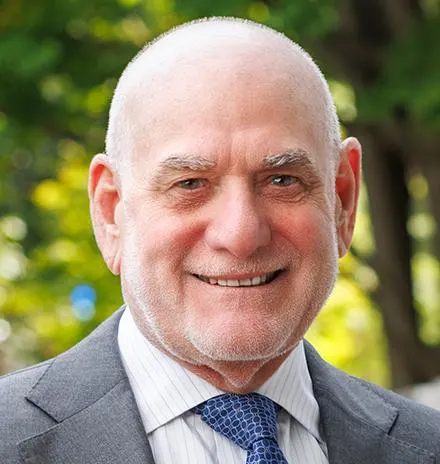

Michael Aubrey, having walked the path from searcher to successful operator and investor, draws on his wealth of experiences to offer a masterclass in small business growth. In this episode, he talks candidly about navigating early operational setbacks and hiring challenges, the strategies he employed to build a national salesforce, and why he believes a deep understanding of one’s customers is the foundation for real improvement and scale. You’ll hear reflections on employee compensation models, the critical role of company culture and accountability, and what it really takes to succeed as a CEO in the world of small business acquisitions. Packed with hard-earned lessons on management, grit, and the value of taking a hands-on approach to operations, Michael’s insights into leadership, hiring, and growth strategy are not to be missed.
Transcript
Royce Yudkoff:
Welcome to Think Big, Buy Small, a podcast from Harvard Business School about entrepreneurship through acquisition. We’re your hosts, Royce Yudkoff…
Rick Ruback:
…and Rick Ruback.
Royce Yudkoff:
Rick and I have the pleasure today of hosting Michael Aubrey. Michael has had a long and successful career in search, initially doing a partnered search and running the business for an extended period of time with his partner before a very successful outcome. He then led an even more successful, as measured in total size, roll-up of veterinarian practices, and currently leads Shore Capital's effort at investing in search funds. So, it's a long and varied career in and around small firms – acquiring them, building them. We're excited to have Michael here and to learn from his learnings. Michael, welcome to Think Big, Buy Small.
Rick Ruback:
Michael, thank you for joining us.
Michael Aubrey:
Thanks so much. It's a pleasure to be here.
Royce Yudkoff:
Michael, maybe a good place to start is for you to tell our listeners a little bit about your journey. How did you find your way towards search, and moving it to the present so people get a sense of who you are and what you've done?
Michael Aubrey:
Sure, thanks. I'm the oldest of five kids and my dad is a self-made entrepreneur. So, he started his career actually as a parking lot attendant in downtown Detroit, and he made the owner of that parking lot so much money that the owner ended up leasing it to my father and then ultimately selling it to him on a land contract. My mother was stay-at-home and, trust me, she had the harder job of the two, raising all five of us. But my dad, I watched him build his business, so from an early age I saw the sacrifice that comes with entrepreneurship, and it was always what I wanted to do ever since I was a little kid. In terms of education, I went to the University of Notre Dame, which was my dream school. I grew up here in Michigan, so it was a very unpopular choice among my fellow Michiganders. I had the privilege of going there, and at school I met a gentleman named Dan Henn. Dan went to HBS, and I got a call from Dan in 2007, and he learned about search funds at HBS. I literally thought it was the craziest idea that I had ever heard in my life, and I told him that he should suggest to Harvard that he get his money back because he wasted his education at HBS. He told me I was being silly and he asked me to fly to Boston. I flew to Boston and I got to meet with some of the more famous search investors and I was hooked. And so I joined Dan in 2007, which we thought was a great time in the economy and we were going to conquer the world. And then '08 and '09 hit, and that was brutal. And so our search took every bit of two years, and we were down to our last $17,000 when we finally found StatLab Medical Products down in Dallas, Texas. And we bought the business and moved there, and the rest is history.
Royce Yudkoff:
Tell us a little bit about the business when you bought it. What did it do? What was its financial profile?
Michael Aubrey:
So, it was $19 million in revenue, $2.8 million of EBITDA, and it was a distribution company. It sold commodity-like, me-too products to labs that test for cancer. So, anatomic pathology labs are these dedicated labs where if you're going to get a cancer test or pathology test, they do that work. And we were selling a lot of the products that were used in the process of those tests. A significant part of the business was in Oklahoma and Texas, and we just felt like there was a massive opportunity to grow in the rest of the country, if we could make big investments in sales and distribution capabilities.
Royce Yudkoff:
Had the business been growing before you and your partner showed up? Had it been going sort of sideways? What was its trajectory?
Michael Aubrey:
It was growing, double-digit growth for several years. We were really excited about that when we bought it. And we paid seven and a half times EBITDA in 2009, which at the time was considered a very, very full price for a business that size, and in search, in particular, but we felt like it was good because it was growing. But I will tell you that half of our cap table disagreed with us and actually didn't invest in the business. One of the main reasons was they felt like we were paying much too high of a price.
Rick Ruback:
One question I always have when I hear about businesses like this is why do you think it was regional? It doesn't obviously seem that if you're selling me-too test equipment for cancer tests that it would be an Oklahoma and Texas market.
Michael Aubrey:
It was three brothers who owned the business, and there was a sales and marketing brother. And I asked the sales and marketing brother, "Why don't you hire a bunch of salespeople in territory?" And his answer to me was, "Well, we don't know how to manage them and so we never made that investment." The reason why it was regional is because they didn't have a national sales team that was in place all over the country.
Rick Ruback:
So interesting. It was simply that they had salespeople who sold, you know, a few hours away from where they lived, and that was their market.
Michael Aubrey:
That's right. The other thing I would say is, because the products were so low-priced, if you were to buy our products in New York, it became punitive for you to do so because of the shipping costs. So, one of the things we ended up doing was we built distribution centers across the country to reduce that cost.
Rick Ruback:
So, tell us a little bit about the evolution. You and your partner take it over, you buy it, you have some investors who are supportive but wondering why some of the people they know and love and often invest with decided not to invest. So, you're under a bit of a microscope, I suspect, and you feel the pressure, I think. And so what do you do first? You're going to grow sales and marketing, because that seems to be the big gain in the distribution business, right?
Michael Aubrey:
Yeah. So, step number one was find out where there was cost in the business that we could take out. One of the advantages we had of buying a business with $19 million of revenue were there were some real costs there. And one of the big costs was shipping. And then I think the reality is there were legacy team members that were probably great to help the business get to a certain point, but they weren't going to be the people that could help us get to the next point. And I think between making those hard decisions and then doing a ton of work – which I have to give my partner, Dan, all the credit in the world for this – we saved a ton of money on shipping, because he built this massive model. It was the most impressive thing I've ever seen. There must've been 60,000 rows in this Excel file that he built. And he knew the hazmat and the zip codes that we were sending things to. He knew more about what we were shipping than UPS did. And between the difficult decisions we made and the shipping savings that we got, there was probably a million dollars in savings.
Rick Ruback:
Wow.
Michael Aubrey:
Yeah, it was meaningful. It was a great way to start. And so we went to our board and said, "Hey, we would like to completely double down and take all of those savings and invest in a sales team." And they said, "But you've never led a sales team before. And are you going to get a Vice President of Sales?" And that's where, you know, I said, "Trust me, I'll do it." And so that is how the investment started. There's one piece to this that I do think is relevant for searchers to hear too. One of the things that the brothers did before we bought the business was they sold a lot of their products out of a catalogue and then, through this 1099 sales force, sold a bunch of products for a bunch of different companies. And the brothers felt it was economical because they didn't have to pay them full-time salaries. Well, as soon as we bought the business, this group literally started stealing our customers. So, they were going into labs that we sold to historically, and they literally told the purchasing manager that we changed our eight hundred number. And it actually happened to be the home of the leader of this group, these six individuals that sort of unionized against us, and they were selling our products out of his garage. His wife was answering the phone as StatLab Medical Products, and the customers legitimately thought they were buying from us.
Rick Ruback:
So, he was basically stealing?
Michael Aubrey:
Yeah, that's right. And I found out about it because as I was flying around the country talking to customers that I thought we lost, I said, "Hey, why'd we lose your business? Is there anything we can do to get it back?" And they said, "You didn't lose our business." I said, "What do you mean?" They said, "Look, you changed your eight hundred number." So, we lost business but we also saved a million dollars in costs, and that was the impetus of building our own W2 sales force.
Rick Ruback:
Where did they get product from?
Michael Aubrey:
Our manufacturers. They knew the manufacturers.
Rick Ruback:
Ah, and they just said, "Send them directly to us"?
Michael Aubrey:
Yeah.
Rick Ruback:
Wow. You know, some day we should do an episode on fraud. But what's really hard is that happened early in your ownership.
Michael Aubrey:
And to all the searchers listening, I say this out of nothing but love, please leave your offices and get into the field and talk to your customers. I find that so many of us are interested in things in the office. I left the office. Look, I had the good fortune of having a partner that I knew would take care of things at home. I flew 200,000 miles our first year.
Rick Ruback:
Wow.
Michael Aubrey:
I was on the road really trying to understand the business in a way so that we could take it to the next level. And I just think understanding your customer is such an important thing that often gets overlooked.
Royce Yudkoff:
Michael, speak a little bit more about that, if you would, because Rick and I are big believers in that, actually, and we often tell our students who've just bought companies to get out and visit all their customers. But, reflecting back on this, what are the really important things that you derived from that, because it was a big investment of time?
Michael Aubrey:
It really was. You know, I would ask every customer, "What should StatLab start doing that we aren't doing? What do we need to stop doing? What do we need to keep doing?" And I will tell you that I took copious, copious notes, and I promised my clients I would never get defensive. I just said, "Please be brutally honest. I'm just going to take notes, I'm here to learn, and I want to make our company better." And I'll tell you one story that basically summed it up. For those who don't know anything about cancer testing, what I would tell you is 24% of tests are misdiagnosed, either a false positive or false negative. And if it was my family, I will tell you, one of the places I trust the most is MD Anderson. To me, it is the pinnacle. And I'll never forget, I went to go see the manager there. And she was from my hometown, and we have this ginger ale in Detroit, it's called Vernors. And we have potato chips that are made in Detroit, they're called Better Made. We're very proud of these two things. I got them and I took them to the hospital with me, thinking that this would somehow make me look good with her. First of all, she's like, "You can't even bring food and drink into a center like this.” And she just let me have it and told me of all the reasons why they would never work with me ever in a million years. But what she didn't realize was she gave me my strategic plan and my roadmap to fix everything, and it was the best meeting of my life. And I walked out and I called my partner and I said, "I know exactly what we have to do." You guys, in 2014, we got that contract. I still get goosebumps because she literally gave me our strategic plan in that meeting. And your customers will give you the answer if you listen.
Royce Yudkoff:
Wow. So, it wasn't just about meeting the customers and building the relationship, it was really about getting ideas for how to change the service mix of the company so you met their needs better?
Michael Aubrey:
Yeah. So, Royce, one of the things that I do in my companies is we have an annual session with all of our salespeople and we talk about “Why do we lose?” We write it on the whiteboard all the reasons why they can't be successful. Continuous improvement is one of my core values. And so we would bring the salespeople in and, again, my rule is I would put a muzzle on for two days and they would tell me all the reasons why they couldn't win every account. And every year I would take a picture and I would show them, "Over the last twelve months, we removed these barriers." Finally, after about three or four years of doing this, our best sales rep said to everybody, "You guys, we got to stop telling him these excuses." So, I think it's just so important for CEOs and leaders to understand why you're not winning and to ask those questions, because you're not winning them all. And the question is, “What would we have to do to win them all?”, and then build your company around that, and that's always worked for me.
Royce Yudkoff:
What's so powerful about that to me, and it ties to your point about the importance of the head of the company getting out to customers, is this isn't really something that's going to be solved by a salesperson. Organizations don't work that way, and so that's why having this knowledge at the top matters so much.
Rick Ruback:
Michael, do you do this in every aspect of your life or just in sales? Because I have this curse where I always, at the end of every day, think about what I could have done better. I don't count my victories, I count my losses. And it's so much fun because, you know, Royce and I spend a lot of time together. We'll teach and then have endless meetings, and Royce will say at the end of the day, "That was a really good day." And I'll say, "That was a terrible day. We didn't get anything done. You know, I didn't get to the gym. I didn't do any writing. There was no creative work." I hate to say it – I'm kind of a "Why isn't that cup full all the way?" kind of guy, never mind halfway. Are you the same way or is it just on sales?
Michael Aubrey:
Yeah, it's a really good question. I would say I'm that way with myself, but not with my team. So, with our team, one of my big things is, whenever we tackle a big project, it sounds really overwhelming and daunting to everybody. And I always say, "Yard by yard it's hard, but inch by inch it's a cinch. We're just going to pick up inches every day." And as a leader, it's really important that you don't get too high or get too low in front of your team. But internally, yes, I tend to be more like you and I'm really hard on myself. And I think that drives the level of excellence I want in the organizations I'm a part of.
Rick Ruback:
But not everybody can take that.
Michael Aubrey:
I think there's a pace to which an organization can handle it, and I have to surround myself with people that can help me, slow me down, and put all of those ideas into a process that people can follow so that we actually achieve it.
Rick Ruback:
I want to go backwards, if I can. You're in late 2009, early 2010, you've freed up some cash, so EBITDA is probably better than the 2.8 you bought it at, cash flows are much better, and you're going to take a million dollars of cash and spend it on a sales force.
Michael Aubrey:
Yes.
Rick Ruback:
Forgetting about how you convinced your investors of that, the bigger question is, after they say “yes”, what do you do? Because you've never built a sales force before, and now you have a million dollars to spend.
Michael Aubrey:
Yeah.
Rick Ruback:
What do you do?
Michael Aubrey:
I made a lot of mistakes, and then I went to a sales school. So, the first thing I did is I went across the country. We worked with a recruiter to help us find individuals, and I interviewed for markets. We picked the markets that we wanted to be in – and I will tell you, literally, my first three hires were awful. I absolutely went zero for three.
Rick Ruback:
But sales is probably the most difficult role to hire for, right?
Michael Aubrey:
It was hard because they're great at interviewing, especially as a 31-year-old co-CEO who didn't even know what I was looking for.
Rick Ruback:
You talk about this, Royce, right? If they can't make you like them…
Royce Yudkoff:
Yeah, right. If they can't make you like them, what are they going to be like on some random Tuesday four hundred miles away with a customer? It's frightening. We've seen again and again how difficult it is to recruit talented salespeople into smaller firms, and one component to that is, you know, a salesperson's value is really evident, and therefore good salespeople are well taken care of by their companies. And therefore the people who are salespeople looking for a job tends to be more biased to people who, for some reason or another, aren't making it as salespeople. I mean, sometimes you get cases where people are moving to be closer to their families or other issues, but they're not walking the streets if they're really good. But, Michael, so tell us a little bit about, you know, what you learned about spotting a good sales talent.
Michael Aubrey:
When I was first starting, I was enamored with the resume and I was enamored with the size of the companies that they worked for, and I had assumed that those companies offered them great training. I kind of equate it to someone that goes to HBS. It's like, "Wow, they go to HBS, they must be really smart.” And so I was like, "Okay, if they worked at that company, that must be great." What I learned is that they might be great in that environment, but the environment of the companies we buy in ETA are so different that the people I hired had a very difficult time transitioning. So, I quickly learned when I went zero for three, I said, "Okay, I need to rethink this. I actually need to hire people that are used to our environment." And so what I ended up doing, and this worked really well, I hired really young people, because I figured the good ones were already taken, to your point. I was looking for twenty-four, twenty-five-year-olds who were selling the hardest things in the world to sell. As an example, this one gentleman I hired, who's the best I've ever hired to this day, was selling office supplies at a really small company. And he was having to sell against Staples, and he was winning. And I started realizing that's the profile. I want people that work at the underdog against the behemoths. They're young in their career and I can train them, and that worked really well. We hired twenty-one salespeople, and the hit rate became much higher after that. And the other thing we did that I'm really proud of is the training. I built a book, it was a thirty-five page novel – we called it “Critical to Understand” – and it was how to sell every single product. Because I had been in the field so much, I knew every objection that I would get for every product, and I wrote what the objection was and what the talk track was. And during your first ninety days at StatLab, every Friday you went to school to learn how to overcome those objections. And on your 90th day, you had to sit in front of me, and I was the customer and you were the salesperson, and if you didn't pass the test, we parted ways. That sounds really harsh, but we said, "These are the answers. All you got to do is memorize them in ninety days and be able to be fluent."
Rick Ruback:
So, how high was your success rate?
Michael Aubrey:
75% of our sales team would make quota every year.
Rick Ruback:
Wow. And how about the turnover – lots or little?
Michael Aubrey:
20 to 25% a year.
Rick Ruback:
I love your strategy. I always think that if you're hiring for these kinds of roles, there's two populations that are really interesting. One are the rookies and the second one – maybe less for sales, but more for, for example, CFO roles – is somebody in their 60s, who's looking for the last five to ten years of work in an environment where they can put aside their own personalities and their own careers, as long as they get paid fairly, and bring their experience to a smaller company. Sales is a little harder for that because there's travel and so the rookies probably work there. And you pay them a lot less than you pay senior people, and so you can have five of them, and if three of them don't work and you have to let them go, it's okay. You're still ahead.
Michael Aubrey:
What I tell a lot of first-time CEOs are, "When you're going to your board and asking to invest in sales, do yourself a favor, try to hire four, because odds are one or two is going to be bad." And if you go to your board a year from now and you just hired one and it didn't work, your board might think it was the strategy that was the problem. It might not have been the strategy, it might've been the person. Give yourself enough shots on goal to at least get one good one. To your point on profile of person, I certainly don't disagree about getting someone later in their career, but what I also found is that there's a ton of value in finding someone that's stuck at their company and you give them a chance to have that higher role, that next promotion, even though they might be a little young. If they have a high ceiling, those hires have worked out for me more often than not.
Rick Ruback:
What I'm hearing is you buy the company, you free up some cash, you spend a year crisscrossing the country and, in that process, you believe you have figured out the puzzle of sales, and then you go hire the sales force and teach them what you've become an expert in.
Michael Aubrey:
Yes.
Rick Ruback:
But had you not become an expert, you couldn't have done what you did. Am I hearing that right?
Michael Aubrey:
You are. One more point: I went to tech school. On Saturdays and Sundays, I would learn how to do what my customers did. I wanted to learn exactly what their job was like so that I could really sell and overcome all the objections. Like, I wanted to use the blades, I wanted to use the alcohol, I wanted to use the paraffin, I wanted it to understand so that I could sell.
Rick Ruback:
Because you didn't start as an expert, you didn't know anything about this, you weren't a biology major, you didn't have a PhD in anything. So, you immersed yourself in the business and, at the same time, immersed yourself in the customer experience, became an expert on what the customer wants, and then brought that to a sales force.
Michael Aubrey:
I did. And it also informed our product development strategy, because I knew what we didn't have in our catalogue that we needed, and I knew which manufacturers we might want to buy.
Rick Ruback:
Yeah, it's so interesting. You know, what I find in our classes, every once in a while, people who want to buy a bigger business so they don't have to get their hands dirty, they don't have to immerse themselves into whatever it is. You know, if it's a trash business, they don't want to actually do the hauling. And what you're saying is, that just doesn't work.
Michael Aubrey:
I don't know another way. Here's the harsh truth. There is a wide variance in outcomes in search, there is. And we can say, "Oh, it's because we bought the wrong businesses," or whatever. I think that there's a pattern of the people that I have seen be really successful, have a work ethic that is really high. And the people I know that have been in the top decile of outcomes share a similar level of intimacy that they got with their businesses and their customers. And I just don't know a lot of people that were able to be really successful and said, "Yeah, I really wasn't in the weeds." I think you have to be in the weeds before you get out of the weeds.
----------
Royce Yudkoff:
I find it very challenging to evaluate searchers, to predict their success at running a company. It's really hard until they take over a company. I think one of the things that I look at is, “Did they begin by bathing themselves in customer opinion?” You know, did they get out there and talk to customers, particularly when they're single searchers – they don't have a partner back in the shop – and there are all sorts of employees crying out for their attention. Do they force themselves out a third of every week, 40% of every week, talk to customers – which, by the way, has a nice effect on customers. I mean, who doesn't like to meet the owner? What a flattering, respectful thing that is to do. But it really allows them to take control of their company in sales, in product development, because you're now the source of knowledge about what's right. So, I think the people who get out and bathe in customer opinion, that's not a guarantee, but it's a marker.
Rick Ruback:
That's more of an action than a marker, so I agree it's one of the things new CEOs should do, and it really is helpful, but it's not really a marker. A marker might be, for example, the confidence to take the criticism that comes with those meetings, or to be able to make that cold call and say, "You don't know me, but I own the company that sells you this gizmo and I'd like to learn how you're experiencing our customer service, our work. I want to hear everything you want to tell me."
Royce Yudkoff:
Yeah, but there are a lot of smart, talented searchers who just decline to do this, even when offered advice on the merits of it. And maybe that comes from a lack of confidence, or a confusion about what's really important, but it's not like most everyone does this.
Rick Ruback:
Right, but the marker is their willingness to do it. It's "How do I predict their willingness to do it?" Because when you interview a potential searcher and you say, "Do you think you should talk to your customers?" "Yeah. Well, I'm going to say ‘no’. I think all my customers are idiots." Nobody's ever going to say that. They're going to say, "Oh, yeah. I want to talk to my customers. I want to go see them every day!” And then three months in, you've discovered that they haven't met a single customer.
Royce Yudkoff:
We agree on that, for sure, that you can't tell this in advance. You can tell it early…
Rick Ruback:
…I want the marker to tell in advance!
Royce Yudkoff:
Let’s return to our conversation.
----------
Royce Yudkoff:
I think this notion of really understanding what matters to the customer before you build a sales force is so important. You know, Rick, you and I see many students starting to learn about search, who will look at a company that, in some ways, Michael, is like your company, where the owners have just chosen not to fill all the territories with salespeople, not to expand into territories they can serve, because they don't need to, because they're not compelled to, but a hungry searcher will, of course, do that. But here's where they part ways with what you're talking about, which is their solution is, "I'll go out and I'll hire five salespeople and I'll fill the territories." And your point is that's doomed for failure because you don't understand the customer yet and therefore you can't teach proper behavior to the salespeople.
Michael Aubrey:
That's certainly my rule. I passionately believe that. And when I feel like that person can understand it, then I feel like it's time to make that investment.
Royce Yudkoff:
Right. And then, I guess, when you hire those people, a second Michael Aubrey rule is: “Don't be enamored with the big brand names and polished resume of elite firms”, because their problems are not your problems, right? That salesperson who works for Famous Brand doesn't get asked certain questions that your employee is going to get asked, right? They don't get the kind of questions that he or she gets, because they don't represent a big brand. They don't have an engineering or research lab that they can call for complicated technical questions. They have to find a different way than a much larger competitor solves their sales problems.
Michael Aubrey:
I couldn't have said it better myself. And I think the last thing is onboarding and training matter. As a young leader, I just thought, "Okay, if I hire people that are smart and they have common sense, they're going to do great." And what I found is that my failure as a leader and a trainer is going to be their failure. But if I pour into them and invest in that training, then they'll have a chance to be successful. And I think I didn't appreciate that early on, but I certainly came to over time.
Rick Ruback:
And the other thing that seems to be really important is you give them three months of rope.
Michael Aubrey:
Yeah.
Rick Ruback:
And if it doesn't work in three months, and they haven't learned the book, and they haven't figured it out, and they don't seem to be resonating with the company or the customers, they are gone.
Michael Aubrey:
Yep.
Rick Ruback:
And that feels like a pretty hard and fast rule for you.
Michael Aubrey:
It wasn't rocket science. We were selling microscope slides and cassettes, and little jars of formaldehyde. It wasn't hard to learn. If you gave me the effort, trust me, you would have learned it. If you literally said, "I'm not going to put the effort in," I felt zero remorse about saying, "I'd rather spend my money elsewhere," because you clearly didn't even bother to study for the test.
Rick Ruback:
Right. I mean, I've certainly been through this at the board level, where the CEO hires some salespeople, and we say, "When are we going to judge their success?" And they say, "Three months." And then three months comes and they say, "You know, they haven't gotten traction yet. Let's give them another three months." And then another three months, and then a year later they're still not selling.
Michael Aubrey:
There's an, "Oh my gosh, I have to tell the whole organization I made the wrong hire” – okay, which is a human thing, and it's real. And it's, "Now I have to start all over. I have to hire a recruiter again. I don't have time to interview ten more people to do this again." I believe that a lot of leaders are just like, "It's the devil I know, I'm just going to put up with it because it could be worse." And I'm just not willing to do that. I tell our young leaders that work for me all the time, "If you're not willing to go through the J-curve in your own personal life, we're not going to be the place for you." And the J-curve might mean you've got to go back to the drawing board and interview ten candidates, which is horrible. I get it. It's not fun. But we're not going for good, we're going for great, and sometimes that means you got to go to the bottom of the J-curve with your time. And I'm maniacal about that. And it just means more work, but because I made a mistake the first time, I got to fix it.
Rick Ruback:
And what do you think about the ROI of a sales team?
Michael Aubrey:
Well, in our case, it was what we were paying them, they were generating at least that in an incremental gross profit in one year. That was pretty compelling for us.
Rick Ruback:
So, that's the rule of thumb, that they should be able to pay for themselves in a year?
Michael Aubrey:
When I'm working with CEOs, what I say is, "Try to think about your cost of capital. And if you can generate a 50% ROI on something, that's a no-brainer, you should do that. So, if a salesperson was at 50% ROI, I would still tell them that's okay.” In my case, it was a 100% ROI. And what I would say is, "What are all the things you could do and what is the highest return on investment?" And you should force rank your initiatives in the investments you make using math instead of your gut, and then apply some discount to the fact that, in my case, if it was 100% for the salesperson, I would give that a 50% because what I would say is, "I'm going to hire one and two correctly." Like, when I did my math, and me and Dan were thinking about our ROI opportunities, sometimes in a given year we would say, "We're not going to make any sales hires because the best thing we could do is vertically integrate this product line, because we know that ROI is higher." And so we were constantly using math to make decisions. Anything above 50% for me, Rick, feels pretty compelling.
Rick Ruback:
That is to say, in a year or two they should be paying for themselves, they should be making a contribution beyond just paying for themselves by Year Two, and hopefully getting very close to that at the end of Year One. So, that's how you think about it. That's really interesting. I've always wondered, because very few people actually model it out.
Michael Aubrey:
Everything was math.
Royce Yudkoff:
Michael, we've asked you “What were the building blocks of your approach to creating the sales force?”, and you've walked us through a few of them. It's very interesting to me that, so far, not on your list is compensation. And I think there are a lot of people who sort of approach sales by saying, "I have five open territories. I'm going to hire five people. They're going to be on commission. Their interests are aligned with mine. I'm going to unleash them." And that fails. Tell us how you think about compensation here.
Michael Aubrey:
A mentor of mine once said to me, "Michael, the problem with incentives are they work." And so the first time Dan and I hired salespeople, we paid them 6% of revenue because we thought they would align incentives. And you know what they did? They all gave away free shipping. And that cost our company millions of dollars in lost shipping revenue, or at least even reimbursement, because the sales reps weren't tied to us. And so we quickly said, "Okay, where do we need to align them? We need to align them in gross profit, and that includes the cost of shipping." And so we changed their comp model to one based on gross profit. And I'll never forget when we rolled out the change, one of our salespeople literally raised his hand in the audience and said, "I was wondering how long it was going to take you two to figure this out." So, that was a lesson in humility that I'll never forget. And so what I would tell all young leaders building a sales team is, “If you think you're aligned, you may actually not be – and really drive the exact behavior that you want, because whatever you put in place for salespeople is exactly the behavior that you will drive.” And so whether that's incentivizing them to get new clients or grow their existing clients, whether you put in kickers or bonuses for that, whatever you do, that's going to have unintended consequences and it's going to make them not do other things. And so I just think the compensation will truly drive behavior and you got to be really careful about it.
Royce Yudkoff:
Well, tell us a little bit about this company because, you know, Rick and I, and many other people, encourage searchers to buy companies with recurring revenues. And your business is like that. When you land a new customer, if you do the good job, they're a customer for years, ordering and ordering. And so it raises a compensation question with salespeople – how much do you want to pay them for landing that customer? And how much do you want to be paying them for that customer three years later, where the retention of that customer is the work of many other people in the organization? Speak to that, please.
Michael Aubrey:
It's a really thoughtful question. We had to address that and what we ultimately did is we said, "We are going to give you 10% of gross profit for all your customers in perpetuity." The reason we did that is because when we were hiring these young rock stars, we knew the good ones we wanted to keep, and we wanted to create a path for them to make enough money so that they didn't leave us and go to the bigger healthcare companies that we would otherwise lose them to. But what we did is we had a massive annual bonus for the new business that they brought in, on top of the base. And so for our money-motivated folks, they were constantly going for that. I think it was even 25% of the new gross profit one time, so if they got us a new million dollars of gross profit, they would get a $250,000 kicker. From our perspective, that was going to be an annuity going forward. We were perfectly fine doing that. And then if they wanted to make that kicker again, they would have to generate that much new business the following year. So, it was a two-part comp plan and it ended up being really successful for us, but I'll tell you, it probably took us three or four years to figure out how to design it. We went through a lot of iterations before that.
Rick Ruback:
That combination between how much to incent new business and how much to incent retention is always a balancing act.
Michael Aubrey:
I don't disagree, but I always think about the multiple that we get when we sell our businesses. It's worth it, right?
Rick Ruback:
Yeah.
Michael Aubrey:
Like, when you just do the math, they get a one-time bonus and the company gets the equity value that's associated with it.
Rick Ruback:
Right. Can I go back to something you said earlier? Because I've been thinking about it ever since you said it, which is you look back and look at the searchers that had great outcomes, and you see some commonalities.
Michael Aubrey:
Yeah.
Rick Ruback:
I think you said it's this ability to dig in, and work hard, and high expectations for themselves and all those around them – but I'm putting words in your mouth. Do you think when you make an investment, you can tell the person is that?
Michael Aubrey:
No, I don't know how to do that. I don't. I think that being polarizing is important. I'm certain that this will be a controversial thought I have, but I try to teach our teams to be polarizing and actually stand for something.
Rick Ruback:
Well, I would be good on your team, because I polarize whether I'm sitting at the breakfast table with just my wife and my dog, I'm able to polarize that group.
Michael Aubrey:
We would love to have you. I think that when you're selling something and you just try to be in the middle, it becomes very hard because you don't actually stand for something. I think that you can be good, you can be fast, or you can be cheap. You can't be all three. You can be two of the three, okay?
Rick Ruback:
Mm-hmm.
Michael Aubrey:
But if you try to be all things to all people, I just think that breaks down. And I don't want to disparage other companies, but think about Apple. Like, they're not known for customer service but they have great products, right? Then there are companies like Amazon, who I personally love dealing with. It's great. I just think you can be whatever you are, just make sure you're good at it. What's my point? In my interview processes, I try to be really, really honest about my expectations with the people that I hire. And I tell them, "If you are not ready to sign up for this, don't. You have a family, you have a mortgage – don't risk it. But if you are so tired of working in a bureaucratic, political environment and you just want to like be unleashed and be amazing, you're going to love it here." And that's polarizing to people. And I don't interview in a way that I try to be all things to all people. I try to let people self-select out, and I have actually found that that's effective.
Rick Ruback:
That's great. Royce and I have had so many conversations about what are the markers of great CEOs and can you tell them early? And what I've come to believe is that you can't tell ahead of time. It's only in reaction to problems that you can tell. And that really good CEOs are able to recognize problems, they don't hide from them. They work hard to understand them, and then they work really hard to overcome them. They never say, "I'm stuck. This is terrible. You're going to lose all your money. Oh, please don't be mad at me." They always say, "Well, we missed this in due diligence but we can't go backwards. Here's what we're going to do. Here's our plan." So, I don't think I can tell that until they get in that stress. So, Michael, at the end of every episode, we do this thing where we, having asked our guests questions, we give them the chance to set the agenda and ask whether you have any questions or anything you want our thoughts on.
Michael Aubrey:
Well, when you have the privilege of advising the young men and women that you do, and they're talking about growth, where do you focus your time as a board member? Are you focused on the comp plan? Are you actually cautioning them against it? Are you saying that, "You need to go get a Vice President of Sales"? I'd love to learn from your wisdom, in terms of what best practices you've seen.
Royce Yudkoff:
Well, you know, Michael, I want to say I so adored your opening remarks on what you did as CEO, as one of two owners of the business, by going out to customers, because that is the first thing I advise CEOs to do. And I will often recommend a quota on it, because there are so many calls on their time in a small business, where the management bench underneath them is sort of thin to begin with, and they're learning the business and, quite reasonably, don't yet know what's important, so everything is important. And so I often suggest two days a week – this is for a single searcher, not a partnered searcher – you should be out calling on customers because of all you will learn. That's a hard and high quota for many searchers to hit but that would be my thought on where you start with growth. And I find that that leads to a better understanding of the company quickly, and somewhere along the way to really good ideas by these smart searchers on how to change the service mix or the product mix to more directly fit with what the customer wants.
Michael Aubrey:
That makes sense.
Rick Ruback:
So, that has worked really well in some of the companies that Royce and I work with. I will also say there are some instances where it just doesn't work. It's a little bit like if you go to your doctor and the doctor says, "You should go to the gym. You need more exercise." And so you go to the gym and you sit at the espresso bar and have a wholewheat croissant instead of actually exercising. It doesn't actually solve the problem. And so what you really need to do is find a way to get the young CEOs to embrace this experience, to recognize that it's going to make them better managers, in the way that you described so wonderfully. You know, it’s, "When I understood the customer, I understood everything about what we do, and what products we should develop, and how we should ship, and how we should advertise, and how we should design our website, and how we should design our CRM. Because if I don't understand the customer, I can't do any of that.” But it's getting the CEO to embrace that experience that I think is the real challenge. But the quota works if the CEO approaches it in a gleeful manner that says, "Wow, I am free to ignore the noise of the office and I get to do the really fun stuff." If they say, "Oh, this is like flossing my teeth, something I have to do to make the board of directors happy, but I don't really think it does any good," then it's not going to be successful.
Michael Aubrey:
That makes a ton of sense.
Royce Yudkoff:
Michael, Rick and I want to thank you so much for investing your time and joining us. It's been great to hear your story and the lessons learned. Thank you.
Rick Ruback:
So much fun. And I love your approach.
Michael Aubrey:
Thank you both so much. It was an honor to be here, and big fans of yours and everything that you're doing for so many searchers in the community. Thanks for having me.
----------
Royce Yudkoff:
Michael Aubrey's successful approach to building out a sales organization is really instructive because, Rick, you and I meet many young, would-be searchers who find companies that haven't grown their revenues, even though they have an attractive product or service, and their reaction is to build out a sales force. Michael is making the point that before you can build a sales force, you really have to understand what the customer wants because that allows you to train your salespeople, to tweak your products and services to make them more desirable, and to set up a sales force for success. I think it's a really powerful point for young CEOs to learn, as they attack the problem of historically low-growth sales when they see the potential for more. What's your reaction to that, Rick?
Rick Ruback:
What I was reflecting on is you and I often talk about the fact that CEOs shouldn't make any big changes in the first few months of operation. And the genesis of that idea is that you just need to learn more about your business, that information acquisition is key. And you shouldn't come in with any preconceived notions about how to sell the product or what your customer management system should be or how the accounting should be done or anything really. You should be like a sponge, learn a lot, and then once you learn, be reflective about what you learn and then make improvements.
Royce Yudkoff:
I like that point, Rick, and Michael touched on that because he coached us to think about hiring a salesperson in the same way as you'd make any other investment. You'd never invest in a big information system one month into the job before you understood what the company's information needs were. Yet, people are very eager to jump in and hire salespeople, feeling like they can just keep replacing them, but that's an investment too.
Rick Ruback:
Well, and people are also very eager to spend lots of money on new information systems, two hours after taking over the company.
Royce Yudkoff:
Yeah. Well, we desperately coach them not to do that, and maybe we should include in that “don’t hire salespeople too early either”.
Rick Ruback:
Well, I think the idea is you can't hire for a role that you don't understand.
Royce Yudkoff:
Exactly. That’s right. Well, it's been a pleasure having Michael on the show and I think there was a lot of learning from this episode.
Rick Ruback:
I just love this episode with Michael Aubrey. I learned so much. I hope our listeners did too. This is one that I know I'm going to listen to again and again, as we advise young searchers. His willingness to throw himself into his first business and do whatever it took, and learn, and travel, and talk to customers, and build the sales force, it was just inspiring.
Royce Yudkoff:
I agree, worthwhile lessons for everybody. In our next episode, you and I will be speaking to Rob LeBlanc. Rob has built an investment firm that invests in searchers in frontier markets, and those markets are markets where typically there's never been a search fund before or it's a less developed economy, and he does this all over the world. It's a fascinating strategy. Whether or not you're contemplating searching in one of these frontier markets or in a developed market, like North America or Western Europe, there are a lot of interesting lessons to learn about the different ways in which you search, in which you are qualified to being a searcher, in how you finance – and Rob brings a perspective on searching that is quite unique.
Rick Ruback:
I’m looking forward to it.
Royce Yudkoff:
Rick, we end each season with a very special episode where we ask our listeners to e-mail us and offer questions they have after listening to our episodes or after their experiences in search. We pull out the questions and you and I discuss them.
Rick Ruback:
You know how much fun that can be.
Royce Yudkoff:
It’s a favorite of ours and a favorite of a lot of our listeners. So, listeners, shoot us an e-mail at rickandroyce at hbs dot edu and we’ll put them in the bunch we go through and answer them in our final episode of Season Three. We’re looking forward to it. You’ve been listening to Think Big, Buy Small. We’re your hosts, Royce Yudkoff…
Rick Ruback:
…and Rick Ruback.
Royce Yudkoff:
Katie Zandbergen produced today’s episode.
Rick Ruback:
Craig McDonald is our audio engineer. If you have any questions, comments, thoughts, feel free to just e-mail us, rickandroyce, all one word, at hbs dot edu.
Royce Yudkoff:
We’ll be back next week with another episode of Think Big, Buy Small.