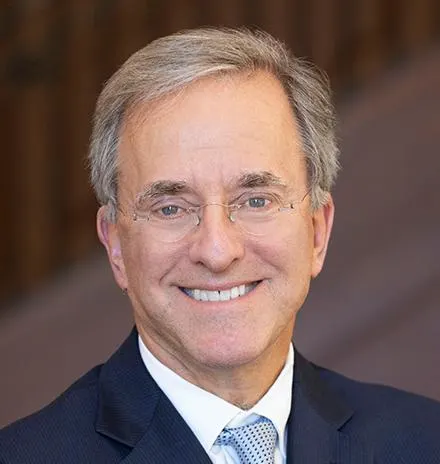
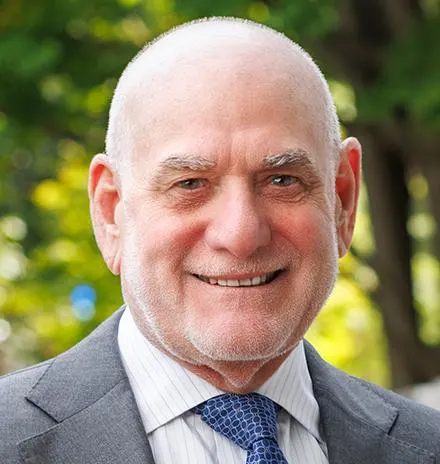

In this episode, we’re joined by Bruce Marks, a veteran SBA lender with decades of experience and well over 1,000 business acquisition deals under his belt. Bruce draws on his deep expertise in the acquisition lending space to reflect on the role of SBA financing in ETA, how lenders assess deals, the importance of debt service coverage, along with evaluations of risk, and factors that searchers should consider when evaluating SBA and conventional financing options. Rick and Royce lead a practical, insightful conversation covering deal structures, loan terms, and the importance of transparency with lenders, making this episode a must-listen for anyone exploring or navigating the acquisition process.
Transcript
Royce Yudkoff:
Welcome to Think Big, Buy Small, a podcast from Harvard Business School about entrepreneurship through acquisition. We’re your hosts, Royce Yudkoff…
Rick Ruback:
…and Rick Ruback.
Royce Yudkoff:
Today, Rick and I are hosting Bruce Marks. Bruce is one of the most active and seasoned lenders to small firm acquisitions utilizing the small business administration loan guarantee programs, and we're going to learn about Bruce's activities, SBA loans, and the role they play in entrepreneurship through acquisition. Bruce, welcome to the podcast.
Bruce Marks:
I'm thrilled to be here. Thank you, Royce and Rick. I really appreciate the opportunity.
Royce Yudkoff:
We're delighted to have you here. Maybe the place to start is by asking you to talk a little bit about your background. Tell us a little bit about your education, your career, and how you found your way into this part of the financing world.
Bruce Marks:
So, yeah, from Boston, Massachusetts. Graduated Salem State University and then went to Suffolk University, in downtown Boston, and finished up my MBA degree at Nova Southeastern, here in Florida. I grew up in the lending world, did fixed income portfolio management for the first five or six years of my career, and then switched over to commercial lending, and then started my own small business consulting company. I had that business for thirteen years and finally made a decision to pop back into the banking business and SBA lending. Back then it was a lot different than it is today. When I first started, I think there was two preferred lenders in the state of Florida. Imagine, just two. Got an opportunity in 2015 to attend a conference where I heard a gentleman speak about branding and how people want to deal with people that are authoritative and are experts in their field. And so I got my certification as an M&A advisor, attended training on business valuations, and just immersed myself into lower middle market. And I was introduced, oddly enough, in 2015 to the search world from a searcher that was one of your students. And he called me and said, "Bruce, are you familiar with search fund lending?" And I said, "No, but I'd love to learn." And he explained the details of the program and how it worked, and I truly just thought it was the greatest thing since sliced bread, to be honest with you. He then referred me to another searcher, another student of yours, and we were successful in that transaction. And that was ten years ago, and I've only been doing search fund lending since that time. So, I am where I am today because of search fund lending and it's just been tremendous for me as well.
Royce Yudkoff:
Can you estimate for us, roughly, how many search fund acquisition loans you've made in that decade since you discovered search?
Rick Ruback:
That was exactly my question, Royce.
Royce Yudkoff:
Well, we've been together for a long time.
Rick Ruback:
You've really got to stop reading my mind. And Bruce, while I love the total number, I'm more interested in how many a year you're doing these days, roughly.
Bruce Marks:
So, between twenty-five and thirty transactions a year is very consistent, and I've closed a half a billion dollars in this space over the past ten years.
Rick Ruback:
Tell us about the terms that you generally seek. Do you want to do 75% of acquisition value? Do you want to have debt service be two turns of EBITDA? Tell us roughly what you look for in an eligible deal.
Bruce Marks:
I don't think it's either one of those…
Rick Ruback:
Okay.
Bruce Marks:
…because, for us, we always start with the notion of if the deal makes sense, and it is structured well, and there's clear debt service coverage, and we've de-risked the deal, and allocated enough for the J-curve to happen, then we've structured a good transaction, and that's what we look at. So, there's no preconceived notion, Rick, of going in there going, "Oh, you know, we only can lend 75% LTV."
Rick Ruback:
So, let's unpack each one of those. I know what you meant by “the deal makes sense”. What did you mean by “sufficient coverage”? Do you have a debt service coverage ratio in mind?
Bruce Marks:
We do. So, we do a lot of pari-passu lending here at First Bank of the Lake. That's where we'll utilize the maximum SBA 7(a) guarantee of $5 million, and then we will do a junior conventional strip behind the SBA.
Rick Ruback:
Tell us a little bit more about that and what you mean by a strip.
Bruce Marks:
Let's say it's a $10 million transaction, and let's say the seller is going to hold a million and a half in a form of a seller note, and the searcher is going to, with his minority owners, invest a million and a half. Then there would be a $2 million gap between what the SBA would require, $5 million, and that $3 million, which is eight. So, there'd still be a $2 million gap to get that deal to the closing table.
Rick Ruback:
Right.
Bruce Marks:
We will come in and we will provide that through a conventional loan here at First Bank of the Lake.
Rick Ruback:
And is that at the same interest rate as the SBA debt or is that at a higher interest rate? How does that work?
Bruce Marks:
It's the same. So, pari-passu is a Latin phrase for “equal footing” and so the SBA loan and the pari-passu piece must be on the same terms and conditions, and the lender can get no preferential treatment. So, the rate is going to be the same and the term is going to be the same.
Rick Ruback:
Equal footing, so same ten-year term, generally.
Bruce Marks:
Correct.
Rick Ruback:
Same uniform payment, amortization kind of schedule?
Bruce Marks:
Yes.
Rick Ruback:
The SBA, of course, is famous and gleeful for the fact that it has no covenants. Would this $2 million additional debt, would that have more standard commercial loan coverage ratios and the like? You know, covenants?
Bruce Marks:
No.
Royce Yudkoff:
So, it's really, truly an extension of the SBA debt, as if the SBA had a cap of $7 million instead of $5 million?
Bruce Marks:
I guess you could look at it that way, sure.
Rick Ruback:
Well, from the standpoint of the borrower, that's how it feels, right?
Bruce Marks:
Yeah, so when we do that – getting back to the debt service coverage ratio – when we look at a transaction, let's say it was a $7 million loan, we're going to look at a much higher debt service coverage ratio, and we always look at it on an after-tax basis, as we should. Uncle Sam is the one first holding out their hand and going, "Hey, if you're making $2 million, who's getting the money first?", right?
Rick Ruback:
Right. So, tell us about what that ratio is. That is to say, what's on the top, what's on the bottom?
Bruce Marks:
The bottom is one and a half after tax. And the top, we hope, is higher and higher and higher.
Rick Ruback:
But what do we put on? Like, for example, some debt service coverage ratios will subtract off distributions, will subtract off capital expenditures. What's the formula that you use?
Bruce Marks:
You definitely will look at that top number and subtract out any CapEx, like the cashflow available for debt service, you're definitely subtracting out CapEx. And we are going to, in the deal structure, look at the working capital adequacy of the business and make sure that there's sufficient working capital for the ongoing nature of the business, also including growth. A lot of searchers, as you know, Rick, they'll look at it and say, "Okay, well, this is what the business is doing. It's doing $20 million in sales." Well, how much working capital do you need to produce $20 million in sales? But if you're putting together a business plan and that business plan shows that you're going to grow that business to $22 million in sales, well, you ought to be thinking about, as a searcher, "Well, how do I do that and how much money do I need to do that?", right? Because that's going to go into your sources and uses of funds.
Rick Ruback:
So, you do this on a forward-looking basis, not just a rearview mirror basis?
Bruce Marks:
You know, in search, upside is theoretical, so it's always on a forward-looking basis. Thin about it, when we invest or you invest, it's on a future-looking basis because you're backing the searcher. You say, "He's the right guy, he's the jockey on the horse, and he can take this business from where it is today and bring it to here, and maybe we get an extra turn as well if he's successful.” And that's the end game. So, you know, when you get into a search transaction – and I speak with searchers every day of my life, that's all that I do – I tell them it's not just about getting an SBA loan. It's making sure that your deal is structured really well, that you can service the debt that you're requesting, you can sleep at night. If there's any J-curve that happens, does the business have the ability to withstand that? Do you have enough room in your debt service to make sure that if the business drops 10 or 20% - because, as you know, upside, like I said, is theoretical, but it doesn't happen every single time.
Rick Ruback:
And by “J-curve” do you mean that there's some reduction in profitability in the first year or two in the business, before the new CEO gains traction? Maybe they lose some customers, maybe they make a pricing mistake, maybe they don't get the deliveries or the services provided at quite the speed and efficiency as the seller, who had done it for decades. For all those reasons, and so many more, there are often times when EBITDA profitability will go down in that first year or two. That's what you mean by the J, that little dip before it takes off like a rocket ship?
Bruce Marks:
That’s 100% what I mean, and very well put.
Rick Ruback:
I mean, it doesn't always happen but it happens more often than not.
Bruce Marks:
Agreed.
Royce Yudkoff:
So, I want to come back to Rick's line of questioning because, like him, I know that a lot of listeners are going to be interested in this question of, “How should I think about how much I can borrow from Bank of the Lake or under the SBA and the associated loans that a bank like yours gives out?” It sounds like a key calculation is this coverage, which is they take the EBITDA at acquisition, they deduct annual normal capital expenditures from that, they deduct any taxes the business pays or distributions they'll make to their investors, for their investors to pay those taxes. And that's sort of the numerator. And then they'll divide that number by this annual debt service, meaning the required principal repayments to the bank, the interest to the bank, and maybe the interest to the seller note. And that ratio of the amount of EBITDA minus CapEx, minus distributions to debt service, needs to be above a certain level. What is the ratio it needs to be better than, generally?
Bruce Marks:
Better than 1.35.
Royce Yudkoff:
Your EBITDA minus CapEx, minus distributions for taxes to investors, divided by debt service requirements, has to be above 1.35.
Bruce Marks:
Yes.
Royce Yudkoff:
Knowing that would help a potential borrower say, "This is how much I can borrow on this business." You, of course, will help them figure that out too, when they show up in your office.
Bruce Marks:
Yes. I also want to add that every searcher looks at things differently, just like every bank looks at things differently. And I've spoken with many searchers who say, "Bruce, I would never do it if it weren't over one and a half because, personally, I want to make sure that I can sleep well at night." And then I have other searches who will say, "Well, why does it need to be 1.35? What's the SBA require?" And so when people talk to me about “what's the minimum debt service coverage?”, I often ask, "Well, what's the minimum for you, for you to feel comfortable with?" Because everybody's different, right? And everybody is going to handle the business differently, and everybody’s going to handle the pressures differently. In my own experience of owning several businesses, it takes time. Generally, these are people buying a business that they haven't been in. There's a learning curve, and it's hard when that learning curve is on-the-job training.
Royce Yudkoff:
Right. Some businesses are highly stable and predictable, and other businesses are maybe cyclical or more volatile. Rick and I often like to say, you can take risk in the operations of your business or you can take risk in your financing, by borrowing a lot of debt, but it's not a good idea to take both of those at the same time. That's sort of the point we're getting at here, right? That there should be some sense of the volatility of the business's operations and the amount of debt service you have. Those should talk to each other in a sensible way.
Bruce Marks:
Yeah. You know, it's interesting too because let's say you've got a person that started an HVAC business, right? They were working for somebody and they got laid off and they said, "I know what I'm doing. I'm going to start my own business." And now here it is fifteen years later and they have an HVAC business that's throwing off a couple of million dollars in EBITDA and they want to sell it. Oftentimes, the searcher, having obtained a Harvard MBA degree, taken your classes, has some experience – maybe he was a military veteran – he's a smart guy. And he brings a lot of education, where maybe the seller didn't. So, when you start talking about financials – you know, you're asking for your diligence checklist, and you're asking to see the balance sheets to get an idea of what that number is – you know, the working capital number is a foreign concept to them. They just know, "Hey, we need money in the bank to run the business." There's just so many, as you all know, moving pieces to these deals that you can't just look at it and go, "Well, debt service coverage is the magic bullet and as long as that hits, it works." Because I can tell you, I have walked on transactions that debt service well but for other different reasons, I don't think that the deal is a strong deal, and so I'll walk. It's a great benchmark as you're modeling your deal, for sure, but certainly not the only one.
Rick Ruback:
And Bruce, one of the things that people often ask about debt service coverage ratios – I know our students ask this all the time, and the CEOs that Royce and I work with often express great frustration about this – is why capital expenditures are subtracted out. And the argument goes something like this: “I get why maintenance capital expenditures need to be subtracted out, because that maintains the capital stock of the business, something the bank has lent against. But if I decide to grow and I need to, say, build a new building or acquire new trucks, those trucks are going to be in the business as security for the bank.” And it feels like, to these CEOs, that by subtracting out CapEx, subtracting out the cost of that new truck, you're penalizing growth, which is not something that anybody wants to do. And again, I distinguish between the truck that replaces one in an existing fleet, I get that. That's maintenance CapEx. But new CapEx, I'm going to buy a new truck to expand my operations. Why is that subtracted out? Why is that counted against the debt service coverage ratio and, in effect, another hurdle for growth?
Bruce Marks:
It's a great question. I'm going to tell you, in my mind, why I think so. It's kind of like the salesman. When you hire a salesman, you know the expense you're going to incur. You're paying him, and you're covering his benefits, and you're contributing 401K, and you have all of that cost going out the door without knowing what the contribution margin is. Maybe he made money, maybe he didn't. And at the end of the year when you review it, if he didn't, he's more than likely not working there anymore.
Rick Ruback:
Yes.
Bruce Marks:
I look at it the same way because in the future, the idea is you're taking money, after tax dollars, to buy a piece of equipment that you hope is going to produce revenue and create bottom line profit, but you don't know if that's a fact going to happen.
Rick Ruback:
How about when that CapEx is a relatively secure asset? So, I used to be leasing the building and now I'm going to buy the building.
Bruce Marks:
What I would like to add is this: "Oh, Bruce, we've got a 20,000 square foot facility. We've been leasing it. We've been paying X amount per month, and this is what our payment is. It includes the CAM on top of it, so here's what our total is. Now we want to buy a 50,000 square foot facility and we're paying X for it.” And now when I look at the debt service, it's now $10,000 or $15,000 more a month, which is now $180,000 to reduce the income. How could I not include that?
Rick Ruback:
Right. So, I guess the underlying principle here is that the big role of the debt service coverage ratio is not to provide security to the bank but to make sure you're sufficiently far away from the guardrail so that the business never runs into the guardrail. I think about it as that white stripe on the side of the road. You know, maybe you want a bigger breakdown lane or a smaller breakdown lane, but you don't really want to be on a road where there's no guardrail and if you go off you fall off the cliff, like the James Bond movies, right? So, you're doing it not as a way of preserving capital but instead you're doing it as a way of preventing a problem.
Bruce Marks:
100% agree. I will often tell searchers this: SBA is first and foremost a cash flow lender. And, in fact, if you came to me and you said, "Bruce, I have a piece of property. I can use it as collateral. It's worth $3 million. I don't have a mortgage on it and I'm requesting a $2 million SBA loan”, but the deal doesn't cash flow.
Rick Ruback:
Not going to work.
Bruce Marks:
Right. Because cash flow is what pays back the loan, not the collateral.
Royce Yudkoff:
If a searcher is wondering which is more appropriate for them in acquiring a business, a conventional bank loan or an SBA bank loan, what would be the sort of big points they have to consider, pro and con, for SBA versus conventional? What should their checklist of thoughts be in that most basic choice?
Bruce Marks:
Number one is, “Can I get a conventional loan?” That truly is number one, Royce, because in banking we have to adhere to a lot of rules and regulations, as you well know. And one of them is “know your customer”. Now, if I'm working at a conventional bank and I'm a commercial lender, I have to refer to that customer, if I’m going to lend to him, and say, "What's my experience with him? How long I have known him? What kind of banking relationship he's had? What kind of deposits does he have with the bank? What's his overall interaction with the bank?” That's “know your customer”. And generally, when we see an acquisition transaction, it's a new customer to the bank, so I can't even cover that because it's just not applicable. That's why most business acquisitions and most searches utilize the SBA loan program, because that criteria that the bank has is not going to be met. And I do get this question a fair amount: "Bruce, I'm banking with so-and-so" or "The seller is banking with so-and-so." And I just had a transaction come to me and the searcher was very upfront and said, "I'm working with a conventional lender. If I choose an SBA lender, Bruce, I'd like to move forward with you, but I am also exploring the possibilities." And his deal was very good and it was absolutely bankable, for sure. And I said to him, "Go back to the bank that the seller has a relationship – especially now, where sellers can roll equity. let him introduce you to his banker. Do that, first and foremost.”
Rick Ruback:
So, if you can get conventional at the size you want at the rates that are similar to an SBA, you would say go ahead and get the conventional?
Bruce Marks:
At least explore the opportunity. Get a term sheet so you have a comparison, Rick. Like, if they're going to come back and they’re going to not do it on recourse, where SBA is, well, maybe that's really, you know, one that moves the needle for you.
Rick Ruback:
And you mean by recourse, no personal guarantee?
Bruce Marks:
Correct. If the SBA is giving you a ten-year loan and they're only giving you a five-year loan, okay, how does that affect debt service coverage? I absolutely would say explore the possibility. The first question is: “Can you get conventional financing?” If you can, absolutely explore it because people want choices. They want to know what this bank can offer, what that bank can offer, what this SBA lender can offer. Why not throw a conventional lender in the mix if you can do it?
Royce Yudkoff:
And, Bruce, I think Rick and I would say, as most searchers evaluate the trade-off, if they can pass the gate of “Will a conventional lender also give me a term sheet?”, they think of the big SBA loan benefits as generally a higher loan-to-value ratio than a conventional lender will do, almost always a longer repayment period, no covenants – simply a requirement to meet the monthly debt service requirements – and a willingness to lend to businesses where there are few assets, where the lending is based on cash flow. Those four attributes are generally the most attractive ones. And the moment for a pause and deep sober reflection is that the SBA loans always require a personal guarantee by the borrower, by the principle owner, whereas conventional loans sometimes do but often do not require that. Is that a fair template of how borrowers think about it?
Bruce Marks:
I would say extremely fair.
Rick Ruback:
Yeah, but increasingly what I'm seeing, particularly at the lower end of the market – you know, the loans for $1 million or $2 million – that conventional banks are lending and doing it with some covenants, but the covenants look a lot like the one Bruce is describing. So, I don't think you monitor the covenant on an annual basis, do you, Bruce?
Bruce Marks:
We do. Every loan that's in your portfolio will get an annual review, for sure.
Rick Ruback:
So, in that way, Royce, I think we should think about loans $2 million to $5 million – and for there, I think the SBA is a fabulous sweet spot because the fees are competitive, there are no covenants, and competitive rates, and I think pretty straightforward lending. I think below $2 million, it gets to be a kind of different story, where you often find commercial banks being more nimble than the SBA and certainly lower fees than the SBA. I don't know if you agree with that, Bruce?
Bruce Marks:
It's not a space that I often play in, so I can't comment.
Rick Ruback:
Yeah, right. You prefer the larger of the SBA loans. My sense is you would prefer loans that are $5 million or above. Is that fair?
Bruce Marks:
Yes.
Rick Ruback:
And so if somebody has a transaction, say $7 million or so dollars, you're the perfect person to call. And if somebody has a transaction that's $25 million, you're probably not the perfect person to call. And if somebody has a transaction that's $1 million, you're not the perfect person to call.
Bruce Marks:
We have a team that does it and my responsibility, certainly, when someone calls, is to talk to them and say, "Happy to refer you to somebody inside the bank that would be, you know, happy to take a look at your transaction." But personally, it's not where the bank wants me to play.
Rick Ruback:
That provides a lot of context.
Royce Yudkoff:
Well, Bruce, I was going to ask you something Rick and I often talk about with our students, which is lenders are investors too, just like equity investors, just like the searcher-entrepreneur themselves. You're putting your money in a business. It's at a different level of the capital structure, but you think about it as an investment. When you look at a business that a searcher brings you, before you get to all of the ratios and sort of repayment formula, Rick and I are certain that you just look at the business as a business and ask yourself, “Is this a quality company?”
Bruce Marks:
Yeah.
Royce Yudkoff:
What attributes are you filtering for when that searcher comes to you and describes the business they're buying?
Bruce Marks:
So, the first thing that I personally look at is sustainability of the business. Will it be around five, seven, arguably ten years from now, if it's a ten-year SBA loan? And then I break it down to, “Is this a need business or is it a want business?” So, I do not finance want businesses, personally. I struggle with that. I'll give you an example. A gentleman calls me up, "Bruce, I'm buying a light manufacturing business." Okay. What do they manufacture? Kayaks. And it may be a great business. It's just not one that's going to make it past my desk because my thought process is you certainly may want one, but there is nothing about that product that makes you need it.
Rick Ruback:
That makes me think you would never finance a restaurant.
Bruce Marks:
Personally, you are correct.
Rick Ruback:
And how about – because I had this discussion with a searcher just yesterday – a business that was essentially a retail business? And it had some service components, but if you looked at 80% of the profit, the profit was coming from people coming in and saying, "I like that item. I'll buy it." And they'll never buy another one.
Bruce Marks:
I'm not a fan of retail because, you know, you've got a lot of fads, it's ease of entry into the market, competition. And I have a saying, "I'm happy to walk down the aisle. I just don't want to be left at the altar." So, when I walk down, I know what allows me to sleep at night and makes me comfortable that these transactions are structured well, they are strong transactions, it's a sustainable business. Listen, nothing is perfect and you can't de-risk everything, but I don't want to ever be in a position that, "Oh my God, I lent money to this person and it did not work out well." For me, I'd rather just pass.
Royce Yudkoff:
So, Bruce Marks' filter number one I'd generalize as, you know, you want a business with enduring, reoccurring revenue that's not cyclical.
Bruce Marks:
No, it doesn't have to be reoccurring, Royce, because I love roofing, and roofing is contract.
Royce Yudkoff:
So, it's really an enduring need.
Rick Ruback:
Yeah. I don't think enduring is part of it. It's need.
Bruce Marks:
It's just need. An example, it’s a funny example, but I remember when gasoline prices were super high and my wife would be like, "Did you see the price of gas?" And I'm like, "No." "Well, do you want to know what it is?" "I don't care what it is. If I have a gas car and I have to drive from A to B, I've got to put gas in it." It doesn't matter what it is. I have to have it. It's a need business.
Royce Yudkoff:
So, criteria number one is there's a need that's not going to go away. What else do you look for? Are there any other sort of important filters you put the business through?
Bruce Marks:
Yeah, a couple of super important ones. How does the business run? Why is the business running? How does it make money? Why does it make money? Is it based upon the seller? What's the skill set of the seller? Is it a “me” business? And can the searcher be the jockey going forward? And I also get very deep in why is the seller selling? I want to share a story with you. It’s a real story and it will hopefully resonate with, you know, your audience. Many years ago, this searcher called me up and he said, "Bruce, I'm buying a business in California." The business did, let's say three years ago, $800,000. The following year it did $900,000, and now it's doing $1 million in EBITDA. This is when interest rates were lower, and I'm willing to pay a five times multiple, so it's a $5 million acquisition. I said, "Okay, what do they do?" "They install Christmas tree lighting." Now, I live in Florida, so it's very common to go around to the community developments here and, you know, at the end of October, the beginning of November, you see the trucks and they're putting on the Christmas tree lighting. This was the business the guy was looking at. And so obviously it's a seasonal business, right? It starts at the end of October and it goes through to the end of January, when they pick up everything, right? And then, you know, for the rest of the year, it's storage facility for the equipment and the lighting and all that. And then it's pulled back out the next Christmas season. So, I said to the searcher, "Tell me a little bit about the seller." He said, "Well, he's a 42-year-old young man. He's married. His wife's 38. They've got two small children." So, "Why is he selling? The business is throwing off $1 million. I'm sure he's not the one climbing up the ladder and installing the lights." He goes, "No, he's not. He's looking to do something else and he's just tired of running this business." That was an example of a deal I would never, ever look at doing. There's no reason for him to be tired, and nobody at 42 years old is walking away from $1 million EBITDA business and working three or four months. I said, "There's got to be something that he's not telling you.” To your point, Royce, if I just looked at cash flow and looked at debt service coverage, I probably would have said, "Yeah, this is great. Let me do this deal and let me try to get it on the books and pass it by the bank." I would never do that. I could never get my arms around why somebody would want to sell that kind of business, working a few months of the year making that kind of money. What could be better?
Royce Yudkoff:
In these ways you're very much like an equity investor, right? Because they're looking at the same questions. Why is the seller selling? Is there an enduring need for this business's products or services? You know, you might be at a different level of the capital structure but you care in the same way they do and you want answers.
Rick Ruback:
So, these are really interesting criteria, and I think you're right, Royce. I think it does echo what equity holders care about. For our listeners who are contemplating an SBA loan, the thing that makes them toss and turn at night, the thing that causes stress around the dinner table with their spouse, is the personal guarantee. So, I'm wondering if you could tell us, when the aliens come and the loan goes bad – it wasn't that the CEO developed a drug problem or stopped running the business and decided to be a full-time ski bum. It was instead that something external to the business changed and, you know, may be no fault of their own – what happens in the personal guarantee? Is it the case that, you know, people come and they put a padlock on their house and they take their car?
Bruce Marks:
No, no.
Rick Ruback:
That's the nightmare people have: "We're going to lose everything."
Bruce Marks:
No, that is not the case. So, the SBA, in their mandate, is to preserve the existence of a small business concern, allow businesses to get capital to grow, hire people, pay taxes, collect revenue, and all be good. After we make a loan, it is assigned to a loan servicing specialist, and if borrowers are having trouble, the SBA has several avenues which you can walk down to try to mitigate a bad result at the end of the day. So, they will give you the ability to do an interest-only period. They will give you an ability to do a deferment. They will ask you for a business plan. “How do you think you're going to get out of it?” They are not there to take your car. The first thing a borrower should do if he feels like his business is not performing as well as it should be and he needs some help, is to reach out to the lender and work with that lender to see what they can do, instead of avoiding them. I can remember, I had made a loan to a gentleman who had a business in Utah. It was very, very successful, and he sold it. And he wanted to move to Florida, and he bought a business in Florida. But four months after buying the business, we get a call from the landlord going, "I have an office across the street from this property, that this gentleman was renting, and I came in this morning and nobody was there. There's no trucks there, there's no employees there, there's no equipment, there's no assets. He's gone. He's gone." It was an early payment default, which means it defaulted in the first twelve months. We were blindsided. We had no idea he was in trouble. Obviously, the next payment wasn't made, and we made continuous efforts to reach out to him. Now, he fraudulently, I can say, was a bad apple because there was no communications. And what happens is the bank will ask the SBA to provide their guarantee, but when it's an early payment default, there are some issues with that. But then the SBA – depending upon how cooperative the borrower is, what his actions are to try to repay that debt – can they work with him to somehow create a structure to do that? Maybe they make it a thirty-year loan instead of a ten-year loan. That's when you work with the SBA to see if there's a strategy in which you can ultimately come out of it. But it's not like the SBA is, thirty days after you make your loans, it goes into default, you know, they're standing there with padlocks. That’s just not…
Rick Ruback:
That's not their style.
Bruce Marks:
Yeah. It's not their style. It's not what the intent was, right? So, you know, everything with SBA is for the betterment. That's why they're the lender. That's why they're providing this guarantee, right? Before, it used to be a direct loan program and then they changed it to where it's a guarantee program. Way back in the seventies, if you wanted an SBA loan, you'd go to the SBA directly. You weren't going through a bank. That thought process where that's the red devil over your…it's just not the realities of it.
Rick Ruback:
What we tell our students – and I wonder if you think we're telling them the right thing or not – is the primary reason why there's a personal guarantee is that the bank wants to be sure that if the equity goes underwater, if for whatever reason, it's a high leverage deal and you have a couple bad years, when EBITDA is maybe down 20 or 25% – that's often enough to wipe out the equity – that the CEO can't just call up the bank and say, "Here's the keys." The CEO has to stay around and work with the bank and try to preserve and increase value of the underlying entity, even though the equity value is gone, because the debt value isn't gone. So, the PG binds the entrepreneur to the activity, to the business. Is that fair?
Bruce Marks:
Fair.
Royce Yudkoff:
Bruce, I think this has been a really fulsome discussion of SBA loans, and it's going to be helpful for people thinking about what's the appropriate financing for their acquisition and how does the SBA play a role? So, a big thank you for kind of walking us through all of that.
----------
Rick Ruback:
Royce, one of the things that Bruce said that I think is so fascinating is the importance of being forthright with your lender about bad information. That is to say, when you first get a glimmer that the year is not going to be what you had hoped it should be, instead of hiding from the bank, you should reach out and proactively call the bank and say, “I know there's no reporting required now but I just want you to know our EBITDA is ten, twenty – whatever it is – percent off. And here's our plan.”
Royce Yudkoff:
I think that's similar to what you and I always teach our students too, which is to be forthright and early with bad news, and there are two reasons to do that. The first reason is that the bank will learn that you are an honest, forthright person and the type of person they want to keep doing business with. And the second reason is actually a bit non-obvious, and that is that by getting to a bank early with bad news, what you're conveying to them is that you have strong controls over your business. In contrast to saying, “Gee, we're in default and can't pay you this month because the last quarter was just terrible”, where you're sort of conveying that your systems and controls over your business's information are so poor, you only know things after they've happened. And so by getting to them early, you're saying, “I'm really on top of my business. I have forward-looking reporting that is pretty clear.” And that's also something that gives a bank confidence.
Rick Ruback:
And, of course, that's the rub, that most small businesses, particularly on the small end of small businesses, don't have great visibility into their business. And even if the CEO is in the office and working every day and talking to customers and watching it, they don't really, really know how busy their workforce is. You know, they can tell when everybody's working 125%, but that 80% utilization can sneak in there, right? And you just don't know. And you know your health insurance premiums went up but you didn't really focus on it. Next thing you know, your SG&A percentages are going up and you haven't raised prices. I think your point is a really good one, that when you communicate to the bank that things are struggling ahead of time, you're communicating a visibility into your business. But I think what is sad and true is that many small businesses just don't have that visibility.
Royce Yudkoff:
As you know, one of the things we do teach our students, that's a protection against some of this but not all, is that they should be regularly projecting their business out for the next quarter, right? They should look at their order pipeline, and try to estimate what the revenue is, and look at their running rate of expenses and project that, and be asking the question to themselves, “Can I meet my bank requirements?” Of course, that doesn't protect you against the many things that you've just described that can happen, but at least it sort of puts a flashlight in the near distance and helps you avoid this situation of being caught completely by surprise and, say, running out of cash or just failing a bank covenant.
Rick Ruback:
Right. I think it is good health for a CEO to have a sort of live spreadsheet that allows them to forecast cash flows, and basically, at the end of every week, they should be looking four weeks ahead, if not even further out ahead – it depends obviously on the business – and say, “Given these reasonable assumptions, what does my cash look like over that short period of time?” And if they see a problem, they need to dig in. Because while it is great to think about long-term profitability and strategy and expansion, it is really bad to run out of cash.
Royce Yudkoff:
Let’s return to our conversation.
----------
Rick Ruback:
Well, Bruce, we always end our podcast by giving the people who've been so kind to answer our questions for the better part of an hour, the chance to ask us a question.
Bruce Marks:
So, you've been running the program at Harvard for many, many years now.
Rick Ruback:
About fifteen, yeah.
Bruce Marks:
And I don't know how many students go through your class and speak so highly of the both of you and how you do it. You see I don't know how many opportunities. When you're assessing a searcher to support, what are some of the attributes that you look for when you're making your decision?
Rick Ruback:
Well, I'll go first because I'm going to take the easy spot in the bingo card, as Royce says. We only work with students after they graduate because that's our university rules. We're not allowed to invest or even hint at investments or any commercial relationships with students, for lots of good reasons, reasons Royce and I completely agree with. So, we never have ongoing negotiations or discussions with existing students. So, what that means is we have these non-commercial conversations about cases, about classes, about this and that with our students over a full year. Because we have a fall course, which is our standard case course, and then we have what we call a field course in the spring, where we actually talk about how you'd go about an acquisition. And so we get to know those people really well. And I think the first question that we always ask is, “Are these people who want to work with us and we want to work with?” And, you know, it's a little bit like a marriage proposal in the sense that I don't think anybody gets down on their knees with that diamond ring and doesn't know what the answer's going to be, right? Because presumably they know the person they're proposing to. And similarly, the students who want to work with us are people we get to know really well, and we know we're going to get along and we're happy to work with them. So, I think that's the first point.
Royce Yudkoff:
I agree with everything you just said. If I were asked to name just one quality that I look for, I would say it's this combination of humility and confidence. And at first, you know, those two would seem to be opposite characteristics, but the truth that Rick and I have discovered is people who are really confident are very comfortable being humble around others. They don't feel any need to sort of say, "I'm an HBS grad," or "I know everything that's going on." And so the humility part is important because you're going into a company you've never worked in, with people who are more experienced, and you need to make the right impression on them, and humility really helps – as it does in meeting customers. And confidence is important because you're going to be making lots and lots of decisions as a CEO every day, and you cannot be paralyzed by incomplete information. So, I don't know, Rick, how you react to that, but I would say, you know, one of the early test points is do I think this person is at once confident and humble?
Rick Ruback:
I agree with all that. I would just add one other thing. If you were to somehow cut open our brains and look inside and do some tests to see if we're value investors or growth investors, you can see the pleasure centers are going to be bright and cheerful when they talk about these ongoing, dull, enduringly profitable businesses with high recurrence. They may not have great growth opportunities, but boy, do they make Royce and I happy. A lot of our students these days want to go for bigger transactions, where you really need outstanding and unusual growth or acquisitive activity to be successful. And while we sometimes get attracted to those investments, overall, we're deeply value investors. And so for our students that want to go and buy the $15 or $20 million platform at seven or eight X and then try to grow it to $100 million, we wish them the best of luck, but oftentimes, that's not us. The student who wants to buy the $4 million business at three and a half X, that's us.
Bruce Marks:
That will be helpful for your listeners.
Rick Ruback:
Look, one of the things that I have noted for the last ten years is people who have done roll-up strategies have made a lot of money for themselves and their investors, and I'm deeply jealous of that. And when people show me that and then say, "So, do you want to do it on this deal?" I'll say, "Yeah, it sounds so good." And then I'll wake up in the middle of the night and say, "No, that doesn't sound good. That's not me." So, you know, everybody has their own thing. Investors are people too.
Bruce Marks:
Yeah, exactly.
Royce Yudkoff:
Bruce, thank you so much for spending the time with Rick and me. We always enjoy speaking with you, and this has been a great opportunity for our listeners to get a good sense of how to utilize SBA loans, and what your experience and your bank does within that segment. So, a big thank you from both of us.
Rick Ruback:
Yeah. Thank you so much, Bruce.
Bruce Marks:
My pleasure. Appreciate the opportunity to be on the show.
----------
Rick Ruback:
Royce, one of the things I found surprising was Bruce's recommendation to think about a conventional lender if, in fact, you can get a conventional loan in your size. But one of the things I think is true is that if you want to get a conventional loan, that conventional loan is going to be on the order of two times EBITDA. So, if you have a business that has a million dollars in EBITDA, your maximum senior loan is going to be about two million dollars.
Royce Yudkoff:
Right, and you're paying probably $4 million for the business, so there's a big gap you've got to come up with.
Rick Ruback:
Right, there's that $2 million hole. And, you know, what I've been finding these days is that there's a little more reluctance around seller notes. I don't know if you think that's true but just in the last dozen transactions I've seen, I've seen less enthusiasm on that. We can imagine the reasons for that – it might be that sellers are getting older and they just want the liquidity while they're still on this side of the earth. So, you got that $2 million hole because you can only borrow two times EBITDA. But if you did this as an SBA loan...
Royce Yudkoff:
You could probably borrow as much as 90% of the purchase price. That, as you know, is the SBA limit – or it might be 80% SBA debt and a little bit of seller debt – but you can cover $3.6 million of that $4 million and then go to a bunch of friends and investors who have some extra capital and raise most of that $400,000, probably giving them a minority portion of the ownership of the company, and with almost nothing. And you and I have seen this many, many times, with almost nothing of your own, just the effort you've done to pull this together – you can own the majority of a company like this and have ten long years to repay that SBA loan.
Rick Ruback:
Right, with very little cash out of your pocket and still own maybe 70, 80, 90% of the business. What I think is intriguing about the example that we've just done is that, to our understanding, the SBA is willing to lend you about a million and a half more dollars than a conventional bank would lend you, in that same situation. So, maybe you can get that million 1.6 from the seller. I don't think so. You could raise it from more equity, but that means more work to raise the equity, and it also means lower reward and a lower ownership percentage for the entrepreneur. There are so many good reasons to use the SBA but I think that's one of them, that you get this no covenants, cash flow lending, long amortization periods of ten years. Did I say no covenants? Because I just wake up in the middle of the night smiling about that. And here, higher debt ratios. Now, Bruce is interesting because he seems to suggest that even though the SBA would require no covenants, he's still going to apply a debt service coverage ratio. But I think that's largely because he's lending more than the five million on the bank's risk level, and that's really his sweet spot.
Royce Yudkoff:
Yeah, I agree. I think Bruce has picked an interesting niche within all this SBA lending, where he's saying to searchers, “If you have a $10 million acquisition and the conventional loan from a commercial bank is only $5 million, I will lend you seven, five from the SBA guarantee program, two side-by-side with that from my bank. So, I will get you an additional $2 million of debt in your acquisition and that's why you ought to use me. So, it's sort of different from the financing challenge many searchers have who are buying three, four, five million dollar businesses. It's kind of for that segment that's buying a larger small company. That's what he's trying to serve.
Rick Ruback:
That's right. And I was very intrigued that additional $2 million is going to be pari-passued to the SBA. I imagined it would be subordinated lending at a higher rate.
Royce Yudkoff:
Me too. I found that very interesting and new to me.
Rick Ruback:
That's pretty unusual in the finance world, right? You take more risk, you get a higher return. And maybe he's saying that as he looks at the whole firm that he's lending against, together with the SBA guarantees, his own review, and the coverage ratio, that he squeezed most of the risk out of that.
Royce Yudkoff:
And they've done it for a while so it must be working.
Rick Ruback:
And there's no doubt it's great for the borrower and it seems to be working well for the bank.
Royce Yudkoff:
Yeah, so a nice product for someone with that type of acquisition.
Rick Ruback:
That's right.
Royce Yudkoff:
Rick, what a productive conversation you and I had with Bruce Marks. I feel like we were able to share with our audience a lot of learning about the role of SBA financing, terms, how to go about obtaining SBA financing, and really stand in the shoes of the lender who will be evaluating a loan proposal – so, a really useful conversation. In our next episode, we will be hosting Paige Sopcic. Paige is a former student of Rick's and mine. She organized a funded search using a so-called accelerator as her investor. She purchased a specialty canning business and had an enormous success with that company. We're going to hear about Paige's journey, why she chose this path, how she came upon the company she bought, what she did to improve value, and the full exciting wrap up to that phase of her journey. Rick, we end each season with a very special episode where we ask our listeners to e-mail us and offer questions they have after listening to our episodes or after their experiences in search. We pull out the questions and you and I discuss them.
Rick Ruback:
You know how much fun that can be.
Royce Yudkoff:
It’s a favorite of ours and a favorite of a lot of our listeners. So, listeners, shoot us an e-mail at rickandroyce at hbs dot edu and we’ll put them in the bunch we go through and answer them in our final episode of Season Three. We’re looking forward to it. You’ve been listening to Think Big, Buy Small. We’re your hosts, Royce Yudkoff…
Rick Ruback:
…and Rick Ruback.
Royce Yudkoff:
Katie Zandbergen produced today’s episode.
Rick Ruback:
Craig McDonald is our audio engineer. If you have any questions, comments, thoughts, feel free to just e-mail us, rickandroyce, all one word, at hbs dot edu.
Royce Yudkoff:
We’ll be back next week with another episode of Think Big, Buy Small.