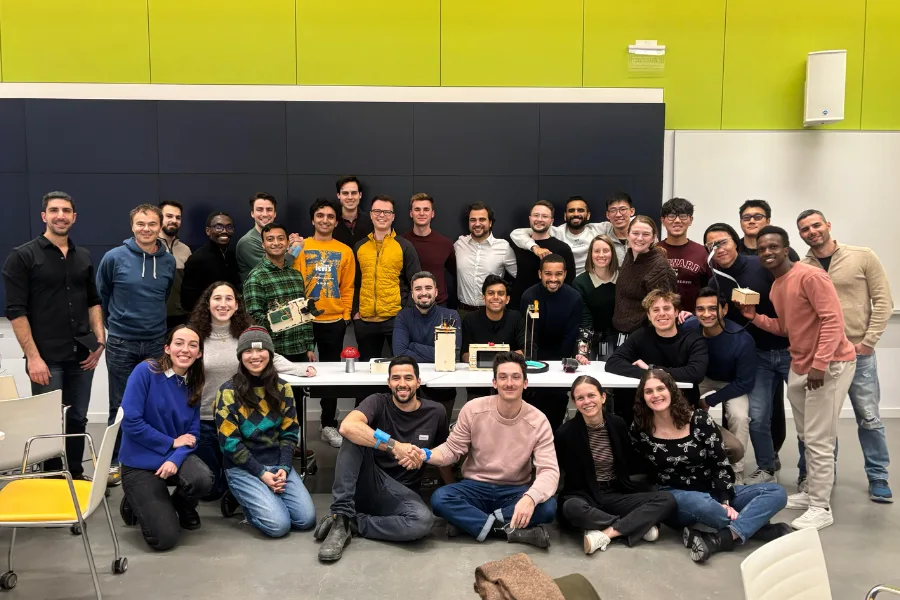
In January, the first-year MS/MBA: Engineering Sciences students returned to campus early to start our course, Technology Venture Immersion (TVI). It was a fun and fast-paced experience, and we’re excited to share a bit of what goes on behind the scenes!
Week 1: Prototyping!
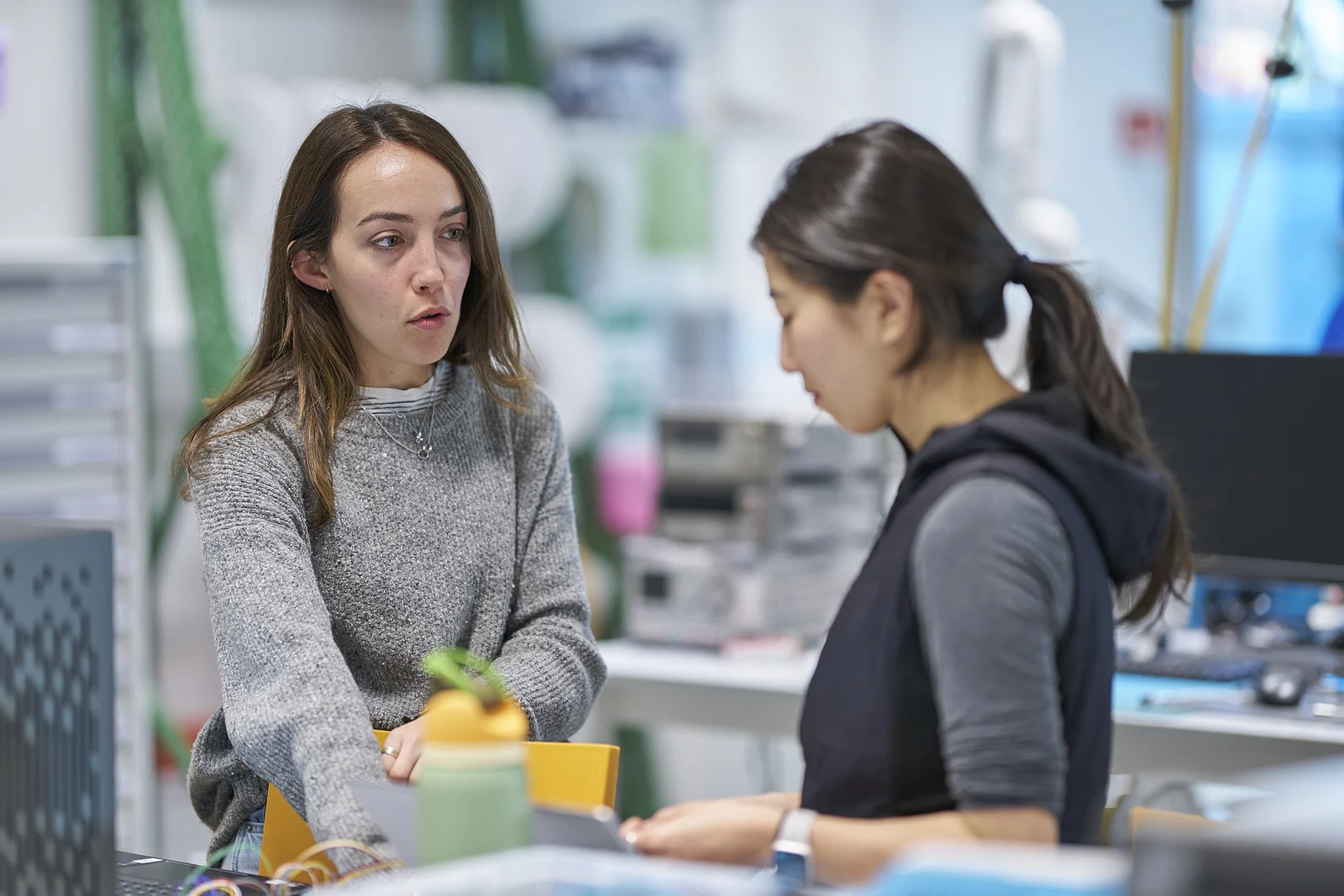
Hallie engaged in wizardry.
The first week of TVI, taught by Professor Conor Walsh, focused on electro-mechanical prototyping — building hardware devices and writing software to control and test them. To get everyone on the same page, we started off with a skills lab, rotating through stations like 3D printing, laser cutting, circuit building, Arduino programming, and epoxy molding, to name a few. We all learned from one another and shared skills: Hallie, a medical device engineer, is a CAD (computer-aided design) wizard; Nicolas, who used to write software for drones, can debug any Raspberry Pi issue; Amir is always willing to offer advice on software infrastructure.
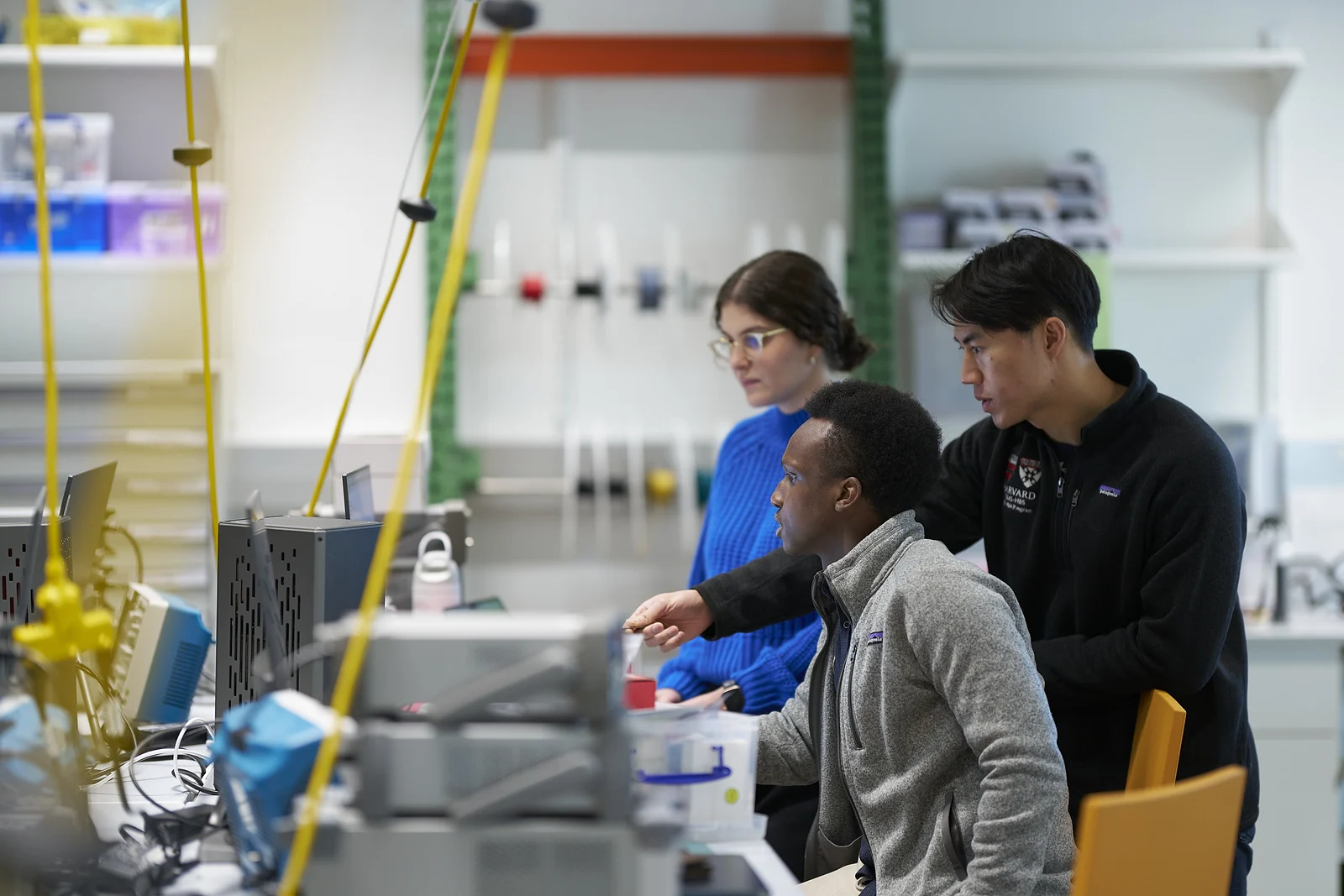
Lorraine, Gordon, and Allan perfecting their circuitry.
Newly equipped with prototyping know-how, we split into project teams to put our skills to use. Some teams worked on staff-suggested projects, but many chose to work on their own ideas —and within just three days, they brought them to life!
The range of projects was inspiring: teams created everything from a wearable device that measures changes in hair density to a handshake-triggered bracelet that automatically shares contact info at conferences. Our team worked on a device called MemRadio, an easy-to-use hardware radio with a mobile app to share pictures and voice messages with older loved ones.
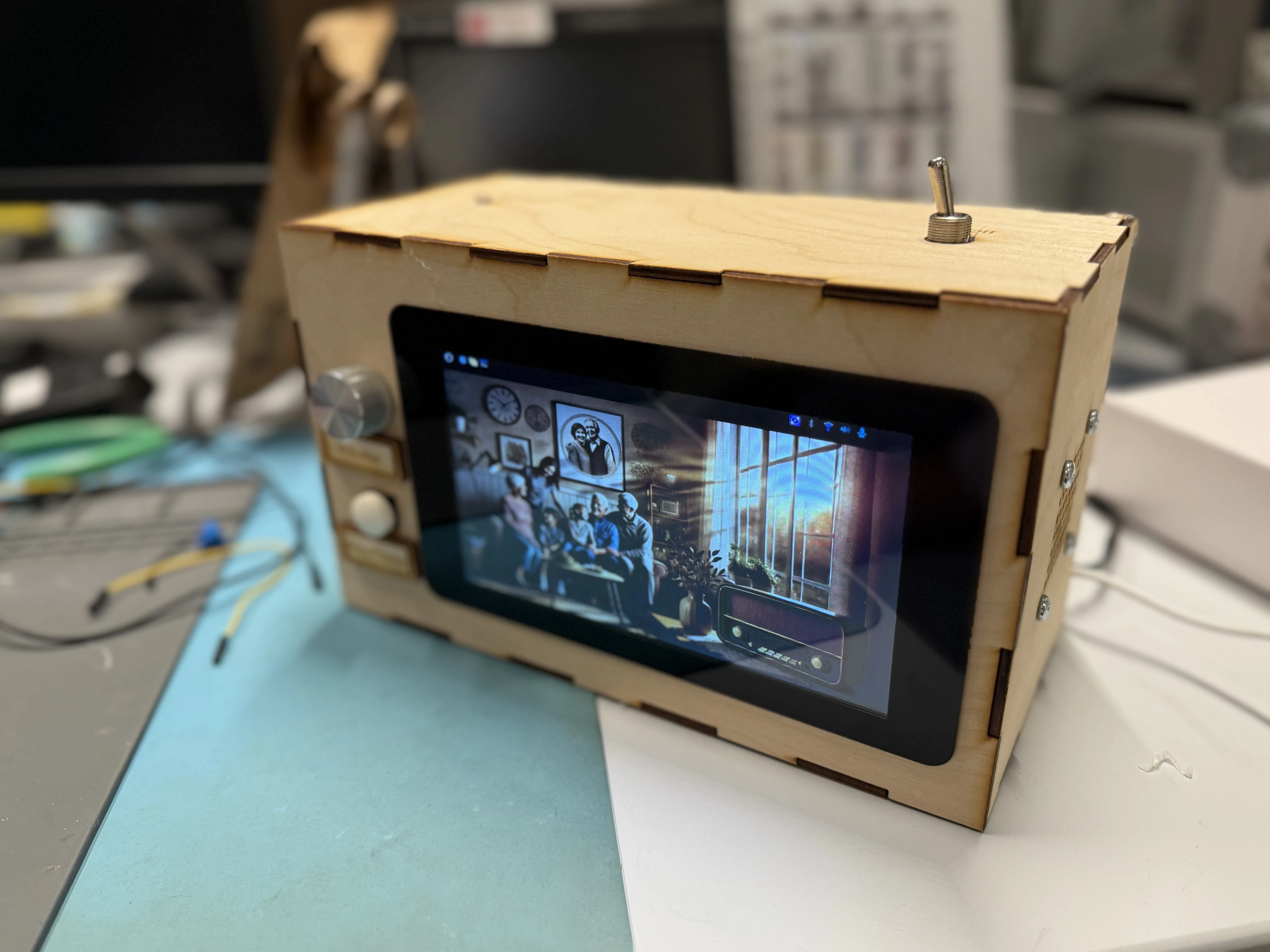
Our team’s completed MemRadio prototype.
By the end of the week, every team had a functional product to demo—and a much deeper appreciation for the effort behind physical product development.
Week 2: Could this be a business?
During the second week of TVI, led by Tom Clay, Senior Lecturer of Business Administration, we shifted gears to focus on startup idea formation and validation, asking ourselves if our ideas could be viable businesses.
Some teams continued to work on their Week 1 projects, while others explored different ideas, like Tom’s DentiPlan startup (a dental subscription offering for consumers in Poland) or Tim’s BoraBond idea (making it easier for the African diaspora to invest in African sovereign bonds). While many of us had started our customer discovery over winter break, the fast-paced nature of Week 2 pushed us to communicate clearly, test assumptions, and get comfortable with feedback, even when it meant rethinking key aspects of our ideas.
We also learned a lot about the different dimensions of growing an early business, digging into everything from early-stage sales to patent applications and term sheet negotiations. As the capstone of the course, we had a formal pitch day where we presented our startup ideas to a group of investors and advisors. Several teams got promising customer and market feedback and are planning to continue with their ideas, so we’ll just have to wait and see what happens!
Outside of Class
TVI was an intense but fun two weeks, action-packed and full of learning. But it was also a great chance for our MS/MBA crew to spend time together and bond. A few non-academic TVI highlights were building a snowman that was featured on the HBS Instagram and taking a post-course trip to New Hampshire with the MS/MBA students across both class years.
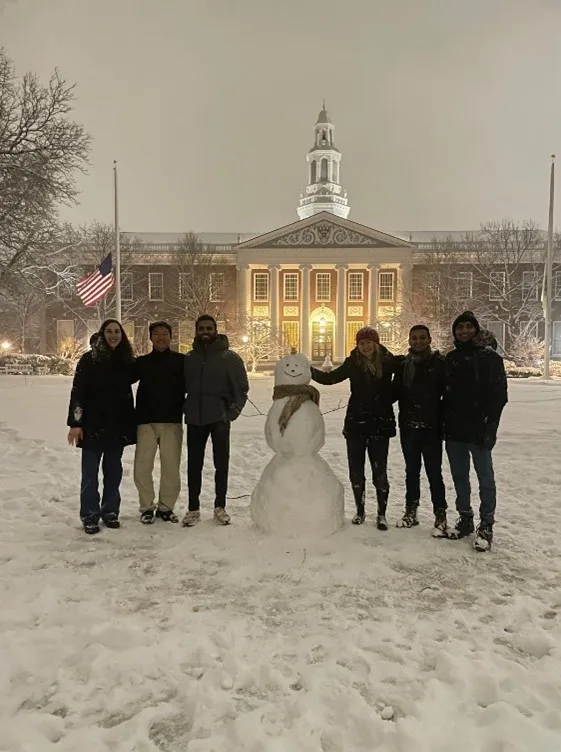
Sully the Snowman, crafted by Zaina, James, Vineet, Amelia, Prakrit, and Shivam.
As we transitioned into our RC (first-year required curriculum) spring, our focus shifted back to MBA coursework, but the impact of TVI extends far beyond these two weeks.
Unlike a traditional MBA course, TVI allowed us to dive deep into the process of building a tech-driven venture, moving beyond theory to firsthand-experience in prototyping, validating business ideas, and navigating the early complexities of launching a product. The course wasn’t just about learning frameworks; it was about applying them under real constraints, making decisions with imperfect information, and refining our business instincts through experiential learning. Just as importantly, working intensely together in this fast-paced environment built a level of trust and mutual understanding that is rare in a typical classroom setting.
As we continue our MS/MBA journey with more joint-degree courses in the fall, we look forward to applying these lessons in new contexts. To learn more about the curriculum and how to apply, check out the MS/MBA website, and don’t hesitate to reach out if you have any questions!