The bank's head of HR lays out the talent strategy underpinning its post-regulatory growth push and AI adoption.
Transcript
Joe Fuller: What does it take to overhaul the culture and talent strategy of a major financial institution while simultaneously navigating technological advancements like AI?
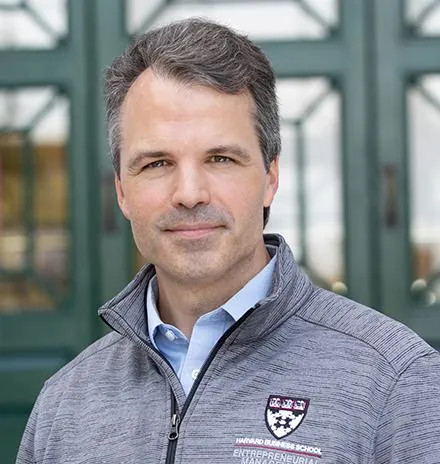
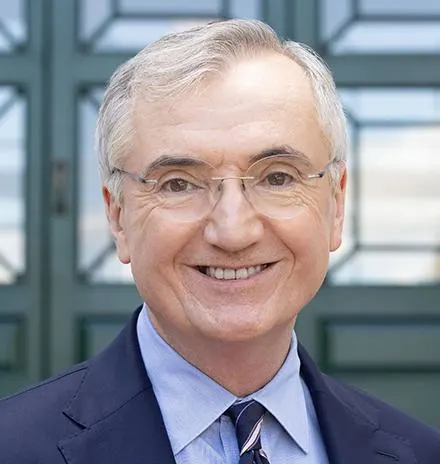
Welcome to the Managing the Future of Work podcast from Harvard Business School. I’m your host, Harvard Business School professor and nonresident senior fellow at the American Enterprise Institute, Joe Fuller. I recently had the chance to sit down with Bei Ling, senior vice president and head of human resources at Wells Fargo while attending the Taproot Foundation’s annual summit. Taproot works with companies like Wells Fargo to mobilize their talent to help not-for-profits problem solve and amplify their impact. Originally a banker, Bei migrated to human resources. Her CV prior to Wells includes leadership positions at Merrill Lynch, PNC, and JPMorgan Chase. We talked about the complex HR challenges facing Wells Fargo as it navigated regulatory requirements and underwent a turnaround. We also talked about the bank’s AI strategy, skills development, and career opportunities for non-degree holders. Bei discussed changing Wells Fargo’s culture from one steeped in caution and relying almost exclusively on promoting from within to one emphasizing competitiveness. That led to a significant increase in external hiring and the realignment of incentives to emphasize performance. She also shed light on managing a multigenerational workforce and helping steer the bank’s community outreach. Well, Bei, welcome to the Managing the Future of Work podcast.
Bei Ling: Very nice for you to invite me. Thank you.
Fuller: Well, you’re the chief human resources officer at Wells Fargo, one of the iconic banking institutions in the United States and in the world. How did you find yourself there? How did you come to end up in HR out of being a line banker and being at Wells after a long career elsewhere?
Ling: I would describe myself as a through-and-through financial services professional. So after graduate school, Merrill Lynch was the first big bank I joined, and after that, I went to PNC, was part of the PNC–National City merger and acquisition, and went through a pretty big transformation journey over there. Then I joined JPMorgan Chase. Was very proud of being part of, again, the massive growth of JPMorgan Chase during that time, even now. And then that’s how I find myself in Wells Fargo.
Fuller: And when did you make the transition into the people organization, as opposed to being an aligned through-and-through banker?
Ling: Yeah, I would say probably 2007. I was actually part of the finance team when the entire financial crisis happened. That was a massive learning experience for me personally and professionally, but was also a period of time where you learn everything about the importance of risk management, the implication of the financial system as part of the country, what should be done, what should not be done, what can go really wrong when people make decisions not knowing all the full implications of those decisions. So that was a massive learning experience from my perspective, Joe. And after that, I formally went into HR as a leadership position and started to build my career.
Fuller: So if we think about the last 10 years or 15 years in banking, I think a lot of people would, if asked what bank has gained the most competitive position, the most market presence, JPMorgan Chase would be referenced very, very frequently, if not universally. And if you said what bank has gone through some travails, a difficult period, really had to reexamine itself and reboot a culture and get back on the front foot, it’s Wells Fargo. What attracted you to go to Wells Fargo? And talk a little bit about that change, the change of environment, and then your experience in being part of what has been a significant repositioning of the bank and effort to change the culture at Wells.
Ling: Yeah, that’s a great question, Joe. And I think the way you characterize both banks is perfectly right. So before I joined Wells Fargo, I did a lot of homework. To your point, it wasn’t the easiest decision, and it wasn’t the most intuitive decision either. I was in a great position at JPMorgan. So it’s almost like, why would you make a change at that point in time? The more I engaged with the Wells Fargo leadership team, especially with [CEO] Charlie [Scharf], what I was really impressed by during the process is, number one, extreme transparency. They were very clear about the enormous amount of change and the transformation the leadership team had to take on. So that one was very attractive to me. The second part—I say this all the time inside the bank and outside of the bank—which is, if you think about one’s career, how many times would anybody ever have the opportunity to be part of a major turnaround for a financial institution that has such a massive scale and complexity and impact, both on the company and on society. Having said that, I have to admit, once I got into the bank and then really tried to lift the hood up and tried to figure out what are all the things that needed to be changed, it was more challenging than I could even imagine. It’s one thing to hear about it; it’s another thing that you have to do it yourself.
Fuller: Well, some of our listeners may question your judgment, but they certainly won’t question your courage. So as you got under the hood, as you said, Bei, how did you work with your colleagues in the C-suite and set priorities? What did you tackle first and why?
Ling: Probably the first good advice I got when I arrived at Wells Fargo was that the priorities will present themselves to you. Charlie joined in 2019. I joined in 2021. So the team had already embarked a little bit in the beginning of the transformation journey. Getting the risk infrastructure set up, making sure the entire company was focused on risk management, setting the right discipline, addressing all the regulatory issues, was undoubtedly the No. 1 priority for all of us. This is where, Joe, I learned a lot from a leadership focus and tenacity perspective. I don’t believe there is another major institution where you would have the entire operating committee review the progress on regulatory and risk agenda every single meeting, every single week. That’s the amount of discipline and rigor that we instituted, which then transcended down throughout the organization. The second component, from a strategic-priority perspective, is absolutely about talent and culture. For a long, long time, Wells Fargo was very good at building talent internally and moving people around. It had gotten to be so good, where I generally describe it as “overused strength can be a weakness.” The historical company had not attracted enough talent from outside to bring a different perspective. So that’s where myself and all my peers have done an enormous amount of work over the last couple of years to rebuild the talent, rebuild the team. We probably changed 75 percent of the top two levels of the organization.
Fuller: Certainly, the bank had a lasting reputation for being a source of talent in the industry, a very proud culture. And I imagine that rebuilding and repurposing that core of essentially career-long employees was a difficult balancing act for you. And Charlie was, of course—Charlie Scharf who came in as CEO in 2019, as you said, with a very distinguished prior career with companies like Citi, JPMorgan Chase, Visa. So talk about what the state of the culture was when you arrived, and how have you tried to put it back on its front foot, as I said, re-instill self-confidence, re-instill pride, re-instill commitment, because I’m sure after all the buffeting that was taken, particularly in both the press, but also in terms of some employment compensation practices in the previous administration, there must have been trust issues. And with a big organization, how do you socialize that change?
Ling: Absolutely. It’s such a great question. Sometimes I think about the Wells Fargo journey that I have been on for the past couple of years. It is such a good case study from a top-down transformation, whether it is culture, it’s people, it’s people practice, it is how you manage the business, how you think about driving growth and driving the discipline. Specifically, to your question, when I joined, I sensed a lot of confusion, if I can say it that way, because if you think about the historical Wells Fargo culture, the biggest strength was really about focus on the customers. Having said that, because the lack of risk-management discipline, certain things just didn’t go well. If you think about, if you are one of the long-term Wells Fargo employees, in their mind, they haven’t done anything wrong personally, but because of their association with Wells Fargo, their life hasn’t been great for the past couple of years. At the time when I joined, I think Charlie was the fourth CEO within a very short period of time. I was the fourth or fifth head of HR during a very short period of time. So that’s where I do feel like there is a sense of confusion among the broader employee base. The second thing I would say is historical Wells Fargo was extremely focused on team and collaboration, which is a huge strength relative to Wall Street. It’s Main Street, not Wall Street—that kind of mentality. Where it didn’t work extremely well was the focus on performance. So whether you think about performance management, you think about compensation, you think about rewards and recognition in general—who gets promoted versus who does not, things like that—very fundamental infrastructure of building a culture. It’s over-indexed on tenure and collaboration as opposed to outcomes and contribution. So what we have done a lot in the beginning is really to rewire the value system. This is where I would say the overall change was hard, but the impetus for making a change was very easy. Because whether it is a management team or it is the employee base, whether it’s the shareholders, they see it needs to be changed. So I don’t feel like I have to make a statement that we need to make a change. It’s very obvious. In early days when Charlie arrived here, the first thing he did was to reset the company expectations. The first thing that he put in the company expectations was about embracing candor. We should have respectful candid conversations about business issues, open dialogue. So that seems small, but it is a massive culture change. The second thing, which I did play a pretty big role with Charlie and the rest of the management team, is reintroduce performance management in a way that is very focused on outcomes as opposed to effort. We still have more work to do, but that was, again, another new concept. The third thing we overhauled was the incentive compensation system. In the past, the compensation was pretty much tied to the longevity of employee, and then the salary you earn, incentive as a percentage of salary, everybody gets the same percentage. We completely changed that, eliminated that, and really focused on incentive compensation is to reward performance. And risk management is integrated with the performance consideration. So those are some of the basic things. And then the leadership transformation I talked about earlier actually played a very big role into it. We hired a lot of folks from outside to rebuild. We also identified a lot of strong talent internally. So we moved them into different seats. And then the new leadership team is a very good combination of talent that came from outside and people who really know Wells Fargo very well.
Fuller: Well, I think if there’s a constant in the history of large companies losing their way a bit and finding themselves in a distressed position, it’s that an absence of psychological safety where people do trust that they can raise dissenting points of view or ask questions and they won’t have some grievous penalty inflicted on them for stepping out of line or questioning management or calling to question some key assumption. So I’m curious, now, the federal constraints that were put on the bank have now been lifted. And so you’re moving forward on an equal footing with your peers in the industry. Let’s fast forward to 2025. You’re in recovery mode, but you’re now striding forward. As you think about people management and talent management at the bank, what are your priorities to build on the recovery, to build on the strengths that you’ve already developed in terms of bringing new talent, changing the culture, changing from an entitlement mindset to performance mindset?
Ling: Yeah. So the things that we talk about often from a talent perspective, number one is, again, looking at leadership positions, making sure we have the right leader, driving the growth in a responsible way going forward. We probably over-indexed on hiring professionals and senior leaders with a lot of strong risk and control background in the past. And over the past three years, I would say we started to invest heavily on key businesses like investment banking, credit card, commercial bank—the businesses where we need to drive the growth. And the value proposition from a talent perspective was so easy. It’s unbelievable the amount of talent we were able to attract over the past couple of years. So having the right people in the right seat, I would say it’s number one. Number two, given where we are, it’s really difficult not to have a conversation about AI and workforce transformation. So we embarked on, starting probably late last year, really thinking about the type of skills that our workforce needs to have to embrace the new AI agenda. So I’m very proud of the partnership between my team and the technology team. We deployed an enormous amount of curriculums to enable our employees to learn about what are the capabilities of AI, what’s the technical component, as well as the human skill component. Responsible AI is a very big topic, actually, not only technically how you use AI, but what are the right ways to use AI. So we’re doing a lot of work there. We’re also getting better at a skills-based framework. Because Wells Fargo has such a diverse workforce. You have frontline call center employees, tellers, all the way to investment bankers, research analysts. They do very different jobs. In my mind, my role or my team’s role really, is about building a career framework where employees can take charge of their own career. Let’s say you’re a bank teller, you want to become a data scientist later on. Very big “if” question. What are the things that we can provide as a bank to them to help them learn those skills? So we piloted that in a couple of the key business areas, like technology function, like operation teams, a skills-based framework, where desired skills are identified, employees can do a self-assessment, [and their] manager can do a review of that. As employees acquire more skills, they get more compensation, and then they can move up on their career. So we’ve had some pretty good successes on the pilots that we have done, and I think we just need to continue to do that. The last piece I probably will mention is where you started, which is about the culture. As we drive growth going forward, I still think risk management is really, really important, and we have to get the balance between the two right, because I would never want to find ourselves in the situation of four years ago.
Fuller: Let me double-click on two things you raised. You mentioned that you’re obviously very proud and excited by the quality of the talent you’ve been able to attract into the bank. Is there any particular explanation you have for the ability to attract that talent in? Was it because the bank was being recreated? Was it because it still has a great brand? What drove that?
Ling: So four years ago, believe it or not, a lot of people joined with a similar mindset as I did, which is they believe they’ve got the experience and knowledge and the skill sets can contribute. They also really want to be part of the fixing. Probably every single one of the operating committee members has that kind of attribute. The other thing, for the senior leader executive positions at Wells Fargo, the unique requirements is not only you need to have a vision, have a plan, have a strategy, you also need to be able to roll up your sleeves and dig deeper and go through the details. And that kind of qualification almost determines whether a senior person joining in can be successful or not, which is pretty interesting. I think the story at this point, or probably even starting two years ago, has been really the growth story and the growth potential that Wells Fargo has. And I think that’s a very unique value proposition, particularly for the producing roles. Right? Whether it’s the investment bankers or relationship managers in corporate bank, they see the growth opportunity that is in front of Wells Fargo, and they see the amount of investment that we’re making in the company in these types of functions, and that’s enormously attractive for that talent.
Fuller: I can imagine. And I think if there’s one constant in the ability to attract good talent that have a lot of upward potential, it’s that they are going to have the opportunity to work for people that they admire professionally and they respect professionally and feel they can learn from that. The other thing I wanted to ask you about, in our research on corporations trying to make this transition to AI, I think my characterization would be that technology has progressed faster than we thought it would, and the adoption is slower than we thought it would be. And as I try to diagnose that, there are some things that are structured. Generative AI doesn’t really play well with the big ERP, ERM systems. There are technical problems. But the other problem is, there’s no logical sole leader for that transformation. And in talking to companies, when I visit with them, I’m often asking them how they’re organizing it. And sometimes it’s rooted with the CFO, which I view as dead on arrival. Sometimes it’s viewed as, well, this is a corporate learning thing, which I think is a fundamental element, but necessary but not sufficient. And you were very specific in your saying partnering with a technologist in the company. Could you just lead us through a little bit how you organize that—how you came to structure to ensure that the bank can move forward in a unified fashion?
Ling: What I think has worked really well, Joe, is we have evolved toward a business-led AI agenda, where it’s really focused on business outcomes. So one of the examples I can give you is, a lot of the corporate bankers, they have to prepare credit memos in order to get loans approved and things like that. It was a very laborious experience in the past. AI has just completely transformed that experience. All of a sudden, you can prepare credit memos with hours of preparation as opposed to multiple people doing research for extended period of time. So we’re deploying multiple situations like that in various places. Another really good example that we have experienced is in the technology function itself. What’s really interesting, the other side of this conversation is, there’s a lot of fear, I would say, about AI taking jobs away, which potentially can be true, but that can be also a migrating jobs to a higher value-added type of categories. And it could also be same amount of people, but doing more work, which is the story in our technology function. Anytime when you deploy major a technology system, you have to write code and you have to test it. We were in one of the critical projects. We were able to leverage AI doing 80 percent of the testing. So success cases like that, which is owned and driven by the business leaders, supported by the technology function, which enables for it to happen, coupled with the HR team helping them to get on the skill transition, I think that’s how I see we’ll gain more and more momentum. This is almost like innovation. A lot of companies would set up a separate team doing innovation. I am a fundamental believer innovation has to be part of the business. It’s no different than the business needs to own the P&L. They need to own the talent. They need to own the technology roadmap. They need to own the transformation journey.
Fuller: One thing that I’m hearing from a lot of senior executives is that they’re finding it challenging at times to manage a workforce that often spans at least four separate generations. Everyone from my generation of baby boomers, even for older workers, the so-called silent generation that preceded baby boomers, and obviously Gen-Z and X and millennials. And that one of the issues that often separates those different layers of workers demographically is a sense of the purpose of work in their life. Does the institution have a moral purpose? And that’s particularly profound with younger workers. Are you seeing that? And how are you responding to that?
Ling: Absolutely I see that. I think the question about the purpose and culture are probably the top two questions I often get from the younger generation. In so many ways, these types of questions are very much aligned with the way we think about our company. So it’s very much intertwined with our principle that you’ve got to serve all the stakeholders in the way that is value add for all. So I think that value proposition really works for the younger generation. We actually have five generations coexisting in our workforce today. And what I was surprised by was, if you look at outside of the United States, the workforce is much younger. For us at least, it’s 68 percent of our workforce now is millennials outside of U.S. In the U.S., it’s only 42 percent. So there is also a different dynamic within the U.S. and outside of the U.S. What I think has worked really well is, in some way, shape, or form, there is a little bit of a mutual mentorship that’s naturally happening within the workforce, a lot more so than a couple of years ago.
Fuller: I think a lot of older workers have what can be called “contextual intelligence.” They understand the market, they understand the company, the culture, the younger workers may have the digital or technical intelligence, and I think taking steps to both literally assign people to learn together, but also construct teams around blending those perspectives for maximum impact. We’re here together in New York in mid-October of 2025 at the annual convening of a group called the Taproot Foundation, which is a leader in encouraging companies to create service opportunities in the not-for-profit sector. Wells Fargo has been involved with Taproot. What’s been your experience and what role does creating those type of opportunities play in connecting with the values of these workers?
Ling: We have a very big foundation, both to donate money and support different initiatives, as well as employee volunteerism. So it’s a combination of all three. Where it worked really well is the strategic priorities align. If you think about us as a bank, financial inclusion is a very big community priority for us. Homeownership is a very big priority for us. And then Wells Fargo also has a very long history of employee volunteering. Last year, our employees donated about close to a million hours for different types of service-oriented work. And I think where Taproot really helped us is to think about skills-based volunteering—which, on a relative basis, is still a pretty new concept. But the feedback both from an employee who participated in this type of efforts, as well as a nonprofit organization being part of this effort, has been extremely positive. We piloted an effort called “Innovation Sprint.” What it does actually ties back to your generational question. We’re trying it in the sense of we paired an intern with a Wells Fargo employee. The two of them will go do work with a nonprofit. In the beginning, there was a lot of skepticism, particularly in the sense of interns, generally speaking, don’t have a lot of work experience. But not only the intern benefited and really loved their experience; the Wells Fargo employee benefited and loved the experience. The nonprofit found the combination of the two actually really helped them to advance their agenda. So I feel like the more we can create opportunities like that in a very natural way, the more everybody can benefit from it.
Fuller: One thing I think is an almost inevitable consequence of the pervasive rise of generative artificial intelligence going forward and agentic AI is that for younger people, we’re going to have to find more opportunities for them to benefit from experiential learning opportunities—that the education system can’t keep up with the technology now, it’s never going to catch up. And I think you will also have inverse impact in terms of reskilling, because as the pathway for lot of technologies really approaches the time it takes to master the technology, companies are going to have to get much better at fast cycle time, formal training in their organizations, where we’ve really relied on an experiential model, by and large, in the four walls of the enterprise. So we had structured learning in education and experiential learning at work, and I think those things are going to invert.
Ling: I totally agree. I often talk about this concept of learning agility. A big question for us as HR professionals, is how can you train the learning agility where the employees have the desire and the motivation to learn on their own? And I see that as actually a very big differentiator between the super high performers versus just okay performers. Whether it is AI technology skills, or leadership skills, or management skills, that actually the learning agility, in my mind, if we can somehow up that bar, it’ll benefit everybody. Another dilemma/challenge I see with all the technology being so invasive in our lives is the relationship-building techniques. So let’s call it the “soft side” of the human skills. People are a lot more comfortable doing emails, and texts, and things like that as opposed to have a face-to-face conversation, which leads to us about the reason why we’re so focused on bringing people back to the office. So that’s another sort of the challenge that I see, which, again, goes back to your point about multi-generations. There’s a lot of mutual benefit if we can put more teams with different backgrounds together and then they can learn from each other.
Fuller: I think some of our research speaks to both those questions just briefly. Relative to the learning agility point, I think that we’re going to have to find ways to recruit for people who are more naturally curious, less threatened by learning opportunities. And simultaneously, we’re going to have to be able to evaluate and hone people’s social skills, because as AI changes the scope of jobs by automating many of the more technical analytical tasks, importantly, that often were burdensome on the worker.
Fuller: Well, Bei Ling, chief human resources Officer of Wells Fargo Bank, such a pleasure to talk to you and hear about your role in causing Wells Fargo to restore itself and get into a growth mode, and your role and how you went about that, and how you were part of a team that pulled off really quite a remarkable transformation.
Ling: Thank you so much. It’s such a pleasure speaking with you.
Fuller: We hope you enjoy the Managing the Future of Work podcast. If you haven’t already, please subscribe and rate the show wherever you get your podcasts. You can find out more about the Managing the Future of Work Project at our website hbs.edu/managingthefutureofwork. While you’re there, sign up for our newsletter.