
Successful IT projects require a skilled blend of strategic foresight and day-to-day coordination. As HBS IT Lead Project Manager Sara Gallo explains, a project manager needs to be able to see both the 30,000-foot view and the details on the ground.
To illustrate the work behind the scenes, Gallo shared how project managers play a crucial role in making projects successful at HBS IT and outlined how she organizes her day:
What Does a Project Manager Do?
Project management at HBS is both an art and a science.
The science lies in the processes that project managers have to do from the moment they are assigned to a project to that first kickoff meeting. You have to develop a charter, meet with the sponsor, get a sense of the scope of the project and goals, start the negotiation of resourcing, and get a feel for the stakeholders as well.
The art comes in when you meet with the team. One of the main goals of project management is cohesion and unity, and it is your top priority to make sure the team understands the work ahead, the goals, who is involved, and when the project needs to be delivered.
At the same time, you’re keeping the project on track by communicating with the project sponsor and the stakeholders, delivering impact-focused status reports, and drafting the project plan.
Why is this work important for HBS IT?
You need project managers to execute the work. The vision has been defined, but how will we execute and deliver it? Whether it’s a four-week, three-month, or one-year project, project managers know how to get the work done because we know our partners and we know how HBS works.
There’s not a secret recipe. You work at it one day at a time. Every day you have to think about, ‘How do I have a little win today?’ If you had a little setback yesterday, you think, ‘How do I reset today? This is how we move forward.’
Every day you’re chipping away at the project and communicating with your team, and over time that builds up and you’re ready to go live.
A Day in the Life
Morning: Organizing Meetings
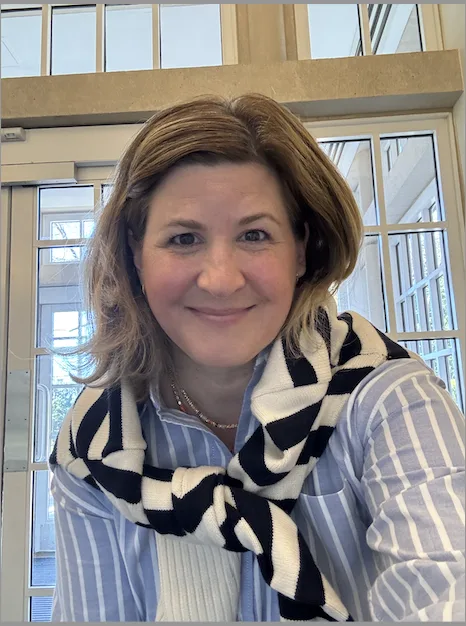
I like to start my day early, whether I’m working remotely or on campus. If I’m at home, I make an espresso or place a coffee order. My first half hour is all about getting organized: I check email, review any messages on Teams or Slack, and take a look at my calendar to assess the meeting schedule. I try to block out buffer time during the day for thinking or for preparing communications. If I’m on campus, I’ll try to book rooms so that other team members on campus can meet in person.
Most of the project managers typically have 4-5 projects going at the same time, so when I’m working on multiple projects, I use the color-coded calendar feature to keep track of which meetings belong to which projects. If we have standup meetings scheduled, I’ll review the relevant tickets and flag anything important to discuss.
We solve complex issues on Zoom calls by bringing multiple departments together, sharing perspectives, and working through challenges in real time. During Zoom calls, I take notes and sometimes transfer them into an AI tool to see if there are other things I should be thinking through. That will help me consider what else I need to communicate to the team. If I have any emails I want to send, I start those drafts in the morning, and if I’m still struggling, I continue to work on them throughout the day.
I also like to do some personal habit tracking, such as keeping track of workouts and what I’m reading.
Lunch: Recharging
I bring my lunch if I’m coming into the office, or occasionally I’ll treat myself to a salad on campus.
If I’m working from home, I’ll take a walk with my dog around the neighborhood. I’ll listen to a podcast that opens my thought process to something else. Recently I listened to a HBR IdeaCast episode on how to set up an AI project for success.
Afternoon: Follow-Up and Documentation
In the afternoon, I swap out coffee for green tea or matcha. My afternoons occasionally include 15-30minute stand-up meetings or meetings scheduled on short notice.
I try to hold 4 – 5 p.m. on my calendar for documentation time, and I’ll finish up my email drafts. At the end of the week, I also send out wrap ups in the form of PowerPoint decks. PowerPoints aren’t my favorite, so I’ll work on them during the day to chip away at it—maybe I’ll put some music on—and by the end of the week they’ll be done.
End of Day: Wind Down and Reflect
I like to look at my calendar in three-day increments —it keeps the week from feeling overwhelming and helps me map out the next couple of days.
I often stay online a little after 5 p.m. to see if anyone chats me at the end of the day. I like to make sure I’m not forgetting about anyone. After that, I like to do a complete close down—and that includes work-related apps on the phone. Teams chats and Slack can wait. I make that a habit so I’m not bugging people after 5:30 p.m.