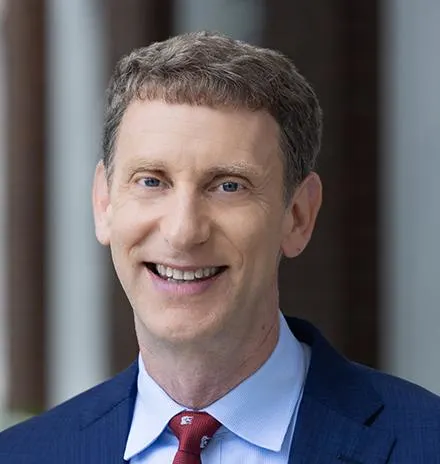
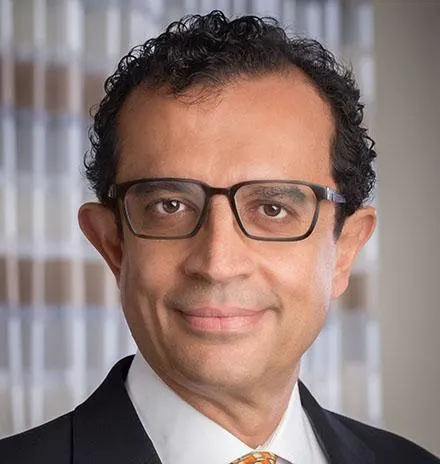

Indigo Ag is one of the most active companies at the intersection of agriculture, carbon markets, and regenerative agricultural practices. A.J. Kumar, Vice President of Sustainability Sciences at Indigo discusses how the company is working with farmers, food companies, and carbon credit buyers to scale regenerative agriculture and unlock environmental and financial benefits. He explains how Indigo supports farmers with both biological inputs and sustainability incentives—from seed coatings and microbial sprays to data-driven tools and market access for carbon credits. A.J. also outlines the challenges farmers face adopting new practices, how Indigo addresses concerns around additionality and permanence in soil carbon projects, and how advances in AI and remote sensing are changing what’s possible in sustainable agriculture. This episode is a part of our series on Regenerative Agriculture, which includes two prior episodes featuring McKinsey & Company Partner Tom Brennan and our next episode with Agreena CEO & Founder Simon Haldrup. Visit climaterising.org to learn more
Resources
Indigo Ag's Carbon College
HBS case study -- Indigo Agriculture: Harnessing Nature
Microsoft has agreed to purchase 2.85 million soil carbon removal credits from Indigo over the next 12 years
Transcript
Editor's Note: The following was prepared by a machine algorithm, and may not perfectly reflect the audio file of the interview.
Mike Toffel:
AJ, thank you so much for joining us here on Climate Rising.
A.J. Kumar:
Mike, thank you so much for having me. I'm excited to be here.
Mike Toffel:
So, why don't we begin, if we could, with a brief introduction to your role at Indigo Ag and a bit about how you got there?
A.J. Kumar:
Yeah, happy to. My role is VP of sustainability sciences, and broadly, I oversee our scientific strategy and innovation at the company. I've been at Indigo now for a little over six and a half years and have been through many different roles as the company grown and evolved over that time. But broadly speaking, I’ve always had a science lens and thinking about how we use that to support finding useful signals out of noisy backgrounds, and to help support the company. I think it's of interest, maybe for your audience here. I didn't start with anything to do with agriculture or climate when I got into this. I'm a physicist by training. I did my PhD at Harvard, and right across the street from the business school, and initially went into the medical world, but found my way to Indigo Ag through the broader Boston ecosystem. One of the things that's cool about Indigo is that there are people with all kinds of backgrounds. Some folks who have lived in ag and worked in ag for 20 plus years, some folks like me who come in with a different skill set, and we all learn from each other. I learned a ton about soil, soil science, ecosystem modeling, all these things. And at this point, help think about how we connect the dots across all the different sciences that.
Soil has to offer and what Regeneron has to offer, and how we can quantify impacts from that, can then connect farmers with markets.
Mike Toffel:
Great, let's begin the dive into Indigo by talking about your major business lines. I now know you organize yourself in a way with biological solutions and sustainability solutions. Let's start with the biological. I believe that your origins in this space were with seed coatings, particularly figuring out ways to combine, to look in the wild for accommodations of microbiomes.
That enabled seeds to grow productively, even in low nitrogen environments. And that became one of the early products. But I know that you've expanded since then. I don't even know if you're still in that business any longer. Give us a little bit of a thumbnail sketch of the biological solution side of the house. And then we'll pivot over and talk about the sustainability side.
A.J. Kumar:
That's a great summary of the business and where we came from on the biological side. And that's really the origin story of Indigo. And that's still one of our core business units today. It's essentially probiotics for plants. The these is naturally occurring microbes that have co-evolved with plants to provide them with some benefit, and the plant provides them with energy, shelter, or some other benefit.
And the seed coatings are still there. And that's a core part of the business. We have new product lines that evolve beyond just nutrient use efficiency. We still have some products in that space. But we found that we've had a really good uptake on some of our water use efficiency products. We have microbes that help develop root structure, or fungi that help essentially extend like little fingers into the soil.
That helps the plants access water more readily, and it can help them with dry conditions or heat stress. This is really one of our key products called W12. And then on the newer things that we've developed, two things I'll say. One is biocontrol or biopesticides. So currently, how we think about fighting against different diseases, different insects have been through synthetic chemistry. Biology and plants often produce these things themselves and then do it in a targeted way. We found within our collection some microbes that have evolved to help plants defend against pests or diseases. We have a product we launched last summer called Nemoral that helps against the soybean cyst nematode. It sounds like a very specific disease that's maybe tangential, but it's actually a major rag on yield globally for soybeans. Think something around a billion dollars of damage or loss of value from this disease. We're able to use naturally occurring microbes that help defend the plant against these nematodes. And it can do it in a way that is more biologically inert to the rest of the biology there and helps not destroy the rest of the soil health.
Mike Toffel:
Got it, got it. What's interesting about these three products or the three domains we just talked about is that they all kind of hit on different environmental issues, right? If I think about the nitrogen fixing or the nutrient availability that allows farmers to use less nitrogen fertilizer per bushel of wheat, for example, which is really a mitigation story. Then, if I think about the heat and water, resilient technologies, that's really an adaptation story. Allowing farms to be more resilient to heat stress and to water stress. And then the last one, the broader environmental issue about how do we protect the health of soils and perhaps surrounding waterways as well by using more targeted approaches, more biological approaches to pesticides and fungicides.
Is that roughly the right way to think about that?
A.J. Kumar:
Yeah, absolutely. The biologicals really tie into sustainability in many different ways, even though that was its own business, as we started it before we got into the sustainability business.
Mike Toffel:
Yeah, the value adds for growers, they seem different. On the one hand, there's an input substitution for the bio pesticides, bio fungicides, and nitrogen fixing. You're using fewer alternatives. And by using yours, presumably, you're pricing them in a way.
A.J. Kumar:
You.
Mike Toffel:
That makes the farmer more profitable by using your products versus the substitutes. And then for the other, and I'll check that in a minute, and for the others about water and heat, there we're talking about reducing variance in the production so that you're able to guarantee higher yields whether there's a high heat stress, low water season or you go through some weeks in that regard. that seems more about smoothing the variation, whereas the others seem like input substitutions. Is that right?
A.J. Kumar:
That's broadly right, but I would say that even on the input substitutions, part of what growers do when they're making that decision, sometimes it's not necessarily to substitute something, but looking for a broader way to deal with a challenge. And sometimes what we see in our trial results, even when you don't reduce something else, you'll still potentially get a yield bump because you are having a different modality for dealing with the pest or for addressing a nutrient use efficiency.
Then a lot of those buyers are probably in a similar mindset as the folks buying for drought resilience and things like that. They're trying to think about how to cover more of their bases and ensure I can get more yield.
Mike Toffel:
Got it. Back when I was more familiar with Indigo, I wrote a case around 2018-2019 that we've taught here at HBS and taught elsewhere. One of the interesting go-to-market features in the seed coating space, at least in the early days, was to charge.
In a performance-based contracting manner, in a sense, they would get the seed coding for free, but the payment would come through a share of the increased yields. Is that still how things are happening, or are you in a more traditional space where you just charge for the product in a normal kind of way?
A.J. Kumar:
We are no longer doing something like that anymore. Our products have proven themselves, so we now charge for them as an input. We do provide guarantees; if something doesn't work for them, we want to hear about it and make it right with farmers. We think that the relationship with the farmer is something we don't take for granted.
One of the challenges broadly with the broader biological market is that, compared to a chemical, biology has to interact with biology, and sometimes it really works really well. And then, sometimes it doesn't work as well as a synthetic nitrogen that you add. That's the chemical route; it's a good chance it's going to work the way you think it's going to work. We've done a lot of work to make sure that farmers are taken care of and that we hear them when things don't work, but also that we have worked hard to characterize where our products work and then sell the right products in the right markets and target them to the places where we have a better chance of a farmer having a good experience.
Mike Toffel:
And for these products, are you going through distributors, the traditional value chain of the distributor to the retailer in the farming communities, or are they buying directly from you, skipping over all those steps? How does that work?
A.J. Kumar:
We've played around with a lot of different approaches in the past. We've found that working, and this is true for both sides of the business, is that working with the folks who have those trusted relationships is really important because farmers are making so many different decisions on a day-to-day basis. They want to think about it holistically. What's my total input package? How am I thinking about my goals for this year?
When you're working with those big co-ops, like we have a great partnership with Growmark, which is one of the biggest co-ops in Illinois in that area. They're talking to them about all these different goals they have, and then Growmark can come to them with all their products, as well as some of our products and programs, and figure out what's right for that farmer for their goals.
Mike Toffel:
Got it, okay, great, makes sense. Let's pivot over and talk about the sustainability side of the house. What are the major product or service lines there, and then we can dig into each of them.
A.J. Kumar:
Yeah, on the sustainability side, what we've really tried to do is help connect two things. One is farmers who are either already doing regenerative agriculture or are interested in adopting regenerative agriculture. And helping them. Show what they've got, show the data for the proof, get the data and the impacts, and then connect that to the markets of whoever is interested in valuing that, and that's within the supply chain. That's helping companies that want to make different water goals, or to meet goals on emissions, or look for different types of products with different qualities. And it's also looking outside of supply chains. Looking at their other companies that care about the environmental impacts and that are willing to help fund and support regenerative agriculture. So that's carbon credits or water impacts, and we've built that to be flexible because new opportunities are arising all the time. Biofuels are another one that's, we've added to that offering recently. The sustainability helps us take the farmers and, through what they're doing, help us quantify it and then connect them to the best market that they can get access to.
Mike Toffel:
So, let's start with, it sounds like we should start with regenerative ag, and then we'll eventually talk about carbon credits in this space. On the regen ag, first, definitions, there are lots of people who have different takes on this. Some define it by the output. It's about soil health. It's about water infiltration and water retention. Others talk about it in terms of practices like no till or cover crops.
A.J. Kumar:
Okay.
Mike Toffel:
And so on. Where does Indigo come out on all this? Like when you're talking with growers or farmers, and you're saying, let's see whether you're interested in Regena, and they say, what do you mean by that? How do you answer that question?
A.J. Kumar:
Well, I think to start with I think it's one of those tricky things in this space I think we'll just start off saying like there's multiple definitions of return or vat but They generally have similar roots Not pun intended, but really it's about right How do you build soil health to your point and it's the how then you can get into different practices or some people like principles?
I like the idea of principles in the sense that, like what we try to do and what I try to do as a scientist is say, I'm here to like listen to the farmers and listen to the folks that have figured that stuff out and how to measure and quantify the impacts of what they've figured out through their own experimentation and understanding. So that's things like living roots. So, cover crops are one of the practices that basically keep roots in the ground all year long. Keep photosynthesis going, right? So, you're drawing more carbon in soil armor, how do you protect the soils that it stays in place and doesn't flow down the river or fly into a windstorm? Things like no till or reduced till fall in that by keeping soil structure in place and keeping residue on the field to protect it against heavy rains and things like that. Biodiversity, there are multiple reasons for thinking about different crop species, and the edge of field practice.
Cover crops in a way that you get more biology going with different diversity, and that creates more health in the soil. And then, helps with this nutrient cycling and also reduces the input used, which then ties into the fourth principle of minimized disturbance. That's let this think of the soil as a living ecosystem. You want to let that grow and build. Don't want to be like if you're trying to establish a forest, you wouldn't bulldoze it down every five years and try to replant it, you would want to try to build a whole ecosystem, right? So same thing with the soil. Integrating livestock is often, some people will talk about that as number five, like how do we think about animals and broader, think about species like worms and other things, insects into the broader landscape, and make sure that we're keeping everything alive. And then the last one that I hear a lot of farmers talk about is context. It's like,
What's the right solution for my land and for my agronomic context? I like that because cover crops don't work everywhere. They're not the right solution for every farmer. No-till works pretty well, but there may be certain occasions where some amount of tillage may be the right thing to do for that agronomic outcome. It's about being less dogmatic and more driven by what we are trying to get to on an outcome basis.
Mike Toffel:
Yeah, this context piece and the description of why it's important make standardizing a definition, I think, so challenging in contrast to things like organic, where you outline a set of practices that you do and don't do, and then that's it. That's what organic is. In this case, because some of the solutions don't work in all instances, it's hard to rule in or rule out things in a dogmatic way. It reminds me a little bit like green building.
So, the LEED green building system is a point-based system. There are a few things that it perhaps mandates, but in most cases, you can assemble the points to reach LEED Gold or LEED Platinum through different combinations of activities. Is that a reasonable analogy to what we're doing here?
A.J. Kumar:
Absolutely, yeah, and it's going to be context specific, right? I'm sure, for like even I'm not sure if it does it with lead.
In some cases, you might want to really invest in things like insulation in a really hot or really cold climate, right? It may not be the best use of your resources in a very moderate climate that might make the best way to do it. Same with the region. There are certain places where certain types of practices are going to have more points or more impact. And we do those two different ways in our programs. We have these supply chain programs, and often, there we actually do almost exactly what we have for this region, the supply shed.
Mike Toffel:
Right.
A.J. Kumar:
These are the kind of practices that we think or we know from literature have an impact. Some of these are one or two points. Some of them are three points if they're really impactful, no matter what you do. And growers can pick and choose from the menu what's right for them. And if they pass a certain number of points, there's one premium. If they pass to the next, just like the good, better, best kind of idea. And the higher they go, the more premium they can get for those crops. And then the buyers get more certainty of supply, but also then an impact.
Mike Toffel:
Yeah.
A.J. Kumar:
Around that, we can quantify.
Mike Toffel:
Great, there are two pieces that your statement leads me to ask. Your statement, I'll try that again. Your statement makes me think of two follow-up questions. On the one hand is getting to the motives of the farmers. They're like, why are they actually engaging in regenerative ag practices? And the other is what Indigo AG actually provides?
To them in this space. We talked earlier about the seed coatings or sprays, like their ag inputs, very clear what the product is. What's the product or service in this area? Both the motives and how you are trying to address the solution.
A.J. Kumar:
Yeah, I'll ask you, I'm going to maybe rephrase your first question, not in terms of why are farmers doing it, like why aren't more farmers doing it? I think.
Mike Toffel:
Good.
A.J. Kumar:
When you hear about regenerative ag, people are like, oh, this sounds great if you're not in agriculture. You're like, oh, why isn't everybody doing no-tilling cover crops? That sounds like a nice thing. Regenerative ag has been around for a long time. You can trace some of its roots to indigenous cultures and thousands of years in some places. And even in more recent times, in the last 20 years, folks have been doing this for a long time. But it's still not the majority.
There are a few reasons why. One is that it requires a transition. If you're not doing it right now, it requires changing how you do things and changing inertia. I think about a New Year's resolution, right? It's like, I want to be healthy. I should probably go to the gym more. I just know what I need to do. But for those many reasons, it was convenient to order fast food.
Mike Toffel:
Yeah.
A.J. Kumar:
Today it was convenient to order, Fertility package and to get a tillage pass to control weeds or deal with compaction. That's what we've got to set up; it's what's available; this thing I can get to more easily. So, we've built a system that makes it convenient to stay in the current way of practicing agriculture. So you have to overcome that inertia. You've got to make it more interesting, more valuable to make that transition. Once you get into that regenerative space and you start to get those benefits, you're starting to hopefully spend less on inputs, see more resilience against severe weather events, and people aren't going to go back. But making that transition is the challenge. And one of the things we try to do is provide financing by helping connect people to either carbon credit payments, supply chain premiums, or other impact payments.
We can help farmers get paid to make that transition and get into that state where they're more regenerative.
Number two, I'd say, is know-how, right? We've been doing ag in certain ways for a while, and it's what some farmers will say, that this is what my parents did, this is what my grandparents did. We think about tillage, there's a saying that I've heard some folks in Illinois say, that it's like, they said, turn the soil black, it'll pay you back, which means till it up and get it nice and good planting conditions, and you'll get a good yield system out of that year. But that destroys a lot of soil structure if you're doing that repeatedly.
There's a whole cultural element of just re-educating folks, and some of these folks that they, just didn't realize they knew a bunch about what's going on above ground and how to manage that biology. They never got taught and learned the part underneath the ground. Part of what we're trying to do is help educate and share resources, not just from us, but from other farmers who have learned this before. We created a bunch of materials. We've created an online course called Carbon College to help farmers and agronomists learn.
More about these things. We've worked with partners to help educate them and to help connect them with other partners that can help explain this and help folks be successful. I think the last bucket I'll say in terms of why not, why people are challenged doing this is that it, in some cases, requires a change in operations and logistics, and farming is, especially, the folks that do this sound like 10,000 acres and stuff.
It is a precision art in logistics and operations. You're taking equipment over thousands of miles—sometimes even hundreds of miles for some of them. The third bucket of reasons why I think people don't do region ag at scale is that this requires more thinking about logistics, and it's already such a well-oiled machine. Folks who are on thousands of acres are moving equipment over many miles and trying to beat the weather, deal with very tight windows of operation for planting or for harvest. And labor is a challenge there, too. They need skilled labor that can operate those things, know the land, can get out there and do the treatments, and support the plants when they need to be supported. When you add in regen ag, there are some practices, such as no till, where you reduce the amount of work. Now I'm not doing a tillage pass anymore.
But other ones, such as cover crops, require me to now get out there and plant another seed in the fall after I'm trying to harvest and beat the snow if I'm in the north. Then someone has to go and put the seed in. And then I need to make sure I can terminate that cover crop, kill that plant before I plant in the spring, so that I can grow my next cash crop. Getting the timing right on that is critical. If you don't get it right, you can get yield drag on your cash crop.
So, there are real consequences to getting it wrong. And that risk can be challenging to get folks to adopt. So how can we reduce those risks? How can we create the space for learning and try to reduce the number of mistakes that folks make?
Mike Toffel:
Got it. It sounds to me so far that in this area, you're providing both financing and educational tools. Is that the right way to think about your services to support the Regen Ag business?
A.J. Kumar:
Yeah, it's really about how we help make visible the invisible impacts of what folks are doing on the field in terms of what it's doing to the soil and then what that soil structure and those soil impacts have back on the farm. And we've done that with tools to help folks understand, okay, if I make these changes, that'll change my soil by this amount, and that could result in more payments of this amount in terms of the different calculators and tools to help give them the tools to make the decision right for them. We don't like to be in the business of trying to prescribe what somebody should do. We want to help give them the information, give them the tools, and help them make the right choices and choose which markets to participate in.
Mike Toffel:
So, what's the business model for Indigo Ag in providing these opportunities, teaching this financing?
A.J. Kumar:
Yeah. So, it's different than our biological business, and we run them fairly independently in biologicals. The farmers are the end customer—they're buying it, or sometimes they get it directly from us, but most of the time they're buying it through others who've paid us. Right. But they're the ones who have the wallet. In this case, the farmer is more of a supplier. Um, they are the ones who create the change. Our business model is to help unlock their capacity and their supply to folks that value those ecosystem services, that value something beyond just the yield.
So that's groups like big tech companies. Microsoft has bought carbon credits from us twice now. They're interested in that to meet their own goals they've made about their broader social impact. And that gives them a way to then support farmers, and farmers a way to tap into a market they didn't have before.
We've got companies like Walmart and Kelen ova who have teamed up to help invest in their own supply sheds, where Kelen ova creates some of the crackers and other products that will then go into Walmart. So, they have the same rice in both of their scope three emissions and impacts. They can both put their dollars together to then have an impact, reducing the emissions in that rice and reducing the water use in that rice. And so, then they each pay less than they would have to pay alone. But then, what farmer gets more and can make that change? And the last is, we've found new folks who are thinking about this because these ecosystem services overlap with other things people need. Ag is one of these systems that uses a lot of water and is part of the water cycle.
Another industry that's been booming recently is data centers and AI. And depending on how they're constructed, they often have a decent amount of water footprint as well. So, one of our more recent partnerships, we've gotten a couple of projects where Google is helping pay farmers through our programs to help adopt regenerative practices that both build soil health. When you're doing that, you reduce water runoff, and you help improve water-holding capacity in the soil. So, these practices, they build carbon, they remove it from the atmosphere. They also help build that water-holding capacity and replenish the aquifers. So that's bringing more value to the farmers, but because it's trying to meet a need, these data centers don't want to increase water stress. I think that gets to the fundamental piece. It's for all of these types of buyers; it works when they see value in it. It's not philanthropy, right? Sustainability has to be about business. And for someone like Walmart and Kellen Ova, they source a lot of rice from Arkansas and from those rice growers, pull water from a certain aquifer. And if that aquifer runs dry,
Mike Toffel:
Yeah.
A.J. Kumar:
That's a major impact on that business to have to shift supply sheds, look at new arrangements, all that. It's part of their long-term resilience strategy for companies to invest in resilient supply chains and to invest in soil health.
Mike Toffel:
Yeah, often when you hear stories like this, the common refrain is, well, people are biased toward now versus the future. And also, well, there's a common problem.
I'd rather my neighbors invest in water retention so that they can use less water from the aquifer or from the irrigation systems. Let them pay for it, and I'll benefit by having better access to the common pool of water that they'll need less of. How do these stories seem to have overcome both the time scale and the competitive effects? Can you say a little bit about how that's happening?
A.J. Kumar:
Yeah, I think part of it is by recognizing that there is a good amount of cooperation in some of these systems more than you might realize, because especially when you get down back to farms into communities like this, the mill that is receiving rice for Anheuser-Busch also knows the folks that are working at the other mills and if they receive broken rice grains that can't, or maybe not good for something that they want, they know who would take that off. And so, they can make a phone call and help that grower out because that grower is their neighbor that they want to help out. Right. So sometimes we've seen some of these kinds of sprout up even from the ground up. We've got, and I think when you have that, then you get the corporate, some of the folks in the company are talking. They can see that comment. Well, this is good for all of us. If we can each support this.
And that's where I think that co-investment opportunity is really interesting and beyond just the Kolesov and Walmart one another one in the same area is with Nestle Purina, which gets rice for some of the pet foods. But that's one of those examples, the other folks at Anheuser-Busch and the mill there are one of the biggest buyers of rice in that area, but they know all the different folks too, and so we work together where they both are investing in programs that are supporting the same rice growers so that that rice grower can get the support from multiple brands. And no one brand has to foot the whole bill of supporting these growers. And those growers get more assurance that I've got somewhere to sell my rice. No matter what kind of rice I produce, I'll have the right buyer.
Mike Toffel:
Yeah, it's interesting that the brands that you're referring to in this case, like Anheuser-Busch, Nestle, or Walmart, are not brands that people think of as having customers who are willing to pay a premium for sustainable attributes. But yet it sounds like these companies are nonetheless investing in some wholesale premium and perhaps through longer-term contracts.
For just those types of attributes. Now, not necessarily to get repaid by their consumers by putting some green label and charging 5% more, but rather by earning benefits in other ways. So, what are those ways? So, I think people often will think that manufacturers aren't willing to invest more money in supplies that have a green attribute unless they're willing to get compensated by a higher willingness to pay. But it seems like this is a counterexample to that.
A.J. Kumar:
Mm-hmm. Yeah, I think it's two things. I do think that some of these companies do try to think on a longer time span, right? And do try to think about this—they're ambitious, right? They want to be around for a hundred years. So, in a hundred years, what happens if the aquifer runs dry? We're in big trouble, right? So, they're thinking about this, and we're big enough that we can actually move the needle here. We can help shape markets, and I think Microsoft is very, very public about how they're thinking about their work in the broader carbon removal space as helping make a market for carbon removals and paving a way. They do a bunch of diligence—their science teams are huge, which do the diligence on this stuff. And part of that then means that if they've spent the money in doing that, then others are going to be able to follow that and then invest in these projects.
Mike Toffel:
Yeah.
A.J. Kumar:
Microsoft has done the full diligence on it. And so that, I think these companies do sometimes see that bigger responsibility that we don't necessarily give them credit for. And then the second part is that for the folks in the supply chain, resilience, especially in the last several years, has become much more apparent, where you have major flooding events, you have major droughts, you have all these different things that are happening.
Sometimes these happen at a bigger clip than in the past. So, understanding that resilience in the supply chain is part of the game. And that's how you make money. Because if you have disruptions there, you lose a lot of money. And that small amount of premium to that grower is very little compared to the potential losses and the need to adjust your supply or lose customers because you're stocked out.
Mike Toffel:
Right, I would characterize it as valuing stability in supply, and that's both geographic stability as well as temporal stability.
A.J. Kumar:
Yeah, I think that's right.
Mike Toffel:
Okay, that's really interesting. Let's talk about the carbon credit side. One of the benefits that you get from regenerative ag, of course, is the stability that we're talking about, the ability to withstand heat, and the ability to not have your topsoil run off. There's lots of value there. But then the other piece was increasing soil carbon content, which has value for the productivity of the soils.
But also has value because we all want to take carbon out of the atmosphere and put it somewhere where it can remain for a long period of time, whether that be in vegetation and trees, for example, or pumped underground through direct air capture, or in this case, in soils or in oceans even. So, for the soil story, it seems like...
A.J. Kumar:
Mm-hmm. Mm-hmm.
Mike Toffel:
When I think about the list of concerns in the voluntary carbon market and carbon credits, the areas that I wonder about are, first of all, the additionality play.
Would people be doing these activities even in the absence of the revenue from a carbon market? Like we're talking about some circumstances where it seems like they might be doing just that. If there is a business imperative anyway, can you also get paid for carbon credits? That's the first question I have. And then the other one is really about durability or sometimes called permanence in the space that even if you are engaging in the practices now, like maybe when it turns over to the
Next generation, or if you end up selling your land, that next generation will be like, well, we're going to go back to conventional practices and go back to tilling and so on. And so that carbon then gets released. To my mind, those are two of the primary issues that have to be overcome in this space. And it's being overcome because you're helping farmers sell carbon credits. I'd love to hear the story about how you're addressing those. And if there's any other big picture concerns that I've overlooked, let's talk about that as well.
A.J. Kumar:
Yeah. I'll just put on the record here the third concern that I think often comes up, and I'm glad it doesn't come up, because I feel like it's the one that, as a scientist, I spend a lot of time working on—is measurement. Like, can we measure this stuff accurately? But yeah, we've worked really, really hard to try to solve that one. I'm glad that's not the one that's top of people's list anymore. But on the additionality and durability front, those are definitely two that come up often. And I think we have solved.
Mike Toffel:
Yeah, I was going to go there later.
A.J. Kumar:
For them, but it's still at the top of people's minds. And they're somewhat related. On the additionality front, I laid out earlier the why not for regenerative ag, because it sounds great in principle, but a lot of people still aren't doing it. And that's where I think there's a strong case to make for additionality for soil carbon and building soil, because there are still a lot of growers who maybe some are even interested or have thought about it. Maybe they've done a few acres of something, but they just don't have the time or money to really go in and do this at a bigger scale. Through financing, by saying, hey, there's someone that's going to value that carbon you put in the ground in the short term over the next few years to get you to the other side, where you get those benefits that you can get from regenerative agriculture. That's enough to get people saying, well, okay, maybe I should start doing some of this. And we've seen that play out where there's a farmer in Ohio that I've talked to—his first carbon credit payments helped him get a new tractor that made his operation more efficient. So, it's helping him to level up to get to the next level. Some of the farmers who are doing this already do a lot of regen on some acres, but then they get new leased land. And they want to convince the land owner to start using cover crops or no-till because they already know the benefits, but maybe the landholder—the land owner—is more skeptical because they're more traditional in how they've learned how to do things. So, these carbon credits and the financial benefit from them give them leverage; they can go to that landlord, one of the farms we work with in Indiana, and Rodney Rulon was telling me about this. He's been doing cover crops in regen for decades. But this is one way that they're able to participate in our program because all those acres that are already regenerating don't qualify for carbon credits. But when he has new leased land, he's able to take our carbon contract and say, hey, I can get paid and we'll be a better tenant, and if I can do these practices for a few years, you don't have to worry about me taking on extra costs for cover crop seed. I know how to do that. I'll take care of that. But you need to give me the chance to do this for three to five years, and that's helped him convince landlords to let him do more region in those places. This is happening because of the program, right, and we're enabling farmers to do more, or those who were already doing it, and we're enabling folks who were trying to learn how to do it to get into doing it in the first place. We do a lot of work on the back end in terms of checking folks for additionality and making sure that the fields they're doing it in haven't been doing it for years in the past. And we do a lot of things to make sure we meet the requirements of the registries and the carbon markets on that front. But we've really tried to address that one head-on. One other thing I'll say on the additionality front.
So that it can also be a sore point with a lot of farmers. Some of the folks who have been doing this for a long time are annoyed that they feel like, well, I've been doing the right thing. Why isn't the carbon credit buyer paying me? And one of the biggest things I try to do is focus on communication. I think we have so many misunderstandings on both sides in our society. So, explaining what the carbon credit buyer is looking for—this thing called additionality. And what they want to know is that they want to help drive change to address their own footprint. There are other solutions that can value what the long-term folks have done. Things like supply chain programs where they're looking for the actual footprint of the grain coming off—how much carbon intensity went into this. So, if you're already doing a lot of these things, you have a really good carbon footprint; you have a very low carbon intensity production system.
You're going to qualify for that top-tier payment pretty easily if we can get you connected to those brands and companies. On the new Biofuels 45Z tax credits, some of these growers are going to be able to qualify for payments from ethanol plants for having a bunch of regenerative practices because it's lower carbon intensity, which helps the plant meet the new requirements. So, we're trying to make sure that folks understand that additionality is good for carbon credit buyers. Sometimes it's not great for farmers, but we try to find other solutions for them too.
Mike Toffel:
Got it, great. And let's talk about the permanence question or durability.
A.J. Kumar:
Yeah. So, durability is interesting. We've tried to address durability with a three-tiered approach at the highest level. There's the registry that we work with: Indigo works with the Climate Action Reserve, which is a carbon registry. That registry holds a buffer pool. Every time we create credits.
There's a buffer—they hold back some credits that are not sold. And that's to ensure that if a natural disaster happens and wipes out all the topsoil or something like that, we can make whole the credits that were sold and address durability there. At the next level, we take care of durability from an aggregation standpoint,
Individual farmers all sign up for this one big project, and we quantify the total credits at the project scale, then we can divvy out payments and impacts there. But doing this at scale means that small blips up and down—like one farmer might have a really good year and sequester a bunch of carbon, another might have less or maybe lose carbon one year, get averaged together. So, the total credits can be much more certain and steadier in terms of the total carbon being built in the project over time. That helps reduce some of the noise from farmers making changes along the way to ensure we have that. The last.
Mike Toffel:
Because some increases will be offset by other decreases, and remain more stable.
A.J. Kumar:
Exactly. So as a whole, we should try to manage the pool towards the total goal. You win from the law of large numbers, right? By bringing stuff together, we can get there. And that's one of the reasons that individual farmers can now participate, because they're joining part of a pool to support that, versus they would never be able to overcome the uncertainties on a single farm scale unless they were a massive farmer. But the last one is one that I really have found to be really compelling is that we've tried to find those practices, just like we talked about, the regenerative practices that have all these other benefits. Once you get to the place where you build soil health—and that takes a few years—but once you've rebuilt this healthy soil system and you get the biology back to life and functioning, you get all these other benefits, and farmers start to see that in other ways. So, once they're there, they might have needed the push and extra incentive to get there. But once they're there, they're not likely to go back because they're hopefully more profitable—they're using fewer inputs and having more stable yields. They're less stressed because they're able to deal with the broader environmental stresses and challenges from different weather events. And they just understand the system now. This is now the new way, the way that they think—it's not a new way, it's the way that they're doing things at this point.
I've had part of my purview has been looking at research. So, we've done some research studies where we've had farmers take a field that was not regen and split it in half, start to convert it into transition, and keep the other half so we could study the economics and how fast you ramp. And, it was sometimes challenging to get some of the farmers to do it because some of the folks that were very into regen and had known all these benefits already from the rest of their operation.
I asked one of these farmers, would you do that? We'll pay you $5,000 for the 20 acres per year to do this part of the study. He's like, you couldn't pay me anything. You couldn't pay me enough to not put cover crops and no-till on that new field because I know the benefit it'll have to me in five years, and I don't want to wait to start that. That's definitely not everybody's mentality, but that's where we want to get folks to.
And then I'm not worried about durability. But again, by having those three things stacked together, we're hoping we can get more people to that mindset and to the place where they can support that.
Mike Toffel:
Got it, great. Well, you mentioned measurement, so let's talk about that for a minute. So here the challenge is, if you engage in a certain set of practices, you're hoping—but not completely sure—that it's going to increase soil carbon by some amount. And in the early days, your agronomists are out there taking soil samples, trying to figure out the pre- and post-intervention level of soil carbon.
Then I know Indigo invested in a satellite company a long time ago to try and figure out how to tune those models and use satellite imagery to, I believe, estimate soil carbon. Where are you now in that journey with the advent of AI and improving satellite imagery? Because if I remember correctly, about a dozen years ago, measuring soil carbon was feasible but very expensive to do at scale. And that was one of the big unlocks to make this work. We have to dramatically reduce measurement costs, but still in an accurate and credible manner, to convince ourselves and others who have to attest to the fact that the measurement system is sufficiently accurate to generate carbon credits.
A.J. Kumar:
This is one where this is the thing that I've spent most of my time on. And it's been a journey. We acquired TELUS Labs—we finished that back in 2018 to 2019. And that was part of bringing in remote sensing and understanding what's happening on the fields across a large landscape.
Mike Toffel:
Okay.
A.J. Kumar:
We acquired a second company, Soil Metrics, a few years later, which is focused on biogeochemical modeling. So, one of the ways to quantify soil carbon is by modeling. So, there's the measurement you mentioned—taking a bunch of soil cores and measuring them. The thing about taking measurements in the soil is that they can be noisy. And if I measure the soil today and measure it again in five years on this field, and it goes up or down,
I don't know if it's because of the management practices I implemented or the weather patterns that changed during that time. Both of those impact how much photosynthesis occurs, how much moisture is present, and how much is retained in the soil. You need to have the counterfactual—the what-if—of the same soil under the same weather conditions but without that practice.
There's a lot of research done on that over time. That's how we know some of these practices build carbon, right? So, scientists and others have been doing this for decades—some of these studies have been going on for over a hundred years, like at Rothamsted Research Center in the UK. So, a few folks have been doing this and have this record to know that this plot here and the next plot over had the same weather, and all other conditions were the same. This was one of the few differences, and this was the difference I can attribute to that practice. That's really expensive to do at scale.
Right? Having someone set aside land and not implement the practices is expensive, as well as all the measurements. So, models give us a way to interpolate between that space. Using all that existing literature, we tune, calibrate, and validate models. Show that the model reflects reality. We then take soil samples on a subset statistically.
Meaningful sample of the project, and then use that to help ground the models, and then run them in the project. And what we can do then is we can simulate: okay, this is what this field did adopting this new practice, verified with the data collection we've done. And this is what would have happened if they continued their historical practices with the current weather in that field, because the model can run that counterfactual too. And that difference—model uncertainty, which we also propagate throughout the whole process—then we take that difference, and that's the actual credits we create. It's the difference between what happened and what would have happened with a discount based on the uncertainty that we have.
That has been something that we've worked hard to set up the framework for. It's laid out in the Climate Action Reserve. We've published a paper on that. We then published papers about how to get the models validated and calibrated to that. Because we're using models that have been used for national inventories, but we show that you can use them for this purpose—make sure they're fit for use. And then finally, we also published a paper that showed how the whole pipeline works and what we've learned about agriculture in the US as a result of that. And we've gone to great lengths to put this into the scientific literature and try to really learn and hear: what are the objections? What can we do better? Have we missed anything? Because we want to make sure we get that measurement right. And a big win recently was that there's this group called the Integrity Council on the Voluntary Carbon Market, ICVCM.
Mike Toffel:
We've had them on the show before.
A.J. Kumar:
Okay. That's great because when I work in the voluntary carbon market space, I feel like sometimes I'm just living in alphabet soup land. But the ICVCM recently decided what they call the Core Carbon Principles—the CCP labeling—for two regenerative agriculture methodologies: the VM 42
Mike Toffel:
Yes, it is.
A.J. Kumar:
Methodologies from Vera and the Climax ion Reserves Solar Enrichment Protocol. We were involved in helping figure out, writing the process, and thinking about how to make these methodologies work in the first place. We helped with both of them in terms of working groups and being part of those processes. So, we feel a lot of pride because those are the two that have been granted a CCP label. And that means it addresses not just the measurement piece, but also the durability, additionality, and all the other pieces to confirm this meets the level of rigor that we think is important for the broader carbon market to have integrity. So, we're thrilled because the Solar Enrichment Protocol is the version that we've been using that got approval. So, we're the main group that has active soil carbon credits that have CCP eligibility to date.
Mike Toffel:
Got it. And what's the scale so far of the activities in terms of either farmers or acres—both for regenerative ag and for carbon credit eligible fields that you're engaging with?
A.J. Kumar:
Yeah. So, big picture numbers, I think starting with the farmers, we've got several thousand farmers. I think over 3,000 farmers are engaged in our sustainability programs. That's over several million acres. We've generated carbon credits on about 2 million acres, I believe, at this point.
We've got more that's under verification right now, and that number is going to bump up a bit here too. But collectively, we've created just under one megaton of carbon credits issued to date through four issuances. And on the supply chain side, we've also mitigated emissions, specifically rice and methane emissions. And across the programs, we've also quantified the impacts on water.
In terms of reduced runoff and reduced irrigation use. And we're at over 100 billion gallons of water impact across our programs. Yeah, it's been something to go from zero to a million. It's taken a lot of work from a lot of people.
Mike Toffel:
It is not easy to reach big numbers. So, looking ahead, what do you think are the next frontiers for Indigo Ag?
A.J. Kumar:
I think with Indigo, we're always looking for how to get better and how to find more value for the farmers. You mentioned AI and modeling and stuff there. I mentioned we were using satellites. So, for a long time, we've been using machine learning and deep learning in that space to get a sense of all the field boundaries in the world. That combined with.
Some other improvements in the user interface and understanding our farmers better have taken our data collection from something that used to take eight hours sometimes for an operation to less than 30 minutes with better information. And farmers' time is money too, right? By saving that time, we've saved them money. We're going to continue to see that evolve and get better. I think thinking about how we can use inference to get better at understanding what people have done and how we can then think about what they could do and what's the best way to give them opportunities and improve that guidance, as we talked about earlier in this program about decision-making and how we can give folks the understanding of how to implement a practice that they're trying for the first time. So, I hope we can get better at giving even better advice with some of this work. The other part on the actual measurements,
I think we're best in class already, but we're never satisfied with where we are and are trying to get better. And we have a new set of models coming out that, rather than just using a single biogeochemical model to look at the different interactions and quantify the impacts, ensemble multiple different biogeochemical models that all come from different philosophical backgrounds in terms of the assumptions they make and how the world works, and we are leveraging AI and neural nets to help ensemble them and orchestrate that layer. So, we're leveraging that wisdom to understand, okay, from remote sensing variables, weather, and other factors, what's the right model and right tuning that best represents that. Then we use the weighting there. And this kind of hybrid of AI with knowledge-based models, or hybrid knowledge-guided machine learning, or there are a couple of different names people have for this. I think that's a super exciting frontier as a scientist—leveraging the strength where these models can see unknown connections, but grounding it in our physical and scientific intuition, which gives us explainability and interpretability. We're seeing that potentially drives more accuracy and efficiency in computation and modeling.
And that could hopefully unlock new opportunities. Because if you can quantify the soil carbon impacts—which is the end goal—that means hopefully if we've got a sense of all the other pieces throughout the season of what's happening with plants and soil, we can use that to help farmers and other companies get better at making decisions.
Mike Toffel:
Got it. It's such an interesting organization that combines biotech with analytics, AI, satellite imagery, and sustainability initiatives in the ag space—and it's based in Boston, no less, which is an unusual place for an ag company to be based. Really interesting.
So, what are some innovations coming down the pike that you're excited about?
A.J. Kumar
Okay, all right. Yeah, I think there are really a couple of areas where innovation is going to be really exciting. One is in actual technologies. Regenerative agriculture has started with practices like no-till and cover crops. We're starting to see new products being developed for this. Even on the biological side and other crop inputs, people are trying to develop things that help boost soil health, build soil carbon, and build root structure. That'll be an interesting way to see if we can help supercharge soil regeneration. And I think even further down the line, we're seeing some people start to invest in plant genetics. Can we make plants with deeper roots and characteristics that help interact with the soil and build better soil? So, I think this continuum—and it's one of my old colleagues, a guy named Brad Justice, used to talk about this evolution from practices to products to plant genetics. And I really think that's an interesting area where we see ourselves now starting to enter the world of products. I think precision management tools that can go beyond fertility, like many tractors have precision fertility management—but seeing drones and other equipment for regenerative ag will help overcome some of the labor and operational challenges that folks have faced. I think that's going to be one of the big unlocks once people really want to do this. Well, okay, how do I get the work done on the ground? And I think there's going to be a lot of interesting developments in the financing space from an innovative standpoint. In other carbon removal pathways, we've seen this, where in the rock weathering space, there's a group called Undo that just had a big round of financing. They just got a large multi-year off-take agreement. And they were able to use that to get financing to secure upfront capital to support running programs. If we can see something like that happen in the soil space, it would be super exciting to unlock capital for farmers earlier in this process.
So, I think we're going to start to see a lot of creative mechanisms to figure out how to help incentivize farmers and drive more adoption on the ground.
Mike Toffel
Great, that's a wide range of innovations on the horizon. We'll look to see which of these happen first and which remain pipe dreams for a little while—but very interesting.
Mike Toffel:
So, for those who are interested in learning more about either Indigo or working at the interface of climate and ag—climate solutions for ag, in a sense. What do you recommend in terms of conferences, websites, podcasts, or other resources? How can people learn more?
A.J. Kumar:
Yeah, the easiest place to get more information is to go to our website at www.indigoag.com, and then depending on your interest, you can choose your adventure. If you're interested in learning more about the biological side, you can learn more there. If you're interested in sustainability, if you want to go deep on the science wonkiness, you can click through and see all the papers we've published.
But even if you want to support farmers today, you can buy carbon credits. Even at a consumer level, you can go there and support farmers on our website. If you go to Indigo Ag, look for the buy carbon credits section, or see how that can support your company—how you're thinking about your own supply chain or work. In terms of other resources, there are some really great resources: groups like Advancing ECOG or AEA produce a podcast hosted by John Kempf, a farmer. I love listening to it on long road trips to hear about how he thinks about ag and the cool guests he has on talking about regenerative agriculture from a farmer and agronomy perspective.
In terms of the science side, there are big conferences like Canvas where science societies—soil science, crop science, and agronomic sciences—all come together. Often, some of their talks are available. There's a group called CTIC. If you go to ctic.org, it's the Conservation Technology Innovation Center.
It's a nonprofit. As a board member of Indigo—I was just at the board meeting last week—they've been around for several decades, focusing on how to improve information around conservation agriculture and sustainability, help farmers get more information, and inform the general public about what these things are and how soil health works. And finally, I'll put a plug for the Soil Health Institute, a nonprofit.
That has done a lot of great work looking at profitability and how to measure soil health.
Mike Toffel (1:01:33)
Great, and we'll put links to these materials in the show notes so folks can find them easily. Great, AJ, super interesting conversation. Really appreciate you spending time with us on Climate Rising, and good luck with the adventures ahead at Indigo Ag.
A.J. Kumar (1:01:42)
Thanks. Appreciate it, Mike.