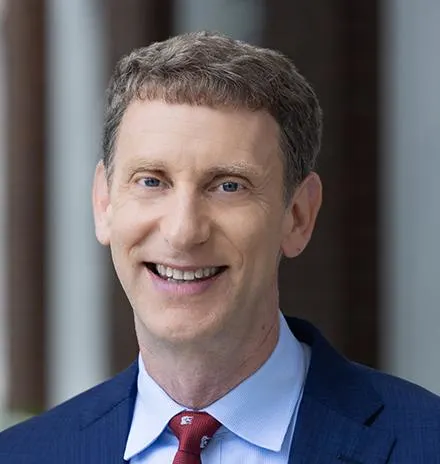
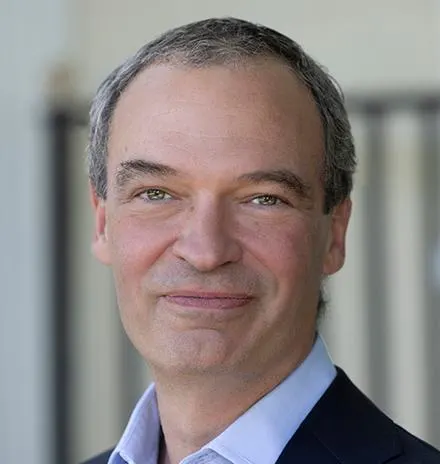

AI and geospatial technologies are transforming how industries understand and respond to climate challenges. David Potere, Managing Director and Partner at BCG X, joins Climate Rising to describe how sensing, decision-making, and automation are reshaping and decarbonizing sectors like agriculture and energy. The conversation examines how satellite data, AI models, and real-time sensing systems are enabling new levels of transparency—from methane emissions in energy systems to crop yields and wildfire risks. David discusses the concept of “Industry 4.0” in outdoor environments, where deploying technology is significantly more complex than in controlled factory settings. The episode also highlights emerging applications in agriculture, energy infrastructure, and climate resilience, and explores how advances in AI and data systems are lowering barriers to innovation. David reflects on the future of consulting, the democratization of technology, and the growing role of builders in solving climate challenges.
Resources
MethaneSAT (Environmental Defense Fund): Satellite-based system designed to detect methane emissions globally, increasing transparency in oil and gas operations and enabling accountability.
TRACE (Tracking Real-time Atmospheric Carbon Emissions): Global initiative co-founded by Al Gore that uses satellite data and AI to track emissions at the asset level, increasing transparency across industries.
Overstory: Climate tech company using satellite imagery and AI to monitor vegetation near power lines and reduce wildfire risk through predictive management.
Industry 4.0 (Concept): Framework describing the integration of sensing, decision-making, and automation in industrial systems—applied here to “outdoor industries” like agriculture and energy.
John Deere See & Spray: Precision agriculture system that uses computer vision to detect weeds and apply herbicide selectively, reducing chemical use and improving efficiency.
Bushel (Farmer Tech Platform): Digital platform supporting agricultural data and workflows; referenced in discussion of farmer adoption of digital and AI tools.
what3words: Geolocation system that assigns a unique three-word address to every 3m x 3m location on Earth, enabling precise location identification in areas without formal addressing systems.
Transcript
Editor's Note: The following was prepared by a machine algorithm, and may not perfectly reflect the audio file of the interview.
Mike Toffel:
David, thanks so much for joining us here on "Climate Rising."
John Mulliken:
Thanks for coming, David.
David Potere:
It's a pleasure to be here. Really excited to be part of the show.
Mike Toffel:
Great, and thanks also to John for being my co-host for this.
John Mulliken:
Thanks for having me here, Mike.
Mike Toffel:
Great. All right. So David, let's begin if we could, with a brief introduction to your role at BCG X and a bit about how you got there.
David Potere:
Mike, I'm a managing director and partner at Boston Consulting Group's X unit. So X was announced in 2022, right as I came back to the firm from about 10 years in startup land, and it is our digital design build unit. So we work with the highest growth, biggest companies in the world around building and doing when it comes to all things digital.
So we have a full stack team of more than 3,000 people globally across product management, design data science, engineering and growth.
Mike Toffel:
Great, and a little bit about how this evolved. Why isn't this just part of Boston Consulting Group?
David Potere:
It's an active conversation about whether or not eventually this just is consulting.
Ah. I think that's the really exciting part of the conversation these days. I suppose OpenAI had something to do with that. You have to remember that X was conceived before the gen AI hyperscaler moment. But the recognition in the firm was that AI is a, just a giant growth factor for our clients, and it's become increasingly important part of how we work, and recognizing that by folding together all of the different flavors of digital work that we do into one unit all the way through to the partnership so that managing directors and partners like myself are, essentially responsible for being the build partners in that story.
It was a really exciting moment in the firm, and I guess it's crazy to think that we're four years into the adventure now of this X thing.
Mike Toffel:
Now you mentioned you'd come back to BCG. Where had you gone?
David Potere:
So I I stepped-- BCG was my first corporate role. I did a PhD- after doing about four years in the Navy, I fell in love with maps and satellites, Mike.
As a young kid, I loved watching the shuttle program in the '80s. I just had a great moment with my 13-year-old watching this Artemis launch happen. And and so I knew that maps and spatial was something, and and so I did that PhD. And my first job out of academia was at BCG. So I came aboard BCG in 2008, and right away looked around for where's the data science.
And right as we founded our data science unit, Gamma, one of the components of X, I I stepped away into startup land and built a satellite imagery startup. So a startup that uses the stuff I did my PhD in to answer real-world problems. And we sold that company to Indigo Ag here in Boston.
And our whole team came across the line and helped build out that carbon crediting story, that pivot to carbon. We were there right at ground zero when that pivot was starting to happen.
Mike Toffel:
Yeah. There's a case study I wrote about Indigo Ag that mentions the acquisition of of that company.
Okay, great. So we've talked a bit about your background. BCG X is this digital design and build. Let's talk a little bit about the climate overlay, and I know you're very excited about what people call Industry 4.0. If you can just give us a little bit of orientation to BCG X and these topics.
David Potere:
Right about the time I came back to the firm in '22, I-- and still obviously the case today climate sustainability is the other big moonshot for the firm, right? We had this real bet the firm moment for my little startup band back in 2015, where we took a swing at forecasting corn yield, really as a demonstration moment to prove to investors that there's something there around what we were chasing.
And so we didn't know that we were building an ag tech company, but that's what Teles Labs became, and that's how we became a part of the Indigo story. And so it was natural in coming back to BCG to focus on those kind of industries. And and so one click broader than agriculture, thinking about the kinds of tough infrastructure and production environments that happen outdoors.
The obvious kind of point I like to make is that, agriculture is the oldest, biggest factory in the world, right? And the thing that's different about it is it doesn't have a roof. And satellites love things that don't have roofs. And it's a place where sensor systems from on orbit and from aerial just really excel.
And that's probably the through line on my work is trying to roll up sleeves in places where your boots are dirty and internet bandwidth tends to be poor and the tech deployment stereotypically tends to be low. But where there's a disproportionate climate story that's worth addressing, right?
Maybe a quarter of emissions coming from places like that and where we've got some catch-up to do or se- may- hopefully some second mover advantage around instrumenting.
John Mulliken:
Let's take the questions to a real setting, right? You've described some of the reasons why it could be so hard to actually do this work in the outdoor industrial setting.
But maybe we could turn to energy first and I, be interested in hearing about some of the client engagements that you've had, some of the places where you've actually seen this put to work.
David Potere:
Yeah. It's a great sector to think about and I think one thing that comes right to mind is working with our upstream clients when you think about things like upstream oil and gas and just helping them through the change that's coming because of the radical transparency of satellite.
And so the MethaneSAT program EDF's effort Harvard is a- affiliated with that effort, Mike, that's a pretty famous example of a whole new class of instruments that are bringing radical transparency to a real problem in that stage of the energy system around methane. And
John Mulliken:
help us orient about around what is the big challenge with methane and what the MethaneSAT program is.
What does this help us see now?
David Potere:
Yeah. Yeah. Methane emissions, so leaks, inadvertent emissions are a major part of the climate burden. That's been a known problem. The magnitude's a lot harder to run to ground than you'd think. Monitoring a pipeline that's thousands of miles in length that is often operated in extreme cold and hot conditions, sometimes in water is just a very difficult engineering challenge.
And so not for lack of trying, the real numbers have been hard to get a handle on, and the uncertainty bars we've known are really wide. W- the idea was that methane gas in the atmosphere has a really tight signal Jon, and that's pretty unique to methane, unfortunately. You can't do something like this with carbon dioxide, unfortunately.
And and so that trace gas just shows up spectrally really well from overhead. And so folks at EDF and other places had this bold vision of let's give it a shot from on orbit. And what those maps showed us was just wild. One example that comes to mind is the overall IEA estimates on energy-related methane emissions are 80% higher than what countries report officially to the UN.
So that was a bombshell in 2026. Yeah. And here in the United States what we show from those satellite systems is a 4X increase over what the EPA would've estimated. So it's not a 10% difference. Yeah. So let's- It's orders of magnitude.
Mike Toffel:
So let's bring this back to client engagement work that BCG X engages in.
And
David Potere:
I think, a lot of BCG's role be- beyond just X is helping our clients look around the corner at what's coming next. And, remember those emitters have all kinds of incentives to get on top of these methane leaks. E- Straight up economic interest in resolving these issues, these are dollars going out the door, and increasingly incentives, direct incentives from our government and other governments to redress and address.
And and really it is a win-win. But in order to take-- to prepare to take action on these, in order to be prepared for the transparency that's coming, working with firms like ours, whether it's on the technology journey of how do I bring in high resolution versions of these maps and systems into what I do and into my operations and planning work, and how to sequence addressing these problems in an efficient, effective way, those are all places that a firm like BCG can be a partner.
John Mulliken:
And so these companies are beginning to actually see what's going on. As you said, they show up really starkly in terms of the spectral signature. How are they beginning to take action? Are you working with them to begin to drive results in terms of reducing these emissions?
David Potere:
Yeah, I think that you see both a wide number of firms signing on for voluntary commitments.
And that's a large fraction of all the gas generated is joining voluntary frameworks like the Oil & Gas Methane Partnership run by UNEP. And and so I think, that's one modality. And and then certainly, like I said, these these leaks these methane emission sources have a direct bottom line impact as well, and can affect the bottom line.
And so that's another lens to look at the redress problem.
John Mulliken:
And that's just the upstream portion. I've also-- I-- You get the sense that downstream is also facing some pretty significant challenges as well.
David Potere:
It's a company called Overstory, and they're Boston-based, and what they attack is this problem downstream in the energy system around wildfire and vegetation management.
And, th-the way they tackle that challenge is using satellite and ground systems and some aerial data to build a credible world model, digital twin of the near line vegetation environment near the electrical distribution system, the power lines. And this is a place that BCG has been also very active with some leading utilities and built cool systems like what Overstory deploys using overhead signals to model where is that vegetation, where will it be.
John Mulliken:
And i-is this the kind of technology or business that you could have built prior to AI? It sounds like you're deploying in a number of aspects from the sensing all the way through the stack down to how you're actually delivering labor.
David Potere:
Yeah, it's a great point. And, I guess it comes down to what do we mean by AI?
I do wonder, maybe something we can find time for, how barriers to entry are changing because of what agentic has done to software development. We've talked about that before, John. That's a new, relatively new thing that I think changes the answer. But on the fundamentals of could you do Overstory, say, ten years ago?
I think they would say that it would be pretty hard. So some of the things you rely on are these exponential rails on more prevalent satellite imagery that's cheaper and better at the same time, and that's really changed a lot even in the last six years. And it's not just how many satellites we have on orbit, but it's the kind of modalities they can see beyond the red, greens, and blues that we're used to seeing and what it is in terms of making sense of those pixels.
So w- how far we've come around the image-based version of these transformer models that we're so used to now with human speech and text. Yeah, I think it would be hard to imagine an Overstory very long ago. It's a relatively recently known thing. And similar for the work that BCG does with utilities on topics like this.
John Mulliken:
And I imagine that both upstream and downstream, there's this democratization that's happening, right? Companies are used to being able to look at their own operations, their own data, their own telemetry, and they've lived like that for a long time. But it's not just they who have access to these types of satellite imagery and and details today, is it?
David Potere:
No. And I think that's that radical transparency problem that we t- or opportunity, depending on which seat you're in. I think hopefully in no matter what seat you're in that is a change. And-
Mike Toffel:
So you gave me the opening to talk about ags one of my favorite topics nowadays. We just did a whole series on regenerative ag, and you guys are doing work in a variety of ag, more, I think more on sensing and AI, maybe some in regen as well.
So tell me a little bit about the work in ag that BCGX is engaging in. And I guess let's weigh into this satellite imagery or other sensors. It seems to me, broadly speaking, you're involved in gathering data and processing data in order to inform decision-making. Is that, first of all, the right way to think about what you're up to based on your-
David Potere:
I think it's a great way to think about it.
Okay. And I, if I wanna borrow from somewhere, it's probably this concept that came out of Germany, this Industry 4.0 concept that came out, I guess it's going on 16 years ago, 15 years ago. This whether you call it Industry 4.0 or the other book that I love on this is The Coming of the Second Machine Age talking about this change in technology, the revolution in technology.
And in the Industry 4.0 framework, what they talk about is sensing deciding, and acting, and that loop as at the core. And if you ask someone to make a poster of that concept of, we had the Steam Age in the beginning bringing, So I wouldn't say automating human labor, but bringing a new kind of force- other than animal and human labor into the mix. Then this notion that there's a new revolution that we're going through now, which is this intersection of what happened in the '70s With information technology and physical action in the world, right? And I find that concept super useful.
It's been useful in framing the pattern of the work I do. I work at taking that outdoors. And a lot of things get harder when you do that. Some of them aren't super obvious. And a lot of them need to get easier if we're gonna address that part of the climate challenge, right? And so that, that's a m- might be a fun place to go n- next, is just think through that loop of sense, decide, and act, and I can tell you some stories of what I'm seeing about how that's starting to change.
Mike Toffel:
Yeah. Great. So why don't we begin by just articulating a bit about why it's harder. I think obvious ideas would be l- light is available only half of the day.
David Potere:
Yeah, that's a big
Mike Toffel:
one. Weather is more unpredictable. Yeah. Surfaces are uneven. All the things you think about why you would build a structure instead of relying on an outdoor setting.
But w- you said some of them are less obvious. What are some of the less obvious features?
David Potere:
Yeah. And I wanna be cl- careful for those who are listening and thinking about being in factories, which is where a l- most of our built environment comes from. That's not easy either Mike? Yeah. But I was just touring a amazing indoor factory environment for handling lettuce.
M- much of the lettuce that we eat comes from the Central Valley in facilities like this. And, it struck me walking through the tour, there were many cameras, many wires and sensors in that- factory environment. And with only a few hundred, you had full perception of everything that mattered.
And that team could imagine bringing a new line on and pencil out everything- Yeah ... the ROI, what was gonna happen to production after. A lot of us that were coming fresh off the field from that tour with dirty boots getting, washing them carefully to get into that environment, we were thinking to ourselves what a difference it makes to have to be in the outdoors.
And you hit on some of it, right? The lighting conditions. The weather is one of the big ones, right? Imagine running a factory where you have unreliable electricity and water to the point, and electricity in the form of photosynthesis-
...
David Potere:
And water and temperature, and that the utilities company can turn those on and off in a completely unreliable pattern from day to day and season to season.
And so you have to plan for anything that might come out of the wall. That's one of the things that makes that place harder. Another one is that a few hundred cameras just doesn't cut it, right? We're talking about the most prevalent use of land on the planet we're talking about 900 million acres just here in the United States for agriculture.
So putting a camera even every acre is just not a phys- physically viable thing. Yeah. And so it's super distributed. And then, maybe one more that just doesn't come to mind often to folks is just rural broadband is such a challenge. And I think that Starlink and Satcom is starting to change that, but that is, man, I can tell you a story. When we were at Indigo, V1 of some of the products we were shipping was iPads, and those things at 115 degrees in Georgia they stop working. And they're not hardened, it turns out, to be in the kind of environments that you're in. And the connectivity story you hope for isn't necessarily native.
So I think- A lot of ag tech companies have been surprised along the way of what it is to make it work out in the field. And be skeptical on this one, Mike, because I'm a geographer and maybe it's a hammer and nail thing. But it is really hard to know where you are in agriculture. By that I mean there isn't a map.
So if you think about what digital maps like Google Maps have done for us around how we live and work and play, pretty transformative, right? And if you take that same system and you go to central Iowa and you take a look around it's a largely blank map when it comes to farms. So farm fields have no standard naming convention much less subfields, barns, infrastructure.
It's a little bit like if you were the mayor of a town and you were working on, resilience for flooding and it gets really hard fast. And so that's an example of one that there... I have a lot of optimism that there are technologies coming soon that can make that naming system and contactability on the land.
John Mulliken:
We've gotten so used to this idea of driving down the cost curve. Certainly the story of solar is about driving down the cost curve really fast. And the numbers of instruments that I, we have in our home even, right? The number of doorbell cameras and the sensors we have in our pockets, it just feels like the intuition might be that we've come so far that we can just deploy lots and lots of these and that that'll that'll work.
But but really the rugged environment makes it such a different place. How do you talk to folks who really think that we m- you know, we must be able to do this because we've come so far down the cost curve?
David Potere:
Yeah. It's a great question. I think about, we work with some of the biggest OEMs in agriculture and talking to some of those teams the Arlo thing comes up from time to time, because these folks are making their living in industrial perception and you look at what it is to harden these cameras and the brains that does the decide part of the story.
It's so eye-opening to see what that really takes, John. And so what it is, it turns out to, to put a- A smart doorbell on our doorstep is just so different from having a camera, for ex-example, on the end of an 60-foot all-carbon boom from the John Deere See & Spray system moving at 15 miles an hour through the field in all weather.
It's just a different ballgame. I guess those are both cameras, but they are about as different as you can get within the family of camera. And even the brain, what it takes the kind of NVIDIA GPUs that it takes to make decisions on individual... The See & Spray system for your listeners that don't follow ag as much as I do, is pretty famous poster child, I think, right now on this full end-to-end loop of see, decide, act, where, that technology very mature now in a lot of crop systems, is making a on-the-fly decision at the nozzle level for spla- spraying herbicide to only put the herbicide on the weed.
Which sounds like a really simple idea, and it is a simple idea. But in pr- in practice, making that happen reliably is the magic of that system. And it's not a bad example of sense, decide, act in one, but you need robotic actuation on that spray nozzle, not just on/off, but directional.
You, you need to have a brain in there that can do the computer vision work which is getting easier thanks to gen AI, but is still computationally really intense, fast enough to be moving at speed through the field. And then you need those cameras, the perception leg. And when all those three pieces come together in one place, you can deliver, a much more efficient outcome and a much better outcome from an environmental perspective.
And I think that, what we see in the work we do across the ag sector is more and more of those loops starting to come into play driven by, riding on the tailwinds of what we're all getting used to when it comes to where consumer car, self-driving car is going, where robotics is going in general, right?
Mike Toffel:
So to take us through, if you would one or two case examples of where BCG Ax is engaging in this digital design build in the ag sector. You've given some examples, but-- And I know that you consultants usually don't like to name their clients, and that's totally fine, but just tell us the type of projects that you're engaging in.
David Potere:
Yeah, I'm happy to do that, Mike. I, two ex- I'll pick two examples from different... One part of the fun of coming back to BCG is the variety of ag sector verticals you get to get your hands in. So we work with all of the major ag input producers, both on the fertilizer and chem front, as well as seeds and traits.
Last year, we were able to do some really exciting work alongside The USDA around thinking through what a farmer data wallet might need to look like. And that's been really... That was very exciting work talking to all of the major players in the startup ecosystem for agricultural carbon and regen, and thinking about, from a system perspective, where are the common interests around some digital rails that allow for interoperability and reduce some of the burden that's out there?
I'm sure you just did a full deep dive on this, so you've had some great folks talk about it. Some of these challenges on ag carbon, the one that I'll throw out there gets called often grower data burden. This notion of gosh, how many person hours, maybe even person weeks does it take to put together a complete enough record to plug into the models that it takes to get paid for farming in a better way?
And it turns out there's a lot of common interest in having something that works interoperably there. So that was a fun project for sure. I mentioned ground truth poverty. That's like a, an earth observation truism for the people that think about practically making maps and solving problems from space.
The... if you can't see it in the image, you can't train a machine to learn it. And if you don't have enough evidence of what really is happening on the ground, then your system, y- is always gonna have a limit in terms of accuracy. And, in terms of carbon markets, how many tons of carbon we need to see per acre in order to make it make sense for farmers is a really critical problem as you know well.
And so the margin, the error margin around these carbon reporting systems in terms of how much accuracy you need to be able to create credits that are strong enough that make farmers, see an incentive that makes sense a lot of the constraint in the accuracy of those models is that ground truth problem.
And it's not just the ground truth of the soil samples themselves, it's ground truth around what are the practices that are happening on the ground. And so anything that can move the needle on the accuracy of those systems is supporting everybody in that chain. And we've seen, the ability to map farm practices and outcomes from overhead get much better in even the last few years.
My little company, my startup, Telos Labs- ... we raised a seed round with a vision around crop yield- Forecast. I think we spent a couple years at that before we kinda had our hello moment, hello world moment. We took a swing at that a few years ago at BCG as an investment project. It was like a six-week push, which is pretty humbling in terms of just how fast the software technology, AI technology is coming around these systems.
John Mulliken:
One of the areas that we've seen continue to accelerate is self-refining systems, right? As we've seen more and more driverless cars deployed you've talked a bunch about autonomy, but I wonder whether the same dynamic is beginning to play out in the field or in these outdoors environments, which seem so much more varied and challenging, whether you're actually seeing the same kind of self-reinforcing and learning systems that are that are accelerating.
David Potere:
I'd love to talk about maybe two examples. One is, one is more on the vehicle, and the other is more in the hand of the farmer, walking the farm. On the vehicle front just like we've come-- we are being impacted by end-to-end automation as drivers of cars, whether we know it or not.
And for your listeners that don't follow end-to-end autonomy well this notion is it's championed often by Tesla but Waymo, all the challengers are, that are heading towards full autonomy on the road will tell you that there is a new way of teaching driving systems to do what we do well, which is to simply watch what we do.
And from the footage that shows you what we could have seen and what we did, the system infers the rules. And the rules are not written in English that you and I can read. And they're written much more efficiently than in code. So they need a lot of safety barri- boundaries around them 'cause things can go wrong.
But it's radically accelerating the whole autonomy scene, and it would be surprising if that same kind of innovation didn't find its way into construction and at the farm gate. So yeah, that's one example that's more about the machine and maybe one more if you give it to me on this closed loop.
It-- we talk about whole field agronomic decision-making, and what I mean by that is that, if you ask someone what the scene is in agriculture around AI the term for the sector overall has been precision agriculture. This whole idea of I know where I am, Deere StarFire system.
I know what's going on around me the See & Spray system. And and I can build a plan at exactly the right, each exactly the right square foot inside the field. I'm planting the right seed at the right time. I'm putting the right- chemical in the ground at the right time. The thing that often gets overlooked is the whole field decision of, "Hey, should I be farming on this field?
Should this land be fallow?" Those kind of whole field decisions, we're seeing a loop start to close there where because the record keeping's getting better, driven by digital, we now have more of these natural experiments that are getting recorded. And so the ability of farmers to learn from their own operation and even to learn from each other is just accelerating really fast.
There's a survey that just came out two days ago from the company Bushel. For the first time, they asked farmers, "Are you using gen AI tools?" And they've been doing this survey for many years and 14% of American farmers responded to the survey and said, "Yeah, I'm using it on a habitual basis."
And much higher percentages when you look at larger farms, far outpacing a lot of other industries. And so I think there is this appetite to learn more and to learn more at the whole farm and whole field level. And we're seeing farmers, they're not-- So it's, ChatGPT is not an ag tech platform, but farmers are going for it, and that's pretty exciting to see.
John Mulliken:
Amazing. Thinking beyond where we've talked about energy and and agriculture, where else in this outdoor industrial complex are you excited about the advances that are being made?
David Potere:
Yeah, it's a great question. I do spend a lot of my time at the farm gate, so I think it's a fun one to think about.
I I guess for me, what's most exciting outside of ag, and that's definitely my, probably my first vote is the electricity grid. And I think, I'm not sure if I'm in the camp of folks that are in the sort of electrify everything and our problems go away. I-- we just converted to a heat pump here in Massachusetts, and it's been a pretty rough road in terms of like whole home cut the cord on natural gas is hard in New England, right?
Some of that's probably New England's fault. But I think to me, seeing these kind of technologies come to the grid and some of the grid work that I've done in both government and with private clients, I just see, John, how far we have to go around what a smart grid really looks like and the urgency of it all, kinda coming back to the, these data centers that are gonna have to happen.
And so to me, that's a very exciting place both because there's so much low-hanging fruit and because it's so critical that we get it right quickly, as a sort of foundational move. So that's one I'm really excited about.
Mike Toffel:
So a question that I always ask at the end of our interviews is for advice for those listeners or viewers who are excited about what they've heard about BCG X and this revolution of design build in the sectors that we've talked about, whether it be energy or utilities or ag.
W- where would you recommend they go to learn more?
David Potere:
I hope this is part of the curriculum by now at a place like w- at a leading business school at HBS. Question mark maybe whether that's the case, but, I think building and just getting your hands on the tools and I-- we touched on this a little bit at the beginning when you were asking me about the X story.
I just think we feel it as builders, as tech builders, that holding tightly to the franchise of building is probably a losing path. And so essentially like the democratization of what it is to be a builder, we can all be builders now, right? And really encouraging folks to think about if you have an idea, if you have a place that you want to dig in and learn more about a sector or an industry, just rolling up your sleeves and not being afraid of fast fail build moments.
It's never been easier to build. And I think we in BCG are going through a transformation just like our clients around figuring out what it is for everyone in the company to have Anthropic and OpenAI in their pockets and on their laptops. And so I think that's one piece of advice I would give folks is is to roll up sleeves and build.
Mike Toffel:
Great. L- last question, just as a follow-up here. For those thinking about consulting or these consulting extensions like BCG X, I think there, there is a lot of question about whether that career path like w- has the stability and excitement and advancement opportunities that it's had in the past, given I know I've spoken to some where they say, we used to bring in 20 summer associates in this office, and now we bring in five because the five can be as productive as 20."
And other stories like that. And then people are also thinking about their labor pipeline. If we don't have 20, then we won't be able to hire five, and then hopefully one of those five will become a senior manager," and so on. So things seem very tumultuous in that space. What's your take on that?
David Potere:
It certainly doesn't feel tumultuous to be at BCG today. And I take your point. I think it's not unique to management consulting, I guess any profession right now. Yeah. We're all facing it. And so I've-- I won't dodge though. I do think there's an open question about whether, the notion of a BCG X, like a unit that does build The role that b-- part of our mission now is helping all of BCG build, and everyone is a builder, right?
And and a big part of our work is helping our clients learn how to build. And that transformation work, that notion of having the kind of caliber people that BCG brings aboard embedded with our clients, rolling up sleeves together to go figure this out, whether it's on the AI journey, whether it's just handling adoption.
I s- just is a four-letter word. Honestly, just handling adoption is really hard. It's scary for a lot of these professions, and so getting people comfortable. I've done this in-- We do a lot of work. A colleague of mine, Julie Bedard, was just on Hard Fork talking about what this is for the, software developers and people that are on the really the battle lines of where this is happening.
It's real. And that work of helping our clients manage adoption and then even for some and increasingly more and more of our clients, managing disruption, like figuring out how these models reinvent, whole service lines and business units that work is shifting to be the main.
And so that gives me a lot of optimism that the core model of helping companies navigate change, in a spiky period of extreme change, that's, when that model tends to really shine. But not to dodge at all the point that the way we do the work is changing super fast. Yeah. Probably faster than it has in a long time.
But BCG's been around for many years, and we've been through the internet boom. We've been through, many different waves of transformation. I haven't been around that long. My seat is cheaper than that. But I would guess that this has gotta be one of the biggest change moments for the business.
I don't think I'm alone in that belief, so I think you're onto something there.
John Mulliken:
Yeah.
Mike Toffel:
Great. David, thank you so much for joining John and me on this really fascinating wide-ranging conversation. Yeah.
John Mulliken:
Thanks, David.
David Potere:
It's been great speaking with you both. A pleasure being here.