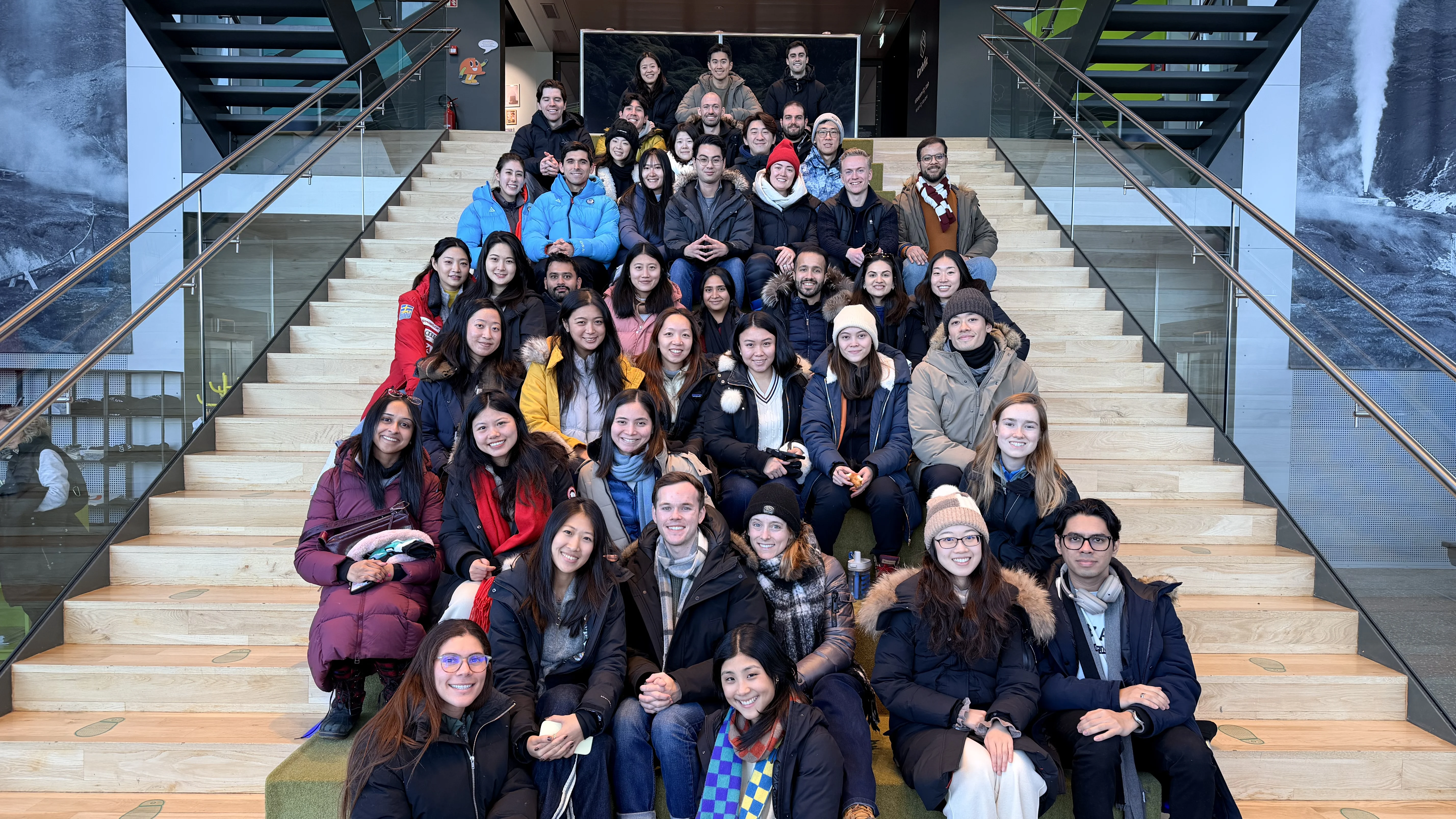
Iceland often feels like a glimpse of the future: a country powered almost entirely by renewable energy, where geothermal heat warms homes, greenhouses grow tomatoes through the winter, and electric vehicles line the streets of Reykjavík. For 49 students from the Harvard Business School Energy & Climate Club, our annual trek to Iceland is an opportunity to see this future firsthand.
But this year’s visit revealed something equally important: building climate technology is only the beginning. Scaling and operating it reliably, often in extreme conditions, is the real test.
Across geothermal plants, carbon removal facilities, and climate startups, a recurring theme emerged: the challenge of turning promising technologies into resilient infrastructure.
Creativity Comes with Trade-offs: Lessons from Small-Scale Geothermal
One of our first visits brought us to a small geothermal facility developed by Baseload Power, designed to demonstrate how small-scale geothermal can provide both electricity and heat to local communities.
Instead of relying on traditional high-temperature steam turbines, the plant used Organic Rankine Cycle (ORC) technology, specifically Climeon’s HeatPower system. ORC systems generate electricity from lower-temperature heat sources that would otherwise go unused.
In an ORC system, heat from the geothermal resource evaporates an organic working fluid with a lower boiling point than water. The resulting pressurized vapor spins a turbine to generate electricity before being cooled, condensed back into liquid, and recirculated in a closed loop. The system’s efficiency depends largely on the available thermal energy and the temperature difference between the heat source and the cooling environment.
While the approach is technically elegant, the generators used at the facility were originally designed to capture intermittent industrial waste heat, not to operate continuously in a geothermal plant. Over time, the turbine bearings experienced significant wear, leading to repeated mechanical failures.
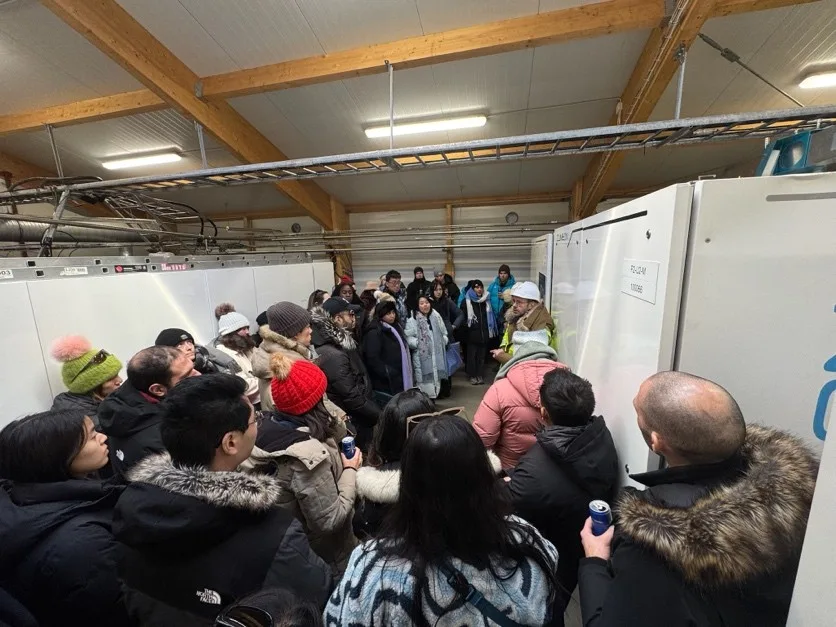
The plant is currently offline while Baseload explores raising capital to install generators better suited for constant operation. Yet the project still demonstrates something powerful. Even at small scale, geothermal can provide stable local energy, heating networks, and economic activity for communities that might otherwise rely on imported fuels. The challenge lies not in the resource itself, but in ensuring that the technology stack is designed specifically for the demands of the application.
Scaling Carbon Removal in the Harsh Reality of Nature
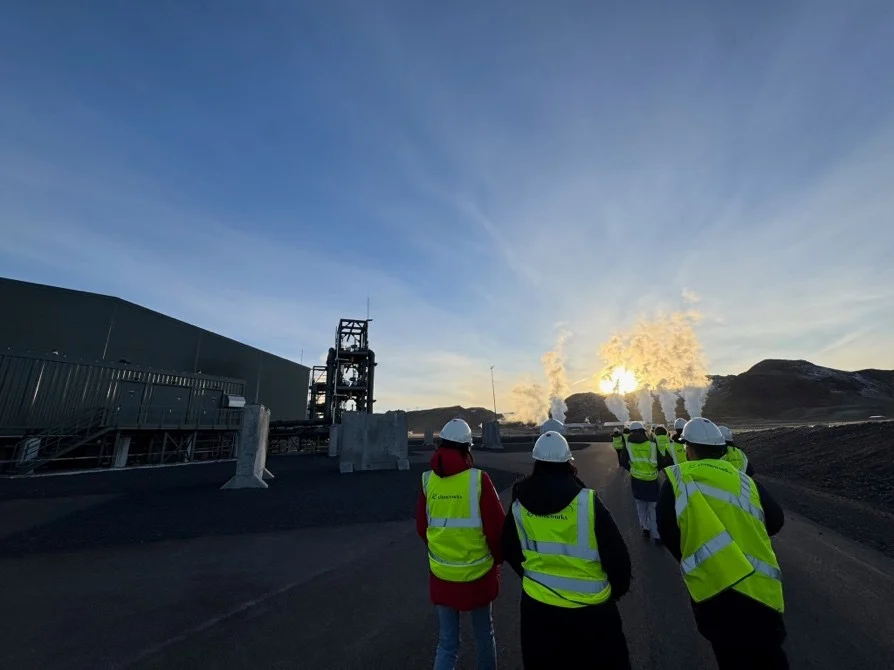
The theme of operational complexity continued at one of the most ambitious climate technology sites in the world: Climeworks’ Mammoth direct air capture (DAC) facility, located in Iceland’s Hellisheiði Geothermal Park.
Mammoth represents a major step forward in engineered carbon removal, with a nameplate capacity of up to 36,000 tons of CO₂ per year. The plant captures carbon dioxide directly from the atmosphere and partners with Carbfix to mineralize it underground in basalt formations—effectively turning CO₂ into stone.
On paper, Iceland looks like the ideal location for such a project. The country offers:
Abundant clean geothermal energy
A partner like Carbfix for permanent carbon storage
Strong government support for climate innovation
A deep cultural commitment to sustainability
Yet operating in Iceland comes with an unexpected challenge: the climate itself.
The Mammoth facility is currently operating at roughly half of its planned capacity, with limited plans to complete the remaining DAC units in the near term. The reason is not a lack of ambition, but the harsh environmental conditions surrounding the site. Iceland’s intense winds and volatile weather patterns create significant operational strain on the capture equipment, complicating efforts to maintain consistent performance.
For climate entrepreneurs, this raises a fascinating strategic question: how do you balance ideal policy and infrastructure conditions with the practical realities of the physical environment? Climeworks may already be adapting its approach. Future projects are being explored in warmer and more stable climates, including developments in the Middle East.
A Living Laboratory for the Energy Transition
Despite these challenges, Iceland remains one of the most fascinating laboratories for the energy transition. The country offers a rare environment where renewable resources, innovative companies, and ambitious climate solutions intersect in one place.
For HBS students, visiting these projects made one thing clear: the path to a low-carbon future is not simply about inventing breakthrough technologies.
It is about making them work: reliably, economically, and at scale.
And that is where the real learning begins.