
BiGS Actionable Intelligence:
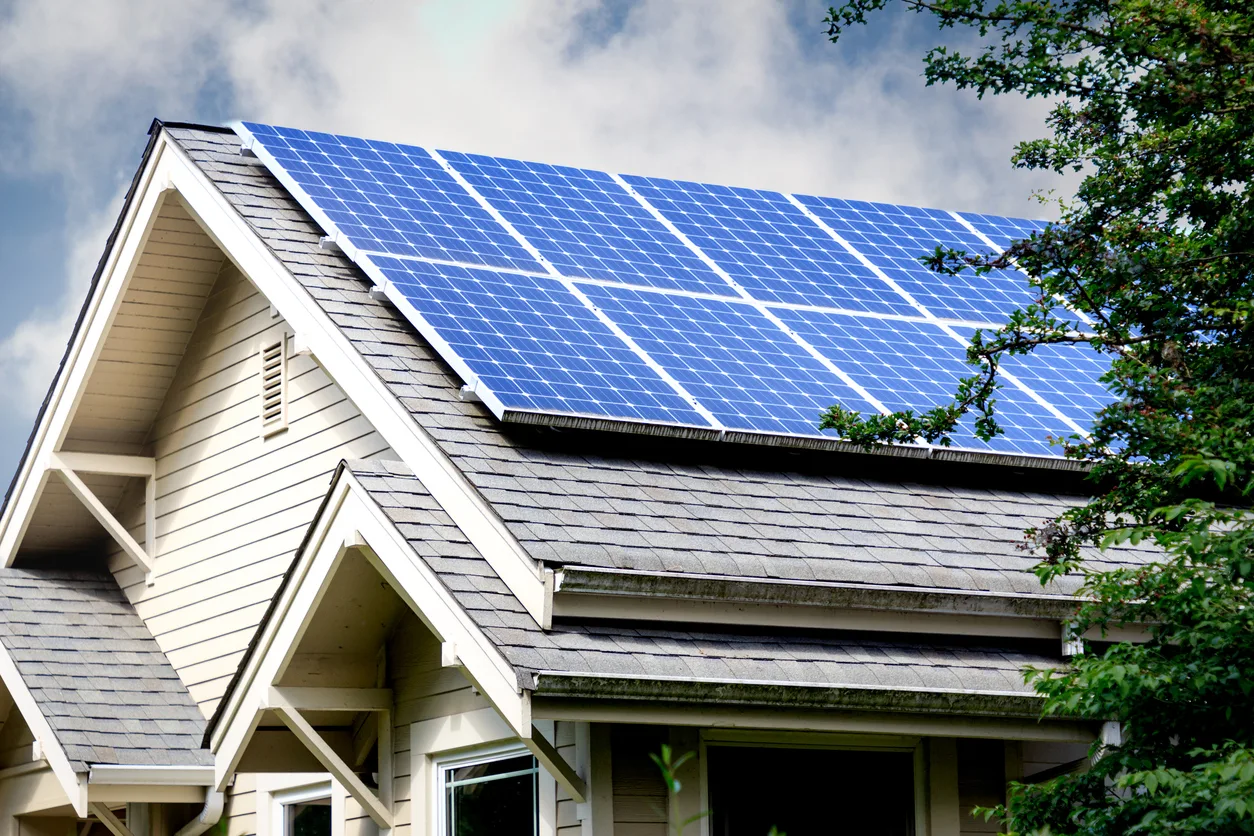
Rooftop solar for homes and businesses has had a tough time in recent years, as a combination of state and federal policy changes, high installation costs and a financially troubled solar power industry slowed the advancement of a sustainable energy source.
But despite the setbacks, experts believe exploding demand for electricity and power cost increases in the United States can save rooftop solar—if the industry can answer the call.
“We are in the midst of an energy crisis,” said Jigar Shah, a clean energy pioneer who founded the solar company SunEdison and ran the U.S. Department of Energy’s Loan Guarantee Office. “This is the moment for the clean energy industry, particularly the rooftop solar industry, to shine, and if they don't shine it's because they didn't rise to the occasion.”
Though it has been available for decades, rooftop solar is far from ubiquitous in the United States, despite the promise that it could reduce costs and benefit the environment. This is especially true for residential applications, which accounted for the largest retail energy sales in 2024, according to the U.S. Energy Information Administration.
Residential use accounted for almost 38% of electricity sales, driven primarily by heating and cooling applications. Commercial use came in second at about 36%, with most of that electricity feeding computers and office equipment. Industrial uses, which primarily power machines used in manufacturing and processing, were third at 26%.
“Residential solar has the disadvantage that it’s more costly per unit of solar installed than if you just build it somewhere on a green field,” said Christian Kaps, an assistant professor at Harvard Business School. “But rooftop also has huge benefits for households.”
By combining rooftop solar installations with storage capacity, such as batteries, Kaps said rooftop has the capacity to help address a central problem with solar power: it only produces energy during the day, when the sun is shining. Ultimately, systems that combine solar and storage could provide some help to residential customers who want to lower bills.
“How much does the installation cost and how much does electricity cost from the grid—that’s the big comparison if you have solar and storage,” he said. “As electricity rates go up, you don’t have to buy as much off the grid.”
What’s wrong with rooftop
The average retail residential price for electricity in the U.S. went up 12% in 2025 and is 40% higher than it was five years ago, according to U.S. Energy Department data. Residential could rise another 15% to 40% over the next five years and double by 2050, according to ICF, a consulting and technology services company.
Meanwhile, demand is growing. Energy-gobbling data centers, the use of artificial intelligence, crypto currency and electric vehicles are contributing to an estimated 25% increase in electricity demand by 2030 and a 78% increase by 2050 from 2023, according to a June 2025 report by ICF.
That might lead homeowners to make the switch to rooftop solar, but many consumers have balked at making the investment. The residential segment of the solar power industry installed 4,710 megawatts in 2024, a 32% decline from 2023. And it is not expected to approach the record level installed in 2023 for the rest of the decade, according to the Solar Energy Industry Association (SEIA).
The first barrier is initial cost: installing rooftop solar panels averages about $25,000 today, according to Sunrun, the nation’s leading solar power and storage company. That’s a massive drop from the 2010 average price of $40,000, but still a major—perhaps even prohibitive—expense for many homeowners, who often have to seek financing. And Americans often pay tens of thousands of dollars more for rooftop solar than families in England, Australia, Japan and Germany.
Permitting is also a hassle. In the U.S., local governments issue permits for rooftop solar, and the process can take weeks or months. Direct and indirect permitting costs (such as the application, inspection and interconnection fees) can add as much as $7,000 to the cost of a solar system, the SEIA calculates. The group estimates that a one-week delay results in a 5% to 10% cancellation rate among homeowners.
Meanwhile, the industry itself is suffering from financial troubles. In the U.S., more than 100 solar companies—including former stalwarts Sunpower, Sunnova, Posigen and Solar Mosaic—have gone belly-up over the past few years. The bankruptcies are due to policy shifts in key states, higher interest rates and tighter financing, according to the insurance company Solar Insure.
And the failures came before passage of the One Big Beautiful Bill Act last July, which repealed renewable energy incentives that helped give rooftop solar a foothold in the market. The 30% tax credit for residential solar systems expired Dec. 31.
Can ‘balcony solar’ catch on in the U.S.?
There are several innovations in residential solar power that could give the industry a boost. One is “balcony solar,” a plug-and-play energy system small enough for apartment dwellers. While it is unlikely to make large-scale changes to the future of energy in the U.S., some say it is a way to empower average Americans to embrace solar power.
The systems use lightweight panels that can be easily mounted by a homeowner. The panels capture sunlight and route current to an inverter, which feeds it into the home's electricity supply through a standard wall socket. Small batteries can be added, allowing users to store electricity generated during peak daylight hours for use in the evenings or overnight.
The systems have caught on in Germany, where more than 500,000 plug-in systems have been installed across the country as of 2024, according to The New York Times. The boom came after new laws were passed to prevent landlords from blocking installations. The systems are now available to German consumers at stores like Ikea, where costs start at about $750.
The systems present savings, but there is also a social component. Monitoring apps have turned energy production into a community exercise, generating friendly rivalries among neighbors and nudging small-panel buyers to eventually upgrade to full rooftop systems. Consumers may be motivated by both savings and an interest in the environment.
The idea of balcony solar is picking up speed in the U.S. as policy makers look for any solution they can find to lower energy bills. As of mid-March, more than 20 states are considering legislation legalizing plug-in solar kits, with Virginia and Utah having already passed legislation.
"If you’re just using these systems for your own power, I think balcony solar makes a lot of sense,” Kaps said. "I think installing them yourself and making it really easy to just hang it over your balcony and plug it in is great, as long as it’s safe and secure. It's a bit less efficient per module, but if you look at what it costs and its convenience, balcony solar would help a lot."
Are virtual power plants the answer?
Some industry watchers are hoping that a technology called virtual power plants (VPPs) could also support a revival in rooftop solar.
VPPs upend the idea of a traditional power plant. With a VPP, a community pools its resources, such as rooftop solar, home batteries, electric vehicle chargers, and smart thermostats, to support the local power grid. The process involves using software to aggregate and coordinate the energy, directing the sources to discharge stored energy or reduce consumption.
The thinking is that these resources could be combined to produce the power that comes from a massive nuclear or natural gas plant, and help make up for the energy supply shortage. VPPs also do not have the long construction timelines and costs of a traditional power plant.
The Brattle Group published a study in 2023 showing that a VPP is roughly 40% to 60% the cost of the alternative options, such as gas and batteries. With VPPs, utilities could save $15 billion to $35 billion in capacity investment over the next decade, the report said.
And while recent reports suggest VPPs are not yet ready to replace baseload power on a grand scale, they may be able to limit strain on the grid during peak demand.
“Virtual power plants could turn traditional electricity flows around because an aggregator could combine 100,000 households and make sure their combined solar generation, batteries, electric vehicles and whatever else you might have is more aligned with the grid demands,” Kaps said.
Room for optimism
Despite policy changes and industry financial woes, some experts see a recovery for rooftop solar paired with storage and other distributed energy sources.
Tesla, in a whitepaper addressing solar costs, found that dramatic savings can be found by addressing “soft costs,” such as permitting, customer acquisition and administrative costs. Delays in installation lead to cancelations by frustrated customers, Tesla said. And that forces companies to pass those losses on to other customers, further raising costs.
“The customer journey is long and complex, often requiring multiple site visits, proposal revisions, loan approvals and permit checks,” the Tesla paper said. “Our data shows that the more friction there is in the process and the longer it takes from lead to install, the more customers cancel.”
Meanwhile, share prices for rooftop solar companies are starting to rise after a yearslong collapse. Sunrun shares have rebounded after dropping 74% in the last five years. Solar Edge Technologies, which provides inverters for roof top solar projects, also have risen after experiencing an 88% decrease in the last five years.
Timothy Fox, an analyst at the research firm Clearview Energy Advisors, said recent gains in share prices of rooftop companies indicate that investors believe some firms can function, even without federal measures to boost solar—and that could provide relief for homeowners looking to lower energy costs.
“I don’t see rooftop solar actually offsetting the growing demand from data centers,” Fox said. “But obviously if you’re a rooftop solar customer, you may be able to avoid some of the higher prices you’re paying.”
McKinsey & Company, in a 2025 analysis, also struck a promising note.
“Residential solar might be down today, but its long-term prospects remain solid,” the report said. “We see that residential solar is poised for steady growth, especially for companies that take the right steps now in preparation to enter the next phase.”