Editor’s note: Lisa Ryden is Vice President for Social Sustainability at Tetra Pak, a world-leading multinational food processing and packaging company. She has worked there for almost two decades. We caught up with her at a workshop in June organized by Shift and the Harvard Business School's Institute for Business in Global Society to explore how businesses can address the risks that inequality creates for people, companies and the broader economy. The interview has been edited for length, clarity and style.
What is the responsibility of businesses in respecting human rights?
Businesses should understand where and how their operations and value chain might affect people's human rights. They should take action to prevent those risks to people and work to put the situation right where harm has occurred or risks have been materialized.
This process, known as human rights due diligence, is a risk management process focused on risks to people. Businesses have a responsibility to take seriously the key elements of the UN Guiding Principles on Business and Human Rights that shape this approach, for example, 1) prioritization criteria, which ensure that attention and resources are directed toward the most severe risks to people and 2) incorporating the views of the affected people as a critical input, to ensure that those at risk are at the center of the process.
A lot of business leaders think governments, not businesses, should address human rights. What do you think?
Governments are the most important actor when it comes to protecting human rights. That doesn't mean that businesses can't play a complementary role in creating better outcomes for people whose human rights are at risk. As suppliers, employers, and buyers of goods and services, businesses affect people every day, including employees, consumers, as well as workers and communities in their supply chain,
What first signaled to Tetra Pak that it needed to take its human rights impact more seriously? How did you go about starting that process of identifying the most severe ones?
Our brand promise as a company is to protect food, people and planet. And the UN Guiding Principles on Business and Human Rights provide a valuable standard to help us fulfill that promise and meet stakeholder expectations, including those from customers and governments.
When we began identifying our human rights impacts, we started with a broad mapping of risk areas, using desk research, general risk tools, reports from non-governmental organizations (NGOs), audit data, and insights from internal and external stakeholders. After identifying the highest areas of risk across the value chain, we focused more deeply on those specific areas and geographies. At that point, we used more targeted tools, such as on-the-ground human rights impact assessments, worker voice surveys, or direct interviews with affected stakeholders in very specific contexts. Our goal was to gain a deeper understanding of the challenges people face and where our actions could make the greatest difference.
How do you ensure that people affected by your operations have a real voice in the process, and what does that meaningful stakeholder engagement look like?
Engaging with workers and communities in our value chain directly informs the identification, prioritization, and the actions we take when it comes to addressing human rights. We are thinking about stakeholder engagement on three levels. First, we engage with external experts who can help direct our strategy. Second, we work with credible proxies of affected stakeholders to help us understand their perspectives. And third, we directly engage the affected stakeholders through interviews or surveys that focus on specific areas of risk in prioritized locations.
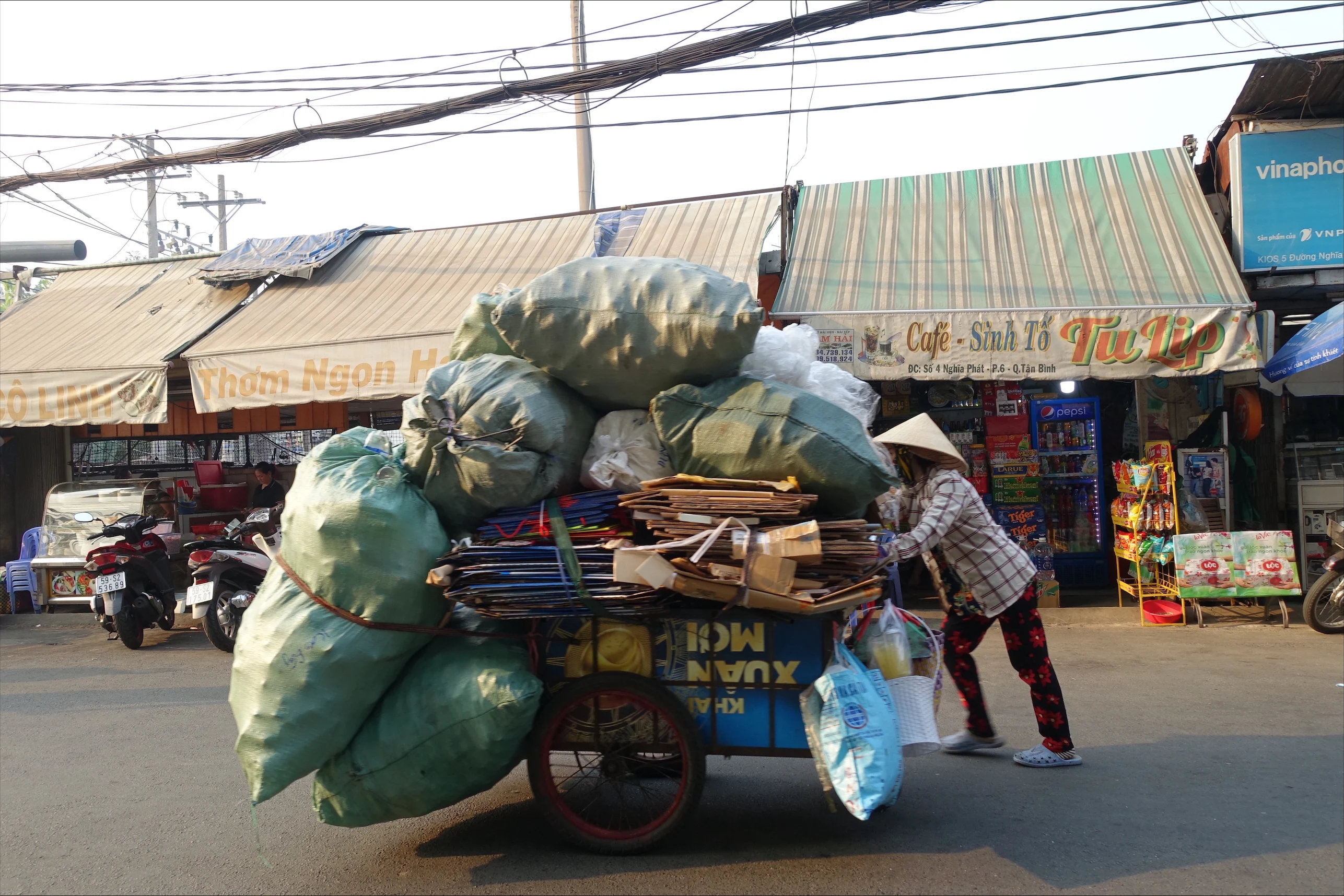
Let me illustrate this approach in practice with the example of how we focused on the working and living conditions of informal waste collection workers in countries where formal waste management doesn't exist. At the first level, we're working with an international NGO that promotes human rights for informal waste collection workers, which will help shape our overall approach to the topic. Second, we are engaging with waste picker associations in countries that we have prioritized, which are credible proxies for those workers and help us understand the country specific context. And at the third level, we directly interview workers in targeted locations via local NGOs.
What are some of the things that you learned?
Our objective is to understand the relative severity of the issues people face, how these issues arise, and, most importantly, what affected individuals see as meaningful action and the kind of support they would like to receive.
One key learning is that challenges vary significantly—not just between countries, but even within different regions of the same country. For example, in one country, homelessness among informal waste collection workers emerged as a major concern, while in another, it was not an issue. This reinforces the importance of not making assumptions about what the problems are or how to solve them.
Effective solutions should, therefore, be context specific. In some places, providing personal protective equipment is a priority to reduce injuries in hazardous working conditions. In others, the first step might be helping workers obtain official identification, enabling access to social security programs. In certain communities, offering childcare facilities can help prevent children from accompanying their parents into unsafe environments.
A recent case that reflects these insights is our initiative in Ho Chi Minh City, Vietnam, where over 65% of domestic waste is collected by informal workers. We began with extensive research, interviewing hundreds of these workers to understand the challenges they face. Based on those insights, we worked closely with local partners to co-develop practical solutions. In June 2025, in partnership with NGO ENDA, we launched a project to support 300 street waste pickers by organizing them into cooperatives and providing access to social welfare, health insurance, and protective equipment. Our aim is to improve their livelihoods while advancing the collection and recycling of used beverage cartons.
You've worked with Shift for a several years. How has this collaboration helped you?
Working with Shift is very beneficial for us in several ways. Firstly, we can draw on their expertise and experience in working with many companies over the years on specific topics. We also participate in peer learning groups, where we interact with other companies that are working on the same issues we are facing. We're also learning about how to embed and integrate the work for human rights in our processes and governance policies.