BiGS Actionable Intelligence:
BOSTON—When OpenAI CEO Sam Altman visited Harvard University in May, the reaction to his predictions about the future of artificial intelligence ran from barely concealed excitement to naked skepticism.
And why not? Some would argue that the widespread availability of artificial intelligence is a technological change to rival the internet itself. It’s going to ignite some passion.
Some of the world’s largest and most influential technology companies, including Amazon, Google and Meta, are spending tens of billions of dollars on AI infrastructure. Meta alone could spend as much as $40 billion this year.
While the promise of AI is massive, it is also a largely unregulated technology operating with broad public access in its formative years—and that draws excitement and caution in equal measures.
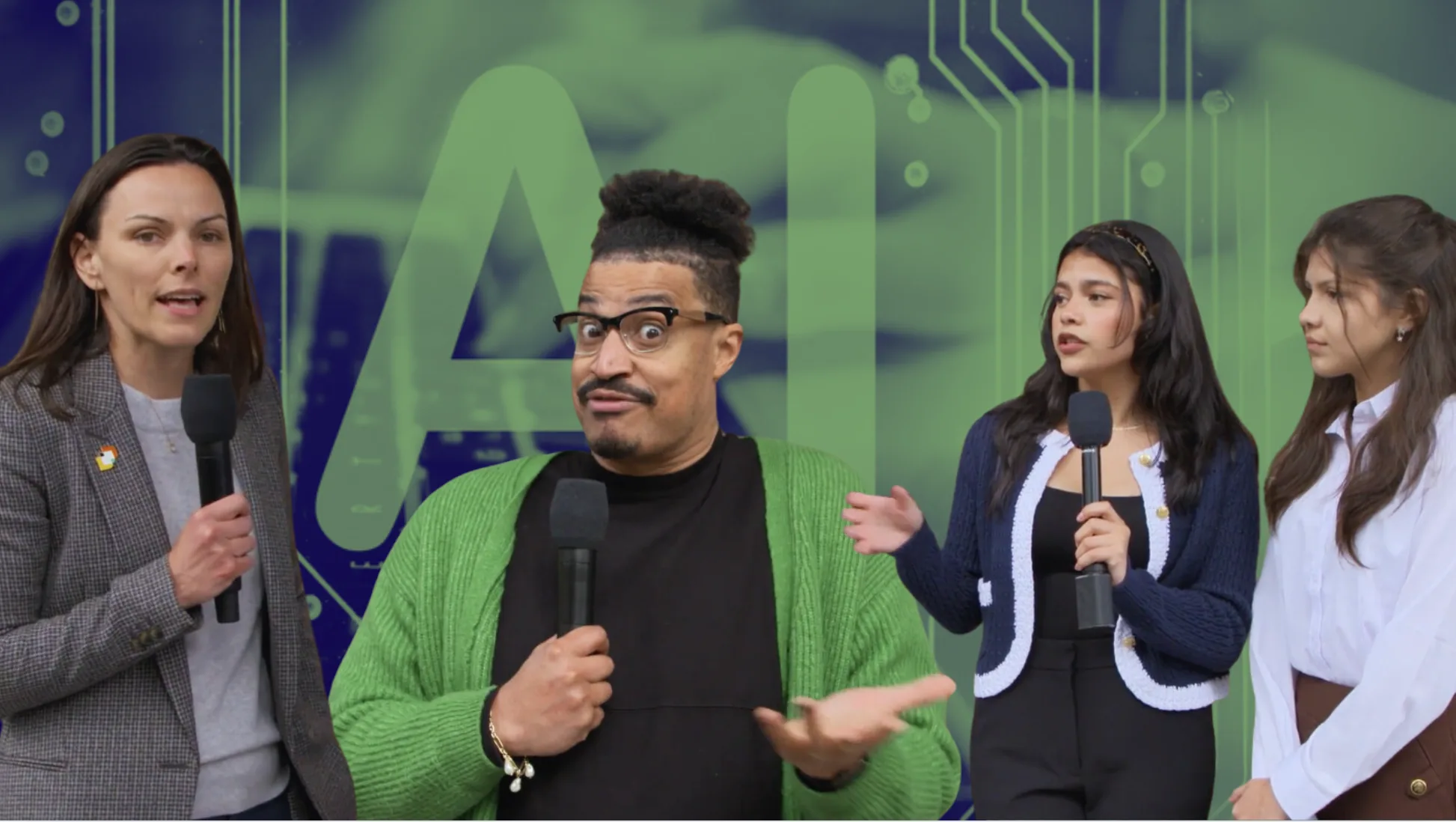
Here are what some faculty, executives and students had to say after hearing Altman speak about the future of AI.
Colleen Ammerman, director of the Race, Gender & Equity Initiative at Harvard Business School
I think his points about the possibilities are well-taken, and I share them in the abstract. But I think what we have to be really thoughtful about is situating those ideals and aspirations in the political and ideological and discursive reality we sit in. It's been hard for all people, whether as consumers or citizens, to really influence or shape or regulate the ways that companies are making decisions about technologies that are shaping and impacting our lives. So I think we just need to think about how we can take the kind of abstract exploration about what AI can do for inequality and think about that in the context of the potential obstacles and levers we have to create change on the ground in the real world that we're actually living in.
Jeffrey Bussgang, general partner at Flybridge Capital Partners and a lecturer at Harvard Business School
I really loved his comment about how fast the progress is with these models and how they're just getting so much better and better, and that we as humans have a hard time thinking exponentially. But if you look at the progress between GPT 2, GPT 3 and GPT 4, that has been exponential. So, what will five, six and seven look like?
I'm a techno optimist and obviously he is as well. I thought he was maybe a little too optimistic when he said 99 percentile positive scenarios. Yet I did love this notion that knowledge is composable just like software is composable. It builds upon itself. And we're now entering this notion of a scaffolding of knowledge enhanced and supercharged by AI. And that's naturally going to be incredibly positive for society.
Jen Stave, launch director at Harvard’s Digital Data Design Institute
I was most surprised that OpenAI air is not just focused on continuously increasing the scale of GPT, but instead is focused on creating new paradigms, solving challenges that haven't been solved while everyone else is racing to catch up to where they are. And so, I'm excited to see what that actually means.
At Digital Data Design Institute, we’re seeing across all of our research labs that generative AI is having a tremendous effect in terms of workplace productivity and also this wave of entrepreneurism that we're expecting. Sam mentioned at least three times ‘riding the wave that’s coming.’ We've been seeing this across every single industry that we look at, that there is this burgeoning wave of innovation that's coming using these tools, transforming businesses, but also creating new businesses that simply weren't possible yesterday.
Broderick Turner, co-founder of the Technology, Race, and Prejudice Lab (TRAP) and a fellow at the Institute for Business in Global Society (BiGS) at Harvard Business School
So this idea that there's some magic [that AI can end] poverty or inequality doesn't quite make sense. It costs money to buy the things on OpenAI. ‘Compute’ is not free, as Sam eloquently pointed out. Energy is not free. And so if we're going to charge people money for a system, I just don't understand exactly how that leads to reducing inequality because part of inequality is having less money.
Now this idea about maybe we'll have some trickle down thing where those on high will let the money or the compute or the AI fall down to the people at the bottom, maybe that makes sense. But I don't know. I've been an American for a while and trickle down does not seem to work yet. I think we're still waiting for it to hit. So maybe there's another way that we can go about this.
It sounds like they are currently working on a model that will improve the big deficiencies of [AI] making up stuff and hallucinating. If we get to the point where we do get some artificial intelligence, great. In the meantime, I want to repeat this: do not use [AI] for legal advice or medical advice. That is a horrible idea. Also, students, don't use it to write your papers. That's how we learn to think for ourselves, by doing the work ourselves.
Katia Walsh, chief digital officer at Harvard Business School and former artificial intelligence officer at Levi Strauss & Company and Vodafone Group
What I was not surprised about, but heartened to hear, was that Sam considers access to ‘compute’ to be a fundamental human right. That was great to hear. The second thing that was equally heartening, though not surprising, was his instant, no-hesitation response to the question, human or machine: human. And then the third one was really his conviction that we are only at the very beginning of surfing the AI wave and serving society even more.
It's so exciting to be living in this time and to be working in this time. As the first chief data and AI officer of Vodafone Group back in 2015 and then the first chief strategy and AI officer at Levi-Strauss and Company in 2019, I feel so vindicated now that the whole world is finally recognizing what this can do for society and certainly in business.
I have absolutely not just seen it, but hopefully contributed to using AI to enhance customer experience, to improve operational efficiencies, and to also recognize and discover and implement new ways of doing business and new models that were not possible before because the technology was not there. And in education, what a great place to be—Harvard Business School, helping educate leaders who make a difference in the world at exponential speed, scale and scope through generative AI.
Kim, a sophomore at Chelsea High School
[Altman] was talking a lot about how his research and AI should help the poor and people who don't have access to healthcare or medical advice. I think that might be really helpful.
Cesia, a sophomore at Chelsea High School
I think [Altman] has a bit too much trust in AI. He wants it to take over a bunch of things that I feel like it isn’t ready for. Like legal matters … you should not let AI take care of that.