BiGS Actionable Intelligence:
ROSSLYN, Va. – Electrification is the path to a lower-carbon future — and that’s great news for Southwire Co., according to the company’s chief sustainability officer.
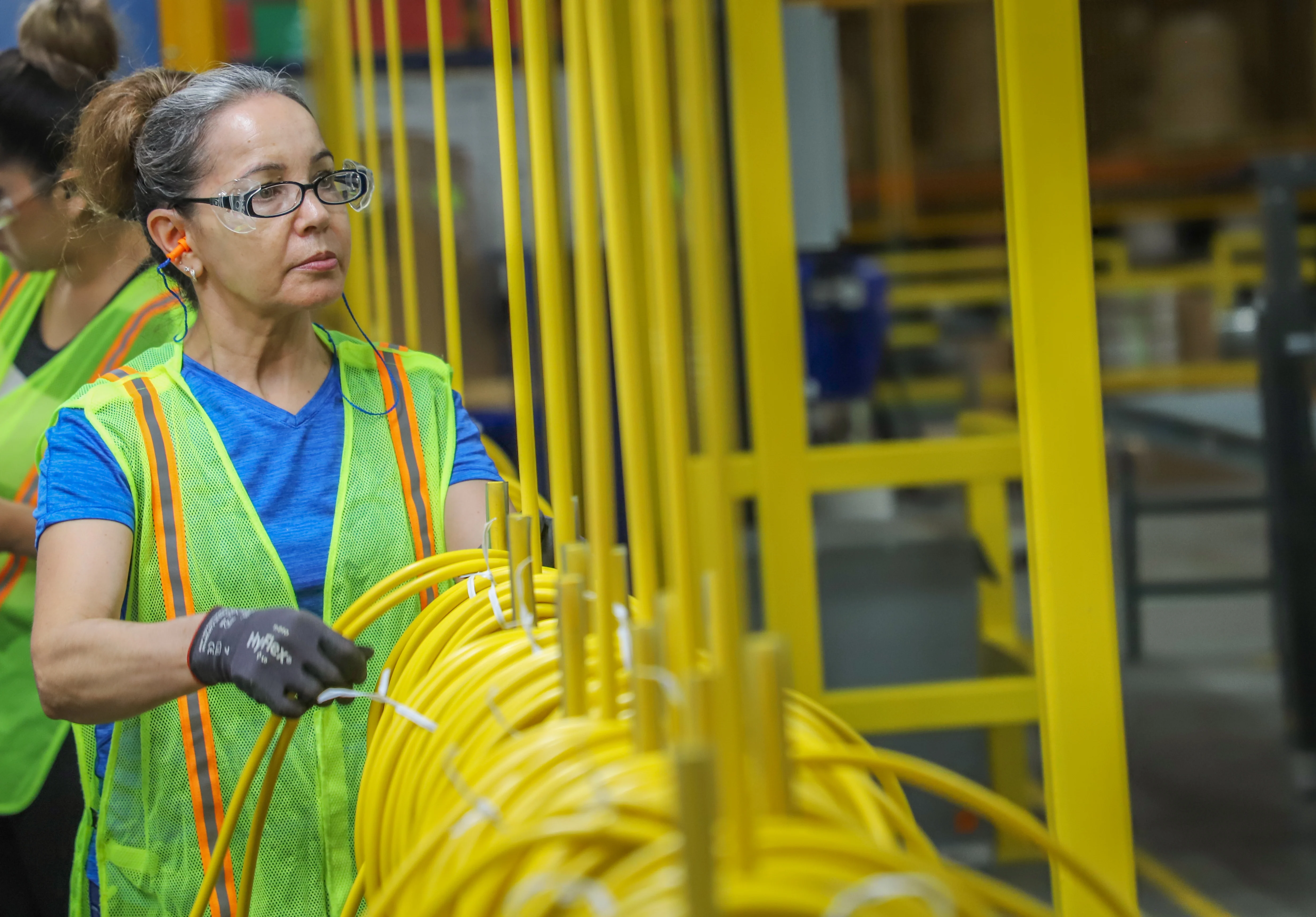
“Decarbonization is a huge opportunity for Southwire,” Southwire’s Burt Fealing recently told The BiGS Fix. Fealing serves as both chief sustainability officer and general counsel of the 75-year-old, family owned company, which is one of the world’s largest developers, manufacturers, and suppliers of building wire and utility cable.
“We are trying to push what we can do to help reduce carbon along the entire supply chain,” said Fealing, who spoke with Harvard Business School’s BiGS on the sidelines of a recent roundtable convened to discuss the new era of industrial policy in the United States.
Southwire is simultaneously working to eliminate its own carbon emissions, also known as Scope 1 and Scope 2 emissions, by 2025 – and the emissions of its customers, also known as Scope 3 emissions, by making its wire products more efficient at transmitting electricity. With more efficient transmission, its biggest customers – such as electric utilities, electric vehicle (EV) manufacturers, and data center operators – can more effectively reduce their own carbon emissions, he says. The company is already collaborating with like-minded partners to reduce upstream and downstream emissions, from the massive trucks that transport ore at copper mines, to the wires installed in residential homes or electric vehicles.
Electrification and Industrial Policy: A Billion-Dollar Opportunity
Since 2021, the U.S. has passed a series of monumental bills – including The Inflation Reduction Act (IRA) – that suggest the country is embarking upon a new era of industrial policy that prioritizes economic and security goals in new ways and relies on an innovative—and largely untested—menu of distinct and focused commercial incentives.
The Biden Administration has emphasized that electrifying homes, businesses, and transportation will help the United States combat climate change and achieve net-zero emissions by 2050. Specifically, incentives in the 2022 Inflation Reduction Act and the 2021 Infrastructure Investment and Jobs Act are designed to accelerate electrification — which means the country eventually will need a lot more wires and cables.
“There’s roughly, from our perspective, $4 billion that's going to go into electric infrastructure,” Fealing said. “And based on Southwire’s market size, we think … we can have a very strong position in that."
Furthermore, that kind of investment can spur innovation, Fealing said. It allows Southwire, for example, to think about how and where it can play the most effective role and ask itself, "What can we do to help the grid?”
Of course, the greener the electric grid — the more electricity is generated from renewable energy sources — the greater the benefits of electrification. But electricity is so much more efficient than combustion as a source of energy that an electric heat pump will emit far less carbon than a furnace, even if the electricity is generated with coal, according to Kristin Eberhard, senior director of state and local policy at the nonprofit Rewiring America.
“You get a net benefit pretty much anywhere in the country right now, even the places that are still very fossil fuel-dependent for their electricity grid,” Eberhard told The BiGS Fix in an interview.
Research has consistently shown that “electrification is one of those key pillars of economy-wide decarbonization,” said John Bistline, program manager of the Energy Systems and Climate Analysis Group at EPRI, an independent, nonprofit energy R&D institute.
Electrification is not the only tool available for reducing emissions, Bistline told The BiGS Fix in an interview.
BiGS learning note:
Bistline points out that there are other ways to reduce emissions. Among them are implementing energy efficiency measures, carbon removal technology, and the deployment of low-carbon energy carriers such as hydrogen including hydrogen produced from electricity - an area being researched by BiGS Climate Fellow Gunther Glenk.
In addition to electrification’s potential to reduce greenhouse gas emissions, it can lower indoor pollutants, with benefits for human health, as well as cut costs and improve safety, Bistline said.
Southwire’s Fealing put it this way: “In terms of carbon that’s being emitted, going to an electric platform is much better for the environment. And we as a manufacturing company are right in the midst of the sweet spot for that.”
In its own operations, meanwhile, Southwire has set ambitious goals for reducing its emissions — while holding itself accountable for meeting them. The company, for example, entered into a relatively new type of financing arrangement that ties loan interest rates to the company’s performance on emissions reductions. Under the arrangement, Southwire will pay a higher interest rate if it doesn’t hit its targets, he said.
100-year outlook: Southwire’s board takes ‘very long view’
Headquartered in Carrollton, Georgia, and employing about 9,000 people, Southwire is betting its future on playing a key role in addressing complex societal issues such as climate change.
As a privately held company, Southwire can afford to focus not only on short-term actions but also on long-term goals. The company’s small group of shareholders and its board of mostly independent directors are thinking about the next 100 years, Fealing said, which gives them “a very long view on what can be done to reduce carbon, to save the planet, and to be a good corporate citizen.”
Executives at public companies are “always going to do what’s necessary to maximize shareholder value,” Fealing said. He added that part of maximizing value includes attracting and retaining the right talent and appealing to customers who want to do business with good companies.
For an executive or thought leader within an organization, betting on sustainability can come down to legacy, Fealing said. “What’s the mark that you want to make in your tenure at that organization?”
Editor’s note: The BiGS Fix caught up with Fealing in February during the Institute for Business in Global Society’s (BiGS’) CEO roundtable event, the institute’s fourth roundtable, which convened more than 40 leaders from business, government, and nonprofits to discuss how to make climate and industrial policy in the United States successful and to identify the potential long-term implications for the country. In attendance were senior government representatives from the Departments of Treasury, Commerce, Energy and the White House as well as leaders from organizations such as KKR and General Motors. The BiGS editorial team regularly interviews select leaders on the sidelines of meetings.
HOW TO ENGAGE WITH HBS BiGS
More on Climate Change
Actionable insights in your inbox
Get the latest insights from BiGS delivered to your inbox daily