
BiGS Actionable Intelligence:
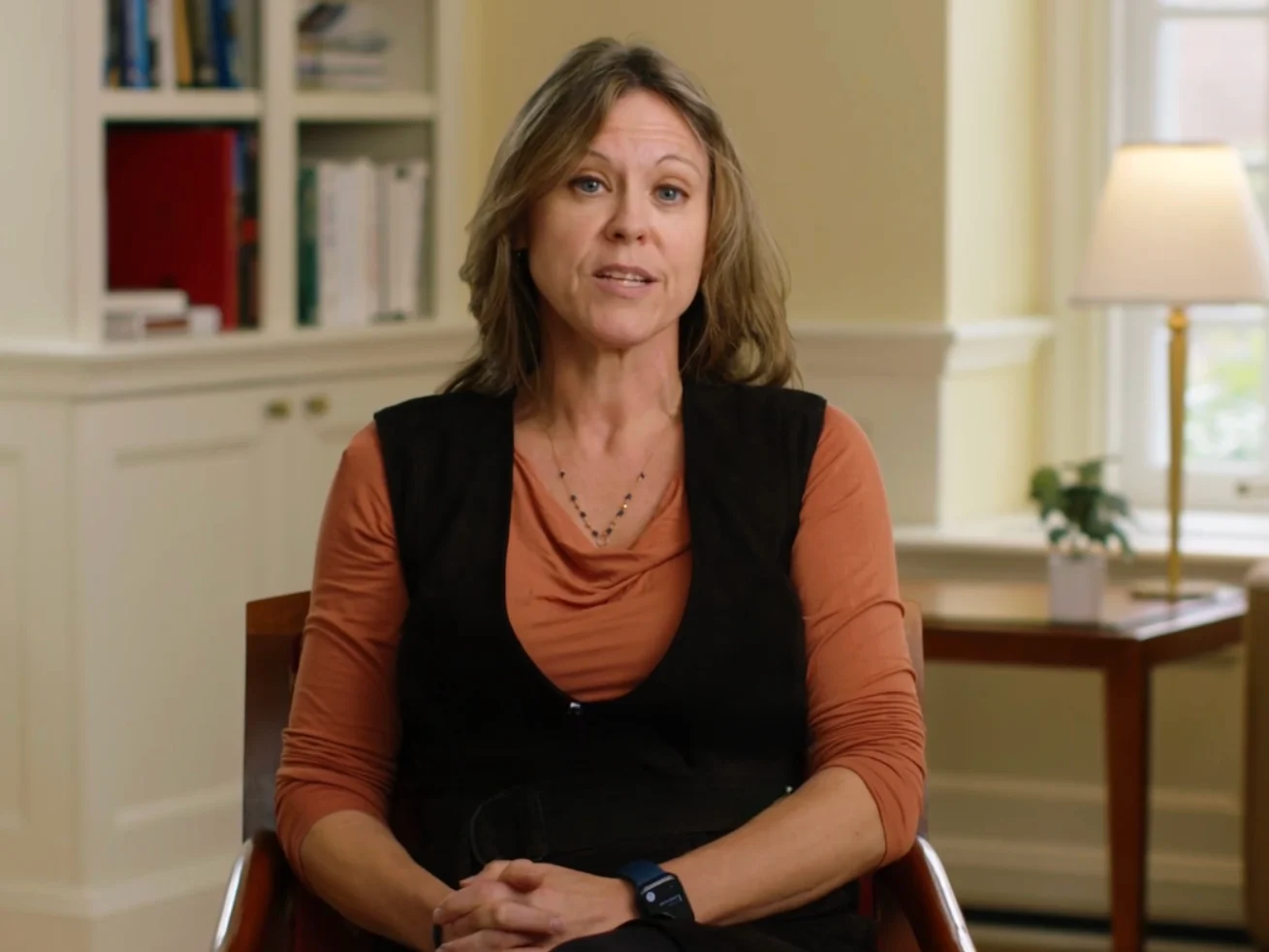
Harvard Business School’s Institute for the Study of Business in Global Society (BiGS) invited Caroline Rees, president and co-founder of Shift, a consulting firm advising businesses, governments, and financial institutions on how to incorporate human rights principles into their work, to speak to faculty on campus. Rees ran negotiations to establish the Special Representative of the United Nations (UN) Secretary General’s mandate on business and human rights. She is also the former director of the Governance and Accountability Program at the Harvard Kennedy School’s Corporate Social Responsibility Initiative.I caught up with her to discuss the challenges corporate leaders face when addressing human rights. The transcript has been edited for length, clarity, and style.
—Barbara DeLollis, BiGS’ head of communications
You played a key role in establishing the mandate for the Special Representative of the UN Secretary General on business and human rights. Can you start by explaining the principles that underlie the mandate?
The principles are essentially a standard of conduct for business when it comes to their effect on people's basic dignity and equality. Up until about 12 years ago, when they were endorsed by the Human Rights Council at the United Nations (UN), it was honestly a radical proposition that corporations had responsibilities when it came to issues of human rights. Today, it is normal to ask what can reasonably be expected of business as they go about their operations, to understand where the greatest risks to people lie and what they need to be doing about them.
These principles are driving a new wave of legislation and standards, especially in the European Union. What are the most important pieces of legislation to emerge, and how wide do you expect their impact to be?
In the European Union, new standards are coming in that ask companies to report on issues that are financially material, environmental, climate related, and social. They will mandate harsher penalties for companies whose practices involve forced labor or child labor. And a corporate sustainability due diligence directive is about to be finalized that will apply to 40,000 or more companies. To adhere to the directive, companies are expected to take actions to understand where there are risks to people's human rights and to address them. Estimates suggest that perhaps as many as 3,000 of those will be U.S. companies with significant operations or presence in the European Union.
The prevailing assumption about business in the United States is that its primary responsibility is to maximize profits for shareholders. How do these principles challenge this assumption?
The guiding principles are based on the idea that business cannot succeed if it is premised on short-term shareholder value that creates costs and risks for the most vulnerable people in our societies. You can outsource your supply chains, you can outsource your labor force, but you cannot outsource your responsibilities for how the people who help you succeed in the world are treated.
The response from many companies is a realization that this is in their own interests, that they don't want to be a corporation that is known to be making profits on the back of misery and poverty and the degradation of the human experience. In respecting human rights, they're also shoring up their own reputations and their own operational and financial success.
How are companies today incorporating, or at least beginning to incorporate, those principles into their operations?
This is very, very far from where we were 30 or 40 years ago when we were talking about corporate social responsibility as some kind of philanthropic endeavor. Companies are coming together in collaborative initiatives with others in their industry, with civil society, and with labor organizations to change their practices, change how decisions get made, and engage with the people that their operations may be affecting.
Whether we're talking about forced labor and child labor or living wages in supply chains, or about the displacement of communities around extractive sites, or the ways in which data gets used and how privacy or well-being might be threatened through IT platforms or social media, the guiding principles have changed assumptions about what companies should be doing.
What can investors do to incorporate respect for the principles into their decision-making?
They can educate themselves, talking with industries to understand more about how human rights risks arise and what best practices can make for a smarter set of exchanges. Engagement with companies is critical. What questions are they asking of companies they invest in on quarterly earnings calls about what those companies are doing to address risks to people's basic dignity? How are they coming together to use collective leverage on industries? What due diligence are they doing on their portfolios to understand where the risks to human rights are and to use their voice, as well as their investment decisions, to reduce them? The ripple effects that questions from investors can have on a company are enormous.
What role can scholarly research play in informing and shaping efforts to convince more companies to think about human rights?
Academia can help us build out the case and can help bring the evidence to show the correlations that bring more leaders into the conversation. We also need academia to be part of the conversation about why these matter for the world we want to live in, to show the true lines between what business does out there in the world and inequality.
The implementation of these ideas is challenging. How do you see companies beginning to rise to those challenges?
One of the things I love seeing again and again in the work that we do with businesses is when people within the organization connect the head and the heart. Yes, they work day to day with the spreadsheets and the data points and everything else that drives decision making within the business. But they connect that up with their own humanity, the sense of who they are in the world.
We see it in the corporate leader of a mining company who is out there at the mining site talking to the Indigenous leader and understanding at a visceral level what this means for communities anchored for thousands of years in the protection of our planet. We see it when the corporate leader is talking to the woman out picking strawberries in the field and realizing what her day-to-day life is and the difference it makes as to whether she can put food on the table for her child. We see it when the corporate leader sees pictures in the newspaper of the men in the plant in India forging iron to make part of the products that go into his business's success and they are walking around barefoot and in loincloths, carrying molten metal and in danger of harm at any moment to their life and limb.
Those are the light bulb moments when the empathic nature of the leader meets the data-driven decision-making aspects of leadership, and he or she brings the two together in the decisions they make going forward.