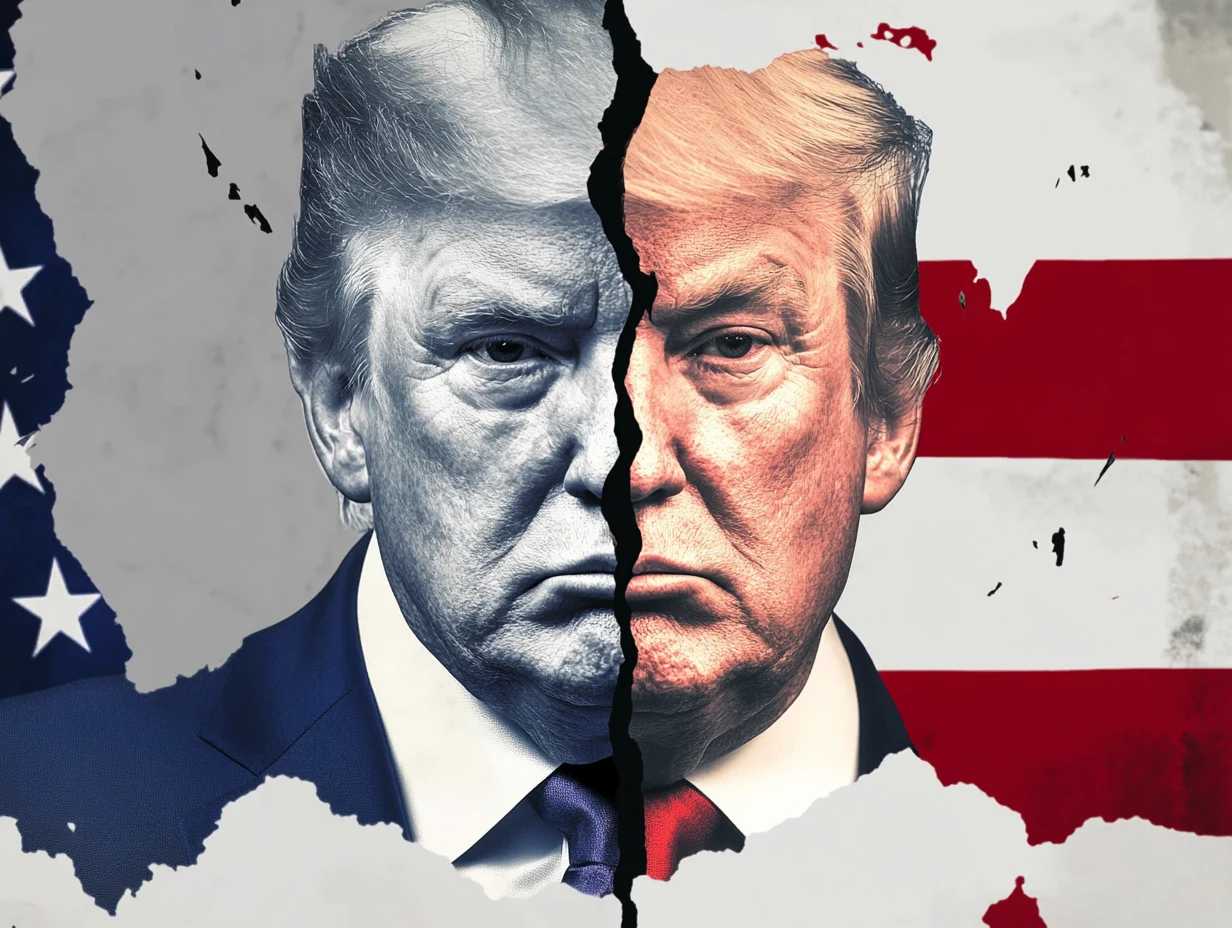
It’s a well-known axiom in American business that companies value stability. Economic uncertainty, unsteady regulation, polarization, and large government shifts can keep executives up at night — and the outcome of this year’s election is unlikely to provide a cure.
The advent of a second Trump administration, fueled by a broad electoral mandate, Republican control of Congress, and a conservative majority in the U.S. Supreme Court will recast the business landscape in America. While some companies will welcome the change and some will not, Trump’s policies will undeniably directly impact trade, energy, climate solutions, healthcare, immigration, diplomacy, labor relations — even race and gender equality.
That means almost every company in America is about to experience large-scale change. Whether grappling with affirmative action and reproductive rights or managing the complexities of a more polarized workforce, companies will have to adjust to the new administration’s policies. But they don’t have to navigate blindly.
For weeks, the Institute for Business in Global Society (BiGS) at Harvard Business School has published a comprehensive series of stories on what the business community might expect from Kamala Harris or Donald Trump. Now that Trump is president-elect, we can provide a guide of what to anticipate, culled from months of campaign speeches, press interviews, and social media posts.
The BiGS editorial team also interviewed business leaders, democracy activists, policy experts, and almost a dozen faculty, lecturers and fellows across Harvard to analyze the potential impact of a Trump presidency. This included David Deming, Joseph Fuller, Jim Matheson, Jonas Meckling, Deepa Purushothaman, Willy Shih, Debora Spar, Sandra Sucher, and Gunnar Trumbull.
One thing is certain: Trump’s vision is likely to include a far more muscular and far-reaching role for the federal government than seen in the recent past, something that could also be said if Democrats had won the White House.
“The battle over big government is largely over,” said Debora Spar, professor and senior associate dean at Harvard Business School and leader of the Institute for Business in Global Society. “Any president will use the federal government as a powerful force, with significant implications for business. The Trump administration is likely to envision a robust role for the state.”
Here is an issue-by-issue summary of what to expect:
TRADE
While not a top-tier issue during the campaign, trade affects important sectors like agriculture and energy, and it can have a major impact on the U.S. economy overall. It is also an area where Trump intends to take significant action.
Tariffs on imports
Trump's most dramatic — and most controversial — trade plan is a massive increase in tariffs on foreign goods. Trump, on the campaign trail, discussed a 60% tariff on imports from China and up to 20% on all other imports. Trump says the tariffs will help reduce the U.S. deficit. However, economists widely believe they will damage the economy by raising the price of goods for American consumers and provoking other countries to hike tariffs on U.S. imports. Trump also wants to impose a 100% tariff on countries that do not use the dollar as their reserve currency, but he has provided no details on how the idea would be implemented. Trump does not need congressional approval to impose tariffs on imports. He can do so unilaterally. “Pay a lot of attention to tariffs,” said David Deming, professor of political economy at Harvard Kennedy School. “Those have a lot higher chance of happening than almost anything else that either candidate proposes, because they’re directly under the president’s control.”
International agreements
Trump is suspicious of trade treaties and working with multilateral international trade organizations. As a self-described dealmaker, Trump has said he can craft better agreements for the United States. In his first term, Trump signed the U.S.-Mexico-Canada Agreement, which replaced the North American Free Trade Agreement (NAFTA). Trump now says he wants to negotiate his own trade agreement with America’s neighbors.
China trade relations
The Republican Platform, which was approved by Trump, calls for significant new restrictions on China, including revoking its most favored nation status, which confers trade benefits, and restricting China’s ability to buy U.S. companies and real estate. The platform also seeks to phase out the importation of essential goods and calls for banning companies that outsource jobs from doing business with the federal government.
The dollar
Trump wants to devalue the dollar, which he says will make American goods cheaper and encourage foreign consumers to buy them. Harvard Business School Professor Willy Shih says the plan could come at a heavy cost. “We as a country benefit tremendously from the fact that so much of the global trade is denominated in dollars and there is a demand for dollars in other countries because it finances our deficits,” he said. Experts are skeptical, however, that Trump can devalue the dollar since there is no clear path for a president to do so.
ENERGY AND CLIMATE
Energy and climate policy is expected to take a dramatic turn under the Trump administration, with a greater focus on oil and gas drilling and a move away from environmental regulation. This is one area where Trump’s policies are likely to divert severely from those of the Biden administration, which focused on investment in renewable energy and climate solutions.
As Harvard Business School professor Gunnar Trumbull, author of the forthcoming book A Concise Business Guide to Climate Change, told The BiGS Fix, “This is and will continue to be the most consequential election for the climate transition.”
Fossil fuels
Trump has declared climate change a “hoax,” and wants more drilling for fossil fuels. He is expected to go all-in to boost the industry, making it easier for older technologies to rapidly expand and quickly drive down energy costs as a means of increasing economic production and living standards.
Clean energy initiatives
The Biden administration ushered in a new era of clean-energy policy, including generous subsidies to encourage electric vehicles, battery, and wind and solar technologies to move the United States away from a reliance on fossil fuels. Trump, who has called the law creating those incentives the “Green New Scam,” has threatened to eliminate it. That is unlikely to succeed because red states have benefited from the plan. But the incoming Trump administration may well be able to limit the scope and size of the incentives. For example, his administration could go after electric vehicles and clean charging tax credits. Trump’s “drill, baby, drill” mantra will mean easier and faster permitting for oil and gas drilling on federal lands.
Environmental regulation
During his first term, Trump rolled back more than 100 environmental regulations, and he is expected to continue on that path in his second term. With artificial intelligence putting heavier energy demands on the country, Trump is expected to make it easier and less expensive to drill and go lighter on greenhouse gas emission regulation. At campaign rallies, Trump pledged to reverse Environmental Protection Agency regulations adopted in 2023 to cut polluting emissions at power plants. Those affect existing coal and new gas plants with greenhouse gas emissions, requiring technology that prevents 90% of carbon emissions. Trump has also said he would ban environmental, social, and governance (ESG) investments. One target may be a 2023 Department of Labor rule allowing fund managers to take ESG factors into account when making investment decisions.
The Paris Agreement
The first Trump administration withdrew from the Paris Agreement, a 195-nation pact that set voluntary emissions targets to limit global temperature rise and achieve net-zero emissions. The administration said the accord favored U.S. economic competitors. Trump has pledged to withdraw from the agreement again.
The Inflation Reduction Act (IRA)
Trump has been highly critical of this 2022 law, regarded as a sea-change in climate and energy policy because it provides tax incentives and billions in funding for clean energy and decarbonization initiatives. The president-elect has discussed reducing IRA spending, but he may get pushback from Congress because both Republican and Democratic congressional districts are benefiting from the funding. “The Biden administration developed the IRA as both a climate policy and a political strategy to make it more durable,” said BiGS Climate Fellow Jonas Meckling.
Electric vehicles
Trump has been critical of tax incentives to encourage the purchase of electric vehicles. He could instruct the Treasury Department to change or rescind regulations that made it easier for manufacturers to take advantage of the existing $7,500 tax credit. Similarly, he has criticized rules that push manufacturers to make more hybrid or fully electric vehicles. A new Trump administration would have the power to roll those back. However, Trump has also formed a close alliance with Elon Musk, the billionaire chief executive of Tesla. Musk campaigned heavily for Trump during the election and could play a role in the new administration. Trump this summer said he is not “against” electric vehicles, but “they’re not for everybody.” It is unclear what influence Musk might have on the EV subsidies policy.
Corporate disclosure
The Securities and Exchange Commission (SEC) issued regulations in 2024 requiring companies to disclose climate-related risks to their business strategy or finances. A Trump-appointed SEC might change these requirements. Eliminating them would mean businesses would no longer have to provide details on climate-related effects on strategy, business models, and outlook; board and management oversight of climate-related issues; processes for identifying, assessing, and managing climate risks; transition plans; financial statement metrics related to climate; greenhouse gas emissions; and climate targets and goals.
LABOR AND WORKFORCE
Trump has offered some nods to organized labor, going so far as to feature Teamsters Union President Sean O'Brien at the Republican National Convention. While most major unions endorsed his opponent, the Trump campaign courted rank-and-file union members with some success. However, Trump has also indicated he would favor business when it comes to union matters. He has also proposed several policies that could directly impact the U.S. workforce.
On labor policy, Trump has laid out a basket of ideas. But Joseph Fuller, a professor of management practice at Harvard Business School, called it “a grab bag of tactical and politically expedient proposals.” Fuller said that, during the election, neither Trump nor his opponent outlined a systematic approach to addressing America’s most pressing problems, which he described as “how to ensure our education and training systems can equip workers with the skills they’ll need in the future.”
Taxes on tips and overtime
Trump has discussed ending taxation on tips and overtime pay but has not specified whether he would eliminate both income and payroll taxes on tips or impose any income limits. The idea faces an uncertain fate in Congress because of the impact on federal tax receipts. Trump’s plan, assuming it would eliminate both income and payroll taxes on tips, would cost between $150 billion and $250 billion over 10 years, according to the Committee for a Responsible Federal Budget. Trump also has proposed eliminating taxes on overtime pay, which the committee estimates would reduce federal revenues by about $1.7 trillion over 10 years.
The federal minimum wage
Trump has not called for an increase in the federal minimum wage but has said he would be open to the idea. Currently, the national minimum wage is $7.25 an hour, though 34 states have minimum wages considerably higher. The federal “subminimum wage,” which employers pay to tipped workers, is $2.13 an hour. Twenty-eight states have higher subminimum wages and seven do not allow a subminimum wage for tipped workers, requiring them to be paid the normal minimum wage, according to the U.S. Department of Labor. An increase in the federal minimum wage would require legislation, which could be unpopular in a Republican-controlled Congress.
Federal civil service
Trump wants to have more control over the federal civil service, which employs two million civilian workers. In his first administration, Trump signed an order creating a new civil service classification, Schedule F, that would take away many civil service protections for federal workers in policy-making roles. Biden rescinded the order, but Trump may reinstate it. Trump has also pledged to sign an executive order allowing the president to fire federal employees.
National Labor Relations Board (NLRB)
As he did in his first term, Trump is expected to appoint business-oriented members to the NLRB, allowing the board to reverse Biden-era rules that made it easier to speed up labor union elections. As an independent agency, the NLRB oversees all union elections. A more pro-business board might weaken protections for labor or enforce rules less aggressively. The president has the authority to fire the NLRB general counsel and to appoint new members of the board when current members' terms expire. Trump has long backed “right to work” laws allowing workers to opt out of paying union dues.
Worker strikes
Trump said during the campaign that striking workers should be fired, although he did not lay out how he would make that legal. Under current federal law, employers cannot fire workers who strike or picket their employers.
Degree requirements
Trump signed an executive order in his first term removing the college degree requirement for some federal jobs. The 2024 Republican platform calls for “drastically more affordable alternatives” to a four-year degree but does not specify what those will be.
GENDER AND FAMILY
Gender and family issues, especially reproductive rights, were prominent in the 2024 election and not just in the presidential race. The Supreme Court's decision to strike down Roe v. Wade has made abortion a state issue. Abortion rights referenda were approved in seven states (Maryland, Missouri, Colorado, Arizona, New York, Montana, and Nevada) and failed in three states (Florida, Nebraska, and South Dakota) in this year’s election. In one state, Nebraska, voters approved a referendum prohibiting abortion after the first trimester. Several policy positions could impact women and family issues in the new Trump administration.
Harvard Business School Professor Sandra Sucher, author of The Power of Trust: How Companies Build It, Lose It, Regain It, said family issues will almost certainly impact companies and their employees. “Research has consistently shown that trust in employers far exceeds trust in business in general, or in the government, media, and nongovernmental organizations,” she said. “Employees expect their companies to protect their employees, regardless of election outcomes. The issues being debated are fundamental to employees' well-being, meaning CEOs can't sit on the sidelines … the proposed policies directly affect their workforce.”
Abortion rights
Trump, whose Supreme Court nominees gave the court a conservative majority in his first term, the court’s decision to strike down Roe v. Wade. He has repeatedly said that abortion rights should be a state issue. At the same time, he has given varying answers to whether abortion should be prohibited across the country. Most recently, he said he would veto a national abortion ban. Project 2025, a blueprint by the conservative Heritage Foundation led by former Trump administration officials, calls for the enforcement of the 1873 Comstock Act, which could lead to a ban on mailing abortion-related medications such as mifepristone.
Reproductive technologies
Trump has stated that in-vitro fertilization (IVF), an expensive procedure that can help women conceive, should be free, and paid for by insurance or the federal government. While some businesses want to offer coverage for reproductive technology such as IVF as part of their employee health plans, a mandate to cover IVF (with an average cost of almost $24,000 for a single cycle) could mean extra expenses for companies if insurers pass along the costs. Trump has not spelled out details of how his proposal would be financed.
Child tax credits
Trump has proposed expanding The Child Tax Credit, which provides a federal credit of up to $2,000 a year per minor child for qualifying taxpayers. Trump has not released specifics, but Vice President-elect J.D. Vance this summer discussed raising the credit to $5,000 per child. Congress failed to extend a Biden administration temporary increase in the Child Tax Credit to $3,600 per child per year, so it’s unclear how willing the incoming, GOP-run Congress will be to hike it again. Trump has not laid out a comprehensive childcare plan but suggested in a speech at the New York Economic Club that his plan to impose tariffs on foreign imports would bring in enough dollars to support childcare programs. The issue is crucial for businesses because childcare expenses impact employees.
Paid family leave
Trump supported the idea of paid family leave during his first term and succeeded in winning pandemic-era paid leave and paid benefits for federal employees who were new parents. He has not offered details of what, if any, paid family leave plan he would promote as president. The nonpartisan Congressional Budget Office, in a 2021 report, calculated that government-paid family leave would cost $200 billion from 2022 to 2031. Employees would likely take more family leave if paid leave were offered, and companies would provide fewer weeks of leave — and less pay during leave — if a federal program was created, the CBO projected.
WORKPLACE DIVERSITY
Trump's plans for the workforce — from his pledge to deport millions of immigrants to discouraging DEI programs — are expected to have big impacts on diversity and the labor force. Some of these impacts will be direct while others will be indirect, as companies prepare for and react to the changes ahead in the new administration.
Deepa Purushothaman, an executive fellow at Harvard Business School, said that mentorship, sponsorship, leadership, and even internship programs aimed at professionals of color and women are ”muzzled right now.” As she put it, “Some of them are on pause.”
Immigration
Trump has pledged to deport millions of immigrants and hire 10,000 new border patrol agents to keep migrants from entering the country. If he follows through, the impact will ripple through workplaces where employees have family members, friends, or neighbors affected. In addition, deporting undocumented workers would have a detrimental effect on business and the economy, according to research by scholars at the Peterson Institute for International Economics. The institute found that mass deportations would lower U.S. GDP and reduce employment through 2040, compared to what would happen if the policy were not implemented. Employers would likely not be able to replace undocumented workers with legal ones for certain jobs, the study found. Expelling those workers would also take consumers out of the economy.
Diversity, equity, and inclusion (DEI)
Trump and his allies have made DEI a stigma in many circles, casting the idea as one that weakens the workforce by forcing employers to hire unqualified workers under the guise of diversity. In his first term, Trump prohibited DEI training programs for some federal workers.
Government leadership changes
A Trump administration would mean new heads at the Department of Justice and its civil rights division, as well as the Equal Employment Opportunity Commission (EEOC) and National Labor Relations Board (NLRB). The new leaders are expected to implement policies consistent with Trump's anti-DEI stance. Changes at Justice may include attacking corporate diversity programs or making it harder for employers to crack down on harassment and discrimination.
Diversity in federal contracting
The first Trump administration imposed a September 2020 executive order banning diversity and bias training in the federal government, including contractors and grantees. Biden reversed that order on his first day in office, and it is anticipated Trump would flip the policy yet again. A Trump administration could also eliminate set-asides for minority and women-owned businesses seeking federal government contracts.
THE U.S.-CHINA RELATIONSHIP
The U.S.-China relationship, as it unfolds in coming years, will shape not only the two nations but also the entire global landscape. The incoming administration will determine the future trajectory of U.S.-China relations, with major implications for geopolitical and military engagement, national industrial policy and competitiveness, and climate change collaboration.
“The relationship between the United States and China is arguably the single most critical factor in shaping the global dynamic over the coming decade or more,” wrote Jim Matheson, a veteran executive, investor and entrepreneur who serves as a senior lecturer at Harvard Business School.
Industrial policy and competitiveness
A second Trump administration will likely double down on “America first” policies that include tariffs, decoupling, and protectionism. This could accelerate the shift toward a more fragmented global economy where the U.S. and China create parallel technology ecosystems, intensifying the rivalry.
Climate collaboration and competition
A second Trump administration may once again extricate itself from the UN Climate Conference of the Parties (COP). A more adversarial stance from the Trump administration could lead to a breakdown in cooperation, with both the U.S. and China focusing solely on their own competitive advantages in green technologies and competing to provide these to the global market.
Military conflict
Tensions in the South China Sea, the status of Taiwan, and increasing military buildup in the Indo-Pacific have brought the U.S. and China to the brink of conflict on multiple occasions. How U.S. policy evolves in response to these tensions will be critical to maintaining regional stability and avoiding military confrontation. The policy set by the next administration will have profound implications for the balance of power in the Indo-Pacific, in part because the administration will be governing during the “Davidson Window,” which postulates that 2027 is a high-probability timeframe for China to take action against Taiwan. Trump’s approach during his first term included a strong, almost antagonistic emphasis on military presence in the Pacific, yet his stance on Taiwan was highly circumspect, even when compared with the long-held U.S. posture of “strategic ambiguity” about Taiwan.
PRESIDENTIAL TRANSITION
The presidential transition is more than selecting and vetting cabinet members and securing Senate confirmation. It means hiring thousands of staffers, getting ready to take operational control of agencies and departments, prioritizing policy changes for the first 100 days, drafting executive orders, and many other tasks. And it has to be done fast, because the countdown has already started.
The Trump administration has to be ready to take control of the federal government when he is inaugurated on Jan. 20. That’s just weeks away. Of course, preparation for Trump’s transition began weeks ago and he has already started announcing key decisions. For example, he named Susie Wiles, who led his successful campaign, as White House chief of staff. She is the first woman ever to hold that position.
Trump was expected to name loyalists to key positions, and he has thus far done exactly that. While he may have an easier time with confirmations now that Republicans control the Senate, several of his proposed cabinet members are expected to face major questions on Capitol Hill. Some examples include Robert F. Kennedy Jr., who has been criticized for his statements on vaccinations, as health and human services secretary, and Dr. Mehmet Oz, a TV personality who has been questioned by Congress about his endorsements, to run the Centers for Medicare and Medicaid Services. Others, such as Florida Senator Marco Rubio, Trump’s nominee for secretary of state, are expected to be less controversial.
Barbara DeLollis, head of communications at BiGS; Jim Matheson, senior lecturer at Harvard Business School; Katherine Hut Scott, managing editor at BiGS; and writers Bill Ainsworth, Desmond Dodd, Katherine Reynolds Lewis, Thomas Lee, Tamara Lytle, and Esther Schrader contributed to this guide.
WANT TO READ MORE?
Explore the BiGS series leading up to the election:
BiGS Inaugural Election Series: Helping executives navigate a turbulent election
Has the ‘battle over big government’ era ended?
How the 2024 election will shape the U.S.-China relationship
How the 2024 elections will shape the future of America’s green economy
Harris and Trump: Diverging views on labor policies — with a few surprising agreements
Women’s and family issues grab the election spotlight — with major implications for business
It's not a top issue, but voters do care about trade
Trump, and Harris present opposite paths for workplace diversity