
BiGS Actionable Intelligence:
LAKE ANNA, Virginia — Weekenders and residents around this 17-mile, man-made lake have returned to the outdoors after a long and cold winter. But as summer progresses, the community increasingly finds itself in hot water.
The 1970s reservoir, built to cool one of the nation’s largest nuclear plants on its north end while creating a vast recreational area to the south, has become an example of the tension taking place nationwide as America considers additional nuclear power.
Surging energy demand, driven by AI data centers, has the White House and many state leaders pushing for more nuclear power with fewer constraints. Yet critics say these projects put increasing pressure on natural resources, including bodies of water that are needed to cool nuclear plants. The concerns at Lake Anna provide a preview of the pressures facing water‑cooled nuclear facilities worldwide.
In the community around the lake, well‑organized activists, adept at social media and grass roots campaigning, have loudly complained about a “digital invasion,” arguing that a massive build‑out of data centers and rising power demand are rewriting the original bargain that created the lake as a public playground. Instead, they say, it is being turned into an “industrial cooling pond” for data‑center giants. In their most dire forecasts, that shift brings stressed or dying fish, altered habitats and recurring algal blooms that make swimming uncomfortable or unsafe.
“It makes me wonder whether this is still a place where my kids can swim and we can relax,” said one part‑time resident who asked not to be named.
In a statement provided for this article, Dominion Energy, the utility that owns and operates North Anna, counters that legally mandated safeguards are sufficient to prevent harmful thermal impacts and to protect both recreation and aquatic life. Dominion also says no data centers are currently allowed to withdraw cooling water from Lake Anna, and that it has no plans to permit such withdrawals in the future. Meanwhile, Amazon Web Services does have a state permit pending to discharge treated cooling water into a nearby creek, which ultimately feeds the lake.
John Macomber, a senior lecturer at Harvard Business School who studies climate‑resilient infrastructure, says he recognizes the pattern. In many places, resources are stretched and solutions can run ahead of consensus.
“A lot of this has to do with what the community is trying to prioritize and who makes that decision,” he said. “Very few communities can agree on the single thing they are trying to solve for. They are trying to do everything for everybody, and then they kind of wind up going sideways.”
Macomber views such conflicts as new manifestation of an age-old challenge, where the competition for resources among stakeholders is not a side issue but a core financial question.
“For projects with 40‑ or 60‑year lives, maintaining that social license is as much an engineering constraint as putting up concrete or steel,” he said.
Growing interest in nuclear power
The United States is the world’s largest producer of nuclear electricity, with 94 reactors generating about 816 terawatt‑hours in 2024, according to the International Atomic Energy Agency and Energy Information Administration. That is nearly 19% of U.S. power and close to 30% of global nuclear generation.
Worldwide, nuclear power remains a significant but limited slice of the electricity mix. In 2024, about 440 reactors with roughly 390 gigawatts of capacity supplied about 10% of global electricity.
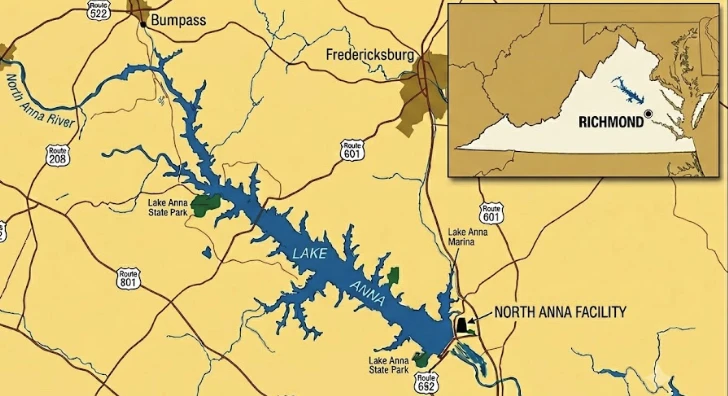
Lake Anna is about 60 miles from Richmond, the capital of Virginia.
While nuclear power is far from dominant, it provides nearly one‑fifth of total U.S. electricity and more than half of the nation’s carbon‑free power, making it especially attractive to data‑center operators looking for steady, low‑emission supply.
In Virginia, nuclear power plays an even larger role. Dominion, the Richmond‑based utility, owns plants at North Anna and Surry, operating four reactors with about 3,650 megawatts of capacity that generate roughly a third of the Commonwealth’s electricity, accounting for more than 95% of its carbon‑free power.
Community debates like the one at Lake Anna are swirling across Virgina and have become urgent in the face of the state’s enormous bet on nurturing AI data centers. The Piedmont Environmental Center says Virginia has the largest concentration of data centers globally, all of which will require huge amounts of energy, land and water to operate, resulting in widespread community impact.
“Data centers amplify the need for power, both to feed the processors and also to cool them,” Macomber said. “It’s the large-scale version of a tel-data closet in your office that generates a lot of heat from the equipment.”
With proximity to the seat of federal government and its own vibrant tech sector, Virginia is far ahead of even leading tech industry states like California and Texas in attracting data centers. Northern Virginia alone has more installed capacity than all U.S. secondary markets combined, with just half a percentage point of vacancy even after adding more than a gigawatt of new supply in 2025.
That scale has translated into big money: a recent report from the Northern Virginia Technology Council estimates that data centers generated nearly $40 billion in economic activity for Virginia in 2025 and supported more than 112,000 jobs, including almost 37,000 jobs constructing data centers. They also delivered more than $1.5 billion in state tax revenue (for scale, Virginia brought in about $31.2 billion in total revenues in FY 2025), plus about $1.3 billion in local property taxes in Northern Virginia. Those revenue figures, combined with an aging rural population, help explain why supervisors in counties like Louisa, home to Lake Anna, are eager to lure data centers away from more suburban counties to the north.
Virginia’s buildout is also far from over. The American Edge Project found that Virginia has about 663 operating data centers and another 595 either under construction or on the drawing board as of 2025. Meanwhile, global real estate services and investment firm CBRE says demand is still outstripping “powered and entitled” land, keeping a long queue of approved but not‑yet‑built projects in the pipeline.
That concentration of digital infrastructure has made Virginia the “data‑center capital of the world” and has positioned Lake Anna on a fault line between big‑tech growth and the limits of the grid and the natural resources that support it.
A shift in U.S. policy
The spotlight on Lake Anna comes at a time when there is a broader shift in policy around nuclear power. Long politically fraught, nuclear is regaining attention in U.S. energy policy as demand rises from AI data centers and other always‑on digital services.
Joe Lassiter, a retired professor at Harvard Business School, argues that nuclear energy is well suited to the moment, with potential broad appeal. Should policymakers place a high value on carbon reduction, energy security or technological leadership, nuclear stands out as one of the few non-fossil technologies capable of running continuously, independent of short-term weather changes or longer-term regional climate change patterns.
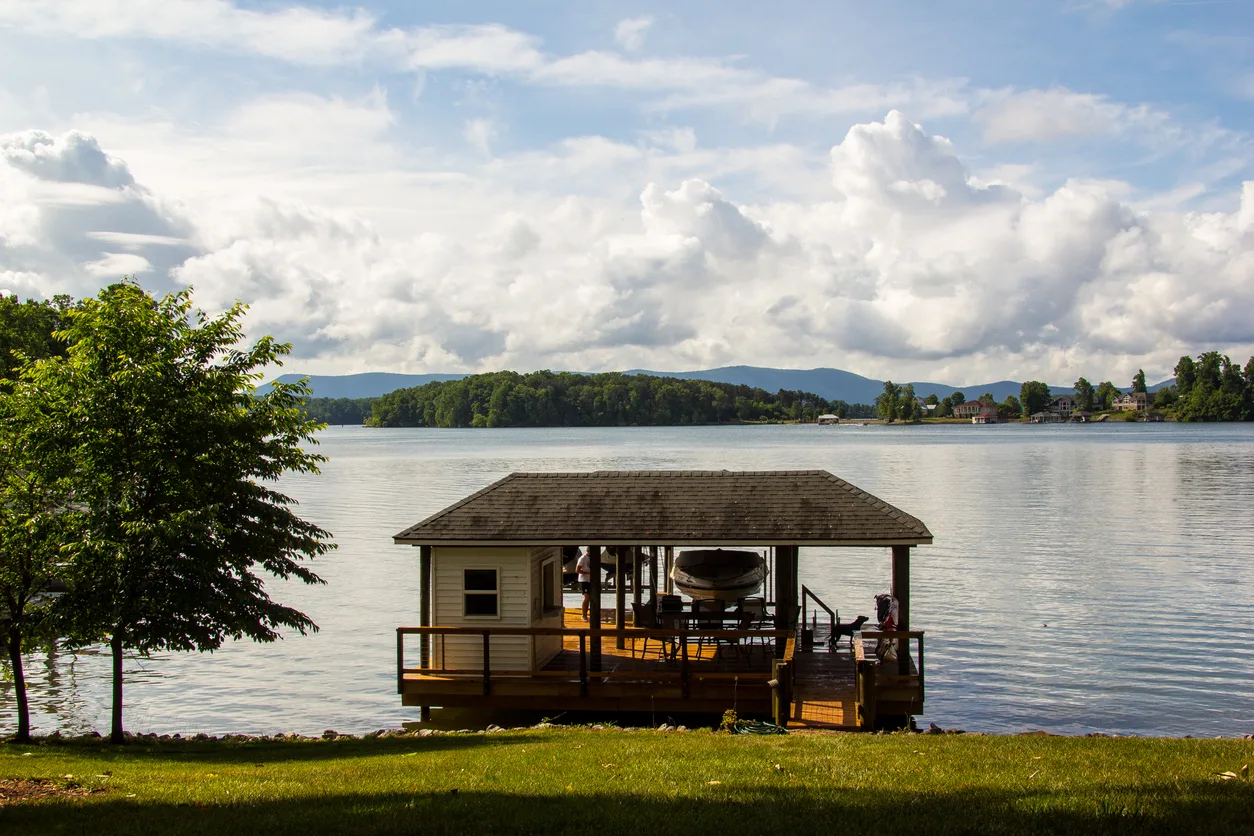
Lake Anna is beautiful, but the concerns there provide a preview of the pressures facing water‑cooled nuclear facilities worldwide.
In theory, Lassiter says, “you can meet that demand with nuclear or geothermal instead of relying solely on wind or solar plus batteries,” which still struggle to provide the steady output large data centers require.
Lassiter contributed to a landmark 2019 study at MIT called The Future of Nuclear Energy in a Carbon‑Constrained World. The study was co-chaired by MIT’s Jacopo Buongiorno and John Parsons, along with Michael Corradini of the University of Wisconsin. It has proved influential in policymaking across administrations. Nuclear advocates of vastly differing stripes have emphasized its findings on generating carbon-free power, technological and geopolitical leadership, and deregulation.
The report concluded that existing nuclear plants provide significant low‑carbon benefits and that keeping them online is one of the most affordable ways to avoid higher power‑sector emissions. Looking ahead, it finds that electricity systems that include nuclear alongside renewables can meet deep decarbonization targets at far lower overall cost than renewable‑only portfolios. The caveat is that nuclear’s high costs need to be reduced through design innovation, new business models, regulatory redesign and policy support.
The administration’s favorite ‘clean’ energy
The Trump administration has made nuclear power a favored “clean” technology while pulling back support for many renewables. Energy Secretary Chris Wright has promoted an “American nuclear renaissance,” describing small modular reactors and other advanced designs as the backbone of a new U.S. nuclear build‑out and promising that this renaissance will power the country’s future energy needs.
A recent wave of executive orders calls for roughly quadrupling U.S. nuclear capacity by mid‑century, streamlining safety rules, and fast‑tracking advanced and small modular reactors for uses ranging from AI data centers to military bases. The Trump administration has meanwhile frozen or scaled back many prior incentives for wind, solar and batteries; moved to stall offshore wind projects; and pressed to reduce tax credits and loan guarantees that were fueling large‑scale renewable build‑outs.
Lassiter says the renewed interest by policymakers in nuclear is strategic on several levels, but stresses that a large-scale increase in capacity is likely to remain elusive in the United States in the short term. “Nuclear costs are high relative to the alternatives unless you put a very high cost on carbon or security,” he says, so without strong carbon pricing or security premiums, new nuclear power plants may lose out to cheaper options.
“Both new regulations and a change in policymaker instructions to regulators are needed if you want to reduce the cost of nuclear power,” Lassiter said, arguing that the United States has approved only one genuinely new reactor type for commercial power generation in roughly half a century, leaving nuclear as an expensive, marginal technology unless both the rules and the policy instructions to regulators are changed.
The hot water problem
There are also environmental concerns. Nuclear plants are dependent on water because, like coal and combined-gas stations, they throw off huge amounts of waste heat that must be removed continuously to keep the reactor and turbines within safe operating limits. Those worries sit on top of long‑standing fears about radiation and catastrophic accidents, reinforced by Chernobyl and Fukushima. Those concerns contributed to Germany shuttering its nuclear fleet entirely.
As to the water issue, the most practical way to move that heat at industrial scale is to dump it into large volumes of water. Rivers, lakes, oceans or cooling towers are relied on to shed heat.
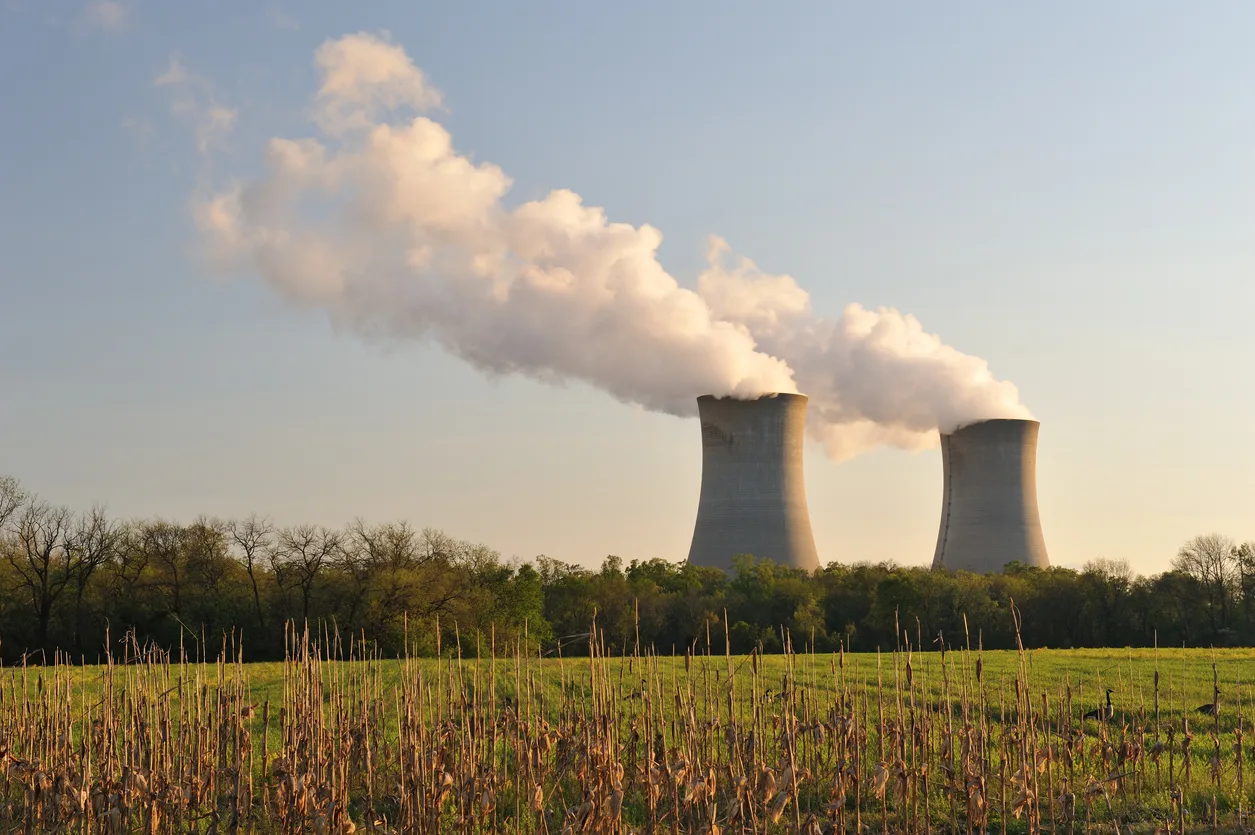
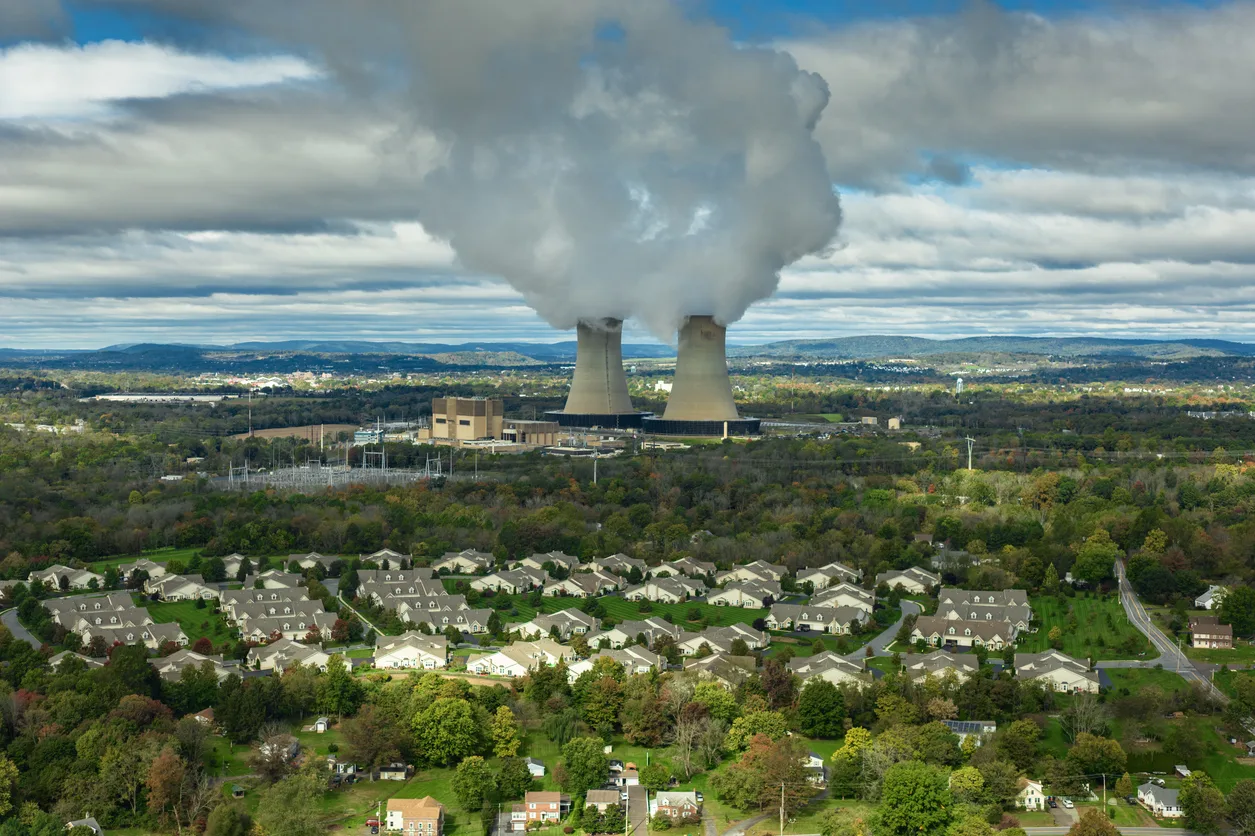
The United States is the world’s largest producer of nuclear electricity, with 94 reactors generating about a fifth of U.S. power. This facility is in Pennsylvania.
Nuclear plants everywhere are bumping up against the same constraint: how much heat nearby rivers and lakes can safely absorb as summers get hotter. Around the world, reactors from New England to France have had to pull back on production or shut down during heatwaves when cooling‑water temperatures breach permit limits.
In fact, rising global temperatures are likely to strain cooling resources even if no new demands are added. Virginia has already warmed by a little more than 1.5°F since the early 20th century, with official climate assessments showing the sharpest increases in recent decades. Summers since the mid‑2000s have run consistently above the long‑term, June-to-August average of roughly 73°F. The 2025 Virginia Climate Assessment now flags extreme heat as the commonwealth’s primary climate hazard, noting that Northern Virginia’s 2025 summer tally of hot nights above 70°F was nearly three times the historical norm.
There are different technologies available to cool water, but each comes at a different price and the technology for North Anna was selected decades ago. Lassiter says operators have many different options, such as designing for low-temperature discharge, leaning on night‑time cooling, or even switching to air‑based systems and cooling towers. Julie Bolthouse, director of land use at the Piedmont Environmental Council, points out that both reactors and data centers could move to closed‑loop, low‑water cooling, but that requires pricier fluids and heftier buildings. Together, they frame Lake Anna’s “hot water” problem less as an engineering challenge than as a question of how much utilities and data firms will pay to dump heat—or if they can be incented to return water to the lake at the same temperature at which they received it.
Macomber observes that the tensions surfacing at Lake Anna are part of a much larger pattern in which big power systems lean on finite rivers and lakes for cooling, regardless of whether the water cools nuclear, coal, gas or large-scale renewables feeding the same grid. Around Lake Ontario, for example, Toronto’s deep lake water cooling system already uses the lake as a giant heat sink to keep more than a hundred downtown buildings comfortable in summer, even as nearby power generation and cities draw on the same waters for electricity and drinking supplies.
Similar pressures are emerging along the Rhine River in Europe, where low flows and heat waves have limited barge traffic and constrained thermal and nuclear plants that have relied on river water for cooling. Across the Colorado River Basin, shrinking reservoirs at Lake Powell and Lake Mead are threatening hydropower output even as millions of people — and new industrial loads — count on that electricity.
For Macomber, places like these are early warnings that as drought, warming, and competing demands make cooling water scarcer and more contested, projects will need to more explicitly consider water constraints. Historically, most energy and infrastructure investments have assumed an infinite heat sink in the sky or in the water. When heating gets as perceptible as the visible changes in Lake Anna and people are directly impacted, tensions arise.
“It doesn’t matter if the plant is nuclear, fossil, or something else—if you can’t keep it cool, you can’t keep it running,” he said.
Rising demand impacts heat control
The North Anna facility has long run close to full tilt as a baseload plant and flirted with creating bathwater temperatures in summer on the plant‑fed “hot side” of Lake Anna.
Hot summers are not new. What is changing is how reliably water closest to the plant spends weeks in the upper 80s and 90s, while even the public side runs unusually warm as a heating climate and hard‑running reactors stack their heat on top of one another. Surging power demand in Virginia makes it ever less likely that Dominion will slow energy production at a plant the grid now depends on, even if Lake Anna’s summer heat intensifies beyond normal.
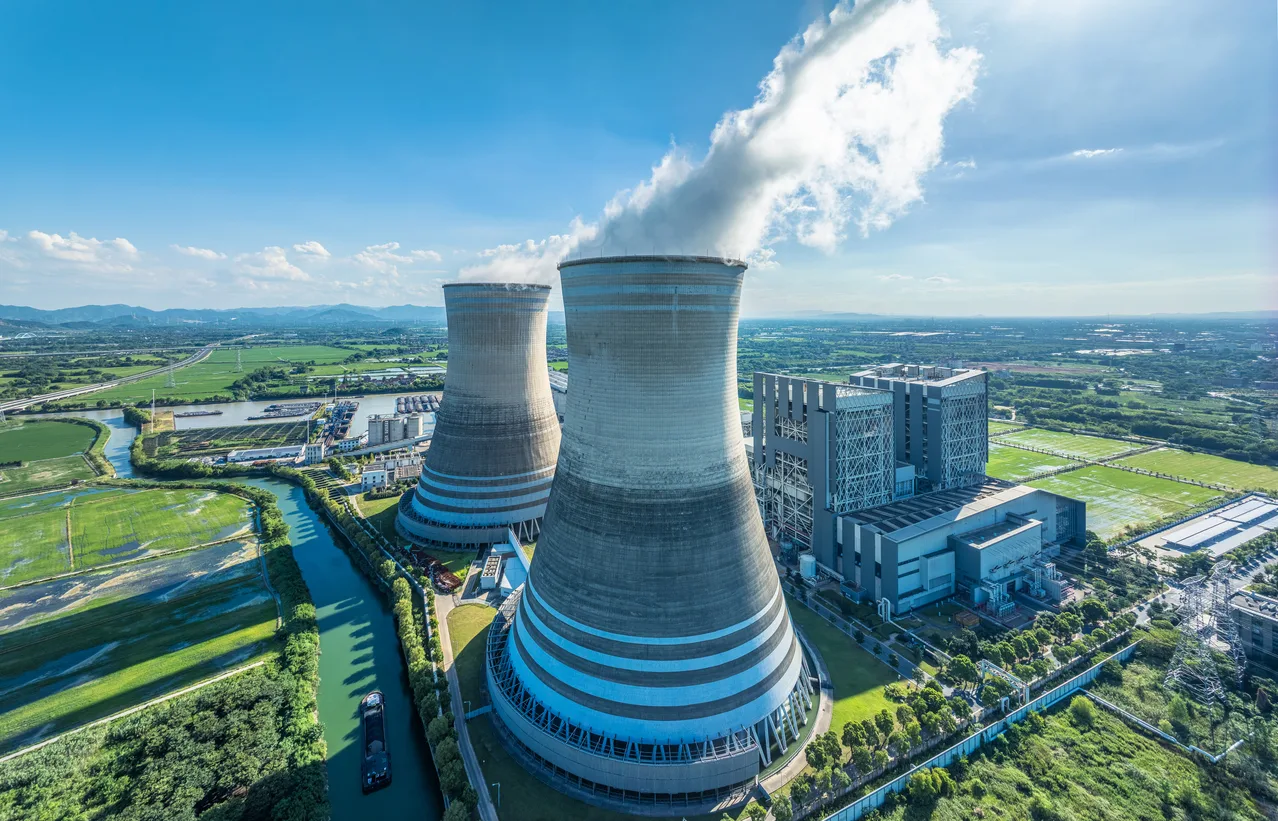
Worldwide, about 440 reactors supplied about 10% of global electricity in 2024. This facility is in China.
“We consider advanced nuclear to be a viable and important option to help meet rising energy demand,” the company wrote in comments for this article. “Nuclear has long been the most reliable workhorse of our fleet, generating carbon-free, around-the-clock power for millions of our customers.”
Dominion has secured permission to run North Anna’s two existing reactors into 2060 and holds a license for a third large unit, but has shifted its focus to newer, smaller designs at the site that would differ substantially from the 1970s‑era reactors.
The next‑generation technologies are known as small modular reactors, or SMR. Any new SMR technology at North Anna would likely rely on the reservoir for at least part of its cooling, though there are other cooling technologies and the new design remains on the drawing board. Dominion confirmed that it is evaluating SMR technologies and North Anna as the potential first site, and that it is also exploring the possibility of developing a SMR at a naval base in Yorktown, Virginia.
‘Is that even possible?’
In addition to local unrest at Lake Anna, there are also practical impediments to using nuclear power there or elsewhere as a solution to meeting Virginia’s energy demands.
Bolthouse, of the Piedmont Environmental Council, is skeptical that new reactors can simply be dropped into Virginia’s grid to rescue it from AI‑era demand.
Nuclear power’s bottleneck is speed and scale, Bolthouse says, noting that her organization is not opposed to more nuclear power in Virginia. “It takes a lot of time to build out a nuclear facility, and right now nuclear is not really being done anywhere,” she says. Small modular reactors may be politically fashionable, but in her telling, they remain “a costly and heretofore unproven technology,” with none yet operating at scale.
Bolthouse argues that “the math doesn’t add up” for Virginia’s energy future. In a state where data‑center requests already dwarf the existing grid, Bolthouse says, nuclear is at best a slow, expensive and marginal addition—not the magic bullet some in Richmond and Washington would like it to be.
“We’re talking about more than tripling the load demand of the grid—a grid that took us 100 years to build—in the next 20 years,” she said. Regardless of what technology is deployed, she asks, “Is that even possible?”